 Anacortes
 Metal Roofing Built for Burlington's Weather, Not Just Its Looks
Burlington sits in a part of Skagit County that gets more rain than most homeowners realize until they've lived through a few winters here. Add in the salt-laden air that drifts inland off the Salish Sea, months of overcast humidity that never quite lets a roof fully dry out, and the moss that creeps across every shaded slope by late fall, and you've got a climate that is genuinely hard on roofing materials. Metal roofing handles that combination better than almost anything else on the market — but only when it's specified and installed correctly for this specific environment. A metal roof detailed for a dry inland climate is not the same job as one built for Burlington.
This page covers what we actually do when we install or replace a metal roof on a Burlington home: the panel types we use, how we handle the details that determine whether a metal roof lasts 20 years or 50, and what our process looks like from the first estimate to the final walk-through.
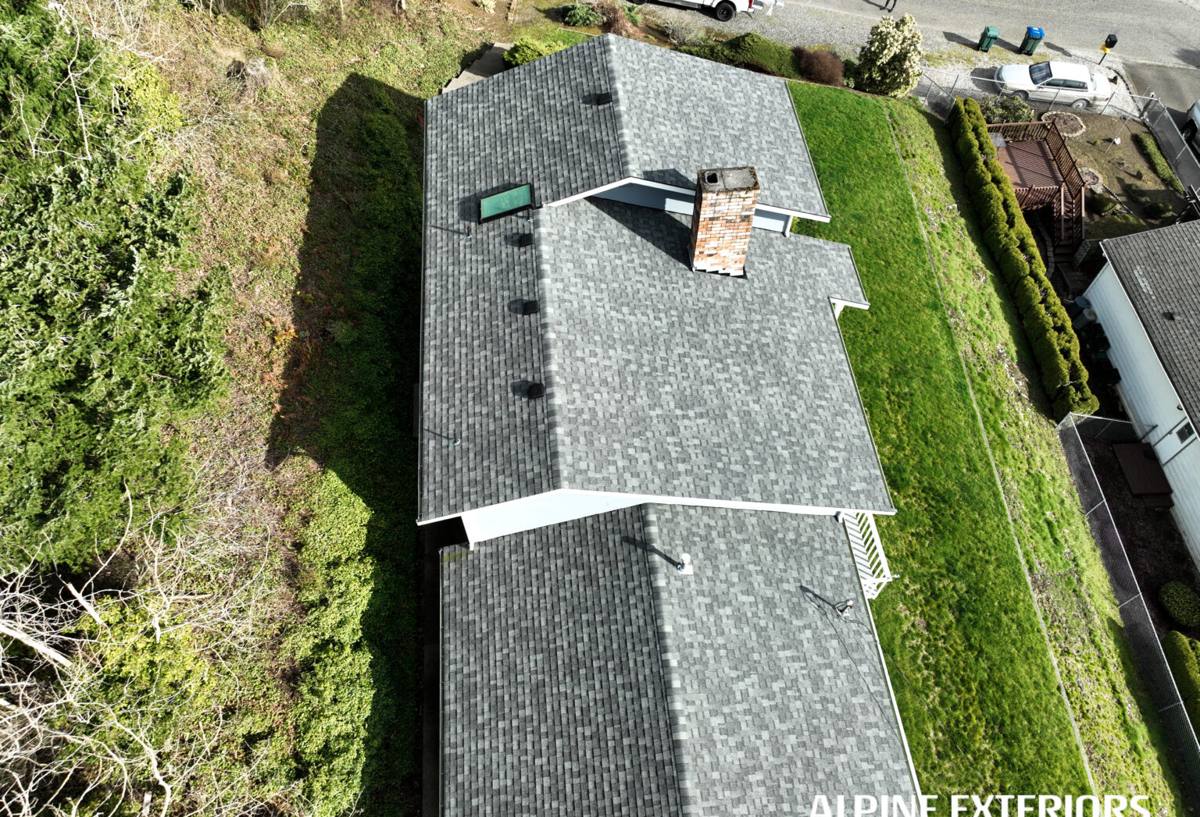
What Driving Rain, Salt Air, and Moss Actually Do to a Roof
It helps to understand the specific ways this climate wears down a roofing system, because it explains almost every decision we make on a metal roofing project.
Driving Rain
Skagit County storms rarely come straight down. Wind-driven rain gets pushed sideways under standard-pitch conditions and finds its way into any gap in flashing, fastener seals, or panel laps. Over years, water that should never touch the deck starts working its way in at valleys, chimneys, skylights, and wall transitions — the same handful of spots on almost every roof.
Salt Air
Homes closer to the water and open exposures get a steady, low-level dose of salt in the air. Salt accelerates corrosion on fasteners, cut panel edges, and any coating that's been scratched or worn thin. It's a slow process, but it's relentless, and it's why fastener and coating choice matter more here than in drier, inland parts of the state.
Moss and Sustained Moisture
Shaded, north-facing, and tree-covered roof sections in this region rarely dry out completely between rain events. That sustained dampness is exactly what moss needs to establish itself, and once moss takes hold it holds moisture against the roofing material even longer, creating a cycle that's hard to break on organic roofing materials. Metal doesn't feed moss the way shingles do, but moss and debris can still collect in panel seams and around penetrations if a roof isn't detailed to shed water and debris cleanly.
Why Metal Roofing Makes Sense in This Climate
Metal isn't the right choice for every home or every budget, and we'll say so honestly during an estimate. But for Burlington's specific conditions, it has real advantages worth understanding before you decide.
- Sheds water fast. Steep-slope metal panels move water off the roof quickly, which matters when rain is frequent and often wind-driven.
- Doesn't absorb moisture. Unlike organic shingle materials, metal panels don't hold water against the deck, which limits the conditions moss and rot need to take hold.
- Long service life when properly installed and maintained. A correctly installed metal roof with the right coating system is built to outlast several cycles of asphalt shingle replacement.
- Handles wind well. Properly fastened metal panel systems perform well in the gusty conditions that come through Skagit County during winter storms.
- Lower long-term maintenance compared to organic roofing materials, once moss and debris management is dialed in.
The trade-off is upfront cost and the fact that metal roofing is far less forgiving of installation mistakes than asphalt shingles. A poorly installed metal roof can leak worse and sooner than a well-installed shingle roof — which is why installation quality matters more here than almost any other roofing decision you'll make.
Metal Roofing Panel Options We Install
Not all metal roofing is the same product wearing different colors. The panel type, fastening method, and coating system all affect how a roof performs in Skagit County's climate.
| Panel Type | How It's Fastened | Best Suited For | Key Trade-Off |
|---|---|---|---|
| Standing Seam | Concealed clips, no exposed fasteners on the field of the panel | Homes wanting maximum weathertightness and the longest realistic service life | Higher material and labor cost than exposed-fastener systems |
| Exposed-Fastener Panel | Screws driven through the panel face into the deck or purlins | Budget-conscious projects, outbuildings, some residential applications | Fasteners and their seals are a wear item that needs periodic inspection and eventual replacement |
| Stone-Coated Steel | Interlocking panels fastened per manufacturer spec, often mimicking shingle or shake profiles | Homeowners who want a traditional roof appearance with metal's durability underneath | More installation steps and detail work than a plain steel panel |
For most Burlington homes, we lean toward standing seam or a quality stone-coated steel system because the concealed or interlocking fastening reduces the number of penetration points that salt air and driving rain can eventually work into. Exposed-fastener panels are a legitimate, cost-effective option too — they just require an honest conversation about long-term fastener maintenance.
What a Correct Metal Roof Installation Actually Involves
The panels themselves get most of the attention, but the details underneath and around them are what actually determine whether the roof performs for decades or starts leaking within a few years.
Deck and Underlayment
We check the roof deck for soundness before anything goes down, and we install a synthetic or high-temp underlayment rated for the panel system being used. In valleys and other high-exposure areas, that underlayment gets doubled up or supplemented with additional protection, since those are the areas driving rain hits hardest.
Fastener and Coating Selection
Given the salt exposure in this region, we pay close attention to fastener material and panel coating specification rather than defaulting to whatever's cheapest. Mismatched metals or under-spec coatings are one of the most common causes of premature corrosion on metal roofs near the water.
Flashing at Every Transition
Chimneys, skylights, sidewall intersections, and valleys are where nearly every roof leak actually originates — metal or otherwise. We custom-fit flashing at each of these transitions rather than relying on generic trim pieces, because a slightly-off flashing detail is where wind-driven rain finds its way in.
Ventilation
Proper attic and roof ventilation keeps moisture from condensing on the underside of the deck, which is just as damaging as water intrusion from outside. We evaluate existing ventilation on every re-roof and correct it where it's inadequate, since this region's humidity makes ventilation mistakes show up faster than they would in a drier climate.
Panel Layout and Seaming
Panel runs are laid out to minimize seams in the direction water and wind-driven rain actually travel, and seams are finished to the tolerances the panel manufacturer specifies. This is where installation experience shows — rushed or misaligned seams are the most common failure point on exposed-fastener and standing seam systems alike.
Our Process, Start to Finish
- Free on-site estimate. We walk the roof, check the deck condition where accessible, and talk through panel options and budget honestly — including whether metal is actually the right call for your home.
- Written proposal. You get a clear scope covering panel type, underlayment, flashing details, and ventilation work, with no vague allowances.
- Scheduling around weather. Given how much rain this region gets, we plan installation windows carefully and protect an open roof if weather turns mid-project.
- Installation. Deck inspection and repair as needed, underlayment, panel installation, custom flashing at every transition, and ventilation correction.
- Final walk-through and cleanup. We review the finished roof with you, answer questions about maintenance, and make sure the site is clean of debris and fasteners before we leave.
Maintaining a Metal Roof in Burlington's Climate
Metal roofing is lower-maintenance than shingles, but "lower-maintenance" isn't "no maintenance," especially with the moss pressure and organic debris common on tree-lined Skagit County properties.
- Clear leaves, needles, and debris from valleys and around penetrations at least once or twice a year
- Keep gutters and downspouts flowing freely so water isn't backing up against roof edges
- Trim back overhanging branches that keep shaded roof sections damp longer than they need to be
- Have exposed fasteners (on exposed-fastener systems) inspected periodically, since their seals are the main wear item on that panel type
- Watch for any scratched or exposed metal after storm debris impact, and have it addressed before corrosion can start
- Schedule a periodic professional inspection rather than waiting until a leak shows up inside the house
Why It Matters That We Already Work in Burlington
A roofing crew that mostly works drier climates will make different default decisions than a crew that works Skagit County every week. We already know which flashing details fail first under sustained wind-driven rain, which fastener and coating combinations hold up against the salt air moving inland off the water, and which roof orientations in this area collect moss fastest. That's not a marketing point — it changes real decisions on your project, from underlayment choice to how we detail your valleys.
We also understand the practical side of working here: scheduling around a genuinely wet climate, protecting a job site when the forecast changes mid-project, and building a roof that's going to be dealing with these same conditions for the next several decades, not just passing inspection on a dry day.
Get a Straightforward Estimate
If you're weighing metal roofing for a Burlington home, we're glad to walk the roof, answer your questions honestly, and put together a clear estimate — no pressure, no sales script. Reach out using the form below to get started.