 Anacortes
 Why Decks in Bow Wear Out Faster Than the Manuals Say
Most decking products are rated and warrantied based on generic climate assumptions — a few freeze-thaw cycles, moderate humidity, occasional rain. Bow doesn't get a generic climate. Sitting close to Samish Bay in unincorporated Skagit County, homes here deal with salt-laden air moving in off the water, long stretches of driving rain rather than gentle showers, and a moss season that can run from early fall through late spring. Individually, none of these is unusual for western Washington. Together, on an aging deck, they compound.
Salt air accelerates corrosion on any exposed metal — nails, screws, joist hangers, post bases. Once a fastener starts rusting, it loses holding strength long before the wood around it looks bad, which is part of why decks in this area can fail structurally while still looking presentable from a distance. Driving rain, especially wind-driven rain that hits a deck at an angle instead of falling straight down, gets pushed into places a deck was never built to shed water from: ledger board connections, end grain on cut boards, and the gaps between decking boards where debris collects. And moss doesn't just sit on top of a deck looking unsightly — it holds moisture against the wood surface for months at a time, which is exactly the condition wood rot and mildew need to take hold.
A deck built without these three factors in mind might look fine for the first several years. The failures tend to show up later, and they tend to show up in the framing and connections you can't see from a lawn chair.
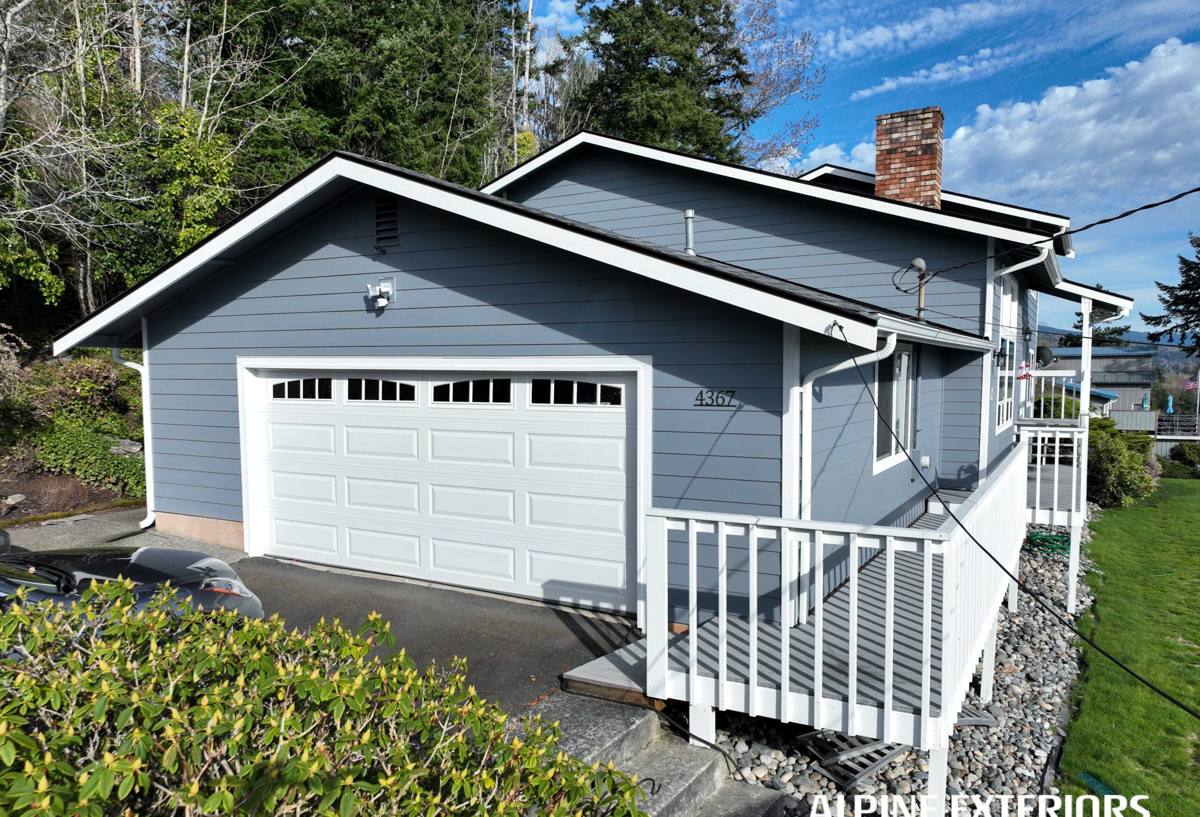
Repair or Replace? Reading the Signs Correctly
Not every tired-looking deck needs a full replacement, but a lot of Bow decks we're called out to inspect have gone past the point where board-by-board repair makes sense. Here's what actually tells you which category you're in.
- Soft or spongy decking boards — press a screwdriver into the surface near board ends and around any drainage low points; if it sinks in easily, the wood is compromised
- Rust streaking below fasteners — a sign the hardware itself is corroding, not just the wood surface staining
- Ledger board separation or dark staining where the deck meets the house — this is the single most important connection on the whole structure, and it's also the one most exposed to wind-driven rain running down siding
- Wobble in the railing posts — often means post base hardware or the framing it's anchored to has weakened
- Persistent moss or algae that returns within weeks of cleaning — a sign the wood underneath is staying wet longer than it should, not just a cosmetic issue
- Boards cupping, splitting, or checking along their length — normal aging accelerates once moisture gets into the wood fibers repeatedly
If what you're seeing is limited to a handful of surface boards and the framing underneath tests solid, repair is often the honest answer and we'll tell you that. If the ledger connection, joists, or multiple structural fasteners are involved, patching individual boards is just delaying a bigger, more expensive failure.
What a Correct Deck Replacement Actually Involves
Framing and Structural Connections
The framing is where most deck failures actually start, even though it's the part homeowners see least. A correct rebuild means proper ledger flashing so water sheds away from the house rather than behind the siding, joist spacing sized to the decking material being used (composite and PVC generally need tighter joist spacing than solid wood), and post footings set below frost depth and sized for the soil conditions on the lot. In a salt-air, high-rainfall area, we also pay close attention to fastener selection — stainless steel or coastal-rated hot-dip galvanized hardware costs more up front than standard exterior-grade fasteners, but standard hardware is exactly what shows up rusted and failing on decks we inspect a decade later.
Decking Surface
The visible boards are the smallest part of the engineering decision but the biggest part of the material decision. What holds up in Bow's climate is different from what holds up in a drier part of the state, and we walk through that below.
Railings and Code Compliance
Guard height, baluster spacing, and stair rail requirements are governed by Washington building code and enforced through Skagit County permitting. This isn't optional detail work — undersized railings and gaps that don't meet code are a common finding on older Bow decks, especially ones built or modified without a permit years ago.
Choosing the Right Decking Material for This Climate
There's no single "best" decking material — there's a best material for a given budget, maintenance appetite, and site condition. Here's how the common options actually behave in a salt air, high-rainfall, moss-prone setting.
| Material | Moisture Behavior | Maintenance | Typical Lifespan Here |
|---|---|---|---|
| Pressure-treated lumber | Absorbs moisture readily; needs to dry out between rain events or rot risk climbs | Annual cleaning and periodic sealing/staining | 10–15 years before boards need replacing |
| Cedar | Naturally rot-resistant but still absorbs water; graying and checking are normal | Regular cleaning; sealing extends life and color | 15–20 years with upkeep |
| Composite decking | Doesn't absorb water into the board core; surface can still hold moss if not cleaned | Periodic washing; no sealing or staining required | 25+ years, varies by product warranty |
| PVC/capped polymer decking | Fully moisture-resistant surface; best resistance to salt air corrosion effects on the board itself | Occasional washing | 25+ years, varies by product warranty |
We install all of these depending on what a homeowner wants and what their budget supports. Where we're direct with clients is on framing-grade lumber and fastener choice regardless of which decking surface they pick — cutting corners there is a maintenance burden and a callback waiting to happen, not a place to save money on a coastal property.
Permits and the Local Process in Skagit County
Bow is unincorporated, which means deck permitting runs through Skagit County rather than a city building department. Most deck replacements that involve structural changes — new footings, a raised height, or work tied into the house framing — require a permit and inspection. Even a straightforward like-for-like rebuild often needs one if the original deck predates current code. We handle the permit application and schedule the required inspections as part of the job, so it's not something a homeowner has to navigate on their own.
Rural Bow properties also come with practical site factors that don't show up on a standard estimate template: longer driveways affecting material delivery and disposal logistics, septic or well locations that can limit where footings go, and in some cases mixed sun and heavy tree cover that changes how much moss pressure a given deck actually faces. These get sorted out at the initial site visit, not discovered mid-project.
Our Deck Replacement Process
- Site visit and assessment — we inspect the existing deck, including framing and ledger connections where accessible, and check the site for access, drainage, and any permit triggers
- Material and design discussion — we walk through decking options and layout based on how the space is actually used, not just what looks good
- Permit submission — handled by us where required, with Skagit County
- Tear-off and disposal — old decking, framing, and hardware removed and hauled off
- Framing and structural work — ledger flashing, joists, footings, and coastal-rated fasteners installed to code
- Decking, railing, and stair installation — final surface and code-compliant railings
- Inspection and walkthrough — county inspection where applicable, plus a walkthrough with you before we call it done
Keeping a New Deck Ahead of Moss and Salt Air
A well-built deck still needs some seasonal attention in this climate — the goal is to make that attention minor rather than emergency repair work.
- Sweep leaves and debris off the deck surface regularly through fall, especially between boards where moisture collects
- Wash the deck at least once a year, more often on shaded or north-facing decks where moss pressure is heaviest
- Make sure gutters and downspouts direct roof runoff away from the deck rather than onto it
- Trim back overhanging branches and nearby vegetation to improve airflow and sun exposure across the deck surface
- For wood decking, reseal or restain on the schedule the product calls for — skipping a cycle in this climate shows up faster than in drier areas
- Do a quick annual check of railing posts and stair connections for movement or corrosion staining
What Affects the Cost of a Bow Deck Replacement
| Factor | Why It Matters |
|---|---|
| Deck size and layout | Square footage and shape (multiple levels, angles, built-in stairs) directly drive material and labor |
| Decking material chosen | Pressure-treated, cedar, composite, and PVC span a wide cost range and each shifts long-term maintenance costs differently |
| Condition of the existing framing | If ledger, joists, or footings need rebuilding rather than just decking replacement, cost rises accordingly |
| Fastener and hardware grade | Coastal-rated stainless or hot-dip galvanized hardware costs more than standard grade but is what actually holds up here |
| Tear-off and disposal | Old lumber and hardware removal, especially on larger or multi-level decks |
| Permit requirements | Structural changes typically require a Skagit County permit and inspection fees |
| Site access | Rural driveways, distance from the road, and grade can affect delivery and disposal logistics |
We give a firm, itemized quote after the site visit rather than a phone estimate — with framing condition being the biggest variable, we don't think it's honest to quote a deck replacement without actually looking at what's underneath the old boards.
Why It Matters to Hire a Crew That Already Works in Bow
A lot of general contractors treat every deck the same regardless of where it sits. A crew that regularly works this specific stretch of Skagit County already knows which fastener grade actually holds up against salt air rather than just meeting code minimums, already has a working relationship with the county permitting process for unincorporated area projects, and has seen firsthand how fast moss comes back on a north-facing deck under tree cover near the water. That's not a marketing point — it's the difference between a deck that needs real attention again in five years and one that doesn't.
If your deck is showing rot, rust, soft spots, or just isn't holding up the way it should against Skagit County's rain and salt air, we're happy to come take a look. We'll give you a straight read on whether repair or replacement makes sense, and if it's replacement, a clear, itemized estimate with no pressure to decide on the spot.