 Anacortes
 Bow Decks Take a Different Kind of Beating
Bow sits along the water in Skagit County, tucked between the tidal flats and farmland east of Chuckanut, and that location shapes what happens to an outdoor deck here. You've got salt-laden air coming off Samish Bay, heavy tree cover on a lot of rural properties, and a rain season that runs long even by Pacific Northwest standards. None of that is unique to any one yard, but the combination is harder on decks than what you'd see on a dry, sun-exposed lot inland. We work decks in Bow regularly, and the repair calls we get here tend to follow a pattern: corroded fasteners, moss-driven rot in shaded corners, and framing that's been quietly failing under a deck surface that still looks okay from a few feet away.
A deck repair page for a Bow property has to talk about those specific failure modes, not just general "deck maintenance" advice. That's what this page covers — what actually goes wrong with decks out here, what a correct repair looks like, and how we approach the work.
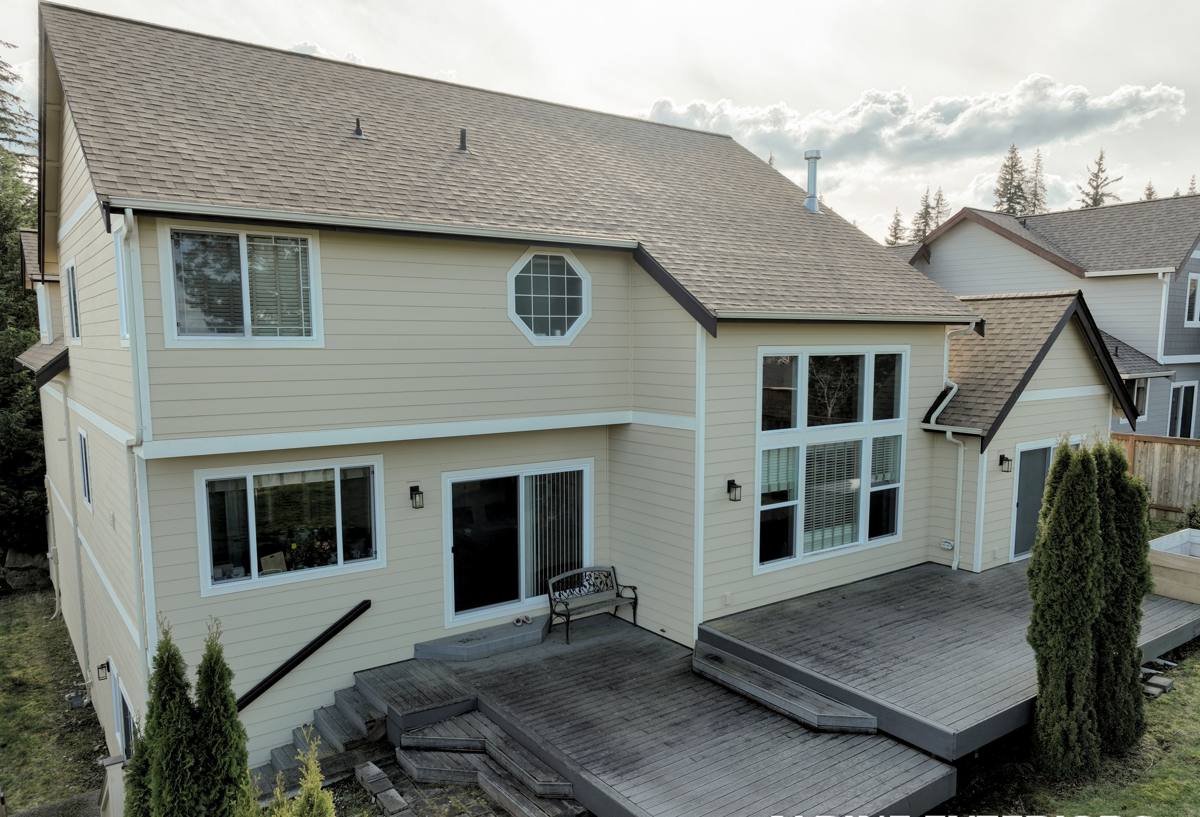
What Salt Air, Driving Rain, and Moss Actually Do to a Deck
Salt Air and Metal Fasteners
Salt-laden air accelerates corrosion on any exposed metal — nails, screws, joist hangers, post brackets, railing hardware. On a deck within a few miles of the bay, standard coated fasteners can start showing rust streaks and pitting years before they would on an inland property. Once a fastener corrodes, it loses holding strength, and that's a structural problem, not a cosmetic one. A joist hanger with corroded nails can still look intact while carrying a fraction of its rated load.
Driving Rain and Water Intrusion
Wind-driven rain off the Salish Sea doesn't just fall straight down — it gets pushed sideways into ledger boards, railing posts, and any spot where decking meets the house. If flashing is missing, undersized, or was never installed correctly at the ledger connection, water works its way behind the board and into the rim joist. That's one of the most common serious problems we find on older decks: rot at the ledger-to-house connection, hidden until the deck starts to feel spongy or pull away from the siding.
Moss, Algae, and Shade
Wooded lots and long wet winters mean moss and algae get a real foothold on deck boards, especially on the north side of a house or under tree canopy. Moss holds moisture against the wood surface far longer than open air would, which speeds up decay in the boards themselves and makes the surface slick and unsafe underfoot. Left alone through a few wet seasons, moss-driven surface rot can work its way from the top face of a board down into the board's structural thickness.
Signs a Bow Deck Needs Repair
Most deck problems don't announce themselves with a dramatic collapse — they show up as small, easy-to-ignore signals first. Here's what we tell Bow homeowners to check for:
- Soft, spongy, or bouncy spots when you walk across the deck
- Visible moss or dark green/black algae staining on boards, especially shaded areas
- Rust streaks running down from screw heads, joist hangers, or railing brackets
- Gaps opening up between the ledger board and the house siding
- Railings or posts that wobble or flex when you lean on them
- Boards that have visibly cupped, split, or pulled away from their fasteners
- A musty smell coming from underneath the deck, which usually means trapped moisture
- Visible gaps or missing flashing where the deck ledger meets the house
Any one of these on its own might be minor. Several together, especially near the ledger board or main support posts, usually means it's worth having someone look at the framing, not just the surface.
What a Correct Deck Repair Involves
A repair that only addresses what's visible from the top often misses the actual problem. We break the deck down into the parts that matter structurally and check each one.
Ledger Board and Flashing
This is the connection between the deck and the house, and it's the single most important structural point on most decks. We check for proper flashing (a metal or membrane barrier that keeps water from tracking behind the ledger), correct fastener type and spacing, and any sign of rot in the rim joist behind it. A failing ledger connection is a safety issue, not just a durability one.
Framing — Joists, Beams, and Posts
We look at joist hangers for corrosion and correct nailing, check beams and posts for rot at ground contact or under the decking, and confirm post bases are still doing their job of keeping wood off standing water. Rural Bow lots with mature trees and less full-sun exposure tend to hold ground moisture longer, which matters for post bases and any wood-to-concrete contact points.
Decking Surface
Individual board replacement makes sense when rot, splitting, or cupping is limited to a few boards and the framing underneath is sound. We match material and fastening pattern as closely as possible so repaired sections don't stand out or behave differently than the rest of the deck under foot traffic and weather.
Railings and Guardrails
Railings take a lot of side-load stress and are often the first thing to loosen. We check post attachment, baluster spacing, and overall rail height against current guardrail requirements, since older decks were sometimes built to different standards than what's expected today.
Repair vs. Rebuild — How We Decide
Not every deck problem calls for the same fix. The table below covers the factors that usually decide whether a deck needs spot repair or a fuller rebuild of the deck surface or framing.
| Factor | Leans Toward Repair | Leans Toward Rebuild |
|---|---|---|
| Ledger board condition | Solid, properly flashed | Rot or missing flashing at house connection |
| Extent of framing rot | Isolated to one joist or post | Spread across multiple structural members |
| Fastener condition | Localized rust, hardware otherwise sound | Widespread corrosion on joist hangers/brackets |
| Decking surface | A handful of damaged boards | Most boards cupped, split, or moss-damaged |
| Deck age and original build quality | Newer, built to current code | Older deck with outdated framing or railing spec |
A lot of the decks we see in Bow fall somewhere in the middle — sound framing but a rotted ledger connection, or good bones but decking that's had enough moss seasons to give out. That's exactly why we inspect before quoting anything; guessing from the surface leads to either overpaying for a rebuild you didn't need or underpaying for a repair that won't hold.
Our Repair Process
- On-site inspection. We walk the full deck, check underneath where accessible, and test the ledger connection, framing, and railings by hand — not just a visual look from the top.
- Written scope. You get a clear breakdown of what's failing, what we recommend fixing now versus monitoring, and why — no pressure to rebuild something that just needs targeted repair.
- Material and hardware selection. We choose fasteners and connectors suited to the exposure the deck actually gets, matching decking material where boards are being replaced rather than the whole surface.
- The repair work. Structural fixes first — ledger, flashing, framing, post bases — then decking and railing work on top of a sound structure.
- Final check. We confirm railings are solid, decking is properly fastened, and flashing is doing its job before we call it done.
Materials and Hardware for Coastal Skagit County Conditions
Given the salt air and moisture exposure common around Bow and Samish Bay, we lean toward stainless steel or heavy hot-dip galvanized fasteners and connectors over standard coated hardware — the upfront cost difference is small compared to redoing a repair a few years down the line because fasteners corroded first. For decking material, both quality pressure-treated lumber and composite boards can hold up well here; the honest trade-off is that wood needs periodic sealing or staining to keep moisture out, while composite costs more upfront but asks less ongoing maintenance. Neither is automatically "better" — it depends on how much upkeep you want to do and what the rest of the house's exterior looks like.
Why a Crew That Already Works Bow Matters
Deck repair done right depends on correctly diagnosing what the local climate has actually done to that specific deck, and that's easier when you've seen the same patterns on other properties nearby. We're based in Anacortes and work throughout Skagit County, including Bow, so we're familiar with how salt air and shaded, wet lots affect framing and hardware out here, and with the county's permitting expectations for deck repair work. That local pattern recognition is the difference between a repair that just replaces what looks bad and one that fixes the actual cause.
If your deck has soft spots, rust streaks, or moss that just won't quit, we're glad to take a look. Fill out the form below for a free, no-pressure estimate — we'll tell you honestly whether you're looking at a targeted repair or something bigger, and why.