 Anacortes
 Windows in Bow Live a Harder Life Than People Expect
Bow sits in that stretch of Skagit County where open farmland meets saltwater, and that mix is tougher on a house than most homeowners realize until they start noticing problems. You've got salt-laden air rolling in off Samish Bay, wind-driven rain that doesn't just fall straight down but gets pushed sideways into every gap and seam, and a wet season that stretches long enough for moss and algae to take hold on anything that stays damp. Windows sit right at the center of all three. They're penetrations in the building envelope, they collect condensation, and they take direct weather exposure on every wall of the house, not just the ones facing the water.
A window that's rated fine for a dry inland climate can still fail early out here — not because the glass or vinyl is bad, but because the installation wasn't built for what this specific location throws at it. That's the real difference between a generic window swap and a custom window job done right in a place like Bow.
What "Custom" Actually Means Here
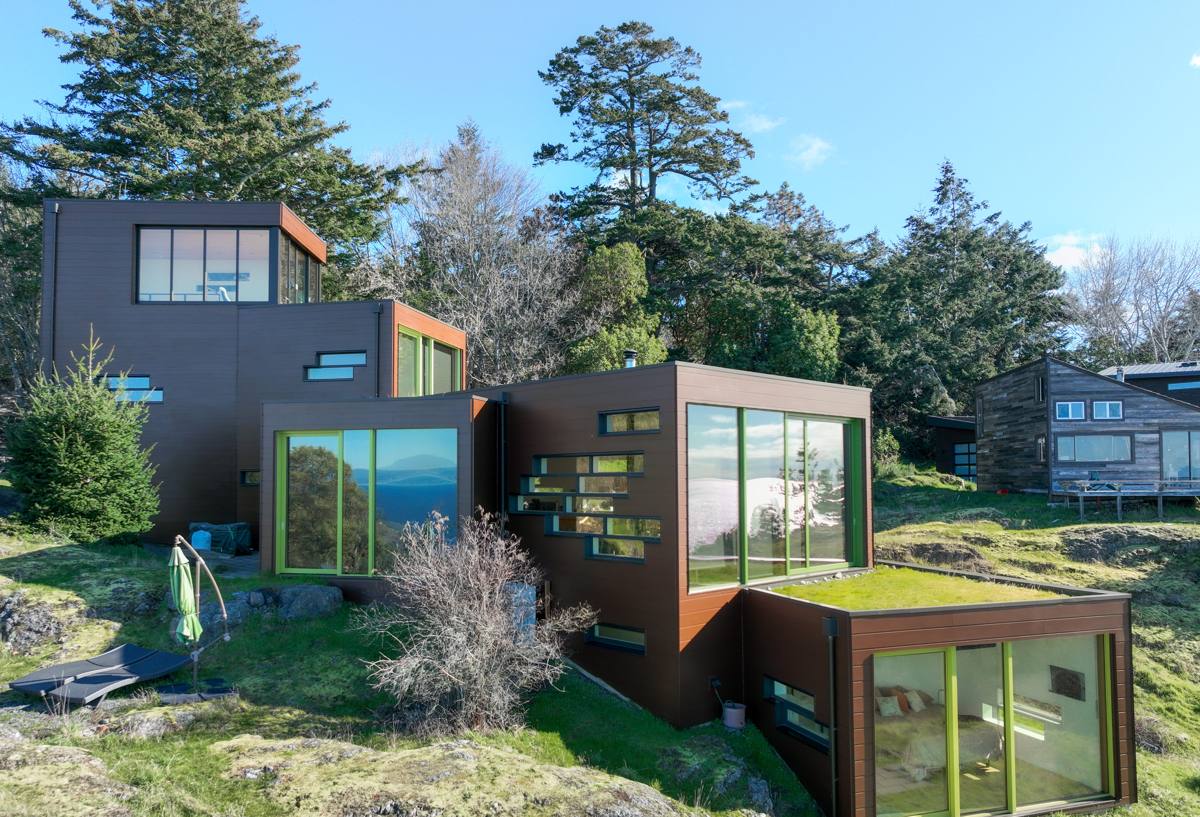
"Custom" doesn't mean fancy shapes or premium upgrades you don't need. On most Bow homes it means the window is built and installed to match the actual opening, the actual wall assembly, and the actual exposure of that specific elevation — instead of forcing a stock size into a rough opening and papering over the gaps.
Custom Sizing vs. Stock Replacement
Older farmhouses, remodeled outbuildings, and homes that have had additions over the years in this area frequently have openings that don't match today's standard window sizes. A custom order means the window is manufactured to fit the opening, not the other way around. That matters because forcing a stock unit into an odd-sized opening usually means extra trim, shims, and caulk doing the work that a properly sized window and flashing should be doing — and caulk is not a long-term water management strategy in a climate this wet.
Custom by Elevation
We also treat window selection differently depending on which side of the house it's on. A window facing the prevailing wind and rain off the bay needs different attention to flashing and sealant detail than one tucked under a covered porch on the leeward side. Same house, same order, different installation approach per opening.
Common Window Problems We See Around Bow
Working this area regularly, the same handful of issues show up again and again:
- Sash and frame corrosion on older aluminum windows from years of salt air exposure
- Wood rot at the sill where wind-driven rain has been getting behind old flashing or failed caulk joints
- Moss and algae staining on north-facing and shaded window trim that stays damp long after a storm
- Fogged double-pane glass from seal failure, usually accelerated by the constant humidity swings
- Drafts and cold spots around openings that were never properly air-sealed during a past remodel
- Swollen or sticking wood sashes on original windows that have absorbed moisture over decades
None of these are unusual for the area — they're what you'd expect from this climate acting on a building envelope over time. The point of a good custom window job is addressing the cause, not just replacing the glass and leaving the same water path in place.
Frame Materials: What Actually Holds Up in This Climate
We get asked a lot about vinyl versus fiberglass versus wood-clad options, and honestly there isn't one right answer for every home — it depends on the home's style, budget, and exposure. Here's how we walk homeowners through the trade-offs.
| Frame Material | Salt Air / Moisture Behavior | Maintenance | Best Fit |
|---|---|---|---|
| Vinyl | Won't corrode or rot; performs well in coastal humidity | Low — occasional cleaning | Most homes wanting durability without upkeep |
| Fiberglass | Very stable in temperature and moisture swings, resists warping | Low | Larger openings or homes wanting a stronger frame profile |
| Wood-clad (exterior-clad) | Good if cladding and flashing are done correctly; the wood interior needs the exterior fully sealed | Moderate — depends on cladding integrity | Homes wanting a wood interior look with better weather protection than bare wood |
| Bare wood | Requires diligent, ongoing maintenance to resist rot in this climate | High | Historic-style homes where owners are committed to upkeep |
| Aluminum (uninsulated) | Prone to corrosion and condensation in salt air over time | Moderate to high | Generally not what we recommend for this specific climate |
We don't push one brand or material on every job. What we do insist on is that whatever material a homeowner chooses, the installation detailing — flashing, sealant, and drainage — is done to handle driving rain, because that detailing matters more to long-term performance than the frame material alone.
Glass Packages Worth Considering
For a marine climate like this, we generally steer people toward double-pane units with a low-E coating and argon fill as the baseline, not an upgrade. The coating helps manage heat loss during the long gray stretches of the year, and a good edge seal matters more here than in a drier climate because constant humidity and temperature swings stress that seal over time. For rooms with more direct wind and rain exposure — typically the water-facing side of a home — we'll sometimes recommend a heavier-duty seal system or laminated glass option, mainly for durability and noise reduction rather than storm-impact requirements, since this area isn't a hurricane zone.
Glass and Frame Options at a Glance
- Double-pane, low-E, argon-filled — solid baseline for most Bow homes
- Laminated glass option — added durability and sound dampening on exposed elevations
- Warm-edge spacer systems — reduce condensation risk at the glass edge
- Tinted or reflective coatings — situational, mainly for south/west sun exposure on open farmland lots
How We Actually Install a Window Here
The installation sequence is where most long-term problems get prevented or created. Here's the process we follow on Bow homes:
- Remove the old window carefully and inspect the rough opening, sill, and surrounding framing for hidden rot or water damage before anything new goes in.
- Repair or rebuild the opening if we find soft wood or compromised sheathing — installing a new window into a damaged opening just hides the problem behind new trim.
- Install a sloped sill pan so any water that does get past the window has a built-in path to drain back outside instead of pooling at the sill.
- Flash in the correct order — sill, jambs, then head — using a shingle-style lap so each layer sheds water onto the one below it, never trapping moisture behind the frame.
- Set and level the window, shimming correctly so the frame isn't under stress that can crack seals or cause the sash to bind over time.
- Air-seal the interior gap with the appropriate low-expansion foam or backer rod, keeping the exterior weather barrier separate from the interior air barrier.
- Seal and finish the exterior with a sealant rated for this climate, and finish trim in a way that sheds water instead of catching it.
That sill pan and shingle-lap flashing step is the one most often skipped on lower-effort installs, and it's exactly the step that determines whether a window leaks in year one or holds up for decades in this kind of weather.
Why a Crew That Already Works Bow Matters
Bow isn't a big town, and the housing stock here is a real mix — older farmhouses, newer builds on larger lots, homes with additions bolted on over the years, and everything in between. A crew that's worked this specific area regularly has already seen how the local exposure plays out on different construction types, which means fewer surprises once the old window comes out.
Local also matters for logistics that homeowners don't always think about: knowing which suppliers can turn around a custom order in a reasonable window, understanding what permitting looks like in unincorporated Skagit County versus inside Anacortes city limits, and being close enough to actually come back promptly if a callback is ever needed.
What to Look for When Vetting a Window Contractor
- Do they inspect the rough opening before quoting, or just measure the glass?
- Do they explain their flashing and sill pan approach, or wave it off as "standard"?
- Are they licensed and insured for exterior work in Washington?
- Do they give a straight answer about material trade-offs instead of upselling the priciest option?
- Can they point to ongoing work in this specific area, not just a general service radius?
- Do they offer a written warranty that covers both the product and the installation labor?
Timing and Seasonal Considerations
Window replacement can happen most of the year here, but scheduling around Skagit County's wet season matters for both the work itself and the drying time framing needs if any repair is involved. We plan installs to minimize how long an opening sits exposed, and we watch the forecast closely rather than pushing through a job during a heavy rain system just to stay on schedule. A rushed install during a downpour is exactly how water gets trapped behind new work.
What a Realistic Budget Range Looks Like
Costs vary a lot based on window size, frame material, glass package, and whether the opening needs repair work before the new window goes in. As a broad range, straightforward vinyl replacements tend to sit at the lower end, fiberglass and wood-clad options run higher, and any job that uncovers rot or framing damage will add to the cost of getting the opening right before installation. We'd rather give an honest on-site estimate than a number that doesn't hold up once we see the actual condition of your windows and walls.
If you're dealing with drafty, fogged, or failing windows on a Bow home, we're happy to take a look and give you a straightforward, no-pressure estimate — just fill out the form below and we'll get in touch.