 Anacortes
 Window Replacement Built for Burlington's Weather
Burlington sits in the flat, wet middle of Skagit County, close enough to the Salish Sea that salt-laden air reaches window frames and hardware even a few miles inland, and close enough to the foothills that winter storms dump driving rain sideways against west- and south-facing glass. Add a moss season that can run from late fall through spring, and you have a climate that is genuinely hard on windows — not because the weather is extreme, but because it is relentless. Wood sashes swell and stick. Aluminum frames pit and corrode. Weep holes clog with organic debris and stop draining. None of this happens overnight; it happens over years of exposure that most manufacturers never test for in their standard warranty language.
We replace windows on homes throughout Burlington and the surrounding Skagit Valley, and the patterns repeat from house to house: failed seals fogging the glass, frames that no longer close square, and sills that have taken on moisture damage long before anyone noticed a leak. This page covers what a correct replacement looks like here, what it should cost, and how our process is built around this specific climate rather than a generic install.
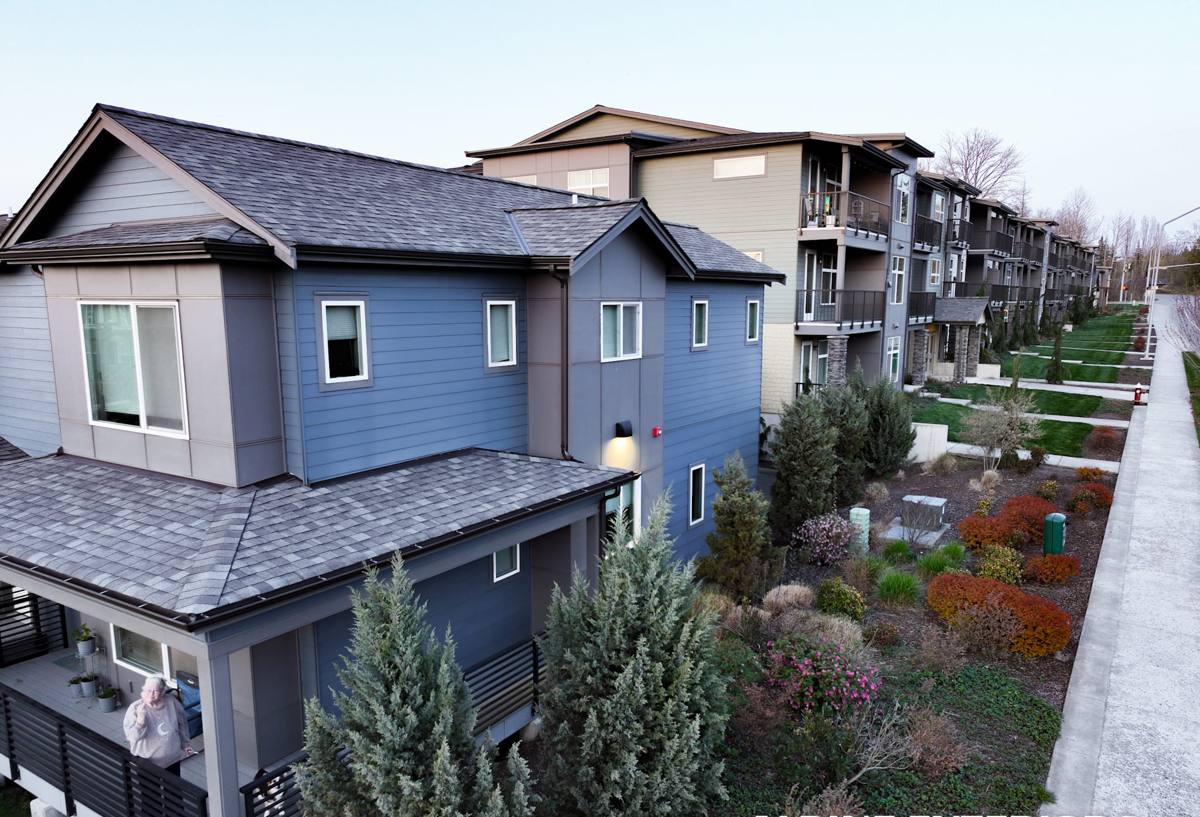
Signs a Burlington Home Needs Window Replacement
Most homeowners call us for one of a handful of reasons. Knowing which applies to your house helps set expectations for the scope of the job.
- Fogged or hazy glass — the seal between panes has failed and moisture has gotten into the gas fill. This is a glass unit failure, not something that can be cleaned away.
- Drafts you can feel — usually a sign the frame has racked out of square, the weatherstripping has hardened, or the original installation never sealed properly to the rough opening.
- Windows that stick, won't stay open, or are hard to lock — common in older wood and aluminum units after years of humidity cycling.
- Soft or discolored trim and sills — often the first visible sign that water has been getting behind the window, sometimes for a long time before it shows on the interior.
- Visible moss or algae staining below the sill — a sign of poor drainage or a north-facing exposure that stays damp for weeks at a stretch, which is common on shaded Burlington lots.
- Rising heating bills with no other explanation — single-pane or early dual-pane windows lose a meaningful amount of conditioned air through the glass and frame.
If you're only seeing one or two of these on a handful of windows, spot replacement may make sense. If several windows across the house are showing wear at the same time, that usually points to age or an original installation issue, and a fuller replacement plan is worth discussing.
What a Correct Window Replacement Actually Involves
Window replacement gets treated as a simple swap — old unit out, new unit in — but the parts that determine whether a window lasts fifteen years or thirty happen where you can't see them.
Removal and Opening Inspection
Every opening gets inspected once the old window is out. This is the point where hidden rot, soft sheathing, or old flashing failures show up. On a coastal-influenced climate like ours, we routinely find moisture damage at the sill that wasn't visible from inside the house. Any damaged framing or sheathing gets repaired before a new window goes in — installing a new window into a compromised opening just resets the clock on the same failure.
Flashing and Drainage
This is the step most likely to get shortcut on a cheap install, and it's the one that matters most for a house that faces driving rain off the Sound. Proper flashing directs water that gets behind the siding back out and away from the framing, using a shingle-lap sequence — house wrap, sill pan, side flashing, head flashing — so every layer sheds water onto the one below it. Skipping or reversing this order is the single most common cause of hidden rot behind newly installed windows.
Insulation and Air Sealing
The gap between the new window frame and the rough opening needs to be filled with a low-expansion foam or backer rod and sealant — not stuffed with fiberglass, which does little to stop air movement. This step is what actually delivers the draft reduction and energy savings homeowners are hoping for.
Interior and Exterior Finish
Trim, caulking, and paint or stain get finished to match the surrounding siding and interior casing, and every unit gets checked for square, level, and smooth operation before we call the job done.
Choosing Windows for Skagit County Conditions
Material and glass choice matters more here than in a dry climate, because the frame is fighting moisture and salt air year-round, not just during storms.
| Window Type | How It Handles Our Climate | Trade-Offs |
|---|---|---|
| Vinyl (fusion-welded frame) | Won't rot or corrode; handles moisture and salt air well; low maintenance | Limited color/finish options compared to wood; frame can't be repainted easily |
| Fiberglass | Very stable through temperature and moisture swings; strong resistance to warping | Higher upfront cost than vinyl |
| Wood (factory-clad exterior) | Classic look, especially on older Burlington homes; cladding protects the exterior face | Interior wood still needs periodic finishing; more sensitive to installation quality |
| Aluminum | Strong and slim sightlines | Poor insulator and prone to corrosion near salt air unless properly finished — we don't recommend it for most homes in this area |
For most Burlington homeowners, we steer the conversation toward vinyl or fiberglass with a good double-pane, low-E, argon-filled glass package. It's not about one brand being better than another — it's about matching frame material to a climate where moisture exposure is constant and where a frame that resists warping and corrosion will simply need less attention over its life.
Glass Packages Worth Discussing
Low-E coatings reduce heat loss without darkening the glass noticeably, and they're standard on most quality windows now. Argon or krypton gas fill between panes adds insulation value for a modest cost increase. For homes on busier stretches near Burlington's main corridors, laminated glass options can also cut down road noise — worth asking about if that's a concern.
Our Window Replacement Process
1. On-Site Assessment
We walk the exterior and interior of every window being considered, check for existing moisture damage, take precise measurements, and talk through material and glass options based on the specific exposure of each opening — a north wall that stays damp gets a different conversation than a sheltered south-facing wall.
2. Written Estimate
You get a clear, itemized estimate before any work starts — no vague allowances, no surprise change orders for work we could have identified during the assessment.
3. Install Day
Most homes are done in one to two days depending on window count. We work room by room to keep the house weathertight overnight rather than leaving multiple openings exposed at once, which matters on a job scheduled during our wetter months.
4. Final Walkthrough
Every window gets operated, checked for a square and even reveal, and inspected for finish quality before we consider the job complete.
What Affects Window Replacement Cost
Costs for a full window replacement in this area typically run from a few hundred dollars per window for a straightforward vinyl replacement in an existing opening, up to significantly more for larger units, fiberglass or clad-wood frames, or openings that need structural or flashing repair. A handful of factors drive most of that range:
| Factor | Why It Matters |
|---|---|
| Frame material | Vinyl is generally the most budget-friendly; fiberglass and clad wood cost more upfront |
| Window size and configuration | Large picture windows, bays, and custom shapes cost more than standard double-hungs |
| Condition of the existing opening | Hidden rot or sheathing damage adds repair time before the new window can go in |
| Full-frame vs. insert replacement | Full-frame replacement (removing down to the rough opening) costs more than an insert but is often necessary when the old frame is damaged |
| Number of windows done at once | Bundling several windows into one project typically lowers the per-window cost versus doing them one at a time |
We give straight numbers during the estimate, including whether we expect any openings to need repair work, so there's no guessing once the crew is on site.
Why It Matters That We Already Work in Burlington
A crew that only occasionally works this area is guessing at things a local crew already knows: which sides of a house typically take the worst weather given how Burlington sits relative to the water and prevailing storms, how long moss and algae growth takes to become a drainage problem on a shaded elevation, and which older housing stock in the area tends to have the same flashing shortcuts from past renovations. That local pattern recognition shows up as fewer surprises during the job and fewer callbacks after it.
It also means we're not a drive-by outfit. If a question comes up two years after the install, we're still working in the neighborhood and easy to reach.
Questions to Ask Before Hiring a Window Contractor
- Do they inspect the rough opening for hidden damage before installing, or just swap the unit?
- Will they explain their flashing and drainage sequence, not just the window brand?
- Is the estimate itemized, with material, labor, and any anticipated repair work broken out separately?
- Are they licensed and insured to do exterior work in Washington state?
- Do they stand behind both the product warranty and their own installation workmanship?
- Can they speak specifically to how the job will be sequenced to keep your home weathertight during install?
If a contractor can't answer these clearly, that's worth noting before you sign anything.
Get a Free Estimate
If your windows are drafty, fogged, sticking, or just showing their age, we're happy to take a look and give you an honest read on what's actually needed — whether that's a full replacement or something less. Use the form below to request a free, no-pressure estimate for your Burlington home.