 Anacortes
 Windows in Oak Harbor Take a Different Kind of Beating
Homes in the Oak Harbor area sit close to the water, which means windows here deal with a combination most inland contractors rarely think about: salt-laden air, wind-driven rain that hits siding sideways instead of straight down, and a long wet season where moss and algae get a foothold on anything that stays damp too long. None of that is dramatic on its own, but stacked together over years, it's exactly the kind of exposure that finds every weak point in a window installation — the flashing detail that was rushed, the sealant bead that was too thin, the sill pan that was skipped to save an hour.
A window that's a fine product on paper can still fail early if it goes in wrong for this climate. That's the real variable homeowners are choosing when they pick a contractor: not just which window brand, but who's installing it and whether they understand what a Whidbey/Skagit-area exterior actually has to survive.
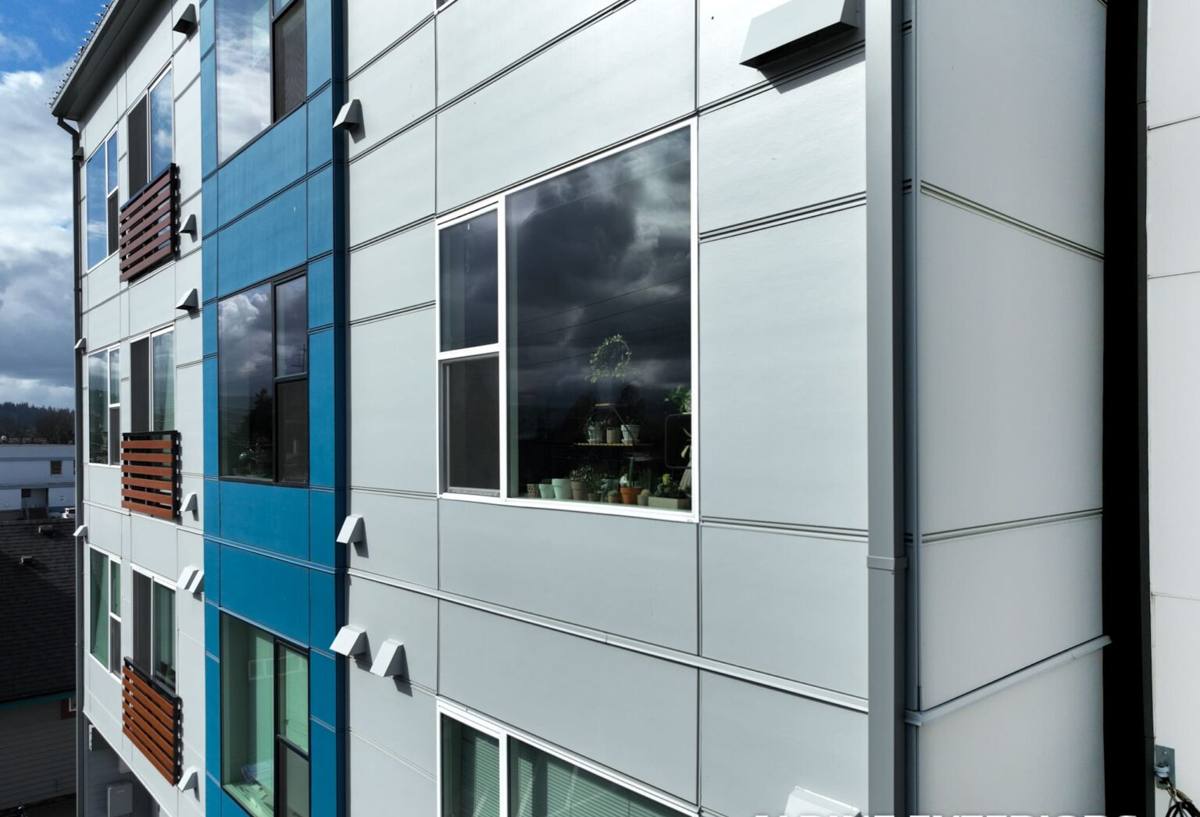
How Salt Air, Rain, and Moss Actually Damage Windows
Salt Air
Airborne salt is corrosive to exposed metal fasteners, hinges, and some window hardware finishes. It also accelerates the breakdown of lower-quality sealants and speeds up UV degradation of certain vinyl formulations. It's rarely the reason a window fails outright, but it shortens the life of every component that isn't rated or protected for coastal exposure.
Driving Rain
Wind off the water doesn't let rain run straight down and off a wall — it pushes water sideways and even upward into gaps that would stay dry in a calmer inland location. This is why flashing details and drainage planes matter more here than almost anywhere else in the state. A window opening that would tolerate a mediocre install in a sheltered valley can leak within a season or two on an exposed Oak Harbor elevation.
Moss and Sustained Dampness
Long stretches of overcast, damp weather mean anything that traps moisture — a poorly sloped sill, a caulk joint instead of proper flashing, trim that sits directly against wet siding — stays wet longer and starts growing moss, algae, or eventually rot. Moss itself isn't structural damage, but it holds moisture against wood and trim, which turns a cosmetic issue into a repair issue over time.
Signs a Window Installation Has Already Failed
Because water intrusion around windows is often hidden behind trim and siding, homeowners usually notice the downstream symptoms long before they see the actual gap or flashing failure. Worth checking for:
- Soft or discolored drywall, trim, or paint below or beside a window
- Musty smell in a room that doesn't air out
- Fogging between panes on a double- or triple-pane window (a sign the seal has failed, not just condensation)
- Visible gaps, cracked caulk, or daylight around the frame
- Difficulty opening, closing, or locking a window that used to operate smoothly
- Moss or algae buildup on the sill, trim, or siding directly around the window
- Drafts you can feel with a hand near the frame on a windy day
What a Correct Window Installation Actually Involves
The window unit itself is only part of the job. The install detail around it is what determines whether the opening stays dry for the next 20-30 years. On a coastal property like this, we treat the following as non-negotiable, not optional upgrades:
- Sill pan flashing at the base of the opening, so any water that does get past the window has a sloped path back out instead of soaking into the framing
- Proper integration with the water-resistive barrier — flashing tape and building paper layered shingle-style so water always sheds outward and down, never into a seam
- Correct fastening and shimming so the frame isn't racked or bowed, which stresses seals and causes premature hardware wear
- Backer rod and quality exterior sealant at the trim joint, not caulk alone stretched over a gap it was never meant to bridge
- Insulation in the shim space so the gap between the window and rough opening isn't a cold, damp void
Skip any one of these and the window can still look fine for a year or two — the failures on this list tend to show up quietly, well after the crew that did the work is gone.
Choosing Windows for Salt Air and Driving Rain
There's no single "best" window material for coastal Washington — it's a trade-off between upfront cost, maintenance, and how the material holds up to salt and moisture over decades. We'll walk through the honest pros and cons for your specific home rather than push one product line.
| Material | How It Handles Salt Air & Rain | Maintenance | Typical Trade-Off |
|---|---|---|---|
| Vinyl | Good — won't corrode; quality matters for UV/salt resistance over time | Low | Lower cost, but frame color/finish quality varies a lot between manufacturers |
| Fiberglass | Very good — dimensionally stable, resists warping in wet/dry cycles | Low | Higher upfront cost than vinyl |
| Aluminum | Prone to corrosion near salt air unless marine-rated; conducts cold | Moderate to high | We generally steer coastal clients away from standard aluminum for this reason |
| Wood / Wood-Clad | Needs consistent upkeep to prevent moisture damage in this climate | High | Best look for some homes, but demands real maintenance discipline here |
Whatever material you land on, the glazing package matters just as much in this region — look for a low-E coating and an argon- or krypton-filled unit rated for the Pacific Northwest's marine climate, which handles condensation control better than a basic single-pane replacement in a home with consistently damp indoor/outdoor humidity differences.
Our Window Installation Process
1. On-Site Assessment
We look at the existing opening, check for hidden water damage or rot in the framing, and evaluate the wall's exposure — a window on the weather side of the house gets treated differently than one tucked under an eave.
2. Product Selection
We walk through material and glazing options against your budget and the specific exposure of that wall, without steering you toward whatever happens to be easiest for us to install.
3. Removal and Opening Prep
Old units come out carefully so we can inspect the sheathing and framing underneath. Any soft or water-damaged wood gets addressed before a new window ever goes in — installing a new window over rotten framing just hides the problem.
4. Flashing and Installation
Sill pan, flashing tape integration, shimming, fastening, and insulation, in that order, following the sequence that actually sheds water rather than trapping it.
5. Trim, Sealing, and Cleanup
Exterior trim goes back on with proper sealant joints, interior trim is finished, and the site is cleaned up. We walk the finished opening with you before we call the job done.
What Affects the Cost
| Factor | Why It Matters |
|---|---|
| Window count & size | More or larger openings mean more material and labor time |
| Material (vinyl vs. fiberglass vs. wood-clad) | Unit cost varies significantly by material and manufacturer line |
| Condition of the existing opening | Hidden rot or old, out-of-square framing adds repair time before the new window goes in |
| Wall exposure | Weather-side walls facing the water often warrant extra flashing detail |
| New construction vs. replacement | Replacement work in an existing wall generally takes more careful, slower detailing than a new-build opening |
We give straightforward, itemized estimates rather than a single lump number, so you can see what you're actually paying for and where the money is going.
Why a Crew That Already Works Oak Harbor Matters
A contractor who mainly works drier, inland jobs can install a technically fine window and still get the flashing sequence wrong for a coastal wall, because they've never had to fight driving rain on a regular basis. Working this stretch of Skagit County and the surrounding water-exposed communities day in and day out means we're not guessing at how a wall behaves in this climate — we're applying what consistently holds up here and skipping the details that consistently fail here. That's not marketing; it's just what repeat exposure to the same weather teaches a crew over time.
It also means faster, more accurate estimates. We're not learning your area's wind exposure and rain patterns on your project — we already know what a water-side wall in this region needs versus a more sheltered one.
Questions Worth Asking Before You Hire
- Do you install sill pan flashing on every window, or only when asked?
- How do you integrate window flashing with the existing water-resistive barrier?
- What happens if you find rot or water damage once the old window is out?
- What's the warranty on both the product and your labor, and who do I call if something goes wrong later?
- Can you show me the specific glazing package and material spec, not just a brand name?
- Do you have experience with coastal or water-exposed properties specifically?
If your windows in the Oak Harbor area are drafty, fogged, hard to operate, or you're just planning ahead before the next wet season, we're happy to take a look and give you a straightforward, no-pressure estimate. Use the form below to get started.