 Anacortes
 Why West Anacortes Roofs Wear Differently
West Anacortes sits close enough to the water that salt air is a daily fact of life, not an occasional nuisance. Combine that with the driving, wind-blown rain that rolls in off the Sound and the long, gray moss season that stretches from fall through spring, and you've got a roofing environment that's harder on materials than most inland parts of Skagit County. Fasteners corrode faster. Algae and moss get a foothold in shaded, north-facing sections and hold onto moisture long after the rest of the roof has dried out. Wind-driven rain finds its way under marginal flashing details that would hold up fine somewhere drier.
None of this means West Anacortes homes need exotic roofing. It means the installation details — underlayment choice, fastener grade, flashing work, ventilation — matter more here than they would in a mild, dry climate. A roof replacement that's "good enough" somewhere else can fail early on a home exposed to this kind of weather.
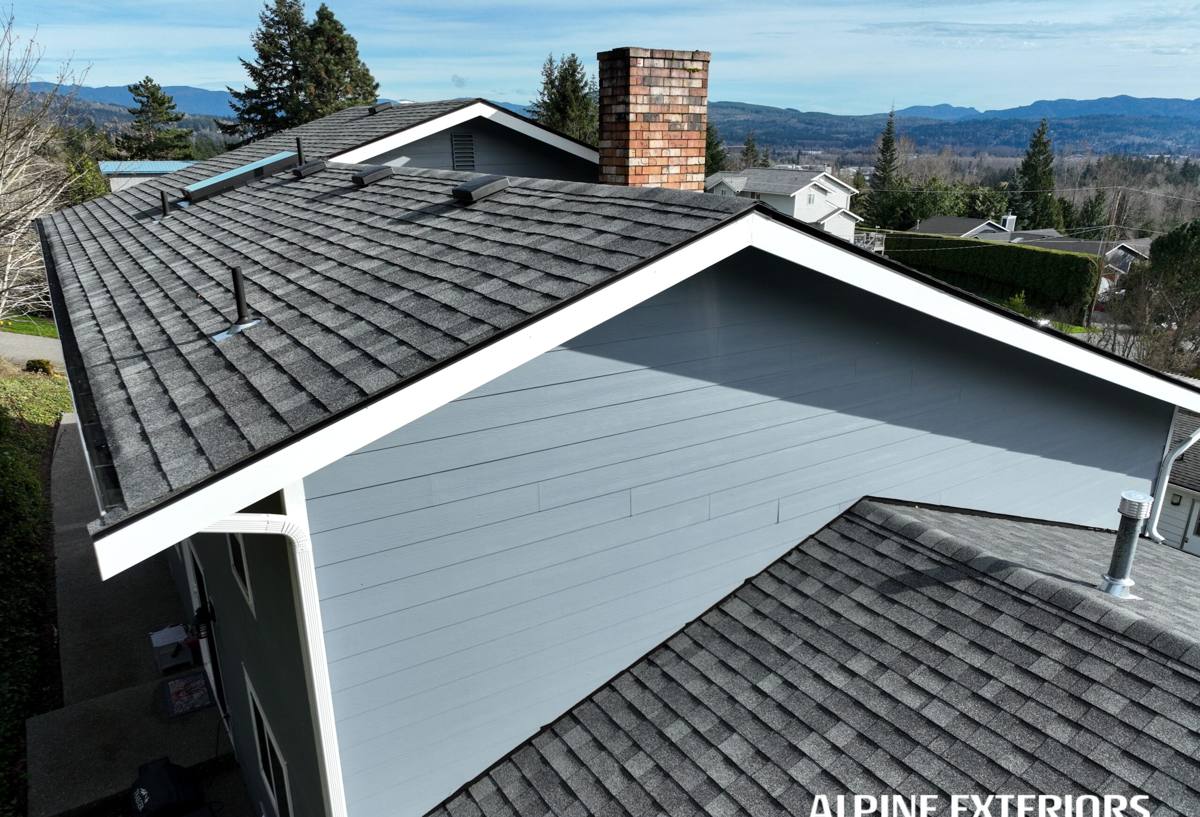
Signs a Roof Needs Replacing, Not Just Repairing
Not every roof problem calls for full replacement. But there's a point where patching becomes throwing money at a roof that's already lost the fight. Common signs we look for on West Anacortes homes:
- Granule loss heavy enough that you can see bare asphalt on multiple slopes, not just one worn spot
- Shingles that are cupping, curling, or cracking across large sections rather than a handful of isolated spots
- Moss and algae staining that keeps coming back within a season or two of cleaning, even after treatment
- Soft spots or sagging in the roof deck, usually found when walking the roof or checking the attic
- Daylight visible through the roof deck from inside the attic, or water staining on rafters and sheathing
- Flashing around chimneys, skylights, or roof-to-wall transitions that's rusted, lifted, or was never properly step-flashed
- A roof that's simply reached the end of its expected service life for its material, even if it "looks okay" from the ground
If a roof is showing two or three of these at once, replacement is usually the more honest recommendation than another round of repairs.
What a Correct Replacement Actually Involves
Full Tear-Off, Not a Layover
We remove the existing roofing down to the deck rather than layering new shingles over old ones. A layover hides deck problems, traps moisture between layers, and voids most manufacturer warranties. It also skips the one chance to actually inspect and repair the sheathing underneath — which matters a great deal on a home that's been absorbing coastal moisture for years.
Deck Inspection and Repair
Once the old roofing is off, we check the plywood or OSB deck for soft spots, delamination, and old water damage. Any compromised sheathing gets replaced before anything new goes down. Skipping this step is one of the most common ways a roof replacement fails early — new shingles over a rotten deck buy you almost nothing.
Underlayment Built for Wet Climates
Given the driving rain West Anacortes gets, we use synthetic or self-adhered underlayment rated for high-moisture exposure, with extra attention to ice-and-water shield style membrane at eaves, valleys, and around penetrations — the spots where wind-driven rain is most likely to work its way backward under standard shingle coverage.
Flashing Done Right
Flashing failures cause more roof leaks than worn-out shingles do. That means properly step-flashed walls and chimneys, correctly lapped valley flashing, and new flashing at every penetration rather than reusing old, rusted pieces to save time. This is the detail that separates a roof that leaks in year three from one that doesn't leak in year twenty.
Ventilation That Matches the Climate
A roof replacement is also the right time to correct poor attic ventilation. Balanced intake and exhaust venting keeps moisture from condensing under the deck in our damp winters and helps shingles run cooler and last longer. Undersized or blocked venting is a quiet cause of premature roof failure that homeowners rarely notice until the deck is already damaged.
Material Options and Cost Factors
Most West Anacortes homes land on asphalt composition shingles for their balance of cost and performance, but the right choice depends on the home, the roof's exposure, and how long you plan to stay in it.
| Factor | What It Affects | West Anacortes Consideration |
|---|---|---|
| Shingle grade (3-tab vs. architectural) | Upfront cost, wind rating, appearance | Architectural shingles handle wind-driven rain and coastal gusts better |
| Metal roofing | Longevity, upfront cost, maintenance | Sheds moss more easily but requires correct fastener and coating specs near salt air |
| Roof pitch and complexity | Labor time, waste factor, flashing detail count | Steeper, cut-up roofs cost more but are common on view-oriented homes |
| Deck condition | Repair costs found during tear-off | Homes with a history of moss or old leaks often need some sheathing replaced |
| Ventilation upgrades | Long-term roof life, attic moisture control | Often underbuilt on older homes; worth correcting during replacement |
| Roof access and slope | Equipment and safety measures needed | Water-adjacent lots sometimes have steeper terrain or tighter access |
Broad ranges for a full tear-off and replacement on a typical single-family home run from the mid five figures for straightforward asphalt shingle jobs up into higher territory for steep, complex rooflines or premium materials like standing-seam metal. Exact numbers depend on the roof itself — anyone quoting a firm price without inspecting the roof and attic in person is guessing.
Moss, Algae, and Salt Air: The Long Game
Even a well-installed roof needs some ongoing attention in this climate. Moss thrives in the shaded, moisture-holding sections common on tree-covered West Anacortes lots, and left unchecked it lifts shingle edges and traps water against the roof surface. Algae-resistant shingles (with copper or zinc granules) help slow staining, but they're not a substitute for periodic cleaning. Salt air accelerates corrosion on exposed metal — fasteners, flashing, gutter hardware — which is why we spec corrosion-resistant materials rather than standard-grade hardware on homes with real coastal exposure.
Simple habits extend a new roof's life significantly: keeping gutters clear so water doesn't back up under the eaves, trimming overhanging branches to reduce shade and debris buildup, and having the roof looked at every couple of years rather than only when something's visibly wrong.
Our Process for West Anacortes Roof Replacement Projects
- On-site inspection. We walk the roof and check the attic in person — not a satellite estimate — to assess deck condition, ventilation, and flashing points before quoting anything.
- Written estimate. A clear scope covering material, tear-off, deck repair allowances, flashing, and ventilation work, so there are no surprise line items later.
- Material selection. We walk through shingle or metal options suited to the home's exposure and your budget, not a one-size-fits-all recommendation.
- Scheduling around weather. Skagit County's wet season narrows the practical installation window, so we plan timing to avoid leaving a deck exposed to rain overnight.
- Tear-off and deck repair. Full removal, deck inspection, and any needed sheathing replacement, documented as we go.
- Installation. Underlayment, flashing, ventilation, and roofing material installed to manufacturer spec and local code.
- Final walkthrough. We review the finished roof with you, including gutter tie-ins and any attic ventilation changes made.
Roof Replacement Readiness Checklist
- Note any interior water stains or attic light leaks and mention them at the estimate visit
- Ask what underlayment and flashing details are included, not just the shingle brand
- Confirm whether deck repair is a flat allowance or billed as found
- Check that ventilation is being addressed, not just replaced like-for-like
- Get the warranty terms in writing — both manufacturer and workmanship coverage
- Ask how debris and old materials will be handled and disposed of
Why Local Experience in This Neighborhood Matters
A crew that regularly works West Anacortes roofs already knows which details need extra attention here — the flashing points that take the worst of the wind-driven rain, the north-facing slopes that hold moss longest, the fastener and hardware grades that hold up against salt air instead of rusting out in a few seasons. That's not something you get from a general contractor who does one roof a year in this area. It comes from repetition, and from having gone back to fix work that wasn't done right the first time.
It also means realistic scheduling. We know how Skagit County's weather patterns affect roofing timelines and plan tear-off and dry-in accordingly, rather than leaving a deck exposed and hoping the forecast holds.
Get a Straightforward Estimate
If your West Anacortes roof is showing its age, or you just want an honest opinion on whether repair or replacement makes more sense, we're glad to take a look. The estimate is free, there's no pressure attached, and you'll get a clear explanation of what we find — use the form below to get started.