 Anacortes
 New-Construction Windows in West Anacortes: What "New Construction" Actually Means
New-construction window installation is a different job than replacing a window in a finished wall. On a new build or a major addition in West Anacortes, the windows go in with a nailing flange, before the siding and often before the house wrap is fully dressed in around each opening. That timing is an advantage — it means the window can be integrated into the weather-resistive barrier correctly from the start, rather than caulked into an existing wall after the fact. But it also means there's no room for shortcuts. Whatever flashing sequence and sealant work happens at framing stage is what protects that wall for the next 30-plus years, hidden behind the finished siding where nobody will see it again until there's a problem.
West Anacortes sits close enough to the water that the windows going into a new home here are doing more work than a comparable install a few miles inland. That's the piece worth getting right the first time.
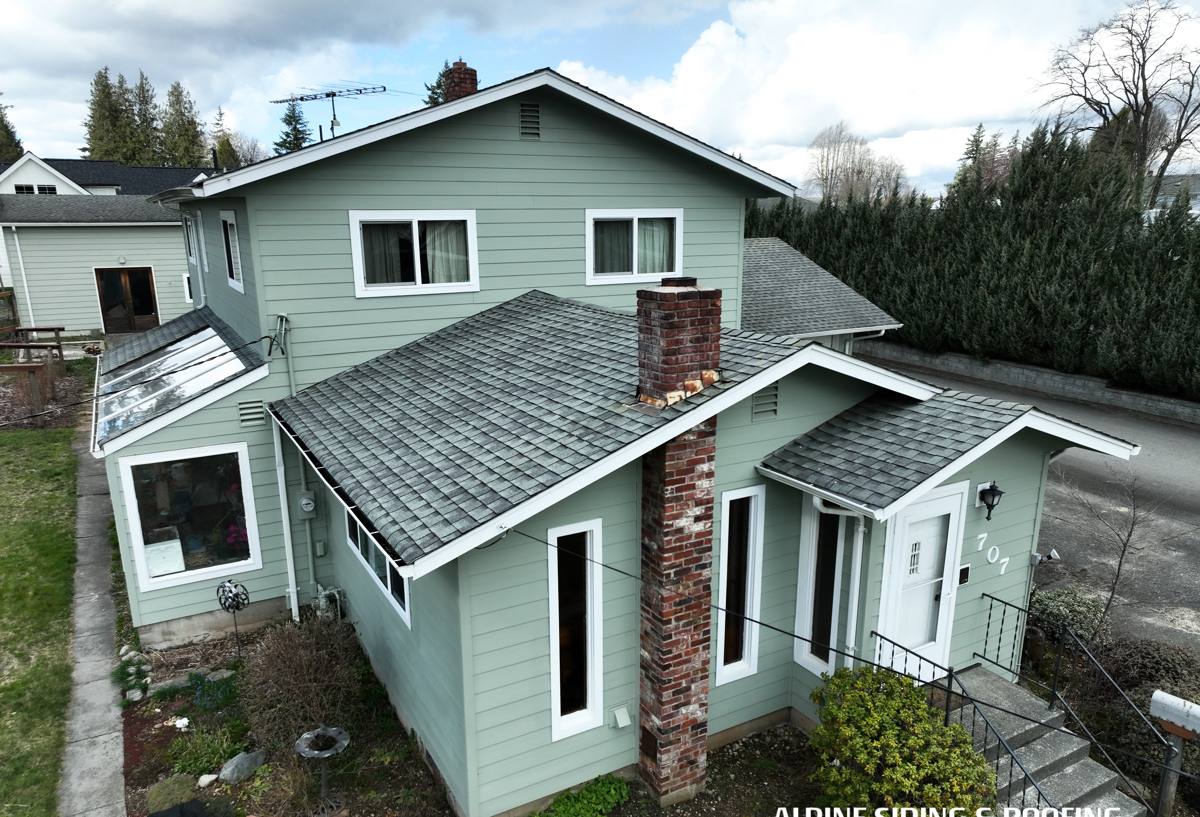
Why the West Side of Town Changes the Calculus
Anacortes sits at the north end of Puget Sound, and homes on the west side of town catch a combination most inland Skagit County builds don't have to deal with: salt-laden air off the water, driving rain that comes in sideways during winter storms, and a long, damp moss season that keeps exterior surfaces wet for months at a time. None of that is exotic — it's just the normal cost of the view. But it means a new-construction window package should be chosen and installed with three things in mind:
- Salt air corrosion — hardware, fasteners, and frame components that aren't rated for coastal exposure can pit, streak, or fail years ahead of schedule.
- Wind-driven rain — water doesn't just run down a wall here, it gets pushed sideways and upward under sills and around trim. Flashing details that would be fine on a sheltered inland lot aren't automatically fine on a west-facing elevation near the water.
- Sustained moisture and moss — long stretches of gray, wet weather keep window sills, trim, and the wall assembly behind them damp for extended periods, which rewards materials and details that dry out quickly and punishes anything that traps water.
None of this means a house near the water needs exotic materials. It means the frame material, the glazing package, and — more than either of those — the installation sequence should be chosen with this specific exposure in mind, not a generic Western Washington spec.
Frame Material: What Holds Up on This Side of Town
For new construction, you're choosing the frame material fresh, which is the best time to think about long-term maintenance rather than just upfront cost. Here's how the common options compare for a coastal-adjacent Anacortes build:
| Frame Material | Salt Air / Coastal Behavior | Maintenance | Typical Fit |
|---|---|---|---|
| Vinyl | Good — won't corrode or rust; quality varies a lot by manufacturer | Low; occasional cleaning | Most cost-conscious new builds |
| Fiberglass | Very good — dimensionally stable, resists expansion/contraction from temperature and moisture swings | Low | Homeowners wanting longevity and a narrower sightline |
| Aluminum-clad wood | Depends heavily on cladding quality and installation; wood core is vulnerable if water reaches it | Moderate to high | Design-driven projects where the interior wood look matters |
| Bare aluminum | Poor in this climate without a quality thermal break and finish; prone to condensation and corrosion over time | High | Rarely our recommendation for residential coastal work |
We don't push one brand or one material on every project — the right call depends on your budget, the home's design, and how much long-term upkeep you want to sign up for. What we won't do is install a frame system into a west-facing, moisture-exposed wall without being upfront about what it'll cost you in maintenance five or ten years out. That's a conversation we'd rather have before the windows are ordered, not after.
The Installation Sequence That Actually Keeps Water Out
More new-construction window failures trace back to installation sequence than to the window unit itself. The window is only as good as the flashing and drainage plane around it. A correct install, done in the right order, looks like this:
- Sill pan flashing installed first, sloped to drain outward, so any water that gets past the window has somewhere to go besides the framing.
- Window set into the rough opening, checked for level, plumb, and square before a single fastener goes in — an out-of-square window stresses the frame and can compromise the seal over time.
- Nailing flange fastened per the manufacturer's schedule, not just "enough nails to hold it."
- Flashing tape applied to the sides and head in the correct shingle-lap order — head flashing laps over the side flashing, side flashing laps over the sill pan — so water is always directed outward and down, never into a seam.
- House wrap integrated over the head flashing, maintaining the same shingle-lap logic through the whole wall assembly.
- Backer rod and sealant at the interior and exterior trim lines, using a sealant compatible with the frame material and rated for the temperature swings and UV exposure this side of the county sees.
Skip the sill pan, reverse the flashing lap order, or caulk a gap instead of properly lapping the barrier, and the window will probably look fine for a few years. The problem shows up later, inside the wall, usually as rot or staining that isn't visible until siding or interior trim comes off.
Glass and Performance Choices Worth Paying For
New construction is the one time you're not stuck matching an existing window's glass package — you get to choose it. A few things worth knowing before you spec a whole house of windows:
- Low-E coatings reduce heat loss in winter and heat gain in summer. For Anacortes' mild, marine-influenced climate, a moderate solar heat gain coefficient (SHGC) usually strikes a better balance than the aggressive low-SHGC glass built for hot inland climates.
- U-factor is the number that matters most for winter comfort here — lower is better. It's worth asking for the NFRC label numbers on any window you're quoted, not just a brand name.
- Argon or krypton gas fill between panes adds a modest efficiency bump for a modest cost — usually worth it on a new build where it's easy to spec upfront.
- Tempered glass is code-required near doors, low sills, and certain wet locations — your plans should already call this out, but it's worth confirming before order.
We're not going to tell you every home needs the top-tier glass package. For a lot of West Anacortes builds, a solid mid-tier Low-E unit with good installation outperforms a premium glass package that's flashed poorly. Installation quality and glass quality aren't substitutes for each other — you need both, but if you have to prioritize spending, correct installation comes first.
Working Alongside Your Builder or GC
On most new-construction jobs, we're not the general contractor — we're coordinating with one, or with you as an owner-builder. That coordination matters more for windows than almost any other trade, because window install sits at the seam between framing, the weather barrier, and siding. We work off the same set of plans as your GC, confirm rough openings before windows are ordered (a mis-sized opening is expensive to fix after the fact), and schedule our install to land at the right point in the framing sequence — house wrap on, ready for windows, before siding crews show up. Good communication at this handoff is what keeps a project moving instead of stalling out waiting on one trade.
What a Correct New-Construction Window Job Looks Like
If you're vetting a window install on your build — ours or anyone else's — here's what to expect from a job done right:
- Rough openings measured and confirmed against actual window sizes before ordering, not after delivery.
- Sill pan flashing on every opening, sloped to drain.
- Flashing tape and house wrap integrated in proper shingle-lap order.
- Every window checked for level, plumb, and square before fastening.
- Manufacturer-specified fastening schedule followed, not eyeballed.
- Sealant compatible with both the frame material and the house wrap or trim material.
- A final walk-through where each window operates smoothly, locks fully, and shows no gaps at the trim line.
If a contractor can't walk you through their flashing sequence when you ask, that's worth paying attention to before the walls close up.
Why a Crew That Already Works West Anacortes Matters
Skagit County's building department and the wind exposure realities on this side of Anacortes aren't identical to an inland Mount Vernon or Burlington build. A crew that regularly works West Anacortes has already dealt with the permitting expectations, has a feel for how exposed a given lot is based on its orientation to the water, and isn't guessing at flashing details for the first time on your house. That familiarity shows up less in any single dramatic decision and more in a dozen small ones — which sealant holds up in this air, how much overlap the flashing needs on a west-facing wall versus a sheltered one, which frame materials our own past installs have held up well over years of actual weather rather than a spec sheet.
Timeline and What to Expect From Us
For a typical new-construction window package, expect a site visit and plan review first, where we confirm rough opening sizes and talk through frame and glass options against your budget. Lead time on ordering windows varies by manufacturer and can run several weeks, so this step happens early — ideally before framing is finished, so there's no gap waiting on windows once the house is ready for them. Installation itself, once windows are on site and the opening is ready, typically runs a matter of days depending on the size of the build, coordinated directly with your framing and siding schedule.
If you're planning a new build or major addition in West Anacortes and want a window package specified and installed correctly the first time, we're glad to walk the plans with you and put together a straightforward, no-pressure estimate — just fill out the form below.