 Anacortes
 Storm Damage Roof Repair, Built for Skyline's Weather
Skyline sits up on the bluff on Anacortes' west side, which means it catches weather that flatter parts of town don't see as directly. Wind off Rosario Strait and the surrounding water pushes rain sideways during winter storms, and the elevation and tree cover that make the neighborhood attractive also mean roofs take a steady beating from wind-driven branches, needle and leaf debris, and near-constant dampness. When a storm rolls through and you've got a lifted shingle, a cracked ridge cap, or water showing up on a ceiling, you need a repair that accounts for all of that — not just a patch that gets you through until the next front comes in.
This page covers what storm damage roof repair actually looks like for a Skyline home: what the local climate does to roofing systems here, what a repair has to get right, and how we handle the job from the first phone call to the final cleanup.
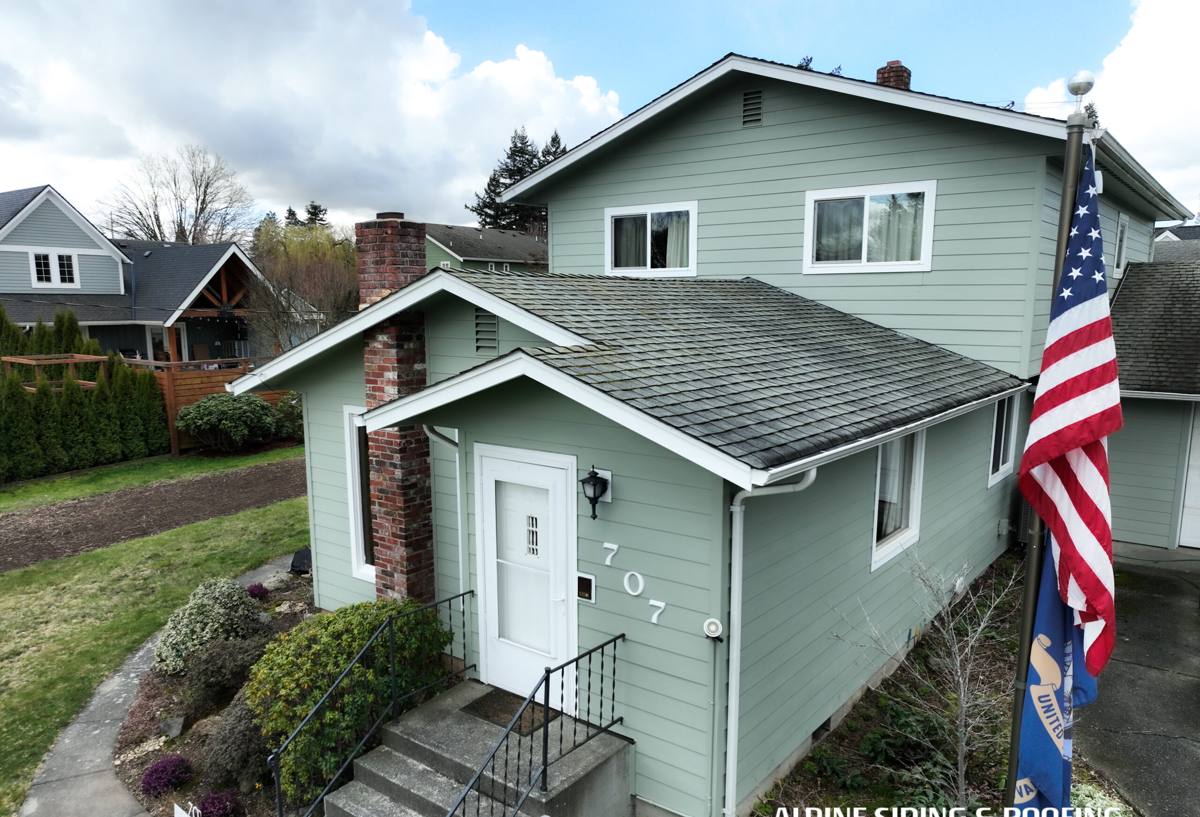
What Anacortes and Skagit County Weather Does to a Roof
Anacortes homeowners deal with a specific combination of conditions that's harder on roofing than most people realize until something fails. In Skagit County, and especially on a bluff neighborhood like Skyline, three things do most of the damage over time:
Salt Air
Being close to Puget Sound means airborne salt is a constant, low-grade factor. It accelerates corrosion on exposed metal — flashing, fasteners, gutter hardware, roof vents — faster than the same materials would wear inland. A fastener that's rusted through is a fastener that's no longer holding anything down, and that's often where a storm repair starts: not with the shingles themselves, but with the metal and fasteners underneath them that gave out first.
Driving Rain
Wind-driven rain doesn't behave like rain falling straight down. It gets pushed up and under shingle edges, into flashing laps, and through any gap that a vertical rain would never find. A roof that's watertight in a calm rain can still leak in a wind event because the water is attacking it from a different angle entirely. This is why storm damage repair on a Skyline roof has to look closely at laps, seams, and flashing direction — not just at whether shingles are cracked or missing.
A Long Moss Season
Western Washington's wet season runs long, and shaded, north-facing roof sections in Skyline's tree-covered lots stay damp for weeks at a time. That's ideal moss and moisture-retention territory. Moss holds water against the roofing material, works its way under shingle edges as it grows, and adds weight that stresses fasteners and decking already under strain from wind. A storm doesn't have to be severe to finish off a section of roof that moss has already been quietly undermining for a year or two.
What Actually Counts as Storm Damage
Not every roof issue after a windstorm is "storm damage" in the way an insurer or a roofer would classify it, and it's worth knowing the difference before you call anyone out.
- Wind damage: lifted, creased, torn, or missing shingles; shingles blown into the yard; bent or torn ridge caps.
- Impact damage: a branch or debris strike that punctures, cracks, or dents roofing material, flashing, or a vent.
- Water intrusion: leaks that appear during or right after a storm, usually at flashing points, valleys, or penetrations rather than in the open field of the roof.
- Pre-existing wear that a storm exposed: moss-lifted shingles, corroded fasteners, or aging flashing that finally gave way under wind load — this is real damage, but it's a maintenance issue the storm revealed, not something the storm alone caused.
That last category matters because it changes how the repair should be scoped. If we're just replacing what blew off, we're not fixing the underlying problem. If moss or corrosion contributed, an honest repair addresses that too, or the same section fails again in the next storm.
What a Correct Storm Repair Actually Involves
A storm repair that's done right is more than nailing down loose shingles. Here's what we check and address on every Skyline storm call:
Full Roof Assessment, Not Just the Visible Damage
Wind damage is often worse than what's visible from the ground or even from a quick look at the obvious spot. We check the whole roof plane, the ridge, valleys, and every flashing point — chimney, vent stacks, wall-to-roof transitions — because wind that damaged one area typically stressed the fasteners and seals nearby too, even where nothing looks obviously wrong yet.
Decking Inspection
If shingles were missing or lifted for any length of time, water may have reached the roof decking underneath. Soft, discolored, or delaminating decking has to be identified and replaced before new roofing goes down — covering damaged decking with new shingles just hides a problem that will come back as a leak or a soft spot underfoot.
Flashing and Fastener Condition
Given how salt air affects metal here, we look specifically at fastener corrosion and flashing integrity, not just whether the flashing is physically intact. Flashing that's rusted or has failing sealant at the laps is a future leak even if it's not leaking today.
Moss and Debris Removal
Any moss growth or accumulated debris in the repair area gets cleared as part of the job. Repairing around moss just gives it a fresh edge to keep growing from.
Matching Materials Correctly
On a repair — as opposed to a full replacement — matching the existing shingle profile, color, and exposure matters for both appearance and performance. A mismatched patch can also create a slightly different water path than the surrounding roof was designed for, which is its own small risk.
Our Process, Start to Finish
- Call or request an estimate. Tell us what you're seeing — missing shingles, a leak, visible damage — and roughly when the storm hit.
- On-site inspection. We walk the roof (or use a lift/drone when pitch or access requires it), check the full field of the roof and not just the reported problem area, and document what we find.
- Written scope and estimate. You get a clear explanation of what's damaged, what's causing it, and what the repair involves — before any work starts.
- Temporary protection if needed. If there's active leaking or exposed decking, we can tarp or dry-in the area to stop further water intrusion while the full repair is scheduled.
- Repair. Damaged shingles, decking, flashing, and fasteners are replaced; moss and debris are cleared; the area is sealed and matched to the surrounding roof.
- Cleanup and walk-through. Job site is cleared of debris and fasteners, and we walk you through what was done.
Repair vs. Replace: How We Help You Decide
Storm damage doesn't always mean a full roof replacement, and it doesn't always mean a simple patch either. The right call depends on the roof's age, how widespread the damage is, and what condition the rest of the roof is in. Here's a general guide to how we think through it:
| Factor | Leans Toward Repair | Leans Toward Replacement |
|---|---|---|
| Roof age | Under 12-15 years, otherwise sound | Nearing or past expected lifespan |
| Extent of damage | Localized to one slope or section | Widespread across multiple roof planes |
| Decking condition | Solid, no rot or soft spots found | Multiple areas of soft or water-damaged decking |
| Moss/moisture history | Minor, addressed as part of repair | Long-term moss damage across large areas |
| Shingle availability | Matching shingles still available | Discontinued profile, visible patch mismatch unavoidable |
| Insurance scope | Adjuster scopes a repair | Adjuster scopes full slope or full roof |
We'll always tell you honestly which side of this a given roof falls on. There's no upside for us in talking a homeowner into a full replacement that a solid repair would handle, and no upside in patching something that's going to keep failing.
Insurance and Storm Claims
Many storm repairs in this area do end up going through homeowners insurance, especially after a named windstorm. A few honest points on that process:
- We can document damage with photos and a written scope that you can submit with a claim, but we're not an insurance adjuster and can't guarantee what a claim will cover.
- Timing matters — the sooner damage is documented after a storm, the easier it generally is to tie it to that specific event.
- If temporary protection (tarping) is needed to prevent further damage, keep records of that as well; insurers generally expect reasonable steps to have been taken to limit further loss.
- We're glad to meet an adjuster on-site if that's useful, and to explain our scope of work in plain terms.
Checklist: Signs Your Skyline Roof Needs a Storm Inspection
After any significant wind event, it's worth a quick check. Call for an inspection if you notice any of the following:
- Shingles in the yard, gutters, or on the ground near the house
- Visible lifted, curled, or cracked shingles from the ground
- New water stains on ceilings or interior walls
- Granules collecting in gutters or downspouts after a storm
- Daylight visible in the attic where there wasn't before
- Sagging or soft-feeling roof sections
- Heavy moss buildup combined with any of the above
- Damaged or missing flashing around chimneys, vents, or skylights
None of these alone means you need a full roof replacement, but any of them is worth a look before the next storm finds the weak spot.
Why It Matters to Hire a Crew That Already Works Skyline
Storm damage repair isn't uniform across Anacortes. A roof down near the water deals with different wind exposure than a roof up on the Skyline bluff under a canopy of trees. A crew that's already worked this neighborhood knows what to expect before they climb the ladder — where moss tends to build up fastest, which roof orientations catch the worst of the wind off the strait, and how salt air has typically aged the flashing and fasteners on homes of a similar age. That familiarity means a faster, more accurate assessment and a repair scoped to what actually happens to roofs in this specific part of Skagit County, not a generic checklist.
It also means someone local you can call again if a problem shows up down the line, rather than a crew that did one job and moved on to the next county.
Get a Free, No-Pressure Estimate
If a recent storm left your Skyline roof with missing shingles, a new leak, or anything on the checklist above, we're happy to come take a look. The estimate is free, there's no pressure to move forward, and you'll get a straight answer about what's actually going on with your roof. Use the form below to get started.