 Anacortes
 Windows in Skyline Face a Different Kind of Weather
Skyline sits close enough to the water that homes here take on a steady diet of salt-laden air, wind-driven rain, and the long gray stretch of moss season that runs from fall through spring. That combination is hard on windows in ways that inland Skagit County homes never really deal with. Salt air accelerates corrosion on hardware and metal components. Driving rain finds any gap in flashing or sealant and pushes water sideways and upward, not just straight down. And the extended damp season means any moisture that does get behind a window has weeks or months to do damage before things dry out again.
None of that means Skyline homes need exotic products. It means the installation has to be done correctly — the right flashing sequence, the right sealants, and windows rated for the exposure they'll actually see. A window that performs fine in a dry climate can fail here in a few years if it's installed with shortcuts that would never show up somewhere less demanding.
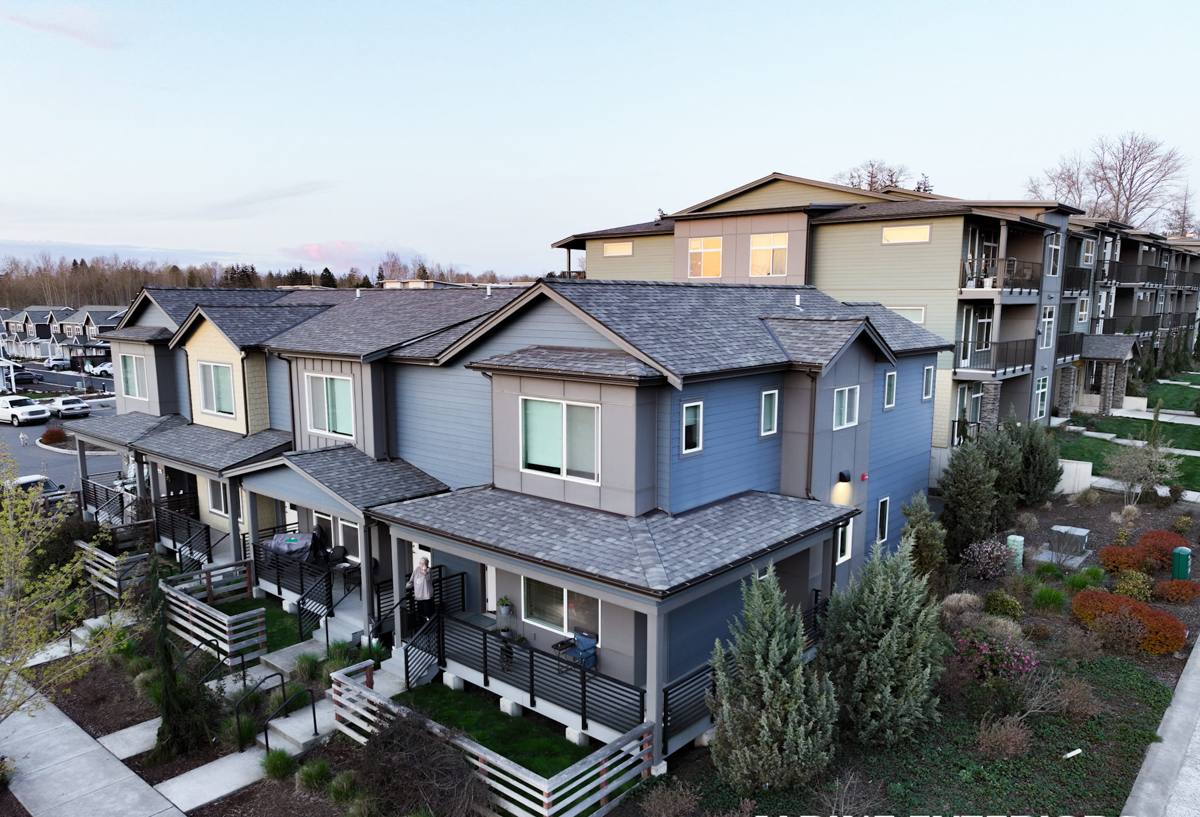
What Wears Out First on Anacortes-Area Windows
Before talking about replacement, it's worth knowing what actually fails first, because it tells you what to look for on your own house.
Hardware and Frames
Locks, cranks, balances, and weep-hole covers are usually the first casualty of salt air. Aluminum and lower-grade vinyl hardware can pit, stiffen, or corrode years before the glass or frame itself gives out. If a window is getting hard to open, lock, or crank, that's often an early warning sign rather than a cosmetic annoyance.
Seals and Sashes
Wind-driven rain tests the weatherstripping and sash fit constantly. Once a seal compresses or a corner joint opens up even slightly, water starts working its way in during storms — and in Skyline's exposure, storms aren't rare events.
Sills and Surrounding Trim
Moss and algae growth on north- and shade-facing walls holds moisture against sills and trim far longer than direct sun-exposed walls. That constant dampness is what rots wood sills and trim around older windows, even when the window unit itself still functions.
Signs It's Time to Replace, Not Repair
- Fogging or a visible film between panes — the seal on the insulated glass unit has failed
- Soft or spongy wood at the sill, jamb, or exterior trim when pressed
- Windows that won't stay open, won't lock securely, or have visibly corroded hardware
- Noticeable draft or cold spot at the frame edge during windy weather
- Paint or finish that keeps failing in the same spot no matter how often it's touched up
- Visible daylight or a gap where the frame meets the siding or trim
A single symptom doesn't always mean full replacement — sometimes it's a resealing or hardware fix. But when you're seeing two or three of these on the same window, or on several windows on the same exposed wall, replacement is usually the more honest answer than another round of caulk.
What a Correct Window Replacement Job Actually Involves
The window unit itself is maybe half the job. The other half — the part that determines whether the installation holds up through Skagit County's wet season for the next fifteen or twenty years — is what happens at the rough opening before the new window ever goes in.
Flashing and Water Management
Correct installation means flashing tape or pan flashing at the sill, a weather-resistant barrier lapped correctly with the house wrap, and head flashing above the unit that sheds water outward rather than trapping it. In a driving-rain climate, this sequence is not optional trim work — it's what actually keeps water out when wind pushes rain sideways against the wall.
Sealant Selection and Placement
Not every gap gets sealed solid. Weep paths need to stay open so any incidental moisture can drain back out, while the structural gaps get sealed to block air and bulk water. Sealing everything shut traps moisture instead of managing it — a common shortcut that causes problems years down the road, not immediately.
Insulation and Air Sealing
The gap between the window frame and the rough opening gets backer rod and low-expansion foam or insulation, not just caulk at the interior trim. This affects comfort and energy performance, but it also affects moisture — an air gap that lets warm interior air reach the cold frame is a spot for condensation to form inside the wall.
Interior and Exterior Trim
Trim gets reinstalled or replaced with materials suited to the exposure, and any wood trim exposed to weather gets properly primed and sealed on all sides — including the back, which is the side most installers skip and the side that rots first.
Window Frame Material Comparison for Skyline's Exposure
| Material | Salt Air / Coastal Performance | Maintenance | Notes for This Area |
|---|---|---|---|
| Vinyl (quality-grade) | Good — won't corrode or rust | Low | Most common choice here; look for reinforced corners and marine-grade hardware |
| Fiberglass | Very good — dimensionally stable, resists corrosion | Low | Higher upfront cost, holds up well to temperature and moisture swings |
| Wood (clad exterior) | Fair — exterior clad protects the wood, but any breach exposes it to rot | Moderate to high | Interior warmth with exterior durability, but installation and sealant quality matter more than with vinyl |
| Aluminum | Poor to fair — prone to pitting and corrosion in salt air over time | Moderate | We generally steer Skyline homeowners away from bare aluminum frames for this reason, not because the metal itself is bad, but because untreated aluminum's corrosion behavior is a poor match for this specific exposure |
There's no single "best" window for every house — budget, architectural style, and how exposed a particular wall is all factor in. What matters more than brand is confirming the hardware is rated for coastal/marine exposure and that the installation follows the flashing and sealing sequence above, regardless of which material you choose.
How Our Process Works
- On-site assessment. We look at each window individually — sun exposure, wall orientation, current condition — rather than quoting a blanket number for the whole house. A wall that catches wind-driven rain needs different attention than a sheltered one.
- Honest scope. We tell you plainly which windows need full replacement now, which can wait, and which just need resealing or hardware service. We don't pad a job.
- Written estimate. Materials, labor, and timeline in writing before anything starts, with no vague allowances.
- Careful removal. Old units come out without damaging the rough opening more than necessary, and we check the sheathing and framing underneath for hidden moisture damage before closing anything up.
- Correct installation. Flashing, weather-resistant barrier integration, sealant, insulation, and trim done in the sequence outlined above — not shortcuts hidden behind fresh caulk.
- Walkthrough. We test operation, check for drafts, and confirm everything before we consider the job finished.
What Drives Cost on a Window Replacement
| Factor | Why It Matters |
|---|---|
| Number and size of windows | The most direct driver of total cost — larger openings and more units mean more material and labor |
| Frame material | Vinyl is typically the most budget-friendly; fiberglass and wood-clad run higher |
| Condition of the rough opening | Hidden rot or moisture damage found during removal adds repair work before the new window can go in — this is common enough in older homes here that it's worth budgeting a contingency for |
| Glass package | Double vs. triple pane, low-E coatings, and gas fill all affect price and performance |
| Access and wall height | Second-story or hard-to-reach windows take more time and equipment |
| Trim and siding tie-in | Matching existing trim profiles or siding material around the new opening adds labor |
We won't quote a per-window price without seeing the actual openings — anyone who does is guessing, and in a climate where hidden sill or sheathing damage is common, that guess is often wrong in a way that surprises you mid-project.
What to Ask Before Hiring Anyone for Window Work in Skyline
- Do you install flashing and weather-resistant barrier tie-in as part of every job, or only when asked?
- What happens if you find rot or moisture damage once the old window is out?
- Are you licensed and insured to work in Skagit County, and can you show proof?
- What's the warranty on both the window product and your installation labor — and are those two different things?
- Do you have experience with the wind and rain exposure specific to this side of Anacortes?
- Will the same crew that gives the estimate be doing the actual install?
A contractor who answers these clearly and specifically, rather than with a generic sales pitch, is usually the one who's actually done this work in this kind of weather before.
Why a Local Crew Matters Here
Window replacement done right isn't a one-size-fits-all process — it changes based on wall exposure, wind direction, and the specific way water moves across a given roofline or siding profile. A crew that's already worked in Skyline knows which walls in this area take the worst of the weather, what kind of moisture damage tends to show up behind older windows in homes of this vintage, and how the local building department expects flashing and moisture barrier work to be documented. That's not something you can fully substitute with a general contractor pulled in from outside the area, even a skilled one. Familiarity with Anacortes' coastal exposure and Skagit County's inspection expectations saves time, avoids rework, and means fewer surprises once the old window comes off the wall.
Get a Straight Answer on Your Windows
If you're noticing drafts, fogged glass, stiff hardware, or soft trim around your windows, it's worth having someone take a real look before winter's rains set in again. We offer free, no-pressure estimates for Skyline homeowners — we'll tell you honestly what needs replacing now, what can wait, and what it will actually cost. Use the form below to get started.