 Anacortes
 Why Similk Beach Puts Extra Demands on a Roof
Homes along Similk Beach sit close enough to the water that salt-laden air is a constant companion, not an occasional visitor. Add in the steady winter rain that Skagit County sees for months at a stretch, plus the shade and dampness that let moss take hold on north-facing slopes, and you've got a roofing environment that's noticeably harder on materials than a drier inland neighborhood just a few miles away. A roof here isn't just shedding water during a storm — it's dealing with airborne salt corroding metal fasteners, moisture sitting in shaded valleys for days, and moss roots working into any surface that gives them a foothold.
That combination is exactly why metal roofing gets so much attention from homeowners in this area. Done right, it holds up to all three of those stressors better than most alternatives. Done wrong — wrong fasteners, wrong coating, sloppy flashing — it can fail faster than a standard asphalt roof would have. The details matter more here than they do in a lot of other places, and that's the part of the job worth understanding before you hire anyone.
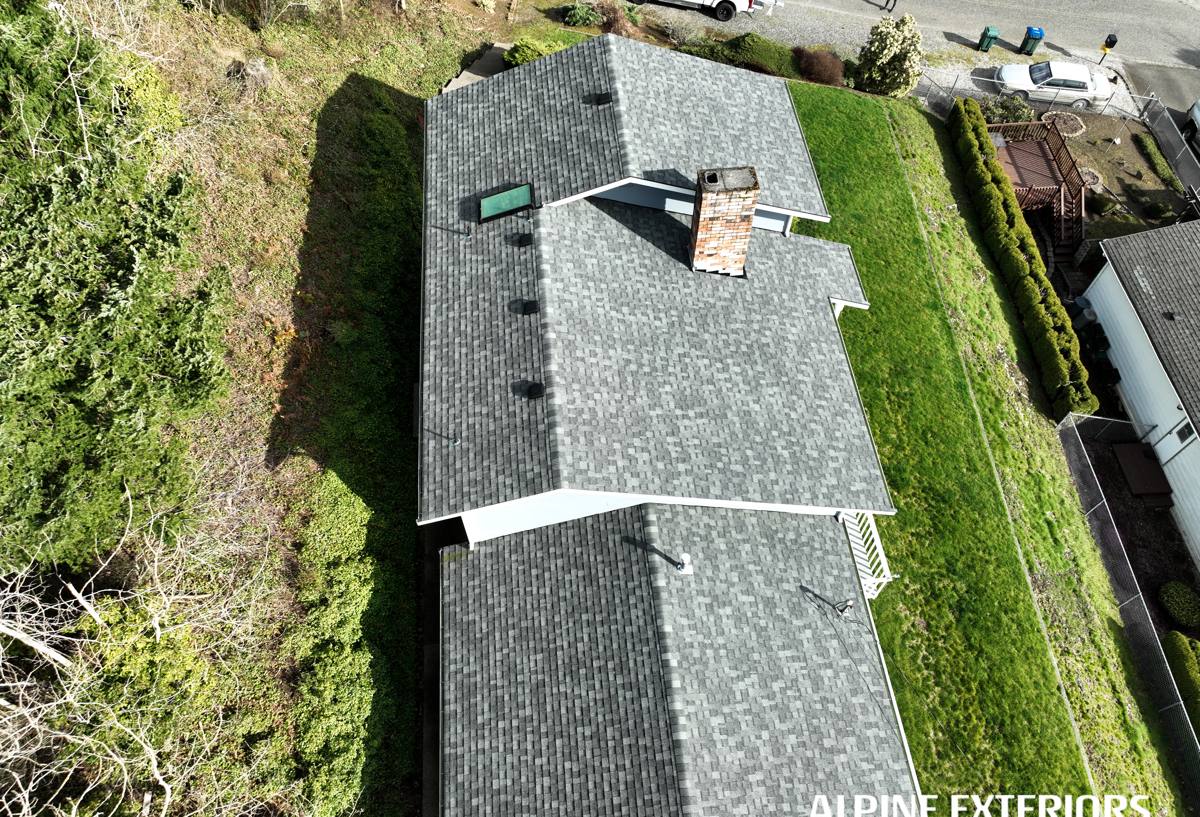
Why Metal Roofing Makes Sense for This Location
Metal roofing isn't the right fit for every home or every budget, but for a waterfront or near-waterfront property in the Anacortes area, it solves problems that other materials struggle with:
- Moss resistance: Moss needs a rough, organic surface to anchor into. A smooth metal panel gives it far less to grab onto than shingles, and what does grow tends to sit on top rather than root in.
- Water shedding: Steep-profile panels and standing seams move heavy rain off the roof quickly, which matters when Skagit County gets weeks of continuous wet weather rather than isolated storms.
- Wind performance: Properties with open exposure toward the water see stronger, more consistent wind than sites tucked into tree cover. Properly fastened metal panels handle sustained wind better than lighter roofing products.
- Longevity, if specified correctly: A metal roof with the right coating and fastener package is built to outlast two or three cycles of a shorter-lived roofing material — which matters when re-roofing a coastal home is more disruptive and more expensive than doing it inland.
None of that happens automatically just because the roof is metal. The coating, the fastener metallurgy, and the underlayment all have to be chosen for a marine environment specifically — not just pulled from a standard inland spec sheet.
What a Correct Installation Actually Involves
Fasteners and Metal Compatibility
Salt air accelerates galvanic corrosion when dissimilar metals touch each other — a steel fastener against an aluminum panel, for example, will corrode faster than either material would on its own. We match fastener alloy to panel material and use gasketed, corrosion-resistant screws rated for coastal exposure. This is one of the most common shortcuts we see on roofs that failed early: the panels were fine, but the fasteners weren't rated for the environment they were installed in.
Underlayment and Ice/Water Protection
A synthetic, high-temp underlayment goes down first, with self-adhered ice-and-water membrane at eaves, valleys, and any low-slope transitions — the spots where wind-driven rain is most likely to find a way underneath the panels. This layer is your backup if wind ever pushes water uphill under a seam, which happens more often on exposed, water-facing lots than on sheltered ones.
Flashing and Penetrations
Every penetration — vent stacks, chimneys, skylights — is a place water can find a way in, and it's usually where roofs fail first, metal or otherwise. Flashing has to be formed to the specific panel profile, not just caulked into place, and sealed with a compatible, UV-stable sealant rather than a general-purpose caulk that will shrink and crack within a couple of seasons.
Ventilation
Metal roofs need a clear intake-to-exhaust airflow path in the attic. Without it, condensation can form on the underside of the panels from the inside, which looks like a leak but isn't — and it's a common misdiagnosis on homes where the roofing was upgraded but the attic ventilation wasn't reassessed at the same time.
Comparing Metal Roofing Options
Not all metal roofing is the same product wearing a different color. Here's how the common options stack up for a home in this kind of coastal, moss-prone setting:
| Type | Best for | Coastal considerations |
|---|---|---|
| Standing seam steel or aluminum | Homes wanting the cleanest look and longest service life | Concealed fasteners reduce corrosion points; aluminum resists salt corrosion especially well |
| Exposed-fastener metal panels | Budget-conscious projects, outbuildings, simpler rooflines | More fastener penetrations to maintain over time; needs regular inspection near the water |
| Stone-coated steel | Homeowners wanting a shingle or shake look with metal durability | Good moss resistance; coating and fastener quality still need to be marine-rated |
We'll walk through which of these actually fits your roofline, your budget, and how exposed your particular lot is — a home tucked behind trees doesn't need the same spec as one with open exposure toward the water.
What Drives the Cost
| Factor | Why it matters here |
|---|---|
| Panel material (steel vs. aluminum) | Aluminum costs more upfront but resists salt corrosion better with no zinc coating to wear through over time |
| Roof complexity | Valleys, dormers, and multiple roof planes mean more flashing work and more seams to detail correctly |
| Underlayment package | Full self-adhered ice-and-water coverage costs more than spot coverage but pays off on exposed, wind-driven-rain sites |
| Existing roof condition | Deck repairs or full tear-off (versus overlay where allowed) affect labor time significantly |
| Access and site conditions | Waterfront lots with limited staging area or steep driveways can add setup time |
We give straightforward, itemized estimates rather than a single lump number, so you can see exactly where your money is going and where there's room to adjust scope if needed.
Our Process
- On-site assessment: We inspect the existing roof, decking, ventilation, and any moss or moisture damage before recommending anything.
- Honest spec recommendation: We'll tell you what panel type, coating, and fastener package actually fits your home's exposure — not just what's easiest to install.
- Written, itemized estimate: No surprises once work starts.
- Tear-off and deck check: We inspect the sheathing once the old roofing is off, since hidden rot is common under aging roofs in this climate.
- Underlayment, flashing, and panel installation: Done to the coastal spec, not a generic inland one.
- Final walkthrough: We review the finished roof and ventilation with you before calling the job done.
Living With a Metal Roof in This Climate
A correctly installed metal roof in a coastal, moss-prone area still benefits from a little basic upkeep:
- Keep gutters and downspouts clear so water isn't backing up under eaves during heavy rain.
- Trim back overhanging branches — less shade means less moisture sitting on the roof and less debris buildup.
- Do a visual check after major windstorms for any lifted panels, loose fasteners, or debris in valleys.
- Rinse off heavy moss or algae buildup gently rather than pressure-washing, which can strip protective coatings.
- Have flashing and sealant checked periodically, since these are the components that age fastest even on a long-lived metal roof.
None of this is heavy maintenance — it's the same kind of basic attention any roof in Skagit County needs, just with a slightly sharper focus on salt exposure and moss.
Signs Your Current Roof Needs Attention
- Rust streaking or discoloration around fasteners or seams
- Moss buildup that's thick enough to hold moisture rather than just sitting on the surface
- Panels that look or sound loose in wind
- Water stains on interior ceilings, especially near valleys or penetrations
- Visible gaps or cracking in flashing sealant
- An attic that feels noticeably damp or shows condensation on the underside of the roof deck
Any one of these on its own might be minor. Several together, especially on an older roof, usually mean it's worth a professional look before the next wet season.
Why Local Experience With Similk Beach Homes Matters
A crew that only occasionally works this close to the water tends to spec roofs the same way they would inland — standard fasteners, standard underlayment coverage, standard ventilation assumptions. That's how roofs end up with early corrosion or moisture problems that weren't obvious until a few winters in. Working regularly in and around Anacortes and Skagit County means we've seen firsthand how salt air, sustained rain, and shaded, moss-prone rooflines actually behave over time here — not in a textbook, but on real roofs a few miles from where your home sits. That experience shows up in the small decisions: which fastener alloy to use, where to add extra underlayment, how much ventilation a particular roofline actually needs.
If you're weighing a metal roof for your Similk Beach home, we're happy to walk the roof with you, talk through what your specific site needs, and put together a free, no-pressure estimate. There's a form below to get that conversation started.