 Anacortes
 Why Similk Beach Decks Wear Differently
Similk Beach sits close to the water along Similk Bay, just outside Anacortes in Skagit County. That waterfront location is part of what makes it a great place to live — and part of what makes deck maintenance here different from a deck twenty miles inland. Salt-laden air moves off the bay and settles on every exposed surface: fasteners, flashing, railings, and the wood or composite decking itself. Add in the driving, sideways rain that comes with fall and winter storms off the Salish Sea, and a moss season that can stretch from October well into April, and you have three separate stressors working on a deck at the same time, year after year.
None of that means a deck at Similk Beach is doomed to fail early. It means the repair work has to account for moisture cycling and corrosion in ways that a generic "fix the loose board" approach doesn't. When we repair a deck in this neighborhood, we're not just replacing what's broken — we're looking at why it broke, because in a marine climate the cause is almost always water, salt, or both.
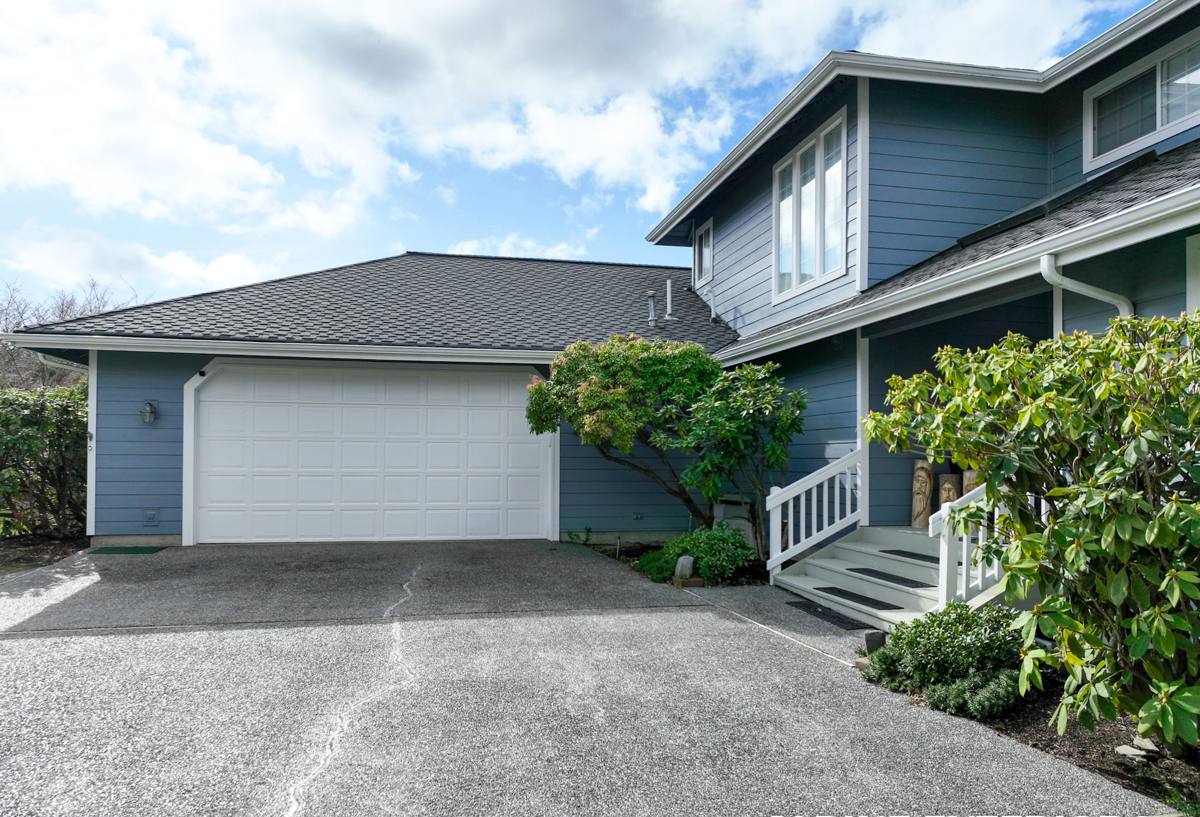
How Salt Air, Rain, and Moss Actually Damage a Deck
Salt air and corrosion
Salt in the air is hygroscopic — it pulls moisture out of the atmosphere and holds it against metal surfaces longer than plain rainwater would. Nails, screws, joist hangers, and railing hardware that aren't rated for coastal exposure will rust from the inside of a connection outward, which is exactly where you can't see it until the joint fails.
Driving rain and water intrusion
Wind-driven rain doesn't just fall on a deck, it gets pushed sideways and upward — into ledger board connections, under railing posts, and into any gap where flashing has come loose or was never installed correctly. Water that gets trapped between boards or behind ledger flashing does more damage sitting still than rain that simply runs off.
Moss, algae, and a long wet season
Skagit County's wet season gives moss and algae months to establish themselves on any shaded or north-facing deck surface. Beyond looking bad, moss holds moisture against the decking material, keeps the surface from drying between rains, and turns boards slick and genuinely dangerous underfoot — a safety issue as much as a cosmetic one.
Signs Your Deck Needs Repair, Not Full Replacement
Most decks we look at in this area don't need to be torn out completely. They need targeted repair to the areas actually taking on water or corrosion damage. Here's how to tell the difference before you call anyone:
- Soft or spongy decking boards — usually isolated water damage, often repairable board-by-board.
- Rust streaks below fastener heads — a sign the hardware is failing, not necessarily the wood underneath.
- Wobbly or loose railings — often a post-to-frame connection issue, not a whole-railing replacement.
- Gaps or separation where the deck meets the house — this is a ledger board and flashing issue and should be looked at promptly, since it's the most common source of hidden rot.
- Persistent moss or dark staining in the same spots every year — points to a drainage or airflow problem, not just a cleaning problem.
- Visible cracking, checking, or splintering across most of the decking — this is closer to end-of-life and may mean replacement makes more financial sense than repair.
If you're only seeing one or two of these, repair is almost always the right call. If you're seeing several at once, especially structural ones like joist or ledger problems, that's when a full evaluation matters before spending money on surface fixes.
What a Proper Deck Repair Actually Involves
Decking boards
Damaged boards are removed and replaced individually rather than resurfaced over. Resurfacing over rot or trapped moisture just hides a problem that keeps spreading underneath.
Framing and joists
Any joist showing soft spots, splitting, or fastener corrosion gets sistered or replaced — this is structural work, and it's the part of a repair that matters most for long-term safety even though it's the least visible once the deck boards go back on.
Ledger board and flashing
Since this connection to the house is the most common failure point in a wet climate, we check that flashing is properly lapped, sealed, and directing water away from the house framing, not into it.
Fasteners and hardware
Corroded fasteners get replaced with hardware rated for coastal and treated-lumber exposure. Reusing standard hardware in a salt-air environment is one of the most common shortcuts that leads to a repeat repair within a few years.
Railings and stairs
Loose posts are almost always a connection problem at the base, not a sign the whole railing needs replacing — but it does need to be fixed correctly, since railings are a fall-safety item, not just an appearance item.
Repair or Replace? A Straightforward Comparison
| Situation | Repair usually makes sense | Replacement usually makes sense |
|---|---|---|
| Damage location | Isolated boards, single railing section, one bad joist | Damage spread across most of the structure |
| Framing condition | Frame is sound, decking or hardware is the problem | Multiple joists or the ledger connection are compromised |
| Deck age | Under 15–20 years, built with adequate framing | Original construction is old, undersized, or code-outdated |
| Moss/staining pattern | Cleanable, surface-level, doesn't return immediately | Persistent, tied to a drainage problem in the structure itself |
| Budget goal | Extend usable life for a reasonable cost | Reset the clock and address everything at once |
We'll always tell you honestly which category your deck falls into. There's no reason to sell a full replacement when a targeted repair will hold up for years — and no reason to keep patching a deck whose frame is genuinely at the end of its life.
Our Repair Process
- On-site evaluation. We walk the whole deck, not just the spot you called about — problems at Similk Beach properties are often connected (a drainage issue in one corner shows up as rot in another).
- Check the structure first. Framing, ledger, and hardware get inspected before we talk about decking material, because those are the parts that matter for safety.
- Honest scope and straightforward pricing. You'll know what's structural, what's cosmetic, and what your real options are before work starts.
- Repair with coastal-appropriate materials. Corrosion-resistant fasteners, correctly lapped flashing, and decking material suited to the actual exposure your deck gets.
- Walkthrough when finished. We show you what was fixed and why, along with simple maintenance steps to slow down the next round of salt and moss exposure.
Materials: What Holds Up Near the Bay
There's no single "best" decking material for every deck — it depends on your budget, how the deck is used, and how much maintenance you want to do. Our standard is to match the material and hardware to the actual exposure, not just install whatever's cheapest or most popular.
| Material | Strengths in this climate | Trade-offs to plan for |
|---|---|---|
| Pressure-treated lumber | Cost-effective, easy to repair board-by-board, widely available | Needs periodic sealing/staining to resist moisture cycling |
| Cedar | Naturally moisture and insect resistant, ages well visually | Softer material, still benefits from regular sealing near salt air |
| Composite decking | Low maintenance, resists moss staining better on the surface | Higher upfront cost; framing underneath still needs the same moisture protection |
Whatever material a deck is built from, the framing and fasteners underneath need the same level of protection — a composite deck on top of poorly protected framing will still fail at the structure, just later and less visibly.
Slowing Down Moss and Salt Damage Between Repairs
No deck in this part of Skagit County stays maintenance-free, but a few habits go a long way toward stretching the life of a repair:
- Sweep debris and standing water off the deck surface regularly, especially in shaded areas that don't dry out on their own.
- Clean moss and algae buildup before it stains or gets slick — waiting until spring lets it work on the surface all winter.
- Check railing posts and stair connections for movement once or twice a year; catching a loose connection early is a small fix, catching it late often isn't.
- Keep gutters and downspouts near the deck clear so runoff isn't dumping extra water directly onto or under the structure.
- Reseal or restain wood decking on the manufacturer's recommended schedule — salt air shortens the effective life of most sealants compared to inland use.
- Have the ledger board and flashing looked at every few years, since that's the connection point most likely to hide a slow leak.
Why It Matters to Hire a Crew That Already Works This Area
Deck repair advice that works for a dry-climate inland deck doesn't always hold up in a bayside, marine-air environment like Similk Beach. A crew that regularly works properties around Anacortes and Skagit County already knows which fastener grades hold up, which framing details tend to fail first in this weather, and how aggressive the moss season really gets here compared to other parts of Washington. That local experience shows up in fewer callbacks and repairs that are sized correctly for the exposure your deck actually gets — not a one-size-fits-all fix borrowed from a different climate.
It also means we're realistic with you. We're not going to recommend tearing out a structurally sound deck, and we're not going to patch over a framing problem just to keep the job small. Our reputation in this community depends on repairs that actually hold up through the next few winters, not just look fine when we leave.
Get a Straightforward, No-Pressure Estimate
If your deck at Similk Beach has a soft board, a loose railing, staining that won't go away, or you just want an honest read on its condition, we're glad to take a look. Fill out the form below for a free estimate — no pressure, no upsell, just a clear picture of what your deck needs and what it would cost to fix it right.