 Anacortes
 Why Ship Harbor Decks Wear Out Differently
Ship Harbor sits close to the water on Fidalgo Island, and that proximity changes what a deck goes through year to year compared to a deck a few miles inland. Salt-laden air corrodes fasteners and hardware faster than it does in a sheltered neighborhood. Wind off the water drives rain sideways under railings and against ledger boards that a typical deck design assumes will stay mostly dry. And Skagit County's long, wet winters mean moss and algae get a real foothold on any horizontal surface that doesn't drain and dry quickly. None of this means a deck can't last in Ship Harbor — it means the deck has to be built with that exposure in mind from the framing up, not just at the surface.
A lot of decks in this area were built to a generic spec that works fine in a drier climate but starts failing early here. Softened structural members, rusted-through joist hangers, and boards that stay damp for weeks at a time in the shoulder seasons are the most common reasons we get called out to look at a deck that's only 12 to 18 years old and already structurally questionable.
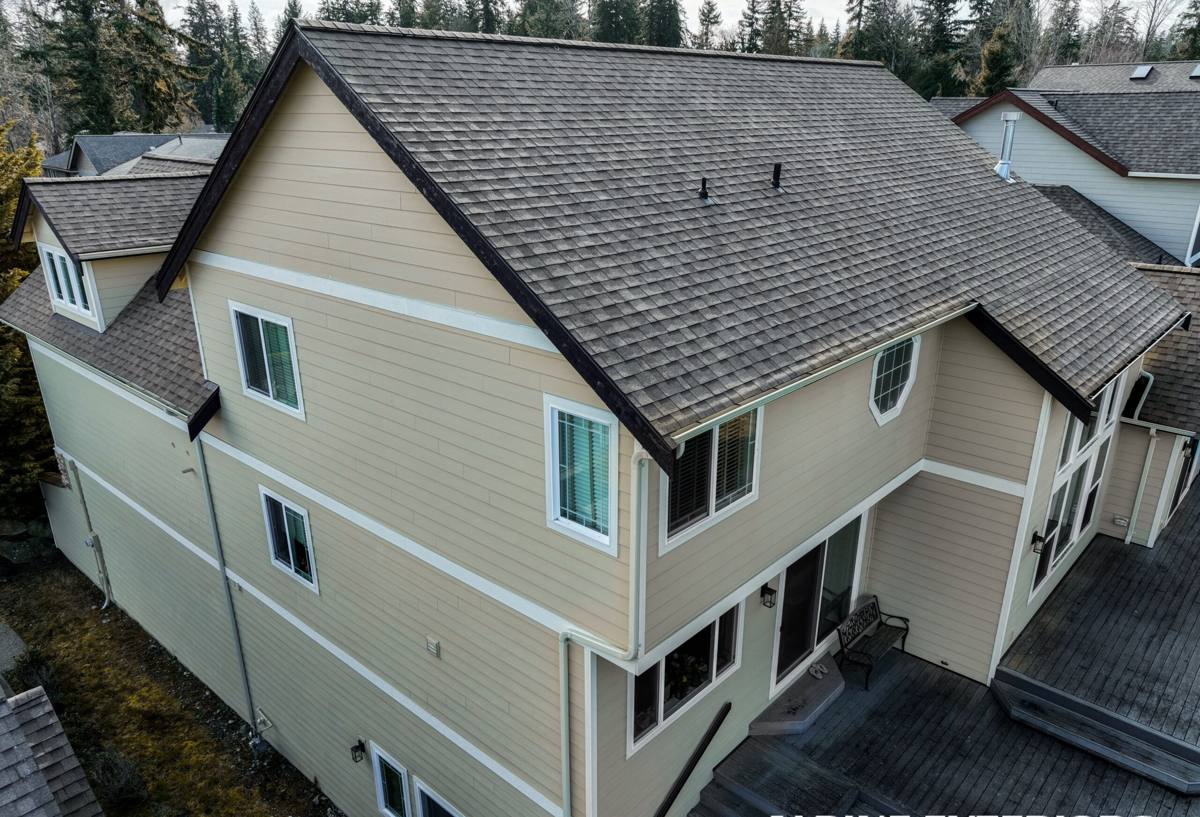
Signs a Ship Harbor Deck Needs Replacement, Not Just Repair
Repair makes sense when the problem is isolated — a cracked board, a loose railing baluster, a single footing that's settled. Replacement becomes the honest recommendation when the damage is systemic: the framing itself has been compromised by years of moisture cycling, or the connections between deck and house are no longer trustworthy. Here's what we look for during an inspection:
- Soft, spongy, or spring-back decking when you walk across it, especially near the house or along the rim
- Rust streaking or visible corrosion at joist hangers, bolts, and ledger connections
- Persistent moss or dark staining that returns within weeks of cleaning, indicating the surface never fully dries
- Gaps or separation where the ledger board meets the house — a common entry point for water intrusion behind siding
- Posts or footings that have shifted, cracked, or show signs of rot at the base
- A deck built before proper flashing and moisture-barrier practices were standard in this area
If two or more of these show up together, patching individual boards usually just delays a bigger repair bill. A full replacement lets us correct the underlying moisture and hardware issues instead of building new decking on top of a frame that's already compromised.
Choosing Materials for a Marine-Exposure Deck
Every decking material has real trade-offs once salt air and constant moisture cycling are part of the equation. We don't push one product as universally "best" — we walk homeowners through what each option actually costs to own over time in this specific climate.
Wood, Composite, and PVC Compared
| Material | Upfront Cost | Maintenance in This Climate | Typical Lifespan Locally |
|---|---|---|---|
| Pressure-treated wood | Lowest | Annual cleaning and re-sealing to resist moss and moisture; most sensitive to neglect | 10–15 years before major repair |
| Cedar | Moderate | Regular oiling or sealing; naturally more rot-resistant but still needs upkeep near water | 15–20 years with maintenance |
| Composite decking | Higher | Periodic washing to prevent surface mildew; no staining or sealing required | 20–25+ years, varies by brand |
| PVC / capped polymer | Highest | Lowest ongoing upkeep; resists moisture absorption almost entirely | 25+ years, strong warranty backing |
The frame underneath the decking matters just as much as the surface material. We use pressure-treated framing lumber and, in the highest-exposure spots — ledgers, post bases, any hardware within a few feet of grade — stainless steel or heavy hot-dip galvanized fasteners rated for coastal use. Standard zinc-coated hardware corrodes noticeably faster this close to the water, and once a fastener weakens, it's usually hidden behind decking until it fails.
Our Honest Take on Certain Products
We're selective about which composite and PVC lines we install, not because any single product is bad, but because some perform better than others under sustained moisture exposure and some manufacturers back their product with a warranty structure that actually holds up if a problem shows up years later. We'll tell you plainly if a product a homeowner is considering has a known maintenance quirk — certain early-generation composites, for example, are more prone to surface mildew in shaded, damp spots — so the decision is made with full information, not marketing copy.
What a Correct Deck Replacement Actually Involves
A deck replacement done right in Ship Harbor is more than swapping old boards for new ones. The parts that matter most are the parts you won't see once the project is finished:
Structural and Moisture Details
We remove the old decking down to the frame and inspect every joist, beam, and post before deciding what gets reused and what gets replaced. Ledger board flashing gets particular attention — this is the single most common failure point we find on older decks in wet coastal climates, because water that gets behind the ledger has nowhere to go and slowly rots the rim joist and sheathing behind it. We install proper flashing tape and metal drip flashing at this connection every time, even when it adds a step the original builder skipped.
Footings and Posts
Where footings show settling or frost heave, or where post bases sit in standing water after heavy rain, we address that before any new decking goes down. A deck that's level and solid when the framing is fixed properly stays that way; a deck built over an already-compromised footing just hides the problem for a few more years.
Fasteners and Hardware
Every hanger, bolt, and screw gets specified for the exposure it's actually going to see. That's a small line-item cost difference and a large difference in how long the deck holds together structurally.
How Our Process Works
We keep the process straightforward because homeowners deserve to know what's happening at each stage of a project on their own home:
- Free on-site estimate — we inspect the existing deck (or the site, if this is new construction), check framing condition where accessible, and talk through material options based on your budget and how you use the space.
- Written scope and price — a clear breakdown of what's being replaced, what materials are specified, and what the schedule looks like, before any work starts.
- Demolition and structural assessment — old decking comes off and we confirm the framing plan against what we find, flagging anything that changes the original scope before proceeding.
- Framing, flashing, and footings — the structural work that determines how long the deck actually lasts.
- Decking, railing, and finish work — installed to manufacturer spec, with attention to drainage and spacing that accounts for our wet-season swelling and shrinkage.
- Final walkthrough — we go over the finished deck together and answer any maintenance questions before we consider the job done.
Permits and Local Requirements
Deck replacement projects in Anacortes and Skagit County generally require a building permit once the work goes beyond simple surface board replacement, particularly if framing, footings, or railing height are involved. Requirements can vary depending on deck size, height off grade, and proximity to property lines or shoreline setback rules, which are worth checking carefully for any property near the water. We handle the permit process as part of the job so homeowners aren't left figuring out code requirements on their own, and we build to current code rather than just matching whatever was there before.
Maintenance That Actually Extends Life Here
Whatever material you choose, a few habits make a real difference in how long a deck holds up through Skagit County's wet season:
- Sweep leaves and debris off the deck surface regularly through fall — trapped organic matter holds moisture and feeds moss growth
- Rinse salt residue off railings and surfaces periodically if the deck faces open water or takes direct wind off the harbor
- Check that gaps between boards stay clear so water drains through rather than pooling
- Inspect ledger flashing and post bases once a year for early signs of moisture intrusion
- Re-seal wood decking on the schedule the product actually requires, not just when it looks faded
None of this is complicated, but skipping it is exactly how a well-built deck ends up needing early repairs anyway.
Why Local Experience with Ship Harbor Conditions Matters
A crew that works Ship Harbor and the surrounding Anacortes waterfront regularly knows which details actually matter here versus what's written in a generic installation manual written for a drier region. We've seen which fastener grades hold up and which corrode within a few seasons, which flashing details prevent the ledger rot we see on older decks, and how much drainage slope actually keeps a deck surface from staying damp through our wet months. That's the kind of knowledge that comes from doing this work in this specific climate repeatedly, not from a product spec sheet alone.
If you're weighing a deck repair against a full replacement, or just want an honest read on what condition your current deck is really in, we're happy to take a look. The estimate is free, there's no pressure to move forward, and you'll get a straight answer about what your deck actually needs.