 Anacortes
 Roofing Built for Ship Harbor's Coastal Conditions
Ship Harbor sits close enough to the water that homes here take a different kind of weathering than roofs a few miles inland. Salt-laden air off the strait accelerates corrosion on fasteners, flashing, and vent hoods. Wind-driven rain doesn't just fall on a roof, it gets pushed sideways and up under shingle edges, valleys, and anywhere a seal has started to fail. And the long, wet Pacific Northwest shoulder seasons give moss and algae months of ideal growing conditions on any surface that stays damp and shaded. An asphalt shingle roof that would hold up fine in a drier climate can show problems years early out here if it wasn't installed with these conditions in mind.
None of this means asphalt shingles are the wrong choice for Ship Harbor. They remain one of the most practical, cost-effective roofing systems available, and a properly installed and maintained shingle roof performs well in Skagit County for decades. The difference between a roof that ages gracefully and one that needs early repairs almost always comes down to the details of installation, the materials chosen, and the maintenance schedule that follows.
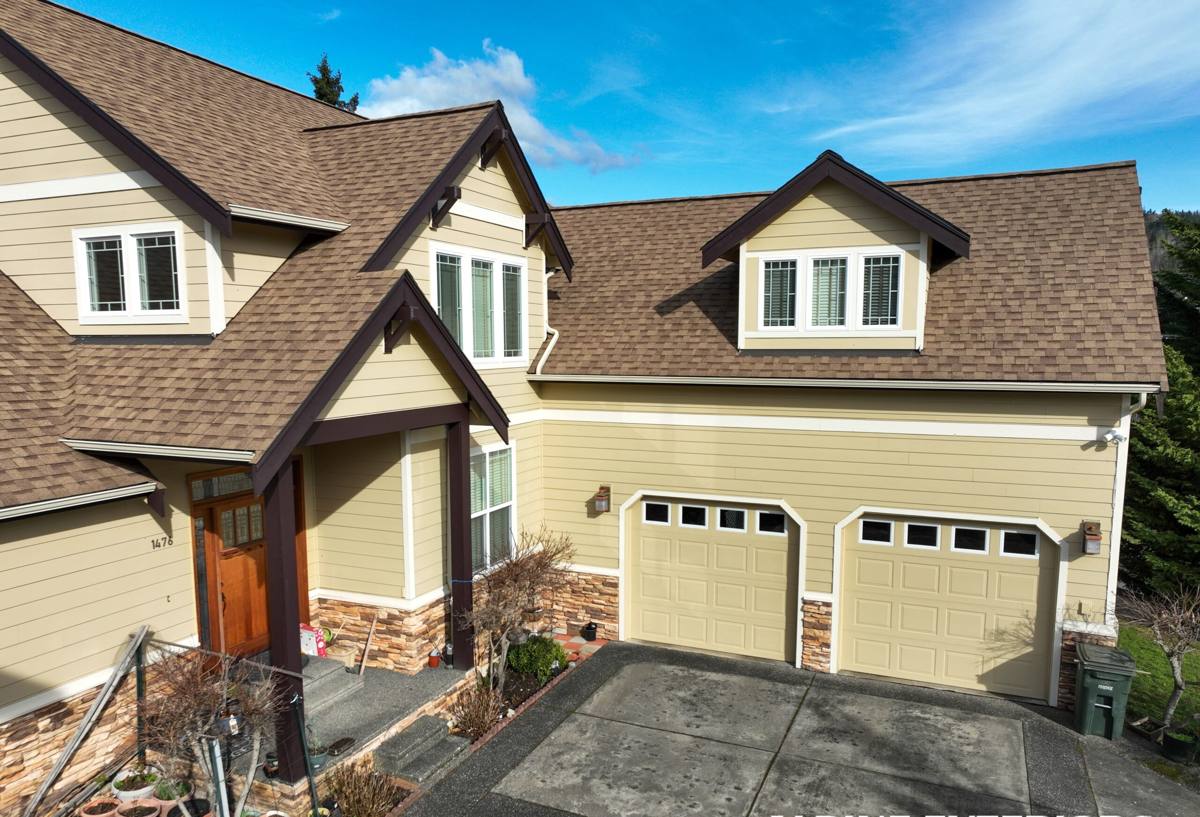
What "Correct" Actually Means on a Coastal Roof
A shingle roof is a system, not a single product. On a Ship Harbor home, every layer of that system has to account for wind and moisture together, not just one or the other.
Underlayment and Water Protection
Standard felt underlayment is a minimum, not a standard we consider adequate for a home exposed to driving rain off the water. We use synthetic underlayment with a proper self-adhered ice-and-water membrane at eaves, valleys, and around every roof penetration — chimneys, skylights, plumbing vents. These are the spots where wind-blown rain actually finds its way in, and it's cheap insurance compared to fixing hidden rot years later.
Flashing and Fastener Choice
Salt air is hard on cheap metal. Galvanized flashing and fasteners can start showing corrosion well before their expected service life in a coastal exposure. We favor corrosion-resistant flashing and fastener specifications appropriate to the exposure, properly lapped and sealed rather than caulked as an afterthought.
Wind Rating and Nailing Pattern
Fall and winter storms off the strait can push wind gusts hard enough to lift improperly fastened shingles. Manufacturer nailing patterns exist for a reason, and skipping a nail or two per shingle to save time is one of the most common causes of premature shingle loss we see on inspections. Correct nail count, placement, and a shingle rated for the wind exposure in your area matter more here than in a sheltered inland lot.
Choosing the Right Shingle for a Salt-Air, High-Moss Environment
Not every asphalt shingle product is a good fit for Ship Harbor's combination of salt air and shade-driven moss growth. We steer homeowners toward algae-resistant shingles, which use copper-containing granules to slow the black streaking and moss colonization that plagues standard shingles in wet, tree-covered lots. Beyond that, the tier of shingle you choose affects wind performance, appearance, and how long you can reasonably expect to go before major maintenance.
| Shingle Type | Typical Wind Rating | Algae Resistance | Best Fit |
|---|---|---|---|
| 3-tab (economy) | Lower rated, more susceptible to lifting | Only if specifically rated | Budget projects, less wind exposure |
| Architectural / laminated | Higher rated, better wind performance | Widely available with algae-resistant granules | Most Ship Harbor homes |
| Premium / designer | Highest rated in most product lines | Standard on most premium lines | Homes wanting longer service life and heavier profile look |
For most homes in this area we recommend architectural shingles with algae-resistant granules as the practical baseline. They cost more than 3-tab up front but handle wind and moss far better, which matters more here than in a drier, more sheltered part of the county.
Our Installation Process
The process we follow on Ship Harbor roofs is deliberately more thorough than a bare-minimum tear-off and reshingle, because the exposure here doesn't forgive shortcuts.
- On-site inspection of the existing roof deck, ventilation, and any signs of moisture damage before quoting
- Full tear-off to bare deck — we don't recommend or install over existing layers on coastal homes, since trapped moisture under old shingles is a common source of hidden rot
- Deck inspection and repair of any soft, delaminated, or water-damaged sheathing before anything new goes down
- Synthetic underlayment installation with ice-and-water membrane at eaves, valleys, and penetrations
- Corrosion-resistant flashing at all valleys, chimneys, walls, and roof-to-wall transitions
- Shingle installation to manufacturer nailing specifications, with attention to wind-exposed edges and ridges
- Ventilation check and correction where intake or exhaust airflow is inadequate
- Final walk-through with the homeowner covering warranty details and maintenance recommendations
Ventilation and Moisture: The Half of the Job That Gets Skipped
A shingle roof fails from underneath as often as it fails from the top. Without balanced intake and exhaust ventilation, moist air from inside the home gets trapped in the attic, condenses against the roof deck, and slowly rots sheathing or degrades insulation — all invisible from the ground. In a climate as consistently damp as Skagit County's, inadequate ventilation shortens shingle life by trapping heat and moisture against the underside of the roof deck year-round, not just in summer.
When we quote a reroof, we look at existing soffit vents, ridge vents, and any gable or box vents already in place, and we tell homeowners honestly if the current ventilation is undersized for the attic space. It's a far cheaper fix during a reroof than it is to diagnose after the fact.
Moss, Algae, and Long-Term Roof Care
Anacortes' moss season is long, and Ship Harbor's proximity to mature trees and marine humidity makes it worse than average. Moss holds moisture against the shingle surface, and over time that moisture works granules loose and shortens shingle life. A few practices make a real difference:
- Keep overhanging branches trimmed back so roof surfaces get sunlight and airflow
- Clear gutters and valleys of debris at least twice a year — clogged valleys are where moss gets its first foothold
- Consider zinc or copper strips near the ridge on shaded, moss-prone roof sections; rainwater carrying trace metal downhill helps inhibit regrowth
- Never pressure-wash a shingle roof — it strips granules and voids most manufacturer warranties
- Have moss physically and gently removed by hand or soft-brush methods rather than scraped, which damages the shingle surface
Algae-resistant shingles reduce the problem but don't eliminate it entirely in a lot with heavy shade. Regular, light maintenance is what actually keeps a roof looking and performing well long-term out here.
Signs Your Ship Harbor Roof Needs Attention
Coastal weathering doesn't always show up as an obvious leak first. Homeowners in this area should watch for:
- Granules collecting in gutters or at downspout outlets
- Dark streaking or visible moss patches, especially on shaded north-facing slopes
- Curling, cupping, or lifted shingle edges, particularly along ridges and rakes
- Rusting or corroded flashing around chimneys, vents, or skylights
- Soft spots or sagging when walked, or visible sagging from the ground
- Water stains or musty odor in the attic, especially near penetrations
- Daylight visible through the roof deck from inside the attic
Any one of these is worth a professional look before it turns into a deck repair or interior damage claim.
Cost Factors for a Ship Harbor Reroof
Every roof is different, but the main variables that move price on a Ship Harbor home are roof size and pitch, the number of penetrations and valleys, deck condition once tear-off exposes it, shingle tier selected, and any ventilation upgrades needed. Steeper roofs and homes with more roof lines and dormers take longer to flash correctly and cost more in labor than a simple rectangular roof of the same square footage. We provide a written, itemized estimate before any work starts so there are no surprises once tear-off reveals the deck condition.
Why a Crew That Already Works Ship Harbor Matters
A roofing crew that works this specific stretch of Anacortes regularly already knows which details matter here — the wind exposure off the water, which shingle lines actually hold up against moss in shaded coastal lots, and how much ventilation correction typically comes up on homes of this age and construction. That local pattern recognition shortens the inspection, sharpens the estimate, and reduces the chance of a callback for a problem that a generic reroof would have missed. We're a Skagit County contractor working this same coastline day to day, not a crew passing through from out of the area.
If you're weighing a repair against a full reroof, or just want an honest read on how much life is left in your current shingles, we're happy to take a look. Fill out the form below for a free, no-pressure estimate.