 Anacortes
 Siding Installation Built for Sedro-Woolley's Climate
Sedro-Woolley sits inland from Anacortes, but "inland" in Skagit County doesn't mean dry. The same marine weather system that soaks Fidalgo Bay pushes east on prevailing winds, carrying salt-tinged moisture across the county and dropping it on rooftops and siding from Anacortes to the foothills. Add in Sedro-Woolley's tree cover, shaded lots, and long stretches of overcast, wet weather, and you get a climate that is just as hard on exterior siding as anywhere on the water — sometimes harder, because shade slows drying time and lets moss and mildew take hold.
We install siding across Skagit County, and Sedro-Woolley homes show us the same pattern again and again: siding that looked fine for a decade starts failing fast once moisture finds a way behind it. Correct installation is what prevents that failure. This page covers what Sedro-Woolley homes specifically need from a siding installation, what our process looks like, and why we install exclusively James Hardie fiber cement.
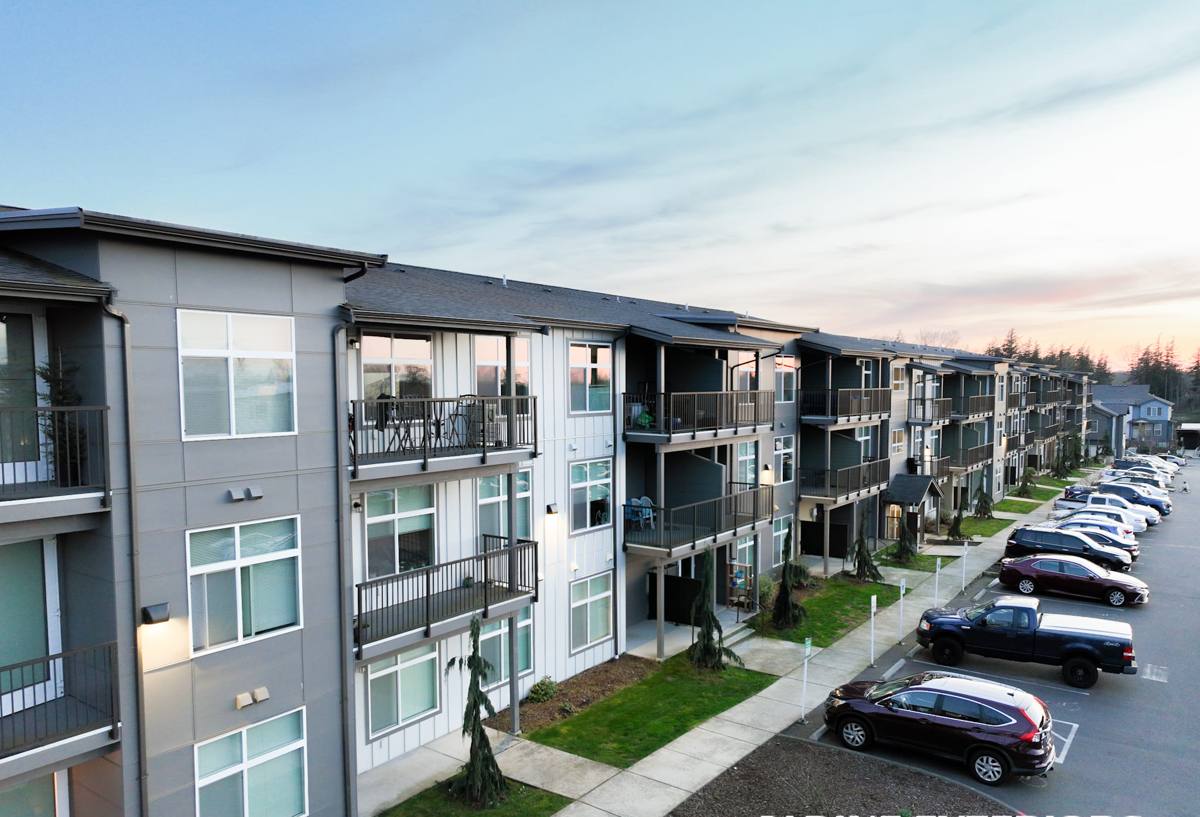
What Driving Rain, Moss, and Salt Air Do to the Wrong Siding
Every siding material handles Pacific Northwest weather differently, and the differences show up over years, not days.
Moisture intrusion
Driving rain doesn't just wet the surface of a wall — wind-driven rain pushes water sideways and upward, testing every seam, joint, and fastener. Siding that isn't installed with the right flashing details, house wrap laps, and drainage gaps will eventually let water behind the cladding. Once that happens, the problem isn't the siding anymore, it's the sheathing and framing underneath it.
Moss and organic growth
Sedro-Woolley's tree canopy and long damp season create ideal conditions for moss, algae, and mildew on north-facing and shaded walls. Some siding materials resist this better than others. Surface texture, paint adhesion, and how a material handles repeated wet-dry cycles all affect how fast a wall turns green and how well it cleans up.
Salt-laden air
Even set back from the water, Skagit County homes are exposed to airborne salt carried on marine wind. Salt accelerates corrosion of fasteners and metal flashing and can degrade certain coatings faster than inland-only weather would. It's a slower, quieter form of wear, but it adds up over the life of a siding system.
Temperature and moisture cycling
Wet winters followed by warmer, drier summers put siding through repeated expansion and contraction. Materials that don't handle that cycling well are prone to warping, cupping, or joint gaps that open a path for water.
Why We Install Only James Hardie Fiber Cement
We used to get asked why we don't offer vinyl, LP SmartSide, or other budget siding options. The honest answer is that we've seen how those materials perform in exactly the conditions Sedro-Woolley homes deal with every year, and we'd rather stand behind one product system we trust than offer a menu of options with different long-term outcomes.
James Hardie fiber cement is engineered specifically for regional climate demands — the HZ5 product line is formulated for the Pacific Northwest's wet, moderate climate, addressing moisture and freeze-thaw performance in a way generic siding isn't built for. It's non-combustible, which matters given the wildfire smoke and drought stress the broader region has seen in recent summers. Its ColorPlus factory finish is baked on under controlled conditions rather than field-applied, which means better fade and moisture resistance than a job-site paint job. And it carries a strong, transferable manufacturer warranty when installed to spec — which is the part most homeowners don't realize is conditional on correct installation.
We're not going to tell you vinyl or engineered wood siding are bad products across the board. They have real advantages in the right application — lower upfront cost, lighter weight, easier handling. But for Skagit County's rain load, moss pressure, and salt exposure, we've made a professional call: we only put our name on installations we're confident will perform for decades, and that means fiber cement, installed correctly, every time.
What a Correct Siding Installation Actually Involves
Fiber cement siding is only as good as the installation behind it. James Hardie's own warranty terms require installation to their published specifications — skip a step and you can void coverage even on a premium product. Here's what a correct job includes:
- Full inspection and repair of sheathing before any new siding goes up — rot, soft spots, or hidden water damage gets addressed, not covered over
- A weather-resistive barrier (house wrap) installed with correct overlaps and sealed penetrations
- Proper flashing at every window, door, roofline, and horizontal trim transition — the details that stop driving rain from getting behind the wall
- A drainage gap or rainscreen approach where conditions call for it, so any moisture that does get in can dry out and drain away
- Correct fastener type, spacing, and depth per Hardie's installation manual — over-driven or under-driven nails are one of the most common causes of premature failure
- Proper clearance between siding and grade, decks, roofing, and other transitions to keep the bottom edge of the siding from sitting in standing water
- Factory-cut and field-cut edges sealed and primed per manufacturer spec, especially at butt joints
- A final punch-list walkthrough covering caulking, trim, and paint touch-up before the job is called done
Any one of these steps done wrong won't necessarily show up right away. It shows up two, five, or ten years later, as a soft spot behind a window or a stain bleeding through paint. That's why installation quality matters as much as the product itself.
Our Sedro-Woolley Siding Installation Process
1. On-site assessment
We walk the exterior, check the current siding and sheathing condition, look at drainage and grading around the foundation, and note anything — tree cover, shaded walls, low clearance areas — that affects how the job should be detailed.
2. Scope and estimate
We put together a clear, written scope: what's being removed, what's being repaired, what product line and profile we're recommending, and a firm cost range. No surprise change orders for things we should have caught during assessment.
3. Tear-off and sheathing check
Old siding comes off and we inspect the sheathing directly. This is the point where hidden moisture damage from the old system gets found and fixed — patching over a rotten section is not something we do.
4. Weather barrier and flashing
House wrap, flashing, and drainage details go in before a single piece of siding is hung. This stage determines how the wall performs in a driving rain event five years from now.
5. Installation
Hardie panels, plank, or shingle siding goes up per manufacturer spec — correct fastening, correct spacing, correct joint treatment.
6. Trim, caulking, and touch-up
Trim gets installed, joints get caulked with the right products, and any factory finish touch-up is done to spec so the ColorPlus warranty stays intact.
7. Final walkthrough
We walk the finished job with the homeowner, point out anything to know for maintenance, and make sure everything meets the standard we hold ourselves to.
Choosing the Right Hardie Product Line for a Sedro-Woolley Home
James Hardie makes climate-engineered product lines, and getting the right one matters more than most homeowners expect.
| Product Line | Engineered For | Relevance to Sedro-Woolley |
|---|---|---|
| HZ5 | Northern climates with freeze-thaw cycling and sustained moisture | The standard fit for Skagit County's wet winters and cool, damp shoulder seasons |
| HZ10 | Hot, humid, high-UV southern climates | Not the right match for Pacific Northwest conditions — included here only for comparison |
| Panel vs. Lap Siding | Different aesthetic and detailing needs | Lap siding is the common choice locally; panel systems suit modern or shop-style builds and need extra attention to joint sealing given local rainfall |
Beyond the product line, color and texture choices matter for moss visibility and heat gain on shaded versus sun-exposed walls — something we talk through during the estimate based on your home's specific exposure.
What Affects the Cost of a Siding Installation
Every home is different, so we don't quote off square footage alone. These are the main factors that move the price:
| Factor | Why It Matters |
|---|---|
| Sheathing condition | Hidden rot or water damage found during tear-off adds repair scope before new siding can go on |
| Home size and wall complexity | More corners, dormers, and trim details mean more labor and material cuts |
| Siding profile and texture | Lap, shingle, and panel systems have different material and labor costs |
| Accessibility | Steep roof lines, tight lot lines, or multi-story walls affect staging and labor time |
| Trim and detail work | Window and door trim, corner boards, and fascia detailing add finish-carpentry time |
| Tear-off vs. new construction | Removing and disposing of old siding adds cost that new-build siding doesn't have |
We give a firm, itemized estimate after the on-site assessment — not a ballpark over the phone — because the sheathing condition alone can change the scope significantly.
Signs Your Current Siding Needs Attention
If you're not sure whether your home needs a full siding replacement or just repair and maintenance, watch for these signs, especially on shaded or north-facing walls:
- Persistent moss or algae growth that comes back quickly after cleaning
- Soft spots, bubbling, or visible warping in siding panels
- Paint or finish peeling and bubbling rather than fading evenly
- Staining or dark streaks below seams, trim, or fastener locations
- Gaps opening at joints, corners, or where siding meets trim
- Visible daylight or drafts at penetrations from inside the wall cavity
- A musty smell near exterior walls, which can point to moisture already behind the siding
Maintaining New Hardie Siding in a Wet, Shaded Climate
Correctly installed James Hardie siding is low-maintenance, but "low" isn't "none," especially with Sedro-Woolley's tree cover and moisture load.
- Rinse siding periodically with a garden hose to keep moss and mildew from establishing, especially on shaded walls
- Keep gutters clear so overflow doesn't run down or pool against siding
- Trim back tree branches and shrubs to improve airflow and sun exposure on damp-prone walls
- Inspect caulking at trim and joints every year or two and have gaps resealed before they let water in
- Address any paint chips or damage promptly to protect the factory finish and keep warranty coverage intact
Why It Matters That We Already Work in Skagit County
Siding installation isn't a one-size-fits-all trade. A crew that mostly works drier inland climates will detail a wall differently than a crew that installs siding in a region that sees driving rain and moss season for months at a stretch. We work throughout Skagit County, including Sedro-Woolley, and that means we already know how local moisture patterns, tree cover, and marine air affect a siding job — before we ever step on your property.
That local experience shows up in small decisions that matter: where we add extra flashing attention, which walls need a closer look at drainage, and how we talk through product and color choices with an eye on moss and sun exposure specific to your lot. It's the difference between a siding job that looks right on install day and one that's still performing correctly ten years from now.
If you're considering a siding installation for your Sedro-Woolley home, we're happy to walk the property, look at what's there now, and give you a straight, no-pressure estimate — no obligation, just an honest look at what your home needs.