 Anacortes
 Building a Deck That Actually Holds Up in Sedro-Woolley
Sedro-Woolley sits inland along the Skagit River, tucked between farmland and heavily timbered hillsides, but it still gets the full Skagit County weather pattern: long stretches of steady rain from fall through spring, high humidity trapped by tree cover and the river valley, and enough marine influence off the Salish Sea to carry salt-laden air into the region on windy days. A deck built here does a very different job than a deck built in a dry climate. It's not just a place to put a barbecue and some chairs — it's an outdoor structure that has to shed water fast, resist moss and algae growth for most of the year, and keep its fasteners and framing from corroding while sitting under tree cover that rarely lets it fully dry out. We build decks specifically with that reality in mind, not a generic build we'd put up anywhere in the country.
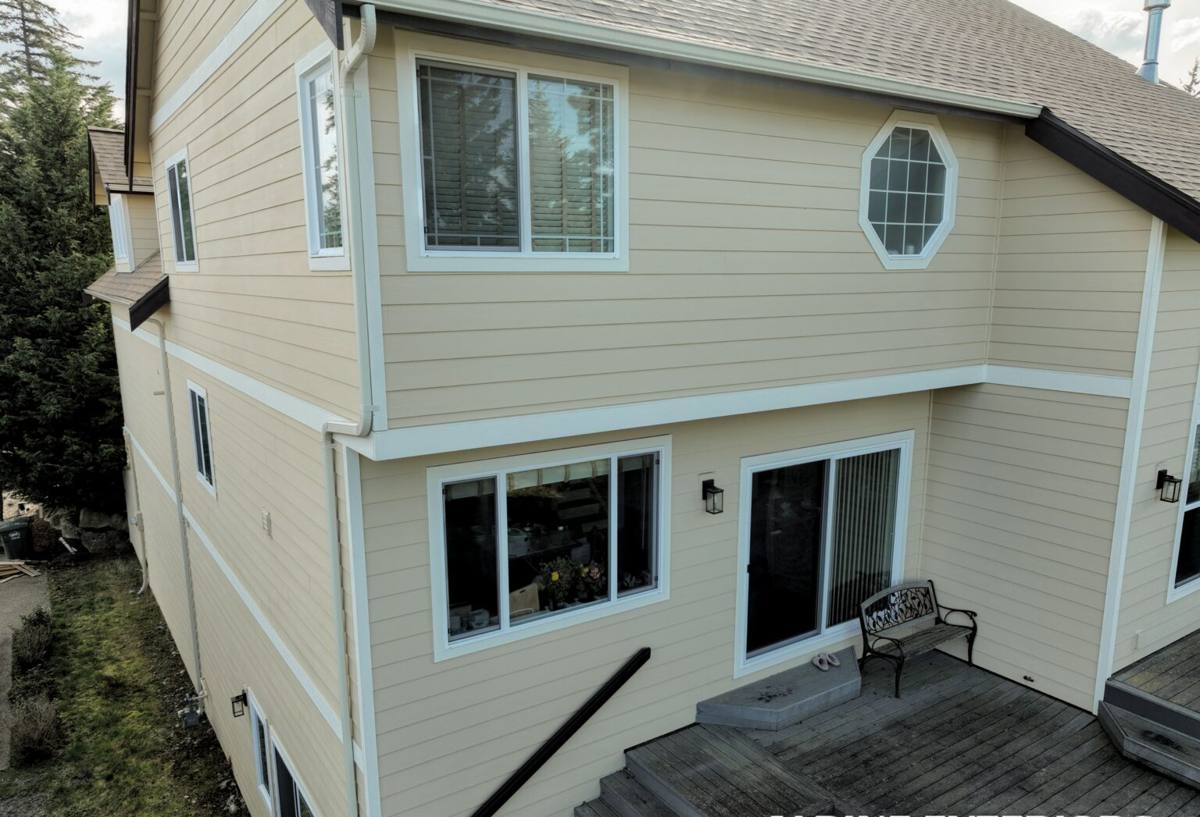
What Sedro-Woolley's Climate Actually Does to a Deck
If you've owned a deck here for more than a few years, you already know the symptoms: green film on the boards by late fall, black staining in the shaded corners, screws that start to weep rust stains down the face of the wood, and joists that feel a little soft when you press on them near the house. None of that is bad luck — it's the predictable result of a wet, shaded, humid climate acting on a structure that wasn't detailed for it.
Moisture that doesn't leave
Driving rain during fall and winter storms gets into every gap, seam, and fastener hole. In a drier climate that moisture evaporates within a day or two. In Sedro-Woolley, especially on decks shaded by fir, cedar, or maple trees, wood can stay damp for a week or more at a stretch. That extended damp period is exactly what wood-decay fungus needs to take hold.
Moss and algae season
Moss doesn't need much — shade, moisture, and time — and this area supplies all three for the better part of the year. Left alone, moss holds water directly against the decking surface, which accelerates rot in wood and can dull or stain composite materials over time. It also makes stairs and landings genuinely slippery, which is a real safety issue, not just a cosmetic one.
Corrosion from salt and moisture together
Salt air is usually associated with waterfront towns, but Skagit County's proximity to the Salish Sea means airborne salt does travel inland, and when it combines with near-constant humidity it accelerates corrosion on any hardware that isn't rated for it. Standard coated screws and joist hangers can start showing rust within a season or two in a shaded, damp corner of a deck.
Choosing Decking Material for This Climate
There's no single "best" decking material — there's a best material for your budget, your maintenance appetite, and how much shade and moisture your specific yard sees. Here's how the common choices actually perform in a wet, mossy, part-shaded climate like Sedro-Woolley's.
| Material | Moisture Behavior | Moss / Algae Resistance | Maintenance | Typical Lifespan |
|---|---|---|---|---|
| Pressure-treated pine | Absorbs and releases water readily; prone to cupping and checking if not sealed regularly | Low — porous surface holds spores well | Annual cleaning and re-sealing recommended | 15-20 years with upkeep |
| Cedar | Naturally moisture-resistant, but surface still needs protection over time | Moderate — natural oils help early on, fade with age | Periodic cleaning and oiling to maintain appearance and resistance | 15-25 years with upkeep |
| Capped composite | Doesn't absorb water into the core; surface sheds moisture | Good — smooth cap resists spore attachment, but grime still needs washing off | Occasional washing, no sealing or staining | 25-30+ years |
| PVC / cellular decking | Fully synthetic, essentially impervious to moisture | Good, similar to capped composite | Occasional washing | 25-30+ years |
Pressure-treated and cedar boards aren't wrong choices — plenty of good-looking, long-lasting decks around Sedro-Woolley are built with real wood, and it's usually the lower up-front cost. But we're honest with clients about the trade-off: wood in this climate needs a real annual maintenance commitment, not an occasional one, or moss and moisture will get ahead of you within a few seasons. Composite and PVC cost more up front and are less "natural" underfoot for some homeowners, but they take the moisture-absorption problem almost entirely off the table, which matters a lot under heavy tree cover.
Framing and Structure: Where Deck Failures Actually Start
Most deck problems people notice are cosmetic — moss, gray boards, a soft spot underfoot. But the failures that actually matter are almost always in the framing, and they're invisible until something gives way. This is the part of the job that separates a deck built to last from one that just looks finished on day one.
Ledger board attachment and flashing
The ledger board — where the deck attaches to the house — is the single most common point of structural failure on residential decks nationwide, and wet climates make it worse. Water that gets behind an improperly flashed ledger board rots the rim joist and sheathing from the inside, often for years before it's visible. We flash this connection properly with the ledger held off the house wall enough to let water drain and dry, not tight against it.
Footings sized for wet, sometimes soft ground
Skagit County soil varies a lot by lot — some areas sit on well-drained glacial till, others on wetter, siltier ground that holds water longer, especially near the river valley. Footings need to be sized and set to local frost depth and soil conditions, not just "deep enough to look right." Undersized or shallow footings are a common source of deck movement and settling over time.
Joist spacing and hardware
Composite decking generally needs tighter joist spacing than solid wood to avoid flexing between boards — a detail that gets skipped when a crew frames a deck the same way regardless of what decking will go on top. We frame to the decking manufacturer's spec, not a one-size-fits-all layout.
Hardware and Fasteners: The Detail Most Decks Get Wrong
This is a small line item that has an outsized effect on how long a deck actually lasts in a wet, occasionally salt-influenced climate. Mismatched or under-rated hardware is one of the most common reasons decks develop rust streaks and weakened connections years before the wood or decking itself fails.
| Hardware Type | Corrosion Resistance | Best Use |
|---|---|---|
| Standard electro-galvanized screws | Low — coating wears through quickly in wet/humid exposure | Not recommended for exterior deck use in this climate |
| Hot-dip galvanized connectors | Good for general framing hardware | Joist hangers, post bases, structural connectors |
| Ceramic or polymer-coated deck screws | Good, rated for treated lumber's chemical exposure | General decking and fascia fastening |
| Stainless steel (305/316 grade) | Best — resists both moisture and salt-air corrosion | Visible fasteners, hardware near ground contact, coastal-influenced areas |
We match fastener and connector type to both the lumber (pressure-treated wood is chemically corrosive to the wrong metals) and the exposure the connection will see. It costs a little more up front than grabbing whatever's on the shelf, but it's cheap insurance against the rust staining and weakened joints that show up on underspecified decks within a few years.
Drainage: Keeping Water Moving Instead of Sitting
Given how much rain this area sees, drainage isn't an optional upgrade — it's core to how long a deck lasts. A few things we pay close attention to on every build:
- Decking gapped correctly so water sheds through rather than pooling on the surface
- Grading and surface slope directing water away from the house foundation, not toward it
- Under-deck airflow maintained so the space beneath the joists can actually dry between rain events
- Post bases set above grade and away from standing water, not buried in soil or mulch
- Gutter and downspout placement checked so roof runoff isn't dumping directly onto or under the deck
A deck that's structurally sound but poorly drained will still develop moss, staining, and premature wear — drainage and material choice have to work together, not one or the other.
Our Process From First Call to Finished Deck
We keep the process straightforward and try not to surprise anyone partway through:
- On-site assessment — we look at sun exposure, tree cover, soil, existing structure (if replacing a deck), and how you actually want to use the space.
- Material and layout discussion — we walk through the honest trade-offs between wood and composite/PVC for your specific yard, budget, and maintenance preference, not a one-size pitch.
- Design and permitting — we draw the layout, confirm structural requirements, and handle the permit application with the local building department.
- Framing and inspection — footings, ledger flashing, and framing go in first, built to hold up before anything cosmetic is added, and inspected per code.
- Decking, railing, and finish work — decking, railings, stairs, and any fascia or skirting are installed to the manufacturer's spec for your chosen material.
- Final walkthrough — we go over the finished deck with you, including what maintenance (if any) it'll need going forward.
Permits and Local Requirements
Most new decks and many deck replacements in Sedro-Woolley and the surrounding Skagit County area require a building permit, particularly for decks attached to the house, decks above a certain height, or those with structural changes. Requirements can differ slightly depending on whether a property falls under City of Sedro-Woolley jurisdiction or unincorporated Skagit County, and can also be affected by setbacks or, in some cases, floodplain considerations given the area's proximity to the Skagit River. We handle the permit application and inspection process as part of the job rather than leaving it for the homeowner to sort out, and we'll confirm the specific requirements for your property before work begins rather than assume.
Deck Maintenance Checklist for This Climate
Whatever material you choose, a little seasonal attention goes a long way in a climate this wet and shaded. A simple annual routine:
- Sweep leaves and debris off the deck regularly in fall — trapped organic matter holds moisture and feeds moss
- Wash the surface at least once a year with a deck-safe cleaner to remove moss, algae, and grime buildup
- Check fastener heads and hardware for early rust staining, especially in shaded corners
- Inspect the ledger board area and flashing yearly for signs of water intrusion
- Re-seal or oil wood decking on the manufacturer or product's recommended schedule, not just when it looks faded
- Clear gutters and downspouts near the deck before the fall rains start
- Confirm under-deck airflow isn't blocked by stored items, skirting without vents, or overgrown landscaping
Why Local Experience Matters for This Job
A deck built from a generic national plan, with generic hardware, without accounting for Skagit County's rain totals, humidity, and moss pressure, will look fine for a season or two and then start showing problems that are expensive to fix after the fact — rot hidden behind a good-looking surface, corroded connectors, moss that's been given a head start by poor drainage. We work in this specific climate regularly, which means the material choices, fastener specs, and drainage details in this page aren't theoretical for us — they're what we actually see fail and actually see hold up on decks around Sedro-Woolley and the rest of Skagit County.
If you're planning a new deck or replacing one that's showing its age, we're glad to come take a look and give you a straightforward, no-pressure estimate — just fill out the form below.