 Anacortes
 Old Town Anacortes: Older Homes, Coastal Exposure
Old Town Anacortes is one of the older residential pockets in the city, and that history shows up in the housing stock. Many homes here were built well before modern siding materials and water-management details existed, and they've been added onto, re-sided, and repaired multiple times over the decades. That layered history is part of the neighborhood's character, but it also means siding problems in Old Town Anacortes rarely look like a textbook case. A repair crew has to read the home's actual construction, not just assume it matches what's on the truck.
Add in Old Town's position close to the water on Fidalgo Island, and you've got a neighborhood where siding takes a harder hit than it would ten or fifteen miles inland. Salt-laden air, wind-driven rain off Rosario Strait and Guemes Channel, and a moss season that stretches through most of the wet months all work on exterior walls year-round. Repairing siding here isn't just about patching a hole — it's about understanding why that hole formed in the first place.
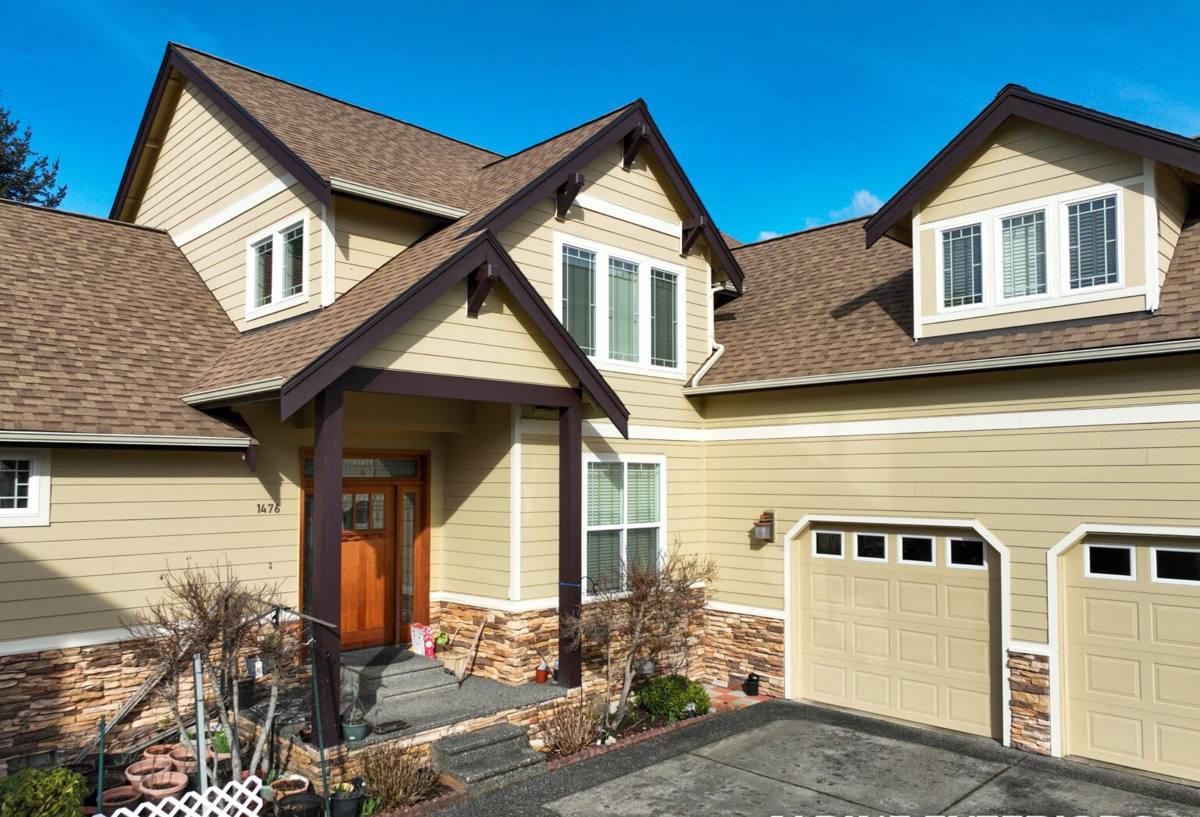
What Salt Air, Rain, and Moss Do to Siding Here
Skagit County's marine climate is mild compared to a lot of the country, but "mild" doesn't mean gentle on a house. Three specific stressors show up again and again on Old Town Anacortes siding calls:
Salt Air
Airborne salt from the surrounding waterways settles on exterior surfaces and accelerates corrosion of exposed fasteners, flashing, and metal trim. Once a fastener starts to corrode, it loses its grip on the siding it's holding, and that's often where a small crack or a loose board gets its start.
Driving Rain
Anacortes doesn't just get rain — it gets wind-driven rain that hits siding at an angle instead of falling straight down. That matters because a lot of siding failures aren't about water landing on a wall; they're about water being pushed sideways and upward into laps, seams, and trim joints that were never designed to handle it. Homes on exposed lots or upper stories catch this worse than sheltered ones.
Moss and Algae
The long wet season here gives moss and algae plenty of time to establish on siding that stays shaded or doesn't dry out between storms. Beyond the cosmetic staining, moss holds moisture directly against the siding surface for extended periods, which is a problem for any material that isn't built to shed water quickly.
Common Old Town Anacortes Siding Problems We See
Because of the neighborhood's age and exposure, certain repair calls come up more often here than in newer developments further from the water:
- Soft or delaminating spots on older wood or hardboard siding, usually near ground level or under windows
- Cracked or split boards where original material has dried and moved over many years
- Rust streaking or failed fasteners on siding that's been through repeated wet-dry cycles
- Moss and algae buildup on north- and west-facing walls that stay shaded longer
- Gaps and separation at trim, corners, and old repair patches where caulking has failed
- Water staining or bubbling paint that signals moisture getting behind the siding, not just sitting on top of it
Repair or Replace? What Actually Determines the Right Call
Homeowners often assume a damaged section can always just be patched, or on the flip side, that any damage means the whole wall has to come off. Neither assumption is reliable. The right call depends on a handful of specific factors, and an honest contractor will walk you through them instead of defaulting to whichever option is easier to sell.
| Factor | Favors Repair | Favors Replacement |
|---|---|---|
| Extent of damage | Isolated to a few boards or a single wall section | Spread across multiple walls or the full elevation |
| Moisture readings behind siding | Sheathing and framing test dry | Elevated moisture suggests hidden rot or ongoing intrusion |
| Age and condition of existing siding | Siding is otherwise sound and mid-life | Siding is near or past its expected service life |
| Material match | Existing material can be reasonably matched | Original product is discontinued or a poor long-term match |
| Root cause of damage | Cause is fixable without disturbing surrounding siding | Cause requires reworking flashing or water management broadly |
In practice, a lot of Old Town Anacortes homes end up somewhere in between — a full repair of one damaged elevation while the rest of the home is left alone, or a repair now with a plan to budget for replacement down the road. We'll tell you honestly which category your situation falls into.
What a Correct Siding Repair Involves
A siding repair that actually solves the problem goes well beyond swapping out the visibly damaged board. Here's what that looks like in practice:
Find the Real Cause First
Damaged siding is usually a symptom. Before any material comes off, we look at what's driving the deterioration — a failed flashing detail, a gap that lets wind-driven rain in, a downspout dumping water against a wall, or simple age and weathering. Replacing the siding without addressing the cause just means the same repair again in a few years.
Check What's Behind the Siding
Once damaged material is removed, we inspect the sheathing and framing underneath for softness, staining, or rot. In an older Old Town home, this step matters even more, since decades of prior repairs and weather exposure can leave hidden damage that isn't visible from outside.
Get the Water Management Right
Correct flashing at windows, doors, and seams, proper overlap on horizontal laps, and adequate clearance at the ground and roofline are what keep water out going forward. This is the part of a repair that's invisible once the job is done, but it's the part that determines whether the repair actually lasts.
Match or Transition Cleanly
When we can match existing siding, we do. When we can't — because the original product is no longer made or isn't something we'd stand behind — we talk with you about the best way to transition, whether that's a full wall section or a broader replacement plan.
Our Process From First Call to Finished Work
We keep the process straightforward because homeowners dealing with siding damage usually just want a clear answer, not a sales pitch:
- On-site inspection — we look at the damage, check surrounding areas for related issues, and test for hidden moisture where it's warranted.
- Honest assessment — we explain what caused the damage and give you a straight answer on repair versus replacement, including if the smart move is to wait and monitor.
- Written plan and estimate — you get a clear scope of work and price before anything starts.
- Repair work — damaged material removed, underlying issues addressed, correct flashing and water management installed, and new material fitted and finished.
- Site cleanup — job site left clean, with old material hauled away.
Why We Only Use James Hardie Fiber Cement for Repairs and Replacement Sections
When a repair calls for new siding material — whether it's a single damaged section or a full wall — we use James Hardie fiber cement, and that's the only siding brand we install anywhere. It's a deliberate standard, not a default.
Fiber cement doesn't absorb water the way wood and wood-composite products do, which matters directly in a climate like Anacortes' where siding stays wet for extended stretches. It's also non-combustible, holds its shape and finish far better through repeated wet-dry cycles, and James Hardie's HZ5 product line is specifically engineered for the Pacific Northwest's moisture exposure. The factory-applied ColorPlus finish resists fading and holds up to the region's moss and mildew pressure better than field-applied paint, and it's backed by a strong transferable warranty.
Practically, this also means that when we patch or replace a section of an older home's siding, the new material is built to outlast a lot of what it's being matched next to — which is exactly what you want from a repair, not a repeat call in a few years.
Why Local Experience in Old Town Anacortes Matters
A crew that regularly works in Old Town Anacortes has already seen how this neighborhood's homes behave — where moisture tends to collect, which orientations take the worst of the driving rain, and what older construction typically hides once siding comes off. That experience shortens the diagnosis and avoids guesswork.
Local familiarity also means fewer surprises on logistics: navigating tighter older-neighborhood lots, working respectfully around mature landscaping and close-set homes, and understanding how Skagit County's coastal weather affects scheduling. A contractor who treats every Old Town job as if it's their first will cost you time, and sometimes a repair that doesn't hold.
Signs You Should Get Your Siding Looked At
- Soft spots when you press on the siding, especially near the bottom of walls
- Visible cracking, splitting, or warping in individual boards
- Paint that's bubbling, peeling, or failing faster than expected
- Persistent moss or algae growth that returns quickly after cleaning
- Rust stains running down from fasteners or metal trim
- Gaps opening up at corners, trim, or old caulked joints
- Musty smells or interior wall staining near exterior walls
If any of that sounds familiar, it's worth getting a professional look before a manageable repair turns into a bigger one. We offer free, no-pressure estimates for Old Town Anacortes homeowners — fill out the form below and we'll take a look and give you a straight answer.