 Anacortes
 Roofing Old Town Anacortes Homes the Right Way
Old Town Anacortes sits close to the water, which means every roof up here deals with more than plain old weather. Salt-laden air off the Guemes Channel and Rosario Strait works on metal fasteners and flashing year-round. Driving rain off the water finds its way under anything that isn't sealed correctly. And the long, damp Pacific Northwest moss season — realistically most of the year in Skagit County — sits on shaded roof slopes and holds moisture against the shingles far longer than a roof further inland would ever see. A roof replacement here isn't just "put new shingles on." It's a chance to fix the specific weaknesses that salt air, wind-driven rain, and moss create, so the next roof actually holds up instead of repeating the same problems in eight or ten years.
A lot of the housing stock in and around Old Town is older, which adds another layer to think about. Older roof decks, older ventilation setups, and flashing details that were standard decades ago but don't hold up the way current materials and code expect. A proper replacement respects the character of these homes while quietly upgrading what's underneath the surface.
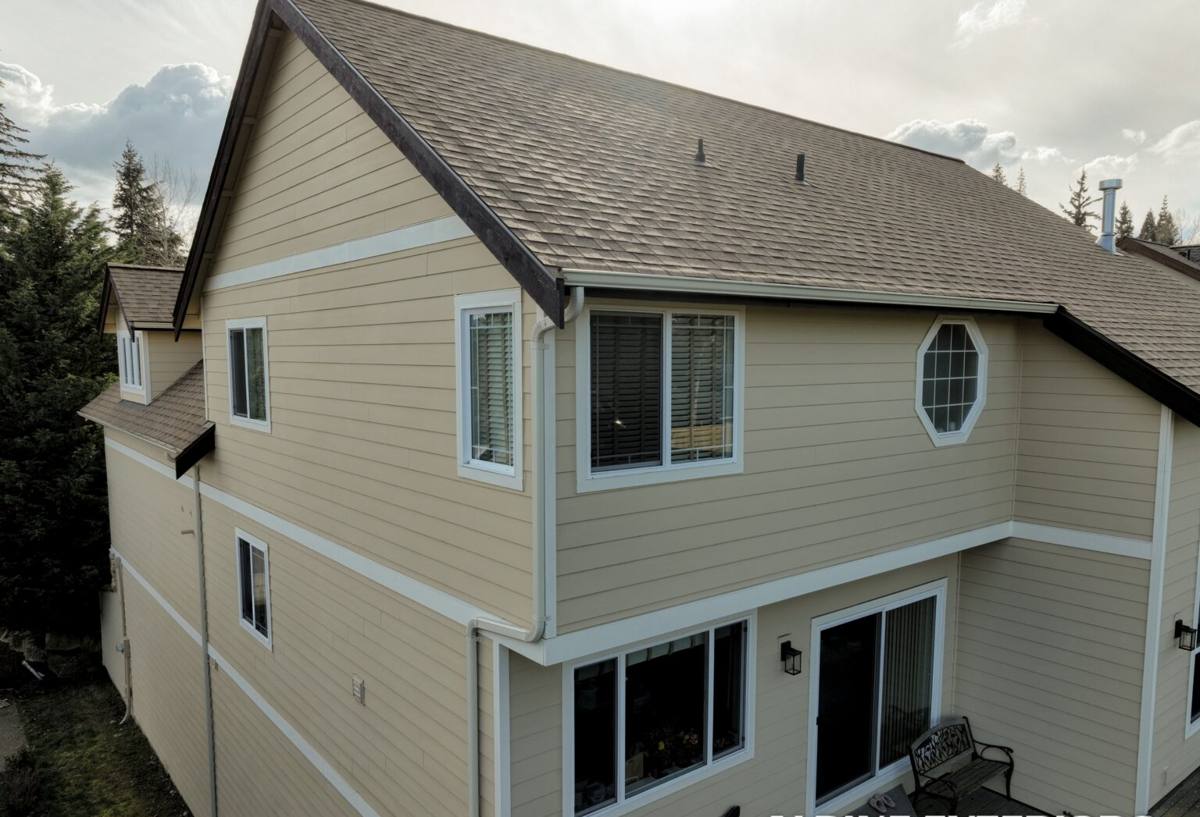
What Salt Air, Rain, and Moss Actually Do to a Roof
Salt Air and Metal Components
Every roof has metal somewhere — flashing around chimneys and skylights, valley metal, drip edge, nails or screws holding everything down. Salt air accelerates corrosion on lower-grade or unprotected metal. Once flashing starts to pit or rust through, it stops shedding water the way it's supposed to, and that's usually where a roof starts leaking — not through the shingles themselves, but around the edges and penetrations.
Driving Rain and Wind-Driven Water
Storms coming off the water don't fall straight down — they come in sideways. That matters because it pushes water into laps, seams, and fastener lines that a straight-down rain would never reach. Underlayment quality, shingle nailing pattern, and how the flashing is layered (not just caulked) all become more important on a home exposed to this kind of weather than they would be on a roof in a more sheltered inland spot.
Moss and Prolonged Moisture
Shaded, north-facing, or tree-covered sections of roof in this area can stay damp for weeks at a stretch during our wet months. Moss doesn't just look bad — its root structure works into the shingle surface and lifts the granules that protect the roof from UV and water. A roof that isn't detailed with moss in mind (proper ventilation, zinc or copper strips where appropriate, adequate slope and drainage) will grow moss again within a couple of seasons no matter how clean it looks on install day.
Signs an Old Town Anacortes Roof Needs Replacing, Not Patching
- Granules collecting in gutters or at downspout outlets — a sign the shingle surface is wearing through
- Shingles that are cupping, curling at the edges, or visibly brittle
- Recurring moss growth even after cleaning, especially on shaded slopes
- Rusted, lifted, or missing flashing around chimneys, skylights, and roof-to-wall transitions
- Daylight visible through the roof deck from inside the attic
- Soft or spongy spots when walked on, which usually means the deck underneath is compromised
- A roof approaching or past the manufacturer's expected lifespan for its material and this climate
- Interior water stains on ceilings or upper walls, especially after wind-driven storms
Patching can buy time on a roof with one isolated problem. But once a roof shows two or more of the signs above, patch repairs tend to become a repeating expense that never actually solves the underlying issue — the deck and underlayment are aging out, not just the visible shingle layer.
What a Correct Roof Replacement Involves Here
Tear-Off and Deck Inspection
We remove the old roofing down to the deck rather than layering over it. That's the only way to find soft, rotted, or delaminated sheathing before it becomes a hidden problem, and it's the only way to install new underlayment correctly. Any damaged decking gets replaced before anything new goes down.
Underlayment and Water Protection
Given how much wind-driven rain this area sees, we pay close attention to underlayment coverage and how it's lapped — not just that it's present, but that it's installed to actually shed water sideways, not just downward. Self-adhered ice-and-water membrane goes in valleys, around penetrations, and along eaves, since those are the areas most exposed to wind-driven moisture and the most common leak points on coastal homes.
Flashing Details
This is where a lot of roofs in salt-air environments fail early if it's rushed. We use flashing rated for the exposure and detail it in layers — step flashing, counter-flashing, and proper laps — rather than relying on sealant to do a metal detail's job. Sealant helps; it isn't a substitute for correct layering.
Ventilation
Balanced intake and exhaust ventilation keeps the underside of the roof deck dry and the attic temperature more consistent, which does two things: it extends the life of the new roofing material, and it reduces the damp conditions that let moss and mildew take hold from below as well as above.
Moss Prevention Measures
Where the roof design allows it, we install zinc or copper strips near the ridge on shaded slopes. Rainwater running over these strips carries trace metal ions down the roof, which discourages new moss growth. It's not a guarantee on a heavily shaded roof, but it meaningfully extends the time between cleanings.
Choosing Materials for a Coastal Skagit County Roof
Material choice matters more here than in a drier, inland climate. The table below reflects general trade-offs we walk homeowners through — not a push toward any one product.
| Material | Salt Air / Moisture Behavior | Moss Resistance | General Lifespan |
|---|---|---|---|
| Architectural asphalt shingle | Good with correct underlayment and flashing; standard choice | Moderate — benefits from zinc strips on shaded slopes | 25–30 years, climate dependent |
| Standing seam metal | Very good when properly coated and fastened; sheds wind-driven rain well | High — moss struggles to hold on smooth metal | 40–50+ years |
| Cedar shake | Requires more upkeep in a damp, shaded coastal setting | Low — needs regular treatment and cleaning | 20–30 years with maintenance |
| Synthetic/composite shingle | Good; resists moisture absorption well | Moderate to good depending on product | 30–50 years |
We don't steer every homeowner toward the same product. A shaded, heavily-treed lot in Old Town calls for different priorities than an open, wind-exposed lot closer to the water — and budget, roof pitch, and the home's existing style all factor into the honest recommendation.
Our Process for an Old Town Anacortes Roof Replacement
- On-site inspection of the current roof, attic ventilation, and any interior signs of water intrusion
- A written estimate that explains material options and why we're recommending a given approach for that specific roof
- Scheduling that accounts for our weather patterns — we don't tear off a roof into an unprotected window when rain is likely
- Full tear-off, deck inspection and repair, and disposal of old materials
- Underlayment, flashing, ventilation, and moss-prevention details installed to the standard the site actually needs
- Final walk-through so you understand what was done and why, plus what maintenance (if any) to expect going forward
Why a Crew That Already Works Old Town Anacortes Matters
A roofer who works this specific area regularly already knows which slopes hold moss longest, which flashing details tend to fail first on older homes here, and how to schedule tear-offs around our rain patterns instead of guessing. That local familiarity shows up in fewer callbacks and a roof that's actually built for the conditions it will sit under for the next few decades — not a generic install that happens to be located near the water.
We're a Skagit County crew, not a traveling outfit passing through. If a flashing detail needs a second look two years down the road, or a storm knocks something loose, we're local and reachable — not a name that only shows up during storm season and disappears afterward.
Maintenance That Protects Your Investment
Even a correctly installed roof benefits from a little upkeep in this climate:
- Keep gutters and downspouts clear so water isn't backing up under the roof edge
- Have shaded or moss-prone slopes checked every year or two, especially after zinc strips have aged
- Trim back overhanging branches to reduce shade and debris buildup on the roof surface
- Address any small leak or flashing issue promptly — in a wind-driven rain climate, small gaps become bigger problems fast
If your Old Town Anacortes roof is showing its age or you just want an honest opinion on what shape it's in, we're happy to take a look. Fill out the form below for a free, no-pressure estimate — we'll tell you what we actually see, not just what sells a job.