 Anacortes
 Siding on Whidbey Island's North End Takes a Real Beating
Oak Harbor sits on Whidbey Island, just across the Deception Pass Bridge from Anacortes and Fidalgo Island. It shares the same exposure to Puget Sound and the Strait of Juan de Fuca that makes this whole corner of Washington hard on exterior building materials: salt-laden air off the water, long stretches of wind-driven rain, and a wet, shaded off-season that keeps moss and mildew active for much of the year. None of that is unusual for anyone who has lived here a while — but it is exactly the combination that separates siding that lasts thirty years from siding that starts failing in eight or ten.
We're an Anacortes-based crew and Oak Harbor is part of our regular service area, not a special trip. That matters more than it sounds like it should, and we'll get into why later in this page. First, let's talk about what this climate actually does to a wall, and what siding has to do to hold up against it.
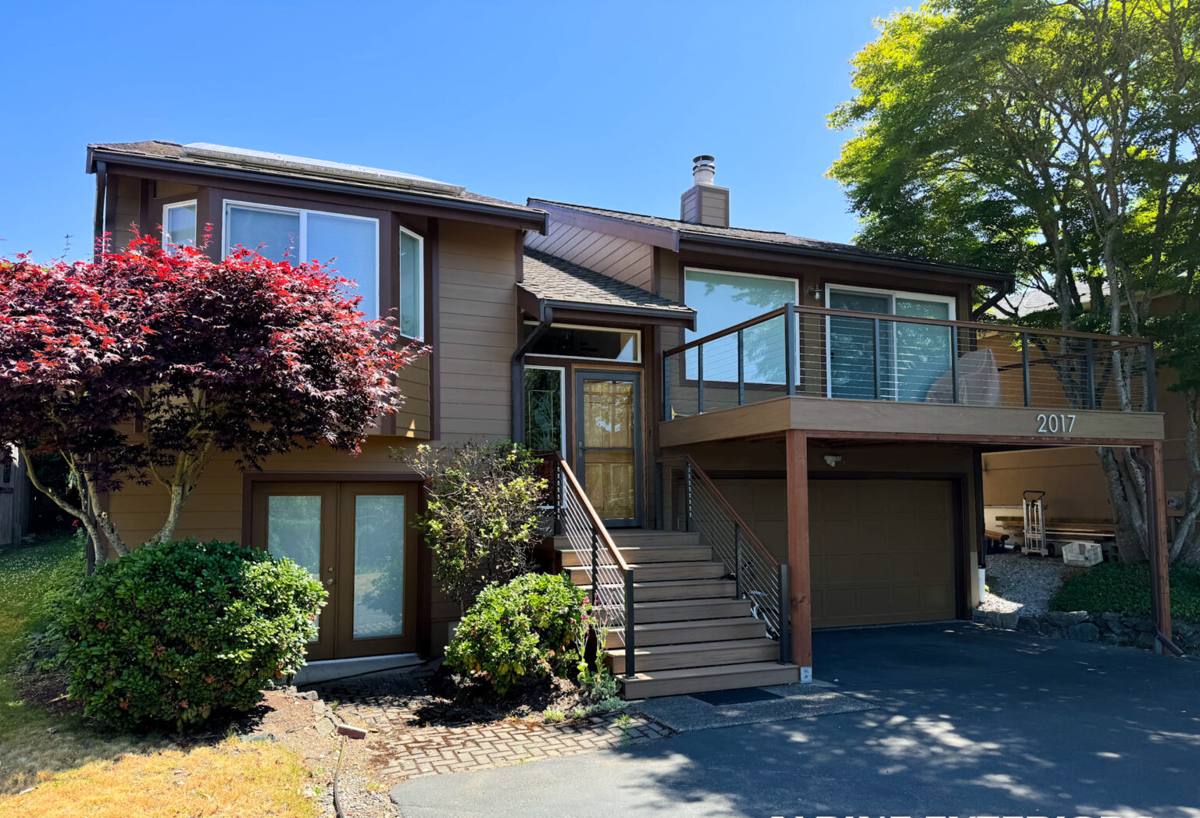
What Salt Air, Driving Rain, and Moss Actually Do to a Wall
Salt Air
Airborne salt doesn't just sit on the surface — over years it works into seams, fastener heads, and any spot where a coating has thinned or chipped. On untreated or lightly finished wood-based products, that accelerates surface breakdown and finish failure. On metal fasteners and trim, it accelerates corrosion. Siding materials and finishing systems that aren't built with this kind of exposure in mind tend to show it first at corners, butt joints, and anywhere caulk has started to let go.
Driving Rain
Rain that falls straight down is one thing. Wind-driven rain coming sideways off the water is another — it gets pushed up under laps, into gaps around trim, and behind siding that isn't flashed and fastened correctly. A siding system depends on more than the face material to keep water out; the water-resistive barrier, flashing details, and fastening pattern behind the visible surface do most of the real work. Get those wrong and even a good product will let moisture in.
Moss and Prolonged Dampness
Shaded north and west walls, tree-covered lots, and our long wet season all add up to siding that can stay damp for days at a stretch. Moss and mildew don't just look bad — sustained dampness is what breaks down wood-based siding from the inside, feeds rot at seams and butt joints, and works against paint and caulk adhesion. Siding that can't shed water and dry out quickly is fighting an uphill battle here for most of the year.
Why We Standardized on James Hardie for Homes Like These
We install James Hardie fiber cement siding exclusively — not vinyl, not LP SmartSide or other engineered wood products, not primed spruce or cedar. That's a deliberate call, not a default. Fiber cement is non-combustible and dimensionally stable, meaning it doesn't swell, warp, or rot the way wood-based siding can when it takes on moisture repeatedly over the years. James Hardie also engineers specific product formulations for different climate zones through its HZ5 line, which is built for the wetter, moisture-heavy conditions we see throughout the Pacific Northwest rather than a one-size-fits-all formula.
On top of that, most Hardie boards are available with the ColorPlus finish system — a factory-applied, baked-on finish that's more consistent and more resistant to fading and moisture intrusion than field-applied paint. In a salt-air environment where field-applied finishes tend to break down faster at exposed edges, starting with a factory finish is a real advantage, not a marketing point.
We're not going to tell you every other siding product is worthless — some have legitimate strengths. But for homes taking this kind of coastal exposure year after year, we won't put our name behind a lower-durability option just because it's cheaper up front. Fiber cement, installed correctly, is what we're willing to warranty our workmanship on.
What a Correct Installation Involves in This Climate
James Hardie siding is only as good as the installation behind it. In an area with this much wind-driven rain, a few details matter more than they would somewhere drier:
- Water-resistive barrier and flashing: A continuous weather barrier behind the siding, with properly lapped and sealed flashing at every window, door, and penetration, so any water that gets past the face material has a way to drain out instead of soaking into the wall assembly.
- Proper fastener spacing and type: Corrosion-resistant fasteners, driven per Hardie's specifications — not overdriven, not underdriven, and spaced correctly so the boards can perform as engineered.
- Clearance and drainage: Correct gaps at the bottom of the wall, around trim, and at grade so water has somewhere to go and siding isn't sitting in standing moisture.
- Caulking at the right joints, not every joint: Hardie's own installation guidance calls for sealing specific joints, not caulking everything — over-caulking can actually trap moisture rather than shed it.
- Factory-cut edges where possible: Minimizing field cuts on ColorPlus boards preserves the factory finish and reduces exposed, unsealed edges that are more vulnerable to moisture and salt.
Skip any of these and you can end up with a wall that looks right for a few years and then starts failing at the seams — which is usually where problems with poorly installed siding show up first, regardless of what brand is on it.
Signs Your Current Siding Is Already Losing the Fight
If you're on the north end of Whidbey Island or anywhere else in this exposure zone, it's worth walking your exterior and checking for these before they turn into bigger repairs:
- Persistent moss or dark staining on shaded walls that comes back soon after cleaning
- Soft, spongy, or crumbling spots, especially near the bottom of walls or around trim
- Paint that's peeling, bubbling, or chalking faster on the water-facing side of the house than elsewhere
- Gaps opening up at butt joints, corners, or where siding meets trim
- Visible rust streaking from fasteners or metal flashing
- Warping, cupping, or boards that no longer sit flat against the wall
Any one of these on its own might just need attention. Several together usually mean the siding system as a whole is past the point where patching makes sense.
Choosing the Right Hardie Profile for an Oak Harbor Home
James Hardie offers several siding profiles, and the right one depends on your home's style and exposure, not just personal preference. Here's how the common options generally compare for a coastal Whidbey Island property:
| Profile | Best Fit | Coastal Consideration |
|---|---|---|
| HardiePlank lap siding | Traditional and most common look, wide range of homes | Widely proven in wet coastal climates; pairs well with proper flashing details |
| HardiePanel vertical siding | Modern styling, accent walls, gable ends | Fewer horizontal laps means fewer joints for wind-driven rain to work against |
| HardieShingle siding | Cape Cod or shingle-style homes | More seams overall, so correct fastening and flashing matter even more |
| HardieTrim boards | Corners, window and door casing, fascia | Keeps trim dimensionally stable where wood trim tends to rot first |
Most homes end up using a combination — lap or panel siding for the field of the wall, trim boards at corners and openings — matched in a ColorPlus finish so the whole exterior weathers evenly.
How Our Process Works, Start to Finish
- Walkthrough and assessment: We look at your current siding, note problem areas (moss buildup, soft spots, failed caulk joints), and check exposure on each side of the house.
- Written estimate: A clear breakdown of scope, product selection, and pricing — no pressure, no surprise add-ons buried in fine print.
- Prep and moisture check: Before new siding goes up, we confirm the sheathing underneath is sound. Existing rot or moisture damage gets addressed, not covered over.
- Weather barrier and flashing installation: This is the layer that does the real water-management work, installed and lapped correctly at every penetration.
- Siding installation to Hardie spec: Correct fastening, clearances, and joint treatment throughout — not shortcuts to save a day of labor.
- Final walkthrough: We go over the finished job with you before calling it done.
Why a Crew That Already Works Oak Harbor Is Worth Choosing
Oak Harbor and Anacortes share the same weather, the same wind exposure off the water, and largely the same building conditions — but they're still two different jurisdictions with their own permitting and inspection processes. A crew that regularly works both sides of the Deception Pass Bridge already knows what local inspectors expect and doesn't have to learn it on your job.
There's also a practical scheduling side to this. A contractor based well outside the area may treat an Oak Harbor job as a special trip, tacking on travel time and less availability for follow-up if something needs attention after the fact. Because we're already working in and around Anacortes and up onto Whidbey Island as part of our normal territory, showing up for a walkthrough, a mid-project check, or a warranty callback isn't a logistical problem — it's just part of our route.
Local experience also means we've seen how this specific climate plays out on real houses over real years — which walls take the worst of the wind-driven rain, where moss tends to establish first, and which installation shortcuts show up as failures fastest in this environment. That's knowledge you don't get from a spec sheet.
What Affects the Cost of a Hardie Siding Project Here
| Factor | Why It Matters |
|---|---|
| Home size and wall complexity | More corners, gables, and dormers mean more cutting, trim work, and labor time |
| Condition of existing sheathing | Rot or moisture damage found during tear-off adds repair scope before new siding can go on |
| Siding profile selected | Lap, panel, and shingle profiles differ in material and labor cost |
| Trim and detail work | Custom corner boards, window casing, and fascia detailing add time and material |
| Site access | Steep lots, limited staging space, or multi-story walls affect equipment and labor needs |
| Color and finish choice | ColorPlus factory finishes versus field-primed options affect material pricing |
We don't quote a job until we've actually looked at it — this table is meant to help you understand what drives the number, not to substitute for a real estimate.
Ready to Talk About Your Home?
If your siding is showing its age, or you're planning ahead before the next wet season sets in, we're happy to take a look and give you a straight answer about what your home needs. Fill out the form below for a free, no-pressure estimate — we'll walk your property, talk through James Hardie's options for your home, and give you a clear, honest quote with no obligation.