 Anacortes
 Windows Built for Life Near the Water
Oak Harbor sits close enough to the water that its homes deal with the same weather patterns we see across the rest of the region: salt-laden air off the Sound, wind-driven rain that hits window seams sideways instead of straight down, and a long, damp moss season that keeps wood and vinyl surfaces wet for months at a time. Windows here don't fail because of one bad storm. They fail slowly, from years of moisture finding its way past worn seals, condensation building up between panes, and old aluminum frames conducting cold straight into the room.
We're an Anacortes-based crew, and we've worked in and around Oak Harbor long enough to know which parts of a window installation actually matter in this climate and which ones are just marketing. This page covers what energy-efficient windows should do for a home out here, what a correct installation looks like, and how we handle the job from first look to final walk-through.
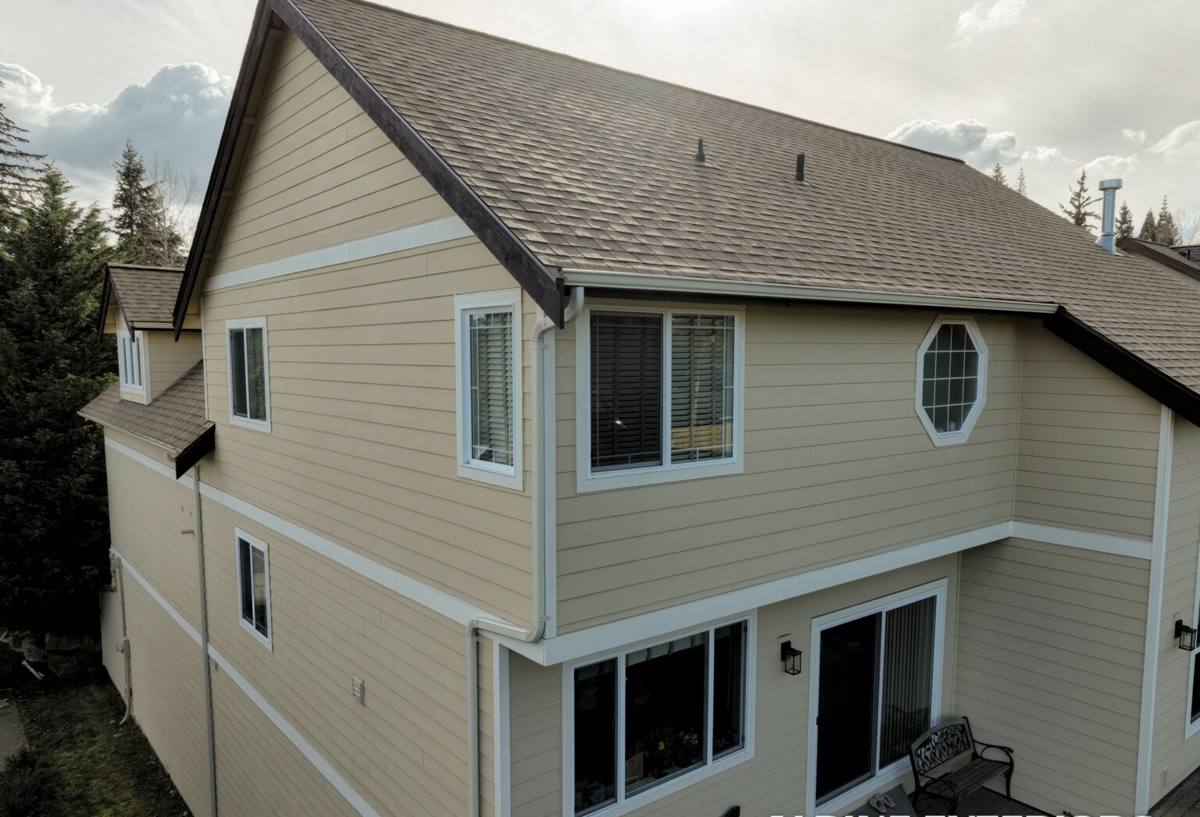
What "Energy-Efficient" Should Mean for This Climate
Every window on the market today gets labeled energy-efficient. That label means very little on its own. What matters for a home in this part of Washington is a specific combination of performance and moisture handling:
- Low U-factor — measures how well the window resists heat loss. In our mild-but-damp winters, this affects comfort near the glass more than it affects your heating bill dramatically, but it's still worth getting right.
- Reasonable Solar Heat Gain Coefficient (SHGC) — we don't get brutal summer sun here, so chasing the lowest possible SHGC isn't usually necessary. A balanced number keeps rooms comfortable without going overboard.
- Multi-point locking hardware — compresses the sash evenly against the weatherstripping, which matters more here than in drier climates because uneven compression is exactly where wind-driven rain finds a way in.
- Warm-edge spacer systems — the strip between panes of glass. Cheap spacers conduct cold and moisture to the glass edge, which is where you'll see fogging and condensation start first.
A window can carry a great energy rating on paper and still leak, sweat, or rot at the sill within a few years if the frame material and installation don't account for constant moisture exposure. That's the piece a lot of estimates skip over.
Signs Your Current Windows Are Working Against You
Most homeowners don't replace windows because of one obvious failure. It's usually a combination of small, ongoing issues:
- Fogging or a visible film between the panes — the seal on the insulated glass unit has failed and the gas fill (or just dry air) has been replaced by moisture.
- Cold drafts you can feel with a hand near the frame, even when the window is latched shut.
- Soft or discolored wood at the sill or lower corners — usually the first sign that water has been getting behind the trim.
- Windows that are hard to open, or that don't latch tightly anymore — often a sign the frame has shifted slightly from moisture absorption.
- Visible mildew or moss growth on or around the exterior trim, which tells you water is sitting there longer than it should.
Any one of these on its own isn't an emergency. Several of them together, especially on the sides of the house that take the most weather, usually mean it's time to stop patching and start planning a replacement.
What a Correct Installation Actually Involves
The window unit itself is maybe half the job. The other half — the part you can't see once it's done — is what determines whether that window is still performing well in fifteen years or leaking behind the wall in five.
Flashing and Drainage
Every window opening needs a flashing sequence that sheds water down and out, layered so each piece overlaps the one below it, shingle-style. Skipping or rushing this step is the single most common cause of hidden water damage we find when we pull old windows out of homes in this area.
Sealant, Not Just Caulk
A bead of caulk around the trim is not a substitute for proper flashing and backer rod at the right joints. Sealant is the last line of defense, not the whole strategy — and in a climate with this much sideways rain, it needs to be the right product applied to a clean, dry surface, not just filled in over old caulk.
Insulation Around the Frame
The gap between the window frame and the rough opening needs to be filled with a low-expansion foam or backer rod and sealant — enough to stop air movement and condensation risk, without over-packing the frame and causing it to bow.
Level, Plumb, and Square
A window that's out of square by even a small amount puts uneven stress on the hardware and weatherstripping, which shows up later as air leaks or a sash that won't latch smoothly. This is basic, but it's also the step that gets rushed on a tight installation schedule.
Frame Material: What Holds Up Here
| Frame Material | How It Handles Salt Air & Moisture | Maintenance | Typical Trade-Offs |
|---|---|---|---|
| Vinyl | Doesn't corrode or absorb moisture; handles salt air well | Low — occasional cleaning | Frame color/style options are more limited than wood or fiberglass |
| Fiberglass | Very stable in moisture and temperature swings; strong resistance to salt exposure | Low | Higher upfront cost than vinyl |
| Wood (clad exterior) | Good if the exterior cladding stays intact; exposed wood is vulnerable to our wet season | Moderate to high — exterior seals need monitoring over time | Best appearance option for some homeowners, but higher long-term upkeep |
| Aluminum | Conducts cold and can corrode with prolonged salt exposure unless treated | Moderate | Generally not our recommendation for exterior-facing openings in this climate |
We install vinyl and fiberglass most often on Oak Harbor homes because they hold up with the least maintenance in a marine climate. Wood-clad windows are a legitimate option when the look matters to a homeowner, but we're honest that it comes with more upkeep over the years — that's a trade-off we lay out at the estimate, not something we discover for you later.
Glass Packages Worth Considering
Beyond the frame, the glass package makes a real difference in comfort and condensation resistance:
- Double-pane, argon-filled — the standard for most replacement projects here; solid performance for the cost.
- Triple-pane — worth it for rooms with more glass area, north-facing walls, or homeowners who are especially sensitive to drafts near windows; adds cost and weight.
- Low-E coatings — help manage heat loss and glare without darkening the room noticeably; standard on most quality windows now.
We don't push triple-pane on every job — for a lot of Oak Harbor homes, a well-installed double-pane, argon-filled, Low-E window is the right balance of performance and cost. Where it's not, we'll say so.
How We Approach an Oak Harbor Job
- On-site assessment — we look at the actual condition of your existing windows, sills, and trim, not just take measurements from a brochure.
- Straight recommendation — frame material, glass package, and install approach based on that specific wall's sun and weather exposure, explained in plain terms.
- Written estimate — clear on what's included: removal, disposal, flashing, insulation, trim, and cleanup.
- Installation — old units removed carefully to check for hidden water damage before anything new goes in; if we find rot or damage behind the old frame, we tell you before we cover it back up.
- Final check — every window opened, closed, and latched to confirm smooth operation and a tight seal, with a walk-through so you know what to watch for going forward.
Because we're already working this area regularly, we're not learning the local weather patterns on your project — we've seen how driving rain hits certain wall orientations out here and how the moss season affects window sills that don't drain properly, and we build the installation around that from the start.
A Quick Checklist Before You Hire Anyone
- Ask exactly what flashing method will be used — "we'll caulk it well" is not a flashing method.
- Get the U-factor and SHGC numbers in writing, not just "energy-efficient" on the invoice.
- Confirm whether old windows will be inspected for hidden rot before new ones go in, and what happens if they find it.
- Ask about warranty coverage on both the window unit and the labor — these are often separate.
- Check that the crew is licensed and insured for work in Washington, and ask how long they've worked in this specific area.
Get a Straight Answer on Your Windows
If you're not sure whether your windows need full replacement, a repair, or nothing at all right now, we'd rather tell you that honestly than sell you something you don't need yet. If you're in Oak Harbor or the surrounding area and want a clear, no-pressure look at what's going on with your windows, request a free estimate using the form below and we'll get back to you.