 Anacortes
 Why March Point Roofs Take a Different Kind of Beating
March Point sits out on the water side of Anacortes, which means the roofs here deal with a combination most inland Skagit County homes never see: salt-laden air off Fidalgo Bay and the Guemes Channel, wind that drives rain sideways instead of straight down, and a wet season that runs long enough to grow a thick coat of moss on anything that stays shaded and damp. None of these things are dramatic on their own, but together they shorten the working life of a roof that isn't built or installed with them in mind. A roof spec'd for a dry inland lot and a roof spec'd for March Point should not look identical, even if they're using the same shingle off the same pallet.
We install new roofs on homes in and around March Point regularly, and most of the call-backs we see on other contractors' work trace back to the same handful of details — not bad materials, but installation choices that didn't account for what this specific location does to a roof over time.
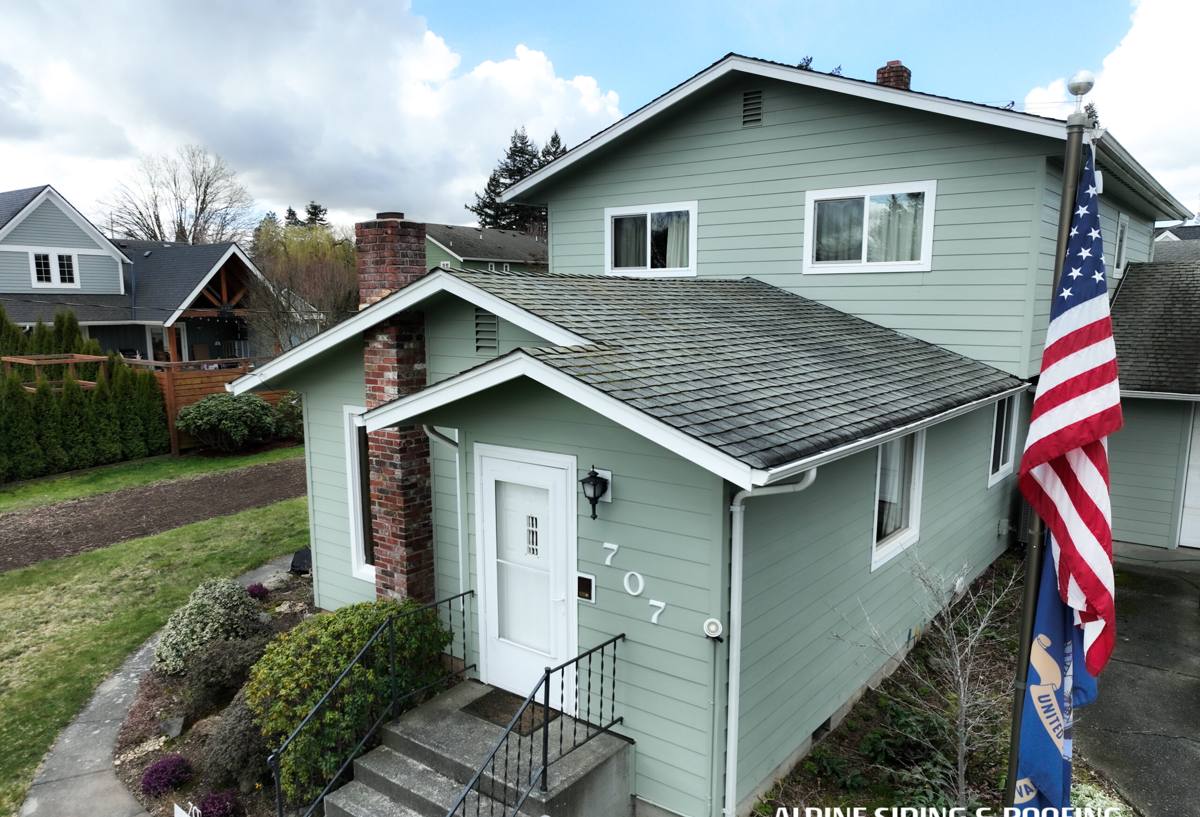
What Local Conditions Actually Do to a Roof
Salt Air and Corrosion
Proximity to saltwater accelerates corrosion on anything metal — nails, flashing, vent boots, gutter hardware. Standard electro-galvanized fasteners can start showing rust streaks and losing holding strength years before they would inland. It's a slow problem, which is exactly why it gets ignored: nobody notices a nail head corroding under a shingle tab until water starts finding its way through.
Driving, Wind-Blown Rain
March Point gets exposed to wind off the water in a way that pushes rain sideways and up under shingle edges, not just straight down onto the field of the roof. A roof that's watertight in a calm downpour can still leak in a wind-driven storm if the flashing, underlayment laps, and fastening pattern weren't built for wind-driven exposure specifically.
A Long Moss Season
Western Skagit County's wet stretch runs long, and shaded, north-facing, or tree-covered roof sections stay damp for weeks at a time. Moss doesn't just look bad — its root structure lifts shingle edges, holds moisture against the roof deck, and works granules loose over time. A roof going in on a shaded March Point lot needs to be treated differently from the start than one going up on an open, sun-exposed lot.
Choosing a Roofing Material for This Environment
There's no single "best" roofing material for every home — the right choice depends on the home's exposure, the roof's pitch and shade pattern, and the owner's budget and maintenance appetite. Here's how the common options actually perform under March Point conditions:
| Material | Salt Air Performance | Moss Resistance | Maintenance |
|---|---|---|---|
| Standard architectural asphalt shingle | Good with corrosion-resistant fasteners and flashing | Moderate — benefits from algae-resistant granules on shaded roofs | Periodic moss treatment on shaded sections |
| Algae-resistant (AR) asphalt shingle | Good, same as standard when properly fastened | Better — copper/zinc-infused granules slow moss and algae growth | Lower, but not maintenance-free |
| Standing-seam metal | Very good with marine-grade fasteners and coated panels | Very good — moss struggles to grip smooth metal | Low; occasional debris clearing |
| Cedar shake | Fair — needs consistent upkeep near salt exposure | Poor without regular treatment; holds moisture | High — regular cleaning and treatment required |
We're generally cautious about cedar shake on shaded March Point lots specifically because of how much moisture the material holds against itself in a long wet season — it's not that cedar is a bad product, it's that the upkeep it needs lines up poorly with a shaded, damp site. For most homes here, an algae-resistant architectural shingle or a standing-seam metal roof gives the best balance of upfront cost and long-term performance, and we'll walk through the honest trade-offs for your specific roof rather than push one option.
What a Correctly Installed Roof Includes Here
The shingle or panel you see is the least important variable in how long a roof lasts in this environment. What's underneath and around it does most of the work:
- Ice-and-water shield membrane at eaves, valleys, and around every penetration — not just the code-minimum coverage, but enough to handle wind-driven rain pushing back up under the shingle line
- Synthetic underlayment across the full deck, properly lapped against the prevailing wind and water direction for the roof's exposure
- Corrosion-resistant fasteners and flashing throughout — stainless or hot-dip galvanized where the roof faces the water, not standard electro-galvanized
- Balanced intake and exhaust ventilation, sized to the attic, so the roof deck stays dry and cool instead of trapping moisture that feeds moss and rot
- Kick-out flashing at every roof-to-wall intersection so runoff is directed into the gutter instead of down the siding
- Sealed, properly flashed penetrations for vents, chimneys, and skylights — the single most common source of new-roof leaks when rushed
Our New Roof Installation Process
Every March Point job follows the same sequence, adjusted for the specific roof:
- On-site inspection and estimate. We look at pitch, shade pattern, existing ventilation, and current moss or moisture damage before quoting anything.
- Tear-off and deck inspection. Old roofing comes off completely so we can check the actual condition of the plywood or plank decking underneath — soft or delaminated sections get replaced, not covered over.
- Underlayment and ice-and-water shield. Applied across the full deck with extra coverage at eaves, valleys, and penetrations given the wind-driven rain exposure here.
- Flashing. New flashing at all valleys, walls, chimneys, and penetrations, using corrosion-resistant materials appropriate for the salt air.
- Shingle or panel installation. Installed to manufacturer spec for wind exposure, with attention to nail placement and pattern — this is where a lot of shortcuts happen on rushed jobs.
- Ventilation tie-in. Ridge and soffit ventilation balanced to the attic's size, which matters as much for moss prevention as anything on the roof surface itself.
- Cleanup and magnetic sweep. Full site cleanup, including a magnetic sweep for stray nails.
- Walkthrough and warranty paperwork. We go over what was done, the manufacturer warranty terms, and what to expect for maintenance going forward.
Ventilation: The Part of a Roof You Never See That Determines How Long It Lasts
Ventilation gets overlooked because it's invisible from the ground, but in a moss-prone, high-moisture area like March Point it's arguably as important as the roofing material itself. An attic that can't breathe traps warm, moist air against the underside of the roof deck. That moisture works its way to the surface, keeps shingles damp longer after rain, and creates exactly the conditions moss needs to establish itself. A roof with excellent shingles and poor ventilation will grow moss and age faster than a roof with mid-grade shingles and correctly balanced intake and exhaust venting. We size ventilation to the attic on every new roof install rather than reusing whatever vents were already there, because "already there" is often part of why the old roof failed early.
What Drives the Cost of a New Roof
Every roof is priced individually after inspection, but the main factors that move the number are consistent:
| Factor | Why It Matters |
|---|---|
| Roof size and number of stories | More square footage and steeper access both add labor time |
| Pitch and complexity | Valleys, dormers, and multiple roof planes take more flashing and labor than a simple gable |
| Deck condition underneath | Rotten or soft plywood found during tear-off requires replacement before roofing can go on |
| Material choice | Standard asphalt, algae-resistant shingle, and standing-seam metal all sit at different price points |
| Ventilation upgrades | Adding or rebalancing ridge and soffit venting where the existing system was inadequate |
| Tear-off layers | Removing multiple old roofing layers adds disposal and labor time |
We don't quote a roof over the phone — square footage and pitch estimates from satellite images miss too much, especially deck condition, which we can't know until tear-off begins. Every quote comes from an actual walk of the roof.
Why It Matters That We Already Work This Area
A crew that already works March Point isn't guessing at how the roof needs to be flashed for wind-driven rain, which fastener grade holds up against salt air, or which roof sections on a given lot layout tend to hold moss longest. That familiarity shows up in the details — fastener choice, flashing material, ventilation sizing — that don't show up on a spec sheet but decide whether a roof is still performing well in fifteen years or starting to show problems in five. It also means we're not learning Skagit County permitting and inspection requirements for the first time on your job.
Before You Replace Your Roof: A Quick Checklist
- Note which sections of your current roof hold moss or stay damp longest — that tells us about shade and ventilation, not just roofing material
- Check your attic for any signs of moisture staining or poor airflow before the new roof goes on
- Ask any contractor you're considering what fastener and flashing grade they use for salt-air exposure — the answer should be specific, not "standard"
- Get the ventilation plan explained, not just the shingle brand
- Confirm in writing what happens if the tear-off reveals deck damage, and how that's priced
- Ask about the manufacturer warranty terms and what voids them
If you're weighing a new roof for a March Point property, we're happy to come take an honest look and walk you through what your specific roof needs — no pressure, no obligation. The estimate form below is the easiest way to get that started.