 Anacortes
 Metal Roofing in Ship Harbor: Built for a Marine Climate
Ship Harbor sits close enough to the water that homes here take a different kind of weathering than roofs even a few miles inland. Salt-laden air off Rosario Strait and the ferry lanes, near-constant humidity, driving rain that comes in sideways during winter storms, and a moss season that can run eight or nine months out of the year all add up to a roofing environment that punishes the wrong material choices. Metal roofing, installed correctly, holds up to all of it better than almost anything else on the market — but "installed correctly" is doing a lot of work in that sentence, and it's the part that separates a roof that lasts thirty-plus years from one that starts showing rust streaks and fastener failures in five.
This page covers what a metal roof needs to do its job on a Ship Harbor home specifically — not generic metal roofing information, but the details that matter for houses exposed to Anacortes' coastal conditions.
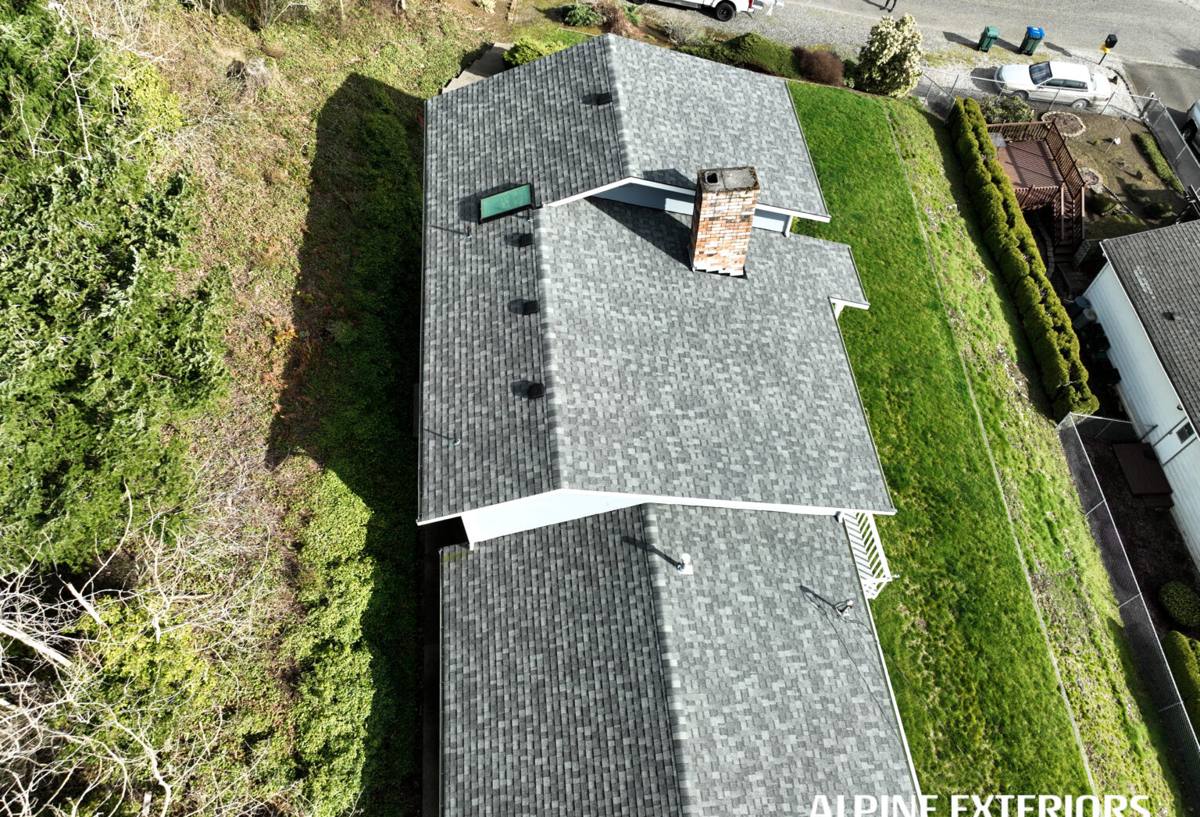
What the Local Climate Actually Does to a Roof
Salt Air and Corrosion
Homes within a mile or two of the water pick up airborne salt that settles on every exterior surface, including the roof. On metal roofing, that salt accelerates corrosion at any point where the protective coating is thin, scratched, or absent — cut edges, fastener heads, and scuffed panel surfaces are the usual failure points. This is why panel coating and fastener material matter more here than they would on a roof twenty miles inland.
Driving Rain
Wind off the strait doesn't just drop rain straight down — it pushes it sideways and up under laps, flashing edges, and fastener penetrations. A roof that would shed water fine in a calm rain can leak here if the underlayment, flashing laps, and panel seams aren't detailed for wind-driven moisture.
Moss and Organic Growth
Shade, moisture, and mild temperatures year-round make Skagit County prime moss territory. Moss holds water against a roof surface, and on organic roofing materials it works into the surface and shortens the material's life. Metal sheds moss far better than most other roofing materials because there's no rough surface for spores to anchor into — but valleys, north-facing slopes, and areas under overhanging trees still need attention.
Why Metal Roofing Fits Ship Harbor Homes
- Sheds water fast off a smooth, continuous surface — fewer laps and joints for wind-driven rain to work into
- Resists moss and algae growth far better than shingle or wood roofing
- Doesn't absorb water, so it isn't prone to the freeze-swell-crack cycle that affects other materials
- Lightweight relative to tile or heavy shingle systems, which is easier on older framing
- Long service life reduces how often a roof has to be reopened and re-flashed — every penetration is a future leak risk
- Non-combustible, which matters for insurance and for peace of mind during dry summer stretches
None of that is automatic, though. A metal roof is only as good as its coating, fasteners, and flashing details — and in a marine environment, cutting corners on any of those three shows up faster than it would elsewhere.
What a Correct Metal Roof Job Involves Here
Panel Material and Coating
Steel panels with a Galvalume or similar metallic coating, finished with a quality paint system, are the standard for coastal residential work. The paint finish is what actually stands up to salt exposure over time — a thin or budget coating will chalk and corrode noticeably faster this close to the water. Aluminum is a reasonable alternative where corrosion resistance is the top priority, since it doesn't rust, though it comes at a higher material cost and has its own handling considerations.
Fasteners
Exposed-fastener panel systems rely on screws with rubber washers to seal each penetration — and in a marine climate, those fasteners need to match the panel material and carry corrosion-resistant coatings, or they become the first failure point on the roof. Concealed-fastener (standing seam) systems avoid this problem almost entirely because the fasteners are hidden under the seam, out of direct weather exposure.
Underlayment
Given how much rain this area gets, a synthetic underlayment rated for high-heat, high-moisture exposure under metal is the baseline — not felt paper. Valleys, eaves, and any low-slope transitions should get self-adhered membrane for extra protection where water concentrates.
Flashing and Detail Work
This is where most metal roof failures actually originate — not in the field panels themselves. Chimneys, skylights, valleys, wall transitions, and vent penetrations all need custom-fabricated flashing sized and lapped correctly for wind-driven rain, not generic trim pieces bent to fit.
Ventilation
A damp climate means attic moisture management matters as much as the roof surface itself. Proper intake and exhaust venting keeps condensation from forming under the panels, which protects both the roof deck and the metal from the underside.
Standing Seam vs. Exposed Fastener: Which Fits Your Home
| Factor | Standing Seam | Exposed Fastener |
|---|---|---|
| Upfront cost | Higher | Lower |
| Fastener exposure | Concealed, protected from weather | Exposed, needs periodic inspection |
| Expected lifespan | 40–60+ years with proper install | 25–40 years, fastener-dependent |
| Maintenance | Minimal | Occasional fastener/washer checks |
| Best fit | Primary residence, long-term ownership, high salt exposure | Outbuildings, budget-driven projects, shorter ownership horizon |
Both systems can perform well in Ship Harbor's climate. The honest trade-off is that exposed-fastener panels ask more of the homeowner over time — checking and eventually replacing washers and fasteners as they age — while standing seam largely removes that maintenance item at a higher installed cost. For homes right along the water where salt exposure is heaviest, we generally lean toward recommending standing seam or, at minimum, high-quality coated fasteners with a clear inspection schedule.
Cost Factors for a Metal Roof in This Area
| Factor | Why It Matters Here |
|---|---|
| Panel system type | Standing seam costs more per square than exposed fastener but reduces long-term maintenance |
| Coating grade | Better paint systems cost more upfront and resist salt air corrosion longer |
| Roof complexity | Valleys, dormers, and multiple planes mean more custom flashing labor |
| Tear-off vs. overlay | Removing old roofing lets us inspect and repair the deck — important given moisture history in this climate |
| Ventilation upgrades | Adding proper intake/exhaust venting during the reroof avoids future condensation issues |
We won't quote a number without seeing the roof — pitch, layout, deck condition, and access all move the price. But any estimate we give breaks these factors out so you can see what's driving the cost, not just a lump total.
Our Process
- On-site inspection: We look at the existing roof, decking condition, ventilation, and any problem areas like valleys or shaded slopes with moss buildup.
- System recommendation: Based on the home's exposure and your budget, we walk through panel type, coating, and fastener options and explain the trade-offs plainly.
- Deck prep: Old roofing comes off, the deck gets inspected and repaired where needed, and underlayment goes down matched to the exposure of each roof plane.
- Panel installation: Panels are installed to manufacturer spec with attention to expansion allowances, seam alignment, and fastener placement.
- Flashing and detail work: Custom flashing at every penetration, valley, and transition — the step that determines whether the roof actually stays watertight in wind-driven rain.
- Final walkthrough: We review the finished roof with you, including what maintenance (if any) the system requires going forward.
Signs a Ship Harbor Roof Needs Attention
- Rust streaking below fasteners or panel seams
- Moss buildup concentrated on shaded or north-facing slopes
- Loose or backed-out fasteners on an exposed-fastener panel roof
- Water stains on interior ceilings near valleys, chimneys, or skylights
- Visible gaps or lifted flashing at wall or roof transitions
- A roof over 20–25 years old that's never had fasteners or flashing inspected
Why a Local Crew Matters
Metal roofing installed the same way it would be in a dry inland climate doesn't hold up the same way here. A crew that regularly works Ship Harbor and the surrounding Anacortes area already knows which slopes on which orientations get hit hardest by wind-driven rain, where moss tends to build up fastest, and how much salt exposure a given block of homes is actually dealing with. That familiarity shows up in the small decisions — underlayment choices at specific valleys, fastener specs for a house two blocks from the water versus one further inland, flashing details sized for the wind this area actually sees — that a crew unfamiliar with Skagit County's marine climate might not think to adjust for.
If you're weighing a metal roof for a Ship Harbor home, we're happy to take a look and give you a straightforward, no-pressure estimate — what your roof actually needs, what it will cost, and why. Use the form below to get started.