 Anacortes
 Storm Damage on March Point Roofs: What Makes It Different
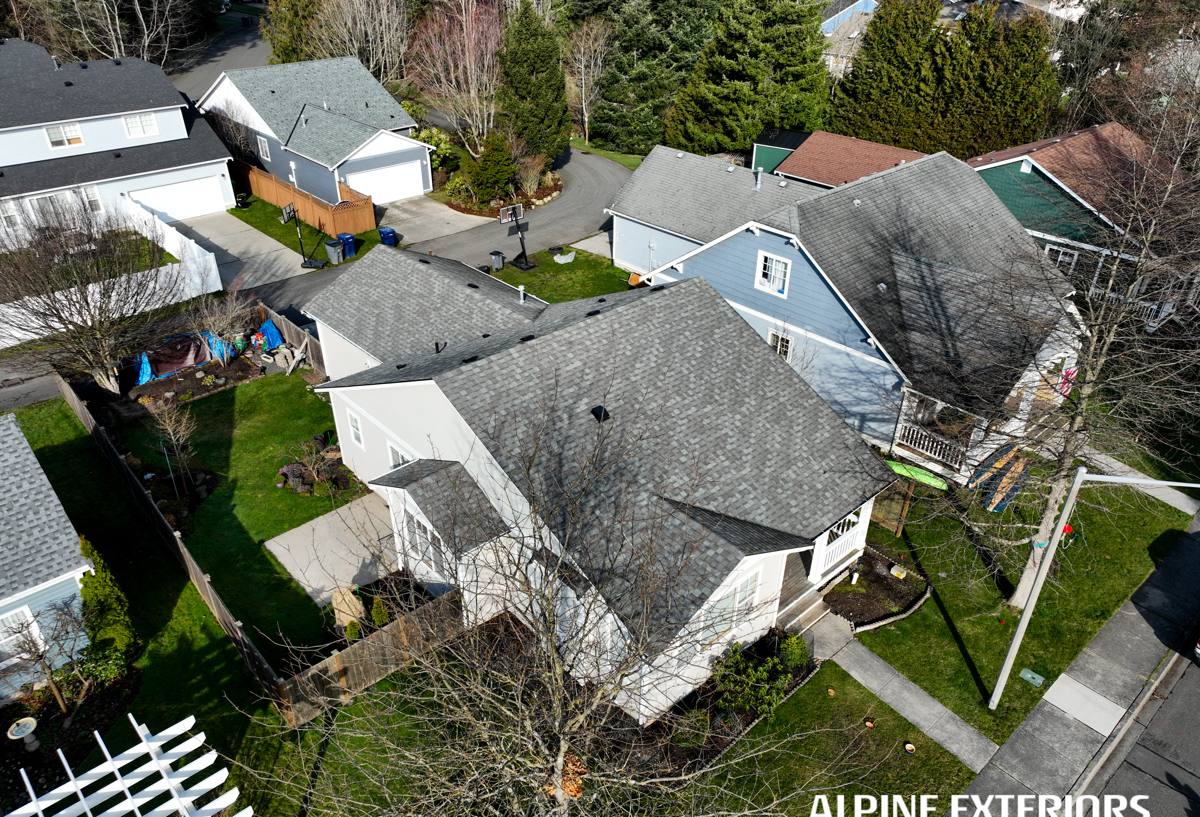
March Point sits out on its own peninsula between Fidalgo Bay and Padilla Bay, which means homes here take weather from more directions than a roof tucked into a sheltered Anacortes neighborhood. Wind off the water, driving rain, and salt-laden air all reach March Point roofs with less to slow them down. When a storm rolls through, the damage isn't always the dramatic kind — a handful of homeowners get the obvious torn-off shingles or a limb through the roof deck, but far more end up with wind-lifted shingle tabs, compromised flashing, or granule loss that won't show up as a leak for another year or two.
That's the pattern we see working roofs in this area: storm damage that's easy to miss until it's already caused secondary problems. Our job on a storm damage call isn't just to patch what's obviously broken — it's to check the whole roof system for what the storm loosened, even if it hasn't leaked yet.
Why Salt Air and Moss Season Change the Repair Math
Two things make Skagit County roofs age differently than roofs inland, and both matter when we're deciding how to repair storm damage rather than just cover it up.
Salt Air and Metal Components
March Point's proximity to Fidalgo Bay and Padilla Bay means metal roofing components — flashing, drip edge, nails, vent boots with metal collars — are exposed to salt-laden air more than a roof further inland would be. Salt accelerates corrosion on unprotected or poorly coated metal. When we're repairing storm damage, we look hard at flashing and fastener condition, not just whether the current storm cracked or lifted it. A repair that reuses corroding flashing because it "still looks intact" is a repair that fails again in the next storm.
The Long Moss Season
Western Washington's wet, mild climate gives moss and algae a long growing window on north-facing and shaded roof slopes — which describes a lot of March Point rooflines given the tree cover in parts of the area. Moss holds moisture against the shingle surface, and on a roof that's already been stressed by wind or impact damage, that trapped moisture finds its way into the smallest gaps a storm created. Part of any storm damage repair we do includes assessing moss buildup nearby, because ignoring it means the repair area stays wet longer than it should.
What Storm Damage Actually Looks Like
Homeowners often expect storm damage to be obvious. Sometimes it is. More often, it's subtle enough that it takes someone who knows what to look for.
- Wind-lifted or creased shingle tabs — shingles that got lifted and re-seated crooked, or creased where the wind bent them without fully tearing them off
- Missing or torn shingles — the obvious kind, usually on the windward slope facing the water
- Granule loss — driving rain and wind-blown debris strip the protective granule layer, leaving asphalt exposed to UV and moisture
- Flashing displacement — around chimneys, skylights, and roof-to-wall transitions, where wind can work flashing loose without tearing anything visible from the ground
- Damaged or dislodged vent boots and pipe collars — small, easy to miss, and a common source of slow leaks after a storm
- Debris impact — dents, punctures, or cracked shingles from branches or wind-carried debris
- Gutter and fascia damage — not the roof surface itself, but it affects how water sheds off the roof afterward
Our Storm Damage Repair Process
1. Full-Roof Assessment, Not Just the Reported Spot
If you call us about a leak in one room, we're not just looking at the ceiling stain's rough location on the roof above it. Water travels along the roof deck and rafters before it shows up inside, so we inspect the full roof surface, flashing points, and attic space where accessible. This is also when we check for pre-existing wear — moss, aging flashing, granule loss from previous storms — that the current storm may have made worse.
2. Clear Explanation Before Any Work Starts
We tell you what we found, what's storm-related versus pre-existing wear, and what the repair options are. If it's a targeted repair, we say so. If we think the damage is extensive enough to affect the whole roof's remaining service life, we say that too — honestly, not as an upsell.
3. Repair, Matched to What's Actually There
Shingle repairs use matching materials where we can source them, with proper nailing patterns and sealant at penetrations — not just tar smeared over a gap. Flashing repairs replace corroded or bent metal rather than caulking around it. Vent boots and pipe collars get replaced, not patched, since a patched boot is a short-term fix at best.
4. Documentation for Insurance
If you're filing an insurance claim, we document damage with photos and a written description of what we found and what repair it requires. We work from what's actually on your roof — we don't pad a claim or write up damage that isn't there, and we won't downplay damage that is.
Repair vs. Replacement: How We Make the Call
Not every storm-damaged roof needs full replacement, and not every roof can be adequately fixed with a patch. The right call depends on a few factors working together.
| Factor | Favors Repair | Favors Replacement |
|---|---|---|
| Extent of damage | Isolated to one slope or a few shingles | Spread across multiple slopes or roof planes |
| Roof age | Roof is younger, well within its service life | Roof is already near the end of its expected lifespan |
| Underlying condition | Deck and flashing sound aside from storm damage | Significant moss damage, soft decking, or corroded flashing found during inspection |
| Material availability | Matching shingles/materials can be sourced | Discontinued material makes a seamless patch impossible |
| Repair history | First storm-related repair on this roof | Roof has needed several storm repairs in recent years |
We'll walk you through where your roof lands on these factors rather than defaulting to the more expensive option. A well-executed repair on a sound roof is often the right, cost-effective call.
What a Correct Repair Involves — And What Cutting Corners Looks Like
Storm damage repair has a few steps that are easy to skip if a crew is trying to move fast. We don't skip them.
Matching Materials and Proper Layering
Shingle courses overlap in a specific pattern for a reason — it's what sheds water correctly. A rushed repair that doesn't respect that layering can look fine and still leak the next time it rains hard.
Fastener Placement
Nails placed too high, too low, or at the wrong count don't hold shingles the way they're rated to. In a wind-exposed spot like March Point, that difference shows up in the next storm, not this one.
Sealant Is a Backup, Not a Fix
Sealant belongs at specific transition points as a secondary barrier. It's not a substitute for correct flashing or shingle placement. A repair that relies mainly on sealant to keep water out is a repair that will need to be redone.
Checking Ventilation While We're Up There
Poor attic ventilation contributes to moss growth and can shorten shingle life from the underside. It's not always the cause of storm damage, but if we notice it while we're addressing storm repair, we'll flag it — fixing the storm damage without mentioning a ventilation problem that will keep causing issues doesn't serve you.
What to Do Right After a Storm
- Do a ground-level visual check from a safe distance — don't get on the roof yourself, especially in wet or windy conditions
- Check the attic (if accessible) for new water stains, damp insulation, or daylight coming through the decking
- Note when the storm hit and any specific damage you can see, for insurance purposes
- Cover exposed areas with a tarp only if you can do so safely from the ground or with proper fall protection — otherwise wait for a professional
- Call for an inspection promptly; the gap between storm damage happening and getting it repaired is when secondary water damage occurs
- Keep any correspondence and photos organized if you plan to file an insurance claim
Why a Crew That Already Works March Point Matters
A roofer who works this specific stretch of Anacortes and Skagit County regularly knows things a crew from further away doesn't — which slopes on a March Point property typically take the brunt of a southwesterly wind, how fast moss reestablishes on shaded slopes here versus a drier inland town, and what flashing and fastener condition tends to look like on homes exposed to this much salt air over time. That local pattern recognition speeds up the assessment and helps us catch damage that isn't obvious yet, rather than only fixing what already leaked.
It also means we're not guessing at permitting, material sourcing, or what actually holds up here versus what looks fine on paper. We size every storm repair to the roof in front of us and the conditions it actually faces, not a generic checklist.
Get Your Roof Checked
If your March Point home took wind, rain, or debris damage in a recent storm — or you're just not sure and want a professional set of eyes on it before it becomes a bigger problem — we're glad to take a look. Reach out for a free, no-pressure estimate using the form below, and we'll walk your roof, tell you honestly what we find, and lay out your options.