 Anacortes
 Siding Built for Life on the Point
March Point sits out on the water in a way most neighborhoods in Skagit County don't. The homes here face wind and moisture from multiple directions, with very little in the way of tree cover or terrain to break it up before it hits an exterior wall. That combination — open exposure, marine air, and near-constant winter dampness — is exactly the kind of environment that separates siding that holds up for decades from siding that starts failing within a few years.
We work on homes throughout Anacortes and the surrounding Skagit County waterfront, and March Point is one of the areas where the climate math is the least forgiving. A siding installation here isn't just about appearance. It's about choosing a material and a installation method that can take on salt air, driving rain, and a long moss season without quietly deteriorating behind the surface you can see.
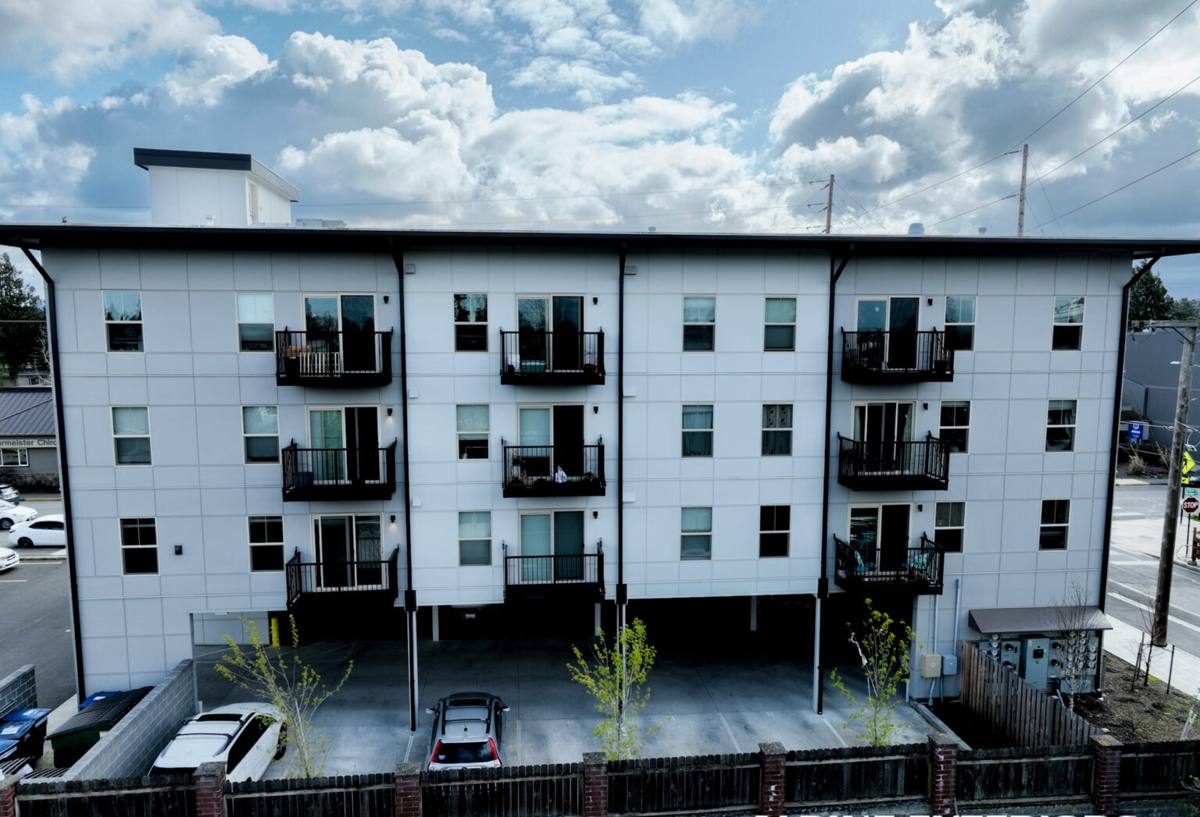
What the March Point Climate Actually Does to Siding
Before we talk about products or process, it helps to understand what's actually working against your siding out here year-round.
Salt Air and Corrosion
Homes close to saltwater deal with airborne salt that settles on every exterior surface, including fasteners, flashing, and trim hardware. Over time, salt exposure accelerates corrosion in anything that isn't rated for it — stapled seams rust, cheap fasteners bleed rust streaks down the wall, and metal trim pieces can fail years before the siding field does. On a point of land like this, that exposure is more constant than it is even a mile or two inland.
Wind-Driven Rain
Anacortes gets plenty of rain, but on an exposed point the rain rarely falls straight down — wind pushes it sideways, into joints, laps, and penetrations that would stay dry on a more sheltered lot. Siding systems and installation details that work fine on a protected inland home can leak on a wind-exposed one if the water management underneath isn't built for it.
Moss, Algae, and Standing Dampness
Western Washington's long wet season means siding surfaces can stay damp for days at a stretch, especially on north-facing walls or areas shaded by the house itself. That dampness is what feeds moss and algae growth, which in turn holds even more moisture against the surface. Untreated or poorly finished materials can start to look tired within a few seasons; the wrong substrate can actually start absorbing that moisture and breaking down.
Why We Install Only James Hardie Fiber Cement
We made a decision as a company to install James Hardie fiber cement siding exclusively — not vinyl, not LP SmartSide, not cedar or primed spruce, not other fiber cement brands. That's not a marketing position, it's a practical one, built around exactly the conditions March Point homes deal with.
Fiber cement is non-combustible, dimensionally stable, and doesn't absorb moisture the way engineered wood products can. James Hardie specifically engineers its HZ5 product line for harsher climate zones, which matters on an exposed point where wind and moisture are a bigger factor than they are for a home tucked into a sheltered inland subdivision. The factory-applied ColorPlus finish is baked on under controlled conditions, which gives it better fade and wear resistance than field-applied paint, and it comes with a real, transferable warranty backing both the material and the finish.
We're not going to tell you every other product on the market is worthless — vinyl and engineered wood siding have their place, and plenty of homes around the country wear them fine. But for the specific combination of salt air, wind-driven rain, and a long moss season that March Point sees every year, we've concluded fiber cement done right is the product that holds up, and it's the only thing we put our name behind.
What a Correct Installation Actually Involves
Siding is only as good as what's happening behind it. A huge share of the siding failures we get called out to inspect aren't a failure of the panel itself — they're a failure of the water management system underneath it, or fasteners and flashing that weren't matched to the environment.
Moisture Management Comes First
Correct installation starts with the weather-resistive barrier and flashing details — window and door heads, penetrations, deck ledgers, and any spot where two building materials meet. On a wind-exposed site like March Point, these details matter more than on a sheltered lot, because wind-driven rain will find any gap that a straight-down rain would never reach.
Fasteners and Hardware Matched to the Environment
Corrosion-resistant fasteners are non-negotiable this close to saltwater. We also follow manufacturer-specified nailing patterns, gaps, and clearances — including the ground clearance and butt joint treatment that keep water from wicking into cut edges, which is one of the more common shortcuts that leads to early failure.
Proper Clearances and Ventilation
Siding installed too tight to grade, roofing, or decking traps moisture against the bottom courses — exactly the spot where moss and rot take hold first. Building in the right clearances and rainscreen ventilation where called for keeps walls able to dry out between storms instead of staying damp for weeks.
Our Process for a March Point Siding Project
Every home is different, but our approach on the peninsula generally follows the same sequence:
- On-site assessment of existing siding, sheathing condition, and wind/moisture exposure on each elevation of the house
- Tear-off of failing siding and inspection of the sheathing underneath for hidden rot or damage
- Repair or replacement of any compromised sheathing before anything new goes back on the wall
- Installation of a correctly lapped weather-resistive barrier and flashing at every penetration
- Installation of James Hardie fiber cement siding and trim to manufacturer specifications, with corrosion-resistant fasteners throughout
- Caulking, touch-up, and final detail work at seams, corners, and trim transitions
- Full site cleanup, including magnetic sweep for stray fasteners
We don't skip the sheathing inspection step, even when it adds time to the project. On an exposed site like March Point, hidden moisture damage behind old siding is common enough that installing new siding over it would just seal the problem in.
Comparing Siding Materials in a Marine Environment
Homeowners on March Point are often comparing quotes that involve different materials entirely, not just different crews. Here's how the common options actually perform under the salt air, wind, and moss conditions specific to this area.
| Factor | James Hardie Fiber Cement | Vinyl | Engineered Wood (e.g. LP SmartSide) |
|---|---|---|---|
| Salt air / corrosion resistance | Non-metallic panel, engineered HZ5 line for harsh climates | Panel itself won't corrode, but can warp or become brittle over time | Wood-based substrate can be vulnerable if moisture gets past the coating |
| Wind-driven rain tolerance | Excellent when installed with correct flashing and laps | Prone to water intrusion at seams under sustained wind | Depends heavily on coating integrity and installation detail |
| Moss/algae resistance on damp walls | Factory finish resists staining; material itself won't rot | Doesn't rot, but moss and mildew still cling to the surface | Moisture trapped under coating can lead to swelling and decay |
| Fire performance | Non-combustible | Combustible, can melt or deform | Combustible, wood-fiber based |
| Finish longevity | Factory-applied ColorPlus finish, long fade resistance | Color is through the material but can fade and chalk | Field or factory coating, dependent on maintenance |
This isn't a knock on every other product on this list — it's simply why, given what March Point's climate does to a house over the years, we've standardized on fiber cement and don't install the alternatives.
Signs Your March Point Home May Need New Siding
Because this area's climate accelerates wear, it's worth checking your exterior more often than you might on a sheltered inland property. Signs worth taking seriously include:
- Soft or spongy spots when you press on the siding, especially near the bottom courses
- Persistent moss or algae growth that comes back within weeks of cleaning
- Rust streaking below nail heads or metal trim pieces
- Visible gaps, warping, or buckling panels, particularly on wind-facing walls
- Peeling or bubbling paint, or chalky, faded color that won't wash off
- Rising energy bills that suggest air or moisture is getting through the wall assembly
- Interior signs like musty smells, staining, or soft drywall near exterior walls
Any one of these on its own isn't necessarily an emergency, but on an exposed site like March Point, several of them together usually mean the siding and the moisture barrier behind it have been struggling for a while.
Why Hiring a Crew That Already Works This Area Matters
Siding installation isn't identical from lot to lot. A crew that mostly works sheltered, inland sites in Skagit County can do a technically fine install and still under-detail a home on an exposed point like this one, simply because they're not used to designing for that level of wind and salt exposure. Working this area regularly means knowing which elevations typically take the worst of the weather, where flashing details need extra attention, and which fastener and clearance specs actually hold up here rather than just meeting the minimum on paper.
It also means showing up already familiar with the practical realities of the peninsula — site access, typical soil and drainage conditions, and the kind of wind loading a job needs to be planned around before the first panel goes up.
If your March Point home's siding is showing its age, or you're planning ahead for a replacement, we're happy to take a look and walk you through what we're seeing — no pressure, no obligation. Fill out the form below for a free estimate.