 Anacortes
 Roofing on a Peninsula: What Makes March Point Different
March Point sits on a peninsula with water exposure on more than one side, which means the homes out there deal with a different set of stresses than a roof three miles inland in downtown Anacortes. Wind comes off the water with fewer trees and buildings to slow it down. Salt-laden air settles on every exposed surface, including the roof. And the shade from mature evergreens on many lots keeps sections of the roof damp for days after a storm passes. None of this is unusual for Skagit County waterfront and near-waterfront properties, but it does mean a roofing job that would hold up fine in a drier, more sheltered neighborhood can fail early out here if it isn't built with these conditions in mind.
We work on asphalt shingle roofs throughout the March Point area regularly, so we're not guessing at how a roof behaves in this specific setting. We've seen which details matter and which shortcuts show up as problems in year three instead of year fifteen.
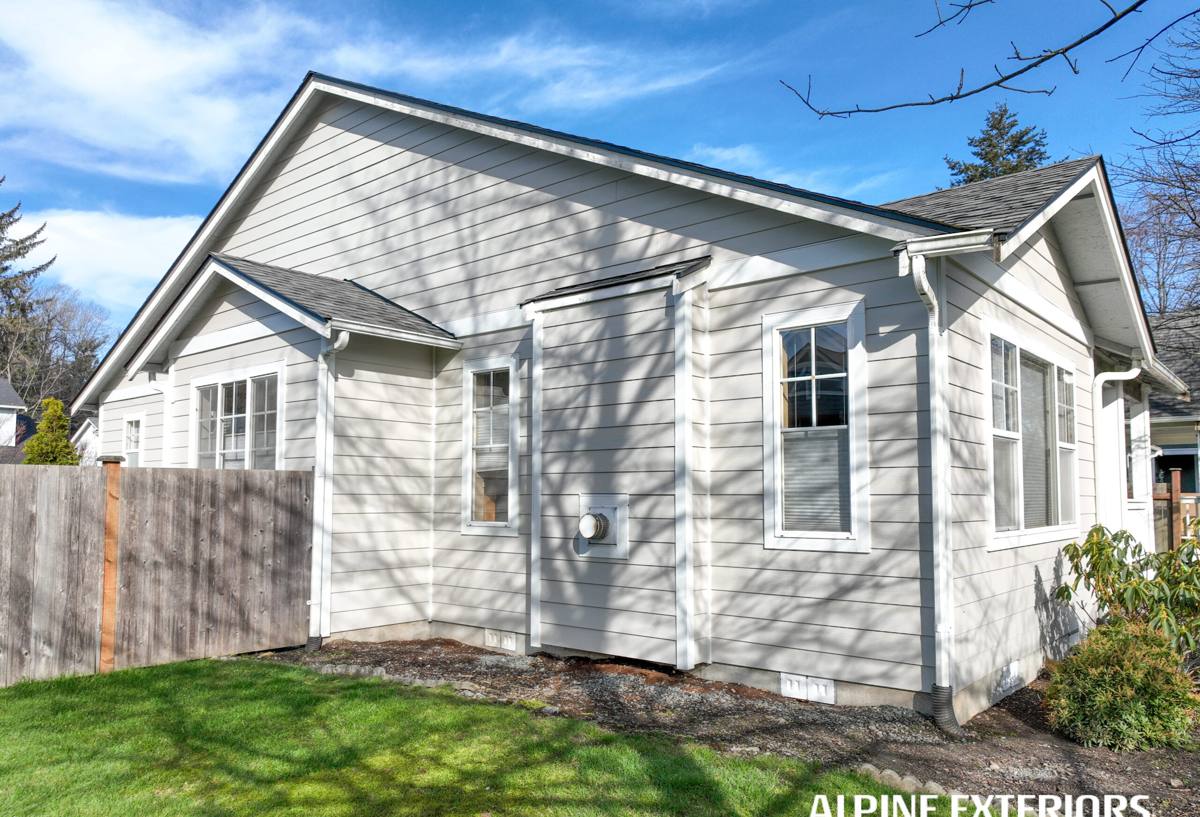
The Three Things That Age a Roof Faster Out Here
Salt Air and Metal Components
Asphalt shingles themselves tolerate salt air reasonably well, but the metal parts of a roofing system don't get the same pass. Flashing, drip edge, fasteners, and roof vents are all exposed to airborne salt, and lower-grade or improperly coated metal will corrode noticeably faster near open water than it would further inland. Once flashing starts to pit or a fastener head rusts through, that's a direct path for water to get under the shingles.
Driving Rain and Wind-Driven Water
Pacific storm systems don't just drop rain straight down here — wind pushes it sideways, up under shingle tabs, and into any gap in the flashing or underlayment. A roof detailed for calm, vertical rainfall will leak at the exact spots that don't matter in a sheltered yard but matter a lot on an exposed peninsula lot: valleys, eaves, and anywhere two roof planes meet.
Moss and Shade
Wherever tree cover keeps a roof slope shaded, moss gets a foothold. Moss holds moisture against the shingle surface long after the rest of the roof has dried, which accelerates granule loss and, over time, lifts shingle edges enough for wind and rain to get underneath. North-facing slopes and anything tucked under conifers are the first places we check on a March Point roof inspection.
What We Look For on a March Point Roof
Before we talk about replacement or repair, we walk the roof (or use a lift/drone when pitch or access doesn't allow safe foot traffic) and look for specific, telling signs rather than just a general impression of "old roof." Here's what actually tells us something on a coastal, moss-prone roof:
- Granule buildup in gutters and downspouts — a sign shingles are shedding their protective surface faster than normal
- Dark streaking or green-black moss lines, especially on shaded or north-facing slopes
- Lifted or curling shingle tabs at eaves and rake edges, where wind gets the most leverage
- Rust staining below flashing, vent boots, or exposed fasteners
- Soft spots or slight sponginess in the decking when walked, which usually means moisture has already gotten past the shingles
- Valley wear, since valleys carry more water volume than any other part of the roof during a heavy storm
Any one of these on its own might just mean routine maintenance. Several together usually mean it's time to talk about the roof's remaining service life honestly, rather than patching around a bigger problem.
What a Correct Asphalt Shingle Roof Requires Here
A shingle roof is a system, not just a layer of shingles. On a March Point property, every layer of that system earns its keep:
Underlayment and Ice-and-Water Barrier
We use synthetic underlayment across the full roof deck and self-adhering ice-and-water barrier at eaves, valleys, and around penetrations — the spots most likely to see wind-driven water get underneath the shingle layer. This isn't optional upgrade territory in a climate that gets sustained wind-driven rain; it's the difference between a roof that sheds water and one that just slows it down.
Flashing That's Built for Salt Exposure
We detail flashing at every wall intersection, chimney, skylight, and valley with materials and fastening chosen to hold up to salt air rather than the cheapest option that meets code. Corroded flashing is one of the most common causes of a roof leak that has nothing to do with the shingles themselves.
Fasteners Rated for the Environment
We use corrosion-resistant nails and fasteners throughout, not just at the parts of the roof that are easy to see. A fastener that starts rusting is a fastener that eventually loses its grip.
Ventilation That Actually Moves Air
A balanced intake-and-exhaust ventilation system keeps the underside of the roof deck dry and closer to outdoor temperature, which matters twice over here: it reduces the condensation that can rot decking from below, and it helps the topside dry out faster after the region's long stretches of overcast, damp weather — which is exactly the condition moss needs to take hold.
Our Process for a March Point Roofing Job
- On-site assessment. We inspect the existing roof, decking condition, ventilation, and flashing details, and we're straight with you about what's actually needed versus what can wait.
- Written estimate. You get a clear scope and price before any work starts — no vague allowances for "surprises" that turn into change orders later.
- Tear-off and deck inspection. We remove old roofing down to the deck (we don't install a new layer over an old one — more on why below) and repair or replace any damaged sheathing we find.
- Underlayment and flashing install. Ice-and-water barrier at vulnerable zones, synthetic underlayment across the field, and new flashing detailed for this climate.
- Shingle installation. Installed to manufacturer nailing and exposure specs, which matters more for wind performance than most homeowners realize.
- Ventilation check and correction. We confirm intake and exhaust are balanced, not just present.
- Cleanup and magnetic sweep. Debris and stray fasteners removed from the yard and driveway before we consider the job done.
We don't install a new shingle layer over an existing one, even though it's cheaper and faster. A second layer traps moisture against the old shingles, adds weight, and makes it impossible to inspect or repair the deck underneath — a real liability in a climate where deck rot from long-term moss and moisture exposure is a genuine risk.
Repair or Full Replacement?
Not every roof needs to come off. If the decking is sound, the damage is localized (a storm-torn section, a failed flashing detail, isolated moss damage), and the rest of the roof has years left, a targeted repair is the honest recommendation. We'll tell you when a repair makes sense — and when it's just delaying a replacement you'll end up paying for twice.
Choosing a Shingle for This Environment
Not every asphalt shingle product performs the same way in wind, salt air, and shaded, moss-prone conditions. Here's how the common options compare for a March Point roof:
| Shingle Type | Wind Performance | Moss/Algae Resistance | Typical Lifespan | Cost Factor |
|---|---|---|---|---|
| 3-tab shingles | Adequate on sheltered slopes; weaker at exposed eaves | Standard unless algae-resistant granules specified | 15–20 years | Lowest upfront cost |
| Architectural/laminate shingles | Stronger wind ratings, better for open, exposed lots | Available with algae-resistant granules | 25–30 years | Moderate |
| Impact-rated laminate shingles | Highest wind and impact ratings | Available with algae-resistant granules | 30+ years | Highest upfront cost, often insurance discounts available |
For most March Point homes with real wind exposure, we steer clients toward architectural shingles with algae-resistant (copper-infused) granules as the baseline, not the upgrade. On the most exposed lots — open to the water with little windbreak — the impact-rated option earns its extra cost through fewer wind-related warranty claims and, in some cases, lower insurance premiums. We'll walk through the real trade-offs for your specific lot rather than defaulting to whatever's cheapest to quote.
What Drives the Cost of a Roofing Job Here
Every roof is priced individually, but these are the factors that consistently move the number up or down on a March Point job:
| Factor | Why It Matters |
|---|---|
| Roof pitch and access | Steeper roofs and limited driveway/yard access take more time and sometimes require a lift |
| Layers to remove | Multiple existing layers add tear-off time and disposal cost |
| Deck condition | Rotted or soft sheathing found during tear-off needs replacement before new roofing goes down |
| Shingle grade chosen | 3-tab, standard architectural, and impact-rated products carry different material costs |
| Number of valleys, penetrations, and flashing details | More complex rooflines mean more flashing work, which is labor-intensive but critical here |
| Ventilation upgrades needed | Adding or correcting intake/exhaust vents where the existing system is inadequate |
We break all of this out in the written estimate so you can see exactly what you're paying for, rather than a single lump number.
Maintenance That Actually Matters in This Climate
A well-built roof still needs upkeep out here, and the maintenance that matters most in a salt-air, moss-prone environment is fairly specific:
- Clear gutters and downspouts at least twice a year — clogged gutters back water up under the shingle edge
- Have moss physically removed rather than just treated when it's established on a slope; chemical treatment alone doesn't fix existing damage
- Trim back overhanging branches that keep a roof section shaded and damp longer than the rest of the roof
- Have flashing and fasteners checked every few years for early corrosion, especially on the sides of the roof facing open water
- Confirm attic ventilation isn't blocked by insulation, which is a common and easy-to-miss cause of trapped moisture
- Address any granule loss or lifted tabs promptly — small issues here turn into deck damage faster than in a sheltered inland location
Why a Crew That Already Works March Point Is Worth Something
A roofing crew that mostly works dry, sheltered neighborhoods will still do competent work — but they may not default to salt-tolerant flashing, algae-resistant shingles, or the ventilation detailing that a peninsula lot actually needs unless you ask for it specifically. We don't have to ask, because it's what we already spec on jobs out here.
There's also a practical side: some March Point properties fall outside Anacortes city limits, in unincorporated Skagit County, which can mean different permitting steps than a job downtown. A crew that's pulled permits for both handles that without it becoming your problem to sort out.
And when a storm rolls through and something needs a look sooner rather than later, being a local, known crew means a faster response than waiting on a company based an hour or more away.
Ready When You Are
If you're noticing moss buildup, granule loss in the gutters, or you just know your roof is getting up there in age, we're happy to take a look and give you a straight answer — repair, partial replacement, or full replacement — with no pressure either way. Use the form below to request a free estimate, and we'll get out to your March Point property to assess it in person.