 Anacortes
 Building Decks That Hold Up to Guemes Island's Marine Climate
Guemes Island sits right in the path of everything Rosario Strait and the Salish Sea throw at it — salt-laden wind off the water, long stretches of driving rain through fall and winter, and a moss season that seems to start earlier and last longer every year. A deck built here isn't working under the same conditions as one twenty miles inland. It's exposed to airborne salt that corrodes hardware, moisture that gets trapped in end grain and joints, and shade patterns from island tree cover that keep certain sections of decking damp for days after a storm passes. Building a deck that actually holds up on Guemes Island means designing around all of that from the first framing decision, not just picking a nice-looking decking board.
We build and repair decks throughout Anacortes and Skagit County, and Guemes Island jobs get their own approach. The materials, fastener choices, and drainage details that work fine in a drier, more sheltered yard in town aren't always the right call out here.
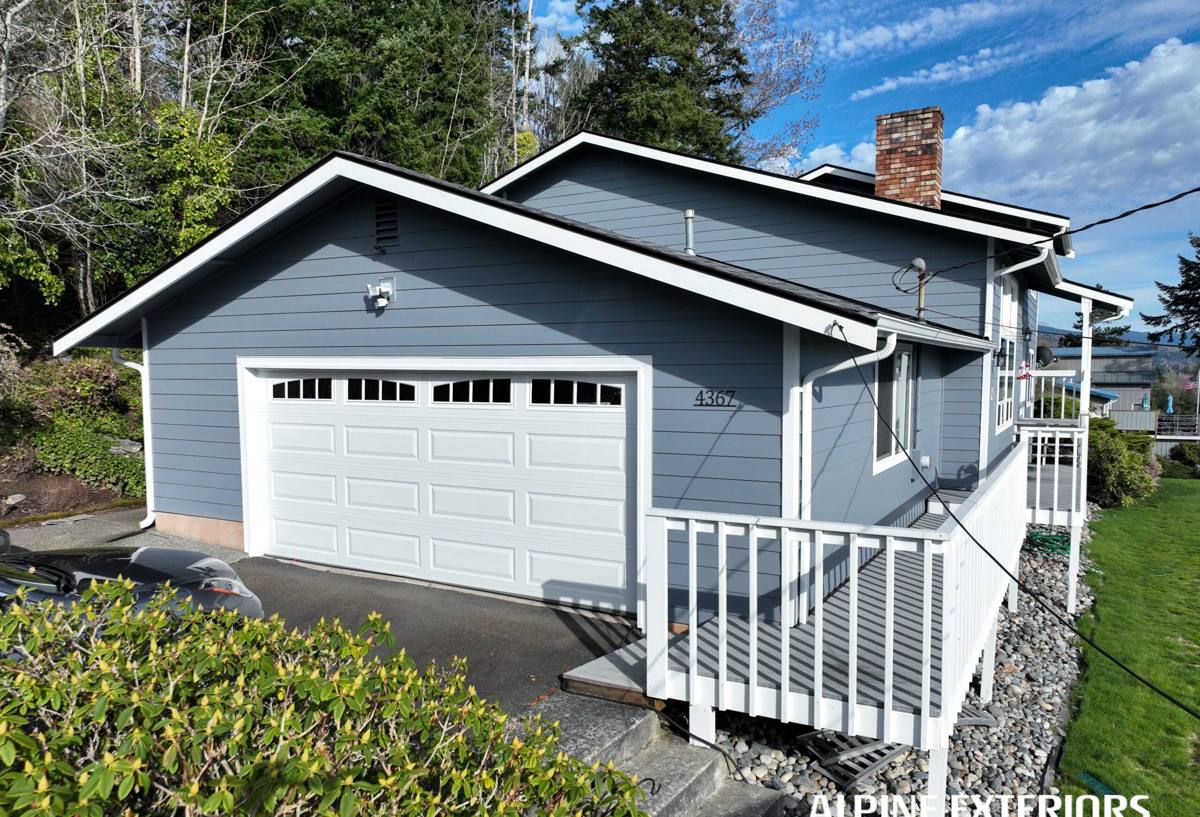
What Salt Air and Moss Season Actually Do to a Deck Over Time
Two slow, quiet problems account for most of the deck failures and premature replacements we see on island properties:
Salt Air and Metal Fasteners
Airborne salt accelerates corrosion on any exposed metal — nails, screws, joist hangers, bolts, and structural connectors. On a standard-grade fastener, that corrosion can start showing as rust streaks on the decking within a couple of seasons. The real damage happens where you can't see it: inside joist hangers and structural connections, where corroding steel loses holding strength long before there's any visible sign from the top of the deck.
Moss, Shade, and Trapped Moisture
Moss doesn't just make a deck look neglected — it holds moisture directly against the decking surface, which keeps wood-based products wet far longer than open sun and air would allow. That extended dampness is what drives rot in real wood decking, softens the surface of lower-grade composite boards, and turns any gap, seam, or fastener head into a spot where organic buildup accelerates decay. Shaded, north-facing, or tree-covered sections of a deck — common on wooded island lots — need this factored into material choice and board spacing from the start, not treated as a maintenance afterthought.
Choosing Decking Materials for an Island Property
There's no single "best" decking material — there's the right material for a given budget, sun/shade exposure, and how much upkeep the homeowner actually wants to do. Here's how the common options stack up under Guemes Island conditions specifically:
| Material | Salt Air Resistance | Moss/Moisture Behavior | Maintenance | Typical Lifespan |
|---|---|---|---|---|
| Cedar (real wood) | Good — naturally rot-resistant | Needs regular cleaning to prevent moss buildup in shaded areas | Annual cleaning, periodic staining/sealing | 15-20 years with upkeep |
| Pressure-treated fir/pine | Fair — treatment protects core but cut ends need sealing | More prone to moss and surface graying without maintenance | Regular sealing, moss treatment | 10-15 years |
| Capped composite (PVC-capped) | Excellent — non-porous cap resists salt and moisture intrusion | Moss can still grow on the surface but doesn't penetrate the board | Periodic washing | 25-30+ years |
| Uncapped/entry-level composite | Fair — more porous, can absorb moisture at cut edges | More susceptible to moss staining and surface softening over time | Regular cleaning, edge sealing at cuts | 15-20 years |
For most Guemes Island homes, we steer clients toward cedar for a warmer, natural look on well-ventilated, sun-exposed decks, and capped composite for shaded sections, waterfront exposure, or anyone who wants to spend their weekends doing something other than deck maintenance. We're honest about the trade-off either way: cedar looks and feels great but asks for a yearly commitment, while composite costs more upfront and needs almost none.
A Note on Fastener Grade
Whatever decking material you choose, the fasteners and structural hardware matter just as much on an island property. We use stainless steel or heavy hot-dip galvanized fasteners and connectors rated for coastal exposure on Guemes Island builds — standard interior-grade hardware isn't sufficient here and shows it within a few years.
Framing and Fasteners: The Part Nobody Sees But Everyone Regrets
A deck's surface material gets all the attention, but the framing underneath is what determines whether it's still safe and solid in fifteen years. On a coastal, salt-exposed, high-moisture site like Guemes Island, we pay particular attention to:
- Corrosion-resistant joist hangers and structural screws rated for coastal or treated-lumber exposure
- Proper flashing at ledger board connections to keep water from tracking behind the deck into the house framing
- Joist spacing and blocking sized for the actual decking product, not a generic minimum
- Gapping between boards that allows airflow and drainage without letting debris pack in and hold moisture
- Post bases that keep wood posts off grade contact, reducing rot at the most vulnerable connection point
- Ventilation underneath the deck so the structure can dry out between rain events instead of staying damp
Skip any one of these and the deck can still look fine on top for years while the framing underneath quietly deteriorates — which is exactly how we end up doing emergency structural repairs on decks that are barely a decade old.
Ferry Access and Island Logistics: Why Local Experience Matters
Building on Guemes Island comes with a practical wrinkle that mainland Anacortes jobs don't have: everything — crew, tools, lumber, hardware, concrete — has to move on and off the island by ferry. That affects how a project gets scheduled and staged. Material deliveries need to be planned around ferry timing rather than a same-day lumber yard run, and a crew that's used to working the island builds that logistics into the project timeline from the estimate stage instead of discovering it mid-job. It also means getting the material order right the first time matters more here than almost anywhere else in the county — a missing box of fasteners isn't a quick fix when it means waiting on the next ferry crossing.
A contractor who already works Guemes Island regularly has this dialed in: they know ferry schedules, they order with enough buffer, and they don't treat the island as an inconvenient add-on to their regular route through Anacortes and the rest of Skagit County.
Our Deck Building Process
Every deck we build on Guemes Island follows the same core process, adjusted for the specific site, sun exposure, and how the homeowner plans to use the space:
- On-site assessment of sun/shade exposure, wind exposure, and drainage patterns specific to the lot
- Material recommendation based on budget, maintenance preference, and how exposed the deck will be to salt air and shade
- Structural design sized to current code requirements, including footings, ledger attachment, and load path
- Coastal-grade fasteners and hardware specified for every structural connection
- Proper ledger flashing and house-connection waterproofing before any decking goes down
- Deck board installation with spacing and orientation set for drainage and airflow
- Final walkthrough covering the maintenance schedule appropriate to the material chosen
Permits and Code Considerations in Skagit County
Most new decks and significant deck rebuilds require a permit through Skagit County, with specific requirements around footing depth, railing height, guard spacing, and ledger attachment to the house — all of which get more scrutiny on elevated or waterfront decks. We handle the permitting process as part of the project rather than leaving homeowners to sort it out, and we build to the load and safety requirements that apply to the site, not just the minimum that gets a project started.
Maintenance: Keeping a Guemes Island Deck Looking Good Year After Year
The material and fastener choices we make up front do a lot of the work, but every deck on the island benefits from a bit of seasonal attention:
| Task | Frequency | Why It Matters Here |
|---|---|---|
| Sweep debris and check for moss | Monthly in fall/winter | Prevents moss from establishing and holding moisture against boards |
| Wash surface with deck cleaner | 1-2x per year | Removes salt residue and organic buildup before it stains or softens material |
| Inspect and re-seal cedar/wood decking | Annually | Maintains the wood's natural rot resistance against constant coastal moisture |
| Check fastener heads and hardware for corrosion | Annually | Catches early hardware corrosion before it becomes a structural issue |
| Clear gaps between boards | Seasonally | Keeps drainage paths open so water and moss don't accumulate underneath |
Why Hire a Crew That Already Works Guemes Island
A deck is a structural project sitting outside in one of the more demanding microclimates in Skagit County. Getting it right means understanding how salt air, shade, and moisture actually behave on this specific island, not just building to a generic spec sheet. It also means being realistic about logistics — ordering material correctly the first time, planning around ferry access, and not treating an island job as a rush.
If you're planning a new deck, a rebuild, or want a second opinion on a deck that's showing its age, we're happy to come take a look. We offer free, no-pressure estimates for Guemes Island homeowners — just fill out the form below and we'll get in touch to talk through what your property actually needs.