 Anacortes
 Board & Batten Siding on Anacortes' Waterfront
Flounder Bay sits right up against the water, and that changes what a siding job needs to survive. Homes here take a steady diet of salt-laden air, wind-driven rain off the strait, and the kind of shaded, damp microclimate that keeps moss and algae growing most of the year. Board and batten is a popular look in this part of Anacortes — the vertical lines read as coastal and Pacific Northwest at once — but the style only holds up if the material underneath the reveal is chosen and installed for this exact environment, not for a subdivision forty miles inland.
This page covers board and batten siding specifically for Flounder Bay properties: what the climate does to different materials, what a correct installation actually involves, and why we only install this style in James Hardie fiber cement.
What Board and Batten Siding Is
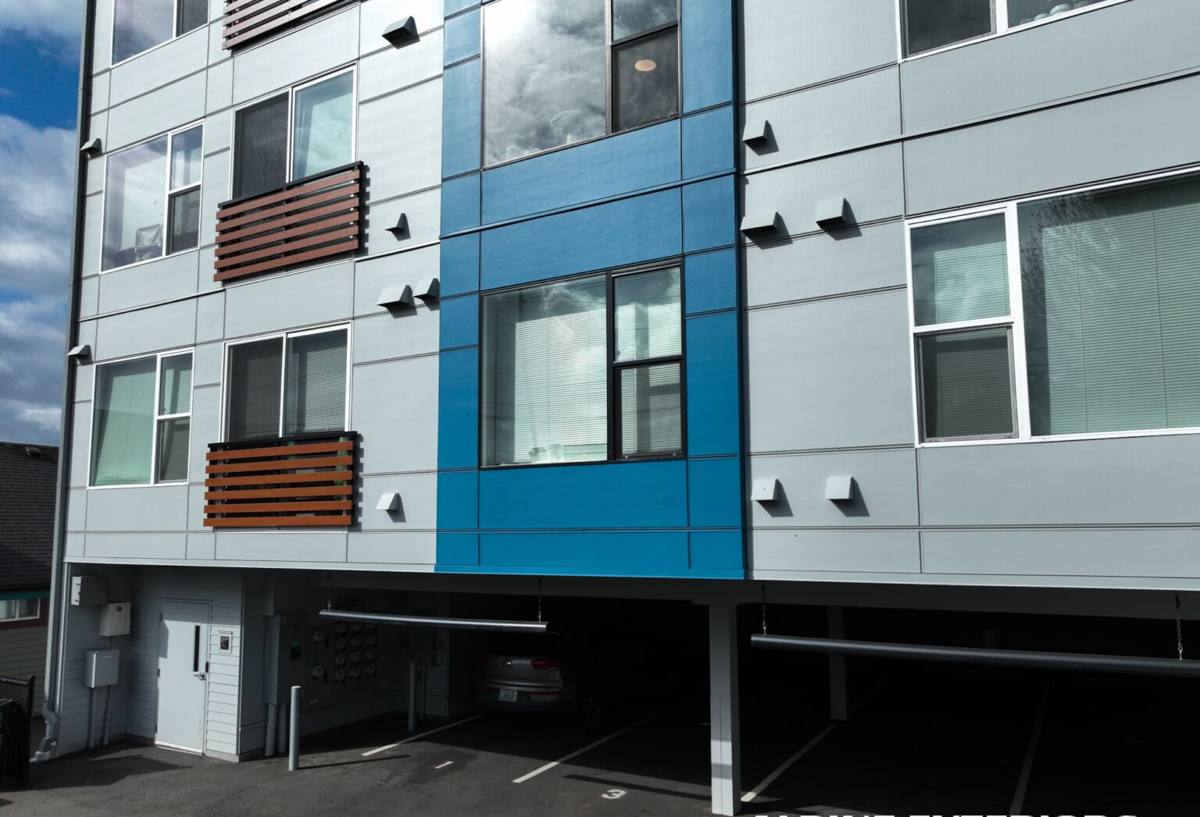
Board and batten is a vertical siding pattern: wide flat panels or boards installed with narrower strips (battens) covering the seams between them. It's one of the oldest siding styles in North America, originally developed as a practical way to cover gaps in vertical board sheathing on barns and early homes. Today it's chosen mostly for its look — clean vertical lines, deep shadow lines from the battens, and a farmhouse or modern-coastal character that pairs well with the shingle and craftsman styles common around Skagit County.
The style itself is not the weak point. The weak point is almost always the material and the install — the seams, the fastening pattern, and how the whole assembly manages water. Vertical siding sheds water differently than horizontal lap siding, and it needs a system designed for that, not a horizontal product turned sideways.
Why the Style Suits This Neighborhood
Board and batten reads well against the mix of newer waterfront construction and older Fidalgo Island homes near the marina. It also tends to show fewer visible seams than lap siding on tall gable walls, which matters on the two-story homes common in this part of Anacortes where a busy horizontal reveal can look choppy from the water side.
What Salt Air, Rain, and Moss Actually Do to Siding
Three things define the Flounder Bay climate, and each one attacks siding a little differently:
- Salt air: Airborne salt accelerates corrosion on fasteners, flashing, and any exposed metal trim, and it can pit or dull certain factory finishes faster than the same product would wear a few miles inland.
- Driving rain: Wind off the water pushes rain sideways into vertical seams and batten joints. On a poorly detailed board and batten wall, that means water tracking behind the battens instead of running down the face.
- Moss and algae: Shaded north and west walls near the water stay damp for days after a storm. Moss doesn't just look bad — its root structure holds moisture against the siding surface, and on absorbent materials that moisture eventually finds a way into the substrate.
None of this is unique to Flounder Bay — it's the same story up and down the Skagit County coastline — but properties directly on the water get a concentrated version of it. That's the standard we install to.
Why We Only Install Board and Batten in James Hardie Fiber Cement
We install one siding brand, in every style we offer, including board and batten: James Hardie fiber cement. That's a deliberate standard, not a default, and it matters more on a marine-exposure job than almost anywhere else we work.
Fiber cement is non-combustible and dimensionally stable — it doesn't swell, cup, or expand and contract with moisture the way wood-based products do. James Hardie's HZ5 formulation is engineered specifically for the kind of wet, marine-adjacent climate Flounder Bay sits in, and the ColorPlus factory finish is baked on under controlled conditions rather than field-applied, which gives it better resistance to fading and moisture intrusion at the surface than a site-painted product.
We get asked why we don't offer the alternatives, so here's the honest version of each:
Cedar and Primed Wood
Real wood board and batten looks beautiful and it's a traditional choice for this style. Its trade-off in a salt-air, high-moisture environment is maintenance: wood siding needs recoating on a real schedule, end grain at the board edges is a moisture entry point, and the battens themselves create extra seams for water to reach exposed wood. On a shaded, damp waterfront wall, that maintenance clock runs faster than most homeowners want to keep up with.
Vinyl
Vinyl board and batten is inexpensive and low-maintenance in the sense that it doesn't need painting, but it's a thin material that can warp or become brittle over time, and its seams and panel joints rely heavily on correct installation to stay tight in wind-driven rain. It's also not the look most Flounder Bay buyers are after — the deep shadow lines that make board and batten attractive don't translate well to vinyl's thinner profile.
LP SmartSide
LP SmartSide is an engineered wood product, and engineered wood — even with a resin-treated strand core — is still wood at its core. It performs fine in a lot of climates, but wood-based siding depends entirely on caulked and painted edges staying sealed to keep moisture out. In a marine environment with sustained damp shade, that's a maintenance dependency we'd rather not put a client into. Fiber cement doesn't have that vulnerability.
What a Correct Board and Batten Installation Involves
The style's biggest failure point is water management behind the battens, so the details below aren't optional extras — they're what separates a board and batten wall that lasts from one that traps moisture behind an attractive face.
- Rainscreen gap: A drainable air gap between the siding and the water-resistive barrier lets any moisture that gets past the surface drain and dry instead of sitting against the sheathing.
- Correct fastening: James Hardie panel and batten systems have specific fastener spacing, embedment depth, and corrosion-resistant fastener requirements — critical near salt air, where the wrong fastener corrodes and stains the face long before the siding itself fails.
- Batten placement over structural framing where required, and proper batten width and spacing per the manufacturer's installation instructions, not eyeballed for looks alone.
- Flashing at every horizontal interruption — window and door heads, transitions, and the base of the wall — so water is directed out and away rather than into a seam.
- Sealed panel joints at any point where board and batten panels meet, using the manufacturer-specified joint treatment rather than caulk alone.
Skip any one of these and the wall can look correct for a year or two before the underlying moisture problem shows up as staining, soft trim, or paint failure.
Material Comparison for a Marine-Exposure Board and Batten Wall
| Material | Salt Air / Moisture Behavior | Maintenance Demand | Fire Performance |
|---|---|---|---|
| James Hardie fiber cement | Dimensionally stable, engineered HZ5 line for wet climates | Low — factory ColorPlus finish, no regular repainting | Non-combustible |
| Cedar / primed wood | Absorbs moisture at end grain and seams; prone to cupping in sustained damp shade | High — recoating and caulk maintenance on a set schedule | Combustible |
| LP SmartSide | Engineered wood core; depends on sealed edges staying intact | Moderate to high — edge sealing and repainting over time | Combustible |
| Vinyl | Doesn't rot but can warp, fade, or crack; joints rely on tight fit | Low, but limited repair options if damaged | Combustible, can deform under heat |
Our Process on a Flounder Bay Job
The steps are the same craft on every home, but the sequence gets extra attention on a waterfront property:
- Site walk and moisture check: We look at existing siding, trim, and sheathing for signs of past water intrusion before quoting anything — common on older walls that have taken years of driving rain.
- Weather barrier and rainscreen install: This is the layer that does the real work once the siding is up, and it's not visible once the job is done, which is exactly why it has to be right the first time.
- Flashing at every penetration and transition — windows, doors, decks, and roof lines — sequenced so water always sheds outward.
- Panel and batten install to James Hardie's fastening and spacing specifications, using corrosion-resistant fasteners suited to the salt-air exposure.
- Final detail pass: trim, joint treatment, and a walkthrough so you know exactly what was done and why.
Maintenance Checklist for Board and Batten Near the Water
- Rinse pollen, salt residue, and grime off the siding once or twice a year, more often on walls facing the water directly.
- Inspect shaded, north- and west-facing walls each fall for moss or algae growth before moss season sets in.
- Check caulking at trim and panel joints annually — sealant is the one part of a correctly built system that does wear over time.
- Keep gutters clear so roof runoff isn't dumping extra water down the wall face during storms.
- Trim back landscaping that keeps siding in constant shade and damp — airflow is one of the cheapest ways to slow moss growth.
Why a Crew That Already Works Flounder Bay Matters
A siding crew that's already worked this specific stretch of Anacortes waterfront has seen which walls take the worst of the wind-driven rain, which sides of a house grow moss fastest, and where salt air tends to chew through the wrong fastener first. That's not something you get from a general contractor pulling siding specs off a national average — it comes from doing the work in this exact climate, on this exact coastline, repeatedly. It shows up in small decisions: which wall gets the extra flashing detail, which fastener spec actually holds up here, and where the rainscreen gap needs to be a little more generous than the minimum.
If you're planning a board and batten project in Flounder Bay, we'd be glad to take a look at your home and walk you through exactly what it needs. Reach out for a free, no-pressure estimate — there's a form below to get started.