 Anacortes
 Windows Built for Mount Vernon's Weather, Not Just the Showroom
Mount Vernon sits in the Skagit Valley, close enough to the water and the marine air flowing in off Fidalgo Bay and the Salish Sea that homes here take on a specific kind of punishment. It's not the dramatic kind — no hail, no wildfire smoke stress on seals like you'd get further inland. It's the slow, grinding kind: months of driving rain, salt-laced air that finds its way into any gap in a frame, and the long stretch of low-sun, high-moisture months where moss and algae get a foothold on anything that stays damp. Windows are one of the first things on a house to show that wear, and they're one of the most expensive things to get wrong.
When we talk about "energy-efficient windows" for a Mount Vernon home, we mean something more specific than just the glass package. It's the whole system — frame material, glazing, flashing, and installation detail — working together to keep water out, keep conditioned air in, and hold up to years of the Skagit Valley's particular mix of wet and salty. A window that performs great in a dry climate can still fail here in five years if it wasn't installed with this weather in mind.
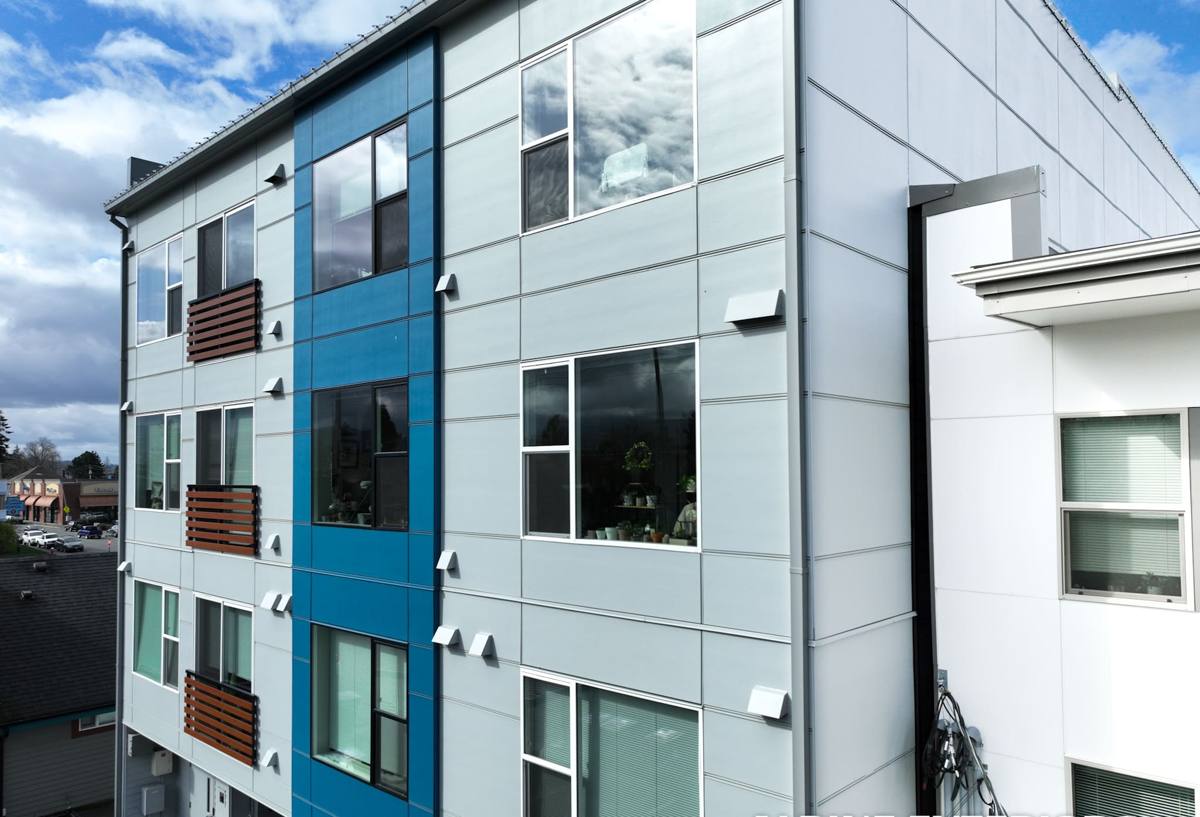
What Skagit County's Climate Actually Does to Windows
Driving Rain
Rain in this area doesn't just fall straight down — wind off the water pushes it sideways into wall assemblies, especially on west- and south-facing elevations. Windows without proper flashing, sloped sills, and sealant details will let water track behind the frame and into the wall cavity long before you ever see a stain on the interior drywall. By the time it shows up inside, the sheathing underneath has often been wet for a while.
Salt Air
Being close to Puget Sound means airborne salt is a real factor, even a handful of miles inland. Salt accelerates corrosion on hardware — hinges, locks, cranks, and especially aluminum components that aren't properly finished or protected. It also degrades weaker sealants and gaskets faster than a landlocked climate would, which shows up as air leaks and failed seals sooner than the warranty period suggests it should.
The Long Moss Season
Western Washington's extended wet season — roughly October through May here — keeps horizontal surfaces damp for weeks at a stretch. Window sills, trim, and the tops of frames are prime real estate for moss and algae growth if they don't shed water well or if the material can't handle sustained moisture. Once organic growth gets established in a joint or seam, it holds moisture against the material and accelerates whatever decay process is already underway.
Temperature Swings and Condensation
Mount Vernon's climate is mild by national standards, but the humidity swings between a cold, wet winter and a warmer, still-humid summer create real condensation potential on older or poorly-rated glass. Single-pane and early double-pane windows fog up, sweat on the interior, and let heat walk straight through the glass — which shows up as a heating bill that doesn't match how well-built the rest of the house is.
What "Energy-Efficient" Should Mean for This Area
Energy efficiency isn't one number on a sticker — it's a combination of factors that matter differently depending on climate. For Skagit County, we weigh these in roughly this order:
- Air and water sealing at the installation, not just the unit itself — the best window in the world underperforms if it's not flashed and sealed correctly for wind-driven rain
- Low-E glass coatings — reduce heat loss through the glass during our cool, overcast months without making the house feel dark
- Frame material that resists moisture and salt-air corrosion — this affects both energy performance and how long the window looks and operates like new
- Multi-point locking hardware — keeps the sash compressed evenly against weatherstripping, which matters more in a windy, wet climate than in a calm one
- Warm-edge spacers — reduce the cold-edge effect around the glass perimeter, which is where condensation and heat loss both concentrate
Frame Material: What Holds Up Here and What Doesn't
We get asked a lot about vinyl vs. fiberglass vs. wood-clad, and the honest answer depends on budget, the house's style, and how much upkeep the homeowner wants to take on. Here's how we walk clients through it for this specific climate:
| Frame Type | How It Handles This Climate | Trade-Offs |
|---|---|---|
| Vinyl | Good moisture and salt resistance, no painting required, solid energy performance at a moderate price | Fewer color options long-term; quality varies a lot between manufacturers |
| Fiberglass | Excellent dimensional stability, holds paint well, very durable against moisture cycling | Higher upfront cost than vinyl |
| Aluminum | Strong and slim sightlines, but conducts heat and cold readily unless thermally broken | Poor energy performer here unless it's a thermally-broken product; more prone to condensation on the frame |
| Wood / Wood-Clad | Classic look, good insulator | Highest maintenance burden in a wet, salt-air climate — exposed wood needs consistent upkeep to avoid rot |
We don't push wood-frame windows without cladding for homes in this immediate area unless a client specifically wants the look and understands the maintenance commitment — it's a matter of being upfront about what a material demands over a Skagit Valley winter, not a knock on wood as a product.
Our Installation Process
The window unit itself is maybe half the job. The other half — the part that actually determines whether the house stays dry and efficient for the next 20+ years — is the installation detail. Here's how we approach it:
1. Assessment and Measurement
We look at the existing opening, the condition of the surrounding wall and trim, and any signs of past water intrusion — staining, soft wood, or failed caulk. This tells us whether we're dealing with a straightforward replacement or whether there's sheathing or framing repair to handle first.
2. Removal Without Collateral Damage
Old windows and their surrounding trim come out carefully so we're not tearing into siding or sheathing that doesn't need to be disturbed. If we do find rot or water damage behind the old unit — which isn't unusual on older homes in this area — we address it before anything new goes in. Installing a new window over a compromised opening just locks the problem inside the wall.
3. Flashing and Weatherproofing
This is the step that matters most for driving rain. We use sloped sill pans, properly lapped flashing tape, and correctly sequenced house wrap integration so water is directed out and down, never trapped behind the window. This is the single biggest factor in whether a window leaks in year three versus performing dry for decades.
4. Setting and Shimming
The window gets set plumb, level, and square, shimmed at the manufacturer's specified points so the frame isn't racked or under stress — a warped frame won't seal or operate correctly no matter how good the glass package is.
5. Insulation and Air Sealing
The gap between the window frame and rough opening gets filled with the correct low-expansion insulating material — not just stuffed with fiberglass, which does little for air sealing.
6. Exterior Trim and Finish Sealing
Exterior trim goes back on (or new trim, if needed) with sealant at the joints most exposed to wind-driven rain, matched to hold up under sustained UV and moisture exposure rather than the cheapest caulk available.
7. Interior Finish and Final Check
We finish the interior trim, test operation and locking hardware, and walk the homeowner through how the window operates and what to watch for.
Signs Your Mount Vernon Home's Windows Are Underperforming
- Condensation or fogging between the panes (a sign the seal has failed on a double- or triple-pane unit)
- Drafts you can feel near the frame on a windy day, even with the window closed and locked
- Visible moss, algae, or dark staining building up on the sill or bottom of the frame
- Wood trim around the window that feels soft, or paint that's bubbling and peeling
- Difficulty opening, closing, or locking — often a sign the frame has shifted or hardware has corroded
- A noticeably higher heating bill compared to similar homes, with no other obvious cause
- Noise transmission that seems louder than it should be for the window's age
Why Local Installation Experience Matters
Window installation looks similar on paper anywhere in the country, but the details that actually protect a home — flashing sequence, sealant choice, sill pan slope — need to be tuned to what the local climate throws at them. A crew that mostly installs in drier inland climates may not instinctively over-build the water management details the way a crew that works Skagit County roofs and walls every week does. We see the same failure patterns repeatedly on this side of the state — water intrusion at the sill, salt-accelerated hardware corrosion, moss buildup on horizontal trim — and we build our process around preventing them specifically, not around a generic national installation guide.
We also know how Mount Vernon and the surrounding Skagit Valley area's homes were typically built across different eras, which affects what we expect to find once old windows come out — older single-pane wood-frame construction behaves very differently during removal and re-flashing than a home built in the last couple of decades.
What a Realistic Project Timeline Looks Like
Most single-window replacements take a matter of hours per unit once the crew is on site, but a whole-house window replacement is usually a multi-day project, especially if we find and need to address moisture damage behind existing units. Weather matters too — we schedule around the wetter stretches of the year when possible, since flashing and sealing work needs a reasonably dry window to cure and set correctly. We'll walk through a realistic timeline for your specific project, including how many windows are involved and what condition the existing openings are in, before any work starts.
Get a Straight Answer on Your Windows
If your windows in Mount Vernon are drafty, fogged, showing moss on the sills, or just old enough that you're wondering whether it's time — we'll come take a look, give you an honest read on what's actually going on, and lay out your options without a sales pitch. Reach out for a free, no-pressure estimate using the form below.