 Anacortes
 Edison sits in the flat, tide-influenced farmland of Skagit County, a short drive from our home base in Anacortes and close enough to Samish Bay that weather off the water reaches every wall of every house in the area. It's a small, low-lying community of older farmhouses, outbuildings, and a mix of newer homes tucked in among open fields and sloughs, and that setting puts a specific kind of load on siding that a more sheltered, in-town lot doesn't see in the same way. We've replaced siding on homes throughout this stretch of Skagit County, and Edison is one of the places where the gap between a generic installation and a climate-specific one shows up fastest.
What Edison's Flat, Tidal Setting Does to Siding
Most of Edison sits on open, low-lying ground between the Samish River and the tidal flats along Samish Bay, with very little in the way of hills, dense tree cover, or tightly packed neighboring homes to break the wind before it reaches a wall. That kind of exposure changes how weather interacts with a house compared to a more sheltered lot closer to town.
Wide-Open Wind Exposure
Without much natural windbreak, storms moving in off the water push rain sideways into siding instead of letting it fall straight down and shed off harmlessly. That driving rain finds its way into any seam, lap joint, or fastener hole that wasn't sealed correctly the first time, and it tests those weak points far more often here than it would on a wall tucked behind other buildings or a stand of trees.
Salt Air Off Samish Bay
Proximity to tidal water means salt-laden air is a regular part of the local environment, not an occasional event. That air accelerates corrosion on exposed fasteners and trim hardware, and it speeds up the breakdown of lower-grade coatings and finishes that weren't built to handle sustained salt exposure. Over years, that's the difference between siding that still looks presentable and siding that's chalking, fading unevenly, or showing rust streaks at every fastener point.
A Moss Season With No Real Off-Switch
Between the tidal humidity, the shade thrown by outbuildings and tree lines common on Edison-area properties, and Skagit County's generally wet, mild climate, moss and mildew have a long growing season here — realistically most of the year on north-facing or shaded walls. On organic, wood-based siding, that sustained dampness is a genuine durability issue, not just a cosmetic one, because moisture held against the surface for months at a time works its way into anything porous.
Signs an Edison Home's Siding Has Reached the End of Its Life
Because of the exposure this area gets, siding problems in Edison often show up earlier than the manufacturer's rated lifespan would suggest — especially on older farmhouses and outbuildings that were never re-sided with the current climate in mind. Worth checking for:
- Soft, spongy, or visibly rotted siding, especially near the bottom courses and around window and door openings
- Paint that's peeling, bubbling, or needing repainting far more often than it used to
- Persistent moss or mildew staining that comes back within a season or two of cleaning
- Warped, cupped, or separating boards, particularly on wood or wood-based siding
- Visible gaps at seams, corners, or trim where daylight or drafts are noticeable from inside
- A musty smell or discoloration on interior walls that share an exterior wall with a suspect section of siding
What a Correct Siding Replacement Actually Involves
Siding replacement isn't just swapping old material for new on the surface — done correctly, it's a chance to fix whatever's happening underneath before it gets covered up for another twenty or thirty years.
Why Tear-Off Matters More Here Than Elsewhere
A lot of older Edison-area homes still have their original wood siding, sometimes with one or more layers added over the top of it over the decades. Installing new siding over that stack without a full tear-off means any hidden rot, trapped moisture, or failed sheathing underneath stays hidden — and given how much moisture this area's walls are exposed to, that's a real risk rather than a theoretical one. We pull old siding down to the sheathing so we can actually see what's there before anything new goes up.
Flashing, Fastening, and Clearance
Once the wall is open, the details that determine whether the new siding lasts get set: a correctly lapped weather-resistant barrier, flashing that's properly integrated at every window, door, and roofline transition, fastening patterns matched to the product and to this area's wind exposure, and enough clearance from grade, decks, and patios to keep the bottom edge of the siding out of standing moisture. None of these are visible once the job is finished, but they're what separates siding that performs for decades from siding that needs attention again in a few years.
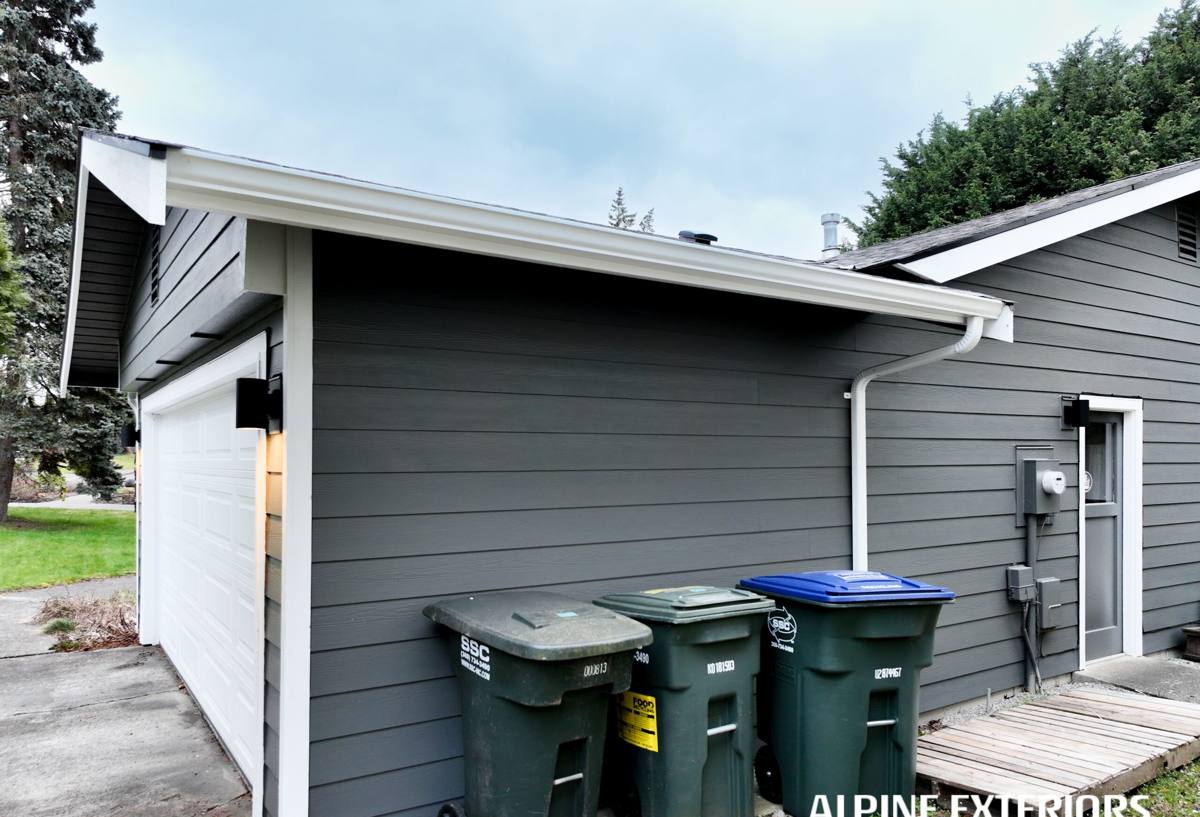
Why We Install Only James Hardie Fiber Cement in Edison
We install one siding product on every job, including in Edison: James Hardie fiber cement. It's non-combustible, it doesn't have an organic core for moisture to work into the way wood-based siding does, and it doesn't go brittle the way vinyl can after years of sun, salt, and temperature swings. In a spot as exposed as Edison, that matters more than it would somewhere calmer and drier.
Hardie's ColorPlus finish is baked on at the factory under controlled conditions rather than painted on site, which gives it a real advantage in an area that doesn't offer much of a dry, stable window for field-applied paint to cure properly. Hardie also builds region-specific HZ product lines engineered around sustained moisture and coastal exposure, rather than selling the same generic formulation everywhere in the country — a meaningful distinction for a property sitting this close to tidal water. It's backed by a strong transferable warranty, and installed to spec, it's the product we're willing to put our name behind for a home in this specific setting.
Cost Factors for an Edison Siding Replacement
| Factor | How It Affects the Job |
|---|---|
| Number of existing siding layers | Older farmhouses with multiple layers take longer to tear off and can reveal more hidden repair work |
| Sheathing and rot repair found at tear-off | Damaged sheathing found once old siding is off adds material and labor before new siding can go up |
| Home size and wall complexity | More corners, gables, dormers, and outbuildings mean more flashing and labor time |
| Site access | Long driveways, soft ground, or fencing common on rural Edison lots can affect staging and equipment access |
| Trim and siding profile | Board-and-batten or heavier trim detailing runs higher than standard lap siding |
We don't publish blanket pricing because it wouldn't be an honest number — the real cost of a job depends on what's actually behind the existing siding, which we won't know for certain until we're on site.
Our Siding Replacement Process
- An on-site walkthrough of the current siding, trim, and any visible problem areas, with an honest read on whether replacement or targeted repair makes more sense
- A written scope of work covering tear-off, expected sheathing inspection, flashing details, and the Hardie product line and color being installed
- Full tear-off to the sheathing so hidden moisture damage or rot can be found and addressed before new siding goes up
- Installation of weather-resistant barrier, flashing, and James Hardie fiber cement siding to manufacturer spec
- A final walkthrough so you can see the finished work and ask questions before we consider the job complete
Why a Local Crew That Already Works Edison Matters
Edison isn't a dense subdivision with rows of similar houses — it's a scattered mix of farmhouses, outbuildings, and newer homes sitting differently relative to wind, tidal water, and tree cover. A crew that works this specific stretch of Skagit County regularly already has a feel for which walls take the worst of the wind off the flats, how far salt air actually reaches inland here, and which flashing and clearance details matter versus which ones are just code minimum. That's the kind of judgment that comes from doing this work on homes like these, repeatedly — not from a crew that occasionally drives out from somewhere else for a one-off job.
What to Check Before Hiring a Siding Contractor in Edison
- Confirm current Washington contractor licensing, bonding, and active liability insurance
- Ask specifically whether the job includes a full tear-off or whether they're proposing to side over the existing layers
- Get a written scope that spells out flashing, fastening, and clearance details, not just the siding brand and color
- Ask how the manufacturer's product warranty and the contractor's workmanship warranty are structured separately
- Ask for a straight answer on why they recommend one siding product over another for a property this close to tidal water
If you're weighing a siding replacement on an Edison property — or you're just not sure whether what you're seeing is a repair or a full replacement situation — we're happy to take a look and give you a straight, no-pressure answer. Reach out below for a free estimate.