 Anacortes
 Siding Repair Built for Edison's Conditions
Edison sits in a stretch of Skagit County where farmland, tidal flats, and Samish Bay all meet, and that mix creates a siding environment that's harder on a home's exterior than most inland neighborhoods realize. Salt-laden air drifts in off the bay, driving rain comes through sideways during fall and winter storms, and the low, damp farmland setting keeps moss and mildew active for a large part of the year. Siding that looks fine from the road can be quietly failing underneath, and by the time a homeowner notices soft spots, peeling paint, or staining, the damage is often further along than it appears.
We repair siding for homes throughout this part of Skagit County, and we've seen firsthand how differently siding ages here compared to a dry inland lot. A repair job done right in Edison accounts for the salt exposure, the wind-driven rain, and the moss — not just the visible damage.
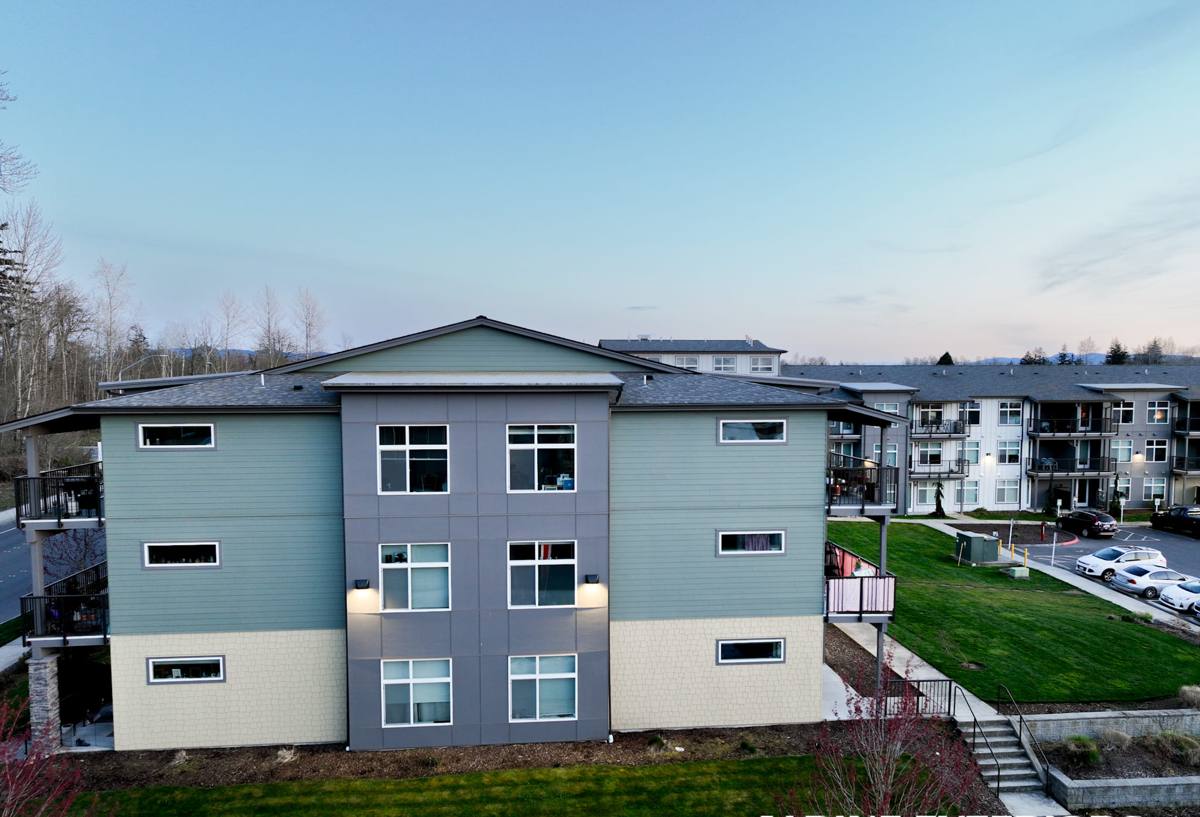
Why Edison's Climate Is Hard on Siding
Salt Air Near Samish Bay
Homes closer to the water pick up airborne salt that settles on siding and works into fasteners, trim, and any exposed wood edges. Over time, salt exposure accelerates corrosion on nails and fasteners and speeds up the breakdown of paint films and caulking. Siding that's rated for general Pacific Northwest weather doesn't always hold up the same way once salt air is part of the equation.
Driving Rain and Wind
Edison's open, low-lying setting means storms coming off the water hit homes with real force and little to break the wind. Rain doesn't just fall here — it drives sideways into wall assemblies, testing every seam, joint, and piece of flashing. Siding that isn't installed with tight, correctly lapped joints and proper flashing details will eventually let water behind it, even if the surface material itself is sound.
A Long Moss and Mildew Season
Between the farmland humidity, tree cover in places, and the region's mild, wet winters, moss and mildew get a long season to establish themselves on north-facing walls and shaded siding runs. Left alone, moss holds moisture against the siding surface far longer than it would otherwise dry, which is one of the more common root causes we find behind repair calls in this area.
Signs Edison Homeowners Should Watch For
Siding damage rarely announces itself all at once. It usually shows up as one or two small signs that, left alone, turn into a much bigger repair.
- Soft, spongy, or bubbling spots when you press on the siding, especially near the bottom courses
- Visible moss or dark green-black staining that keeps coming back after cleaning
- Paint that's peeling, bubbling, or chalking faster than the rest of the house
- Gaps opening up at seams, corners, or where siding meets trim and window frames
- Warping, cupping, or boards that no longer sit flat against the wall
- Water stains or discoloration on interior walls near exterior corners — often the first sign something's wrong outside
- Rust streaks around fasteners or trim, more common on homes closer to the bay
Any one of these on its own might be minor. Several together, or any sign paired with softness under your hand, usually means water has already gotten behind the siding and the repair needs to include what's underneath, not just what's visible.
What a Correct Repair Actually Involves
A siding repair that only replaces the damaged board and stops there is a temporary fix in a climate like Edison's. If water got in once, there's usually a reason — a gap in the weather-resistive barrier, a flashing detail that failed, a caulk joint that opened up — and that reason needs to be found and corrected, not just covered back over.
A repair we stand behind typically includes:
- Removing enough surrounding material to see the full extent of the damage, not just the visible section
- Inspecting the weather barrier and flashing underneath for gaps, tears, or improper laps that let water in
- Checking for rot or decay in the sheathing behind the siding — a soft board is often a symptom, not the whole problem
- Correcting the underlying issue — resealing, re-flashing, or patching the barrier — before any new siding goes back on
- Matching the replacement material and finish so the repair blends in rather than standing out as a patch job
- Proper fastening and lap detail so the repaired section performs the same as the rest of the wall in wind-driven rain
Skipping the underlying inspection is the single most common reason a "repaired" section fails again within a year or two.
Repair or Replace? What Actually Drives the Decision
Not every damaged section needs a full re-side, and not every home is a good candidate for spot repairs. The right call depends on how widespread the damage is and what's driving it.
| Factor | Leans Toward Repair | Leans Toward Replacement |
|---|---|---|
| Extent of damage | Isolated to one or two wall sections | Recurring across multiple elevations |
| Underlying material | Original material still sound elsewhere | Widespread rot, warping, or delamination |
| Age of siding | Newer install, one-off failure point | Near or past its practical service life |
| Cause | A single failed flashing or seal | Systemic moisture intrusion or original install errors |
| Salt/wind exposure | Sheltered side of the home | Repeated failures on the bay-facing side |
We'll always tell you honestly which side of that table your home falls on. If a repair is the right call, that's what we recommend — a full re-side isn't the answer to every problem.
Why We Only Repair and Replace With James Hardie
When a repair calls for new material — whether it's a few boards or a full section — we use James Hardie fiber cement, and we don't install vinyl, LP SmartSide, or wood-based products as patch material even when it would be a faster or cheaper fix. In Edison's climate, that decision matters more than it might elsewhere.
Hardie's fiber cement is non-combustible and doesn't absorb moisture the way wood-based siding does, which matters directly for the rot and warping issues that salt air and driving rain cause here. The ColorPlus factory finish holds up better against UV and moisture cycling than field-applied paint, so a repaired section keeps its color and doesn't become the first spot to fade or peel again. And because Hardie makes climate-engineered HZ product lines built for wet, marine-influenced regions like this one, we're not asking a general-purpose product to perform in conditions it wasn't designed for.
Matching new Hardie boards or panels into existing Hardie siding is usually a clean, close match. If your home currently has a different siding material, we'll walk you through what a Hardie-matched repair versus a broader re-side looks like, honestly, before any work starts.
Our Repair Process
- On-site inspection — we look at the damaged area and the surrounding wall assembly, not just the spot you called about
- Diagnosis — we identify what let water in, whether that's a flashing gap, a failed seal, or a longer-term moisture path
- Honest scope and estimate — repair or replace, in plain terms, with the reasoning behind it
- Removal and inspection of the substrate — checking sheathing and barrier condition before anything new goes on
- Correcting the underlying cause — re-flashing, resealing, or barrier repair as needed
- Installing matched Hardie material to spec, with proper fastening and lap detail for wind-driven rain
- Cleanup and a final walkthrough so you can see exactly what was done and why
Why a Crew That Already Works Edison Matters
Siding repair isn't a generic service — the right approach depends heavily on what's actually causing the damage, and that's shaped by local conditions. A crew that regularly works homes near Samish Bay and across this part of Skagit County already knows where salt exposure tends to hit hardest, which elevations take the worst of the driving rain, and where moss builds up fastest given the area's tree cover and humidity. That familiarity shows up in faster, more accurate diagnosis — less guesswork, fewer repairs that need to be redone because the real cause was missed the first time.
It also means we're not learning on your home. We know what correct flashing and lap details need to look like to hold up through a Skagit County winter, and we install accordingly, every time.
Maintaining Your Siding Between Repairs
A good repair lasts a lot longer with basic upkeep in between. A few habits go a long way in Edison's climate:
- Rinse off moss and organic buildup on shaded or north-facing walls at least once a year
- Check caulking around windows, doors, and trim annually, and re-seal any joints that have opened up
- Keep gutters clear so overflow doesn't run directly down siding surfaces
- Trim back vegetation that keeps siding shaded and damp longer than necessary
- Walk the exterior after major storms and note any new soft spots, stains, or gaps early
Catching a small issue during a routine check is almost always cheaper and simpler than waiting until it shows up as an interior stain.
If you're seeing signs of siding trouble on your Edison home, we're happy to take a look and give you a straight answer about what it needs — repair, partial replacement, or nothing urgent at all. Reach out for a free, no-pressure estimate using the form below.