 Anacortes
 Siding That Has to Work Harder in Edison
Edison sits in the kind of Skagit County microclimate that punishes cheap or poorly installed siding faster than most people expect. You're close enough to Samish Bay and the surrounding tidal flats to get real salt-air exposure, you're on the wet side of a wet county, and the tree cover and damp shoulder seasons here mean moss and algae get a long runway every year. A siding product that's merely "good enough" somewhere drier or more sheltered can start showing problems on an Edison home well before its warranty period is over. This page is about what actually holds up here, and what a correct fiber cement siding job looks like when it's done for this specific area rather than for a spec sheet.
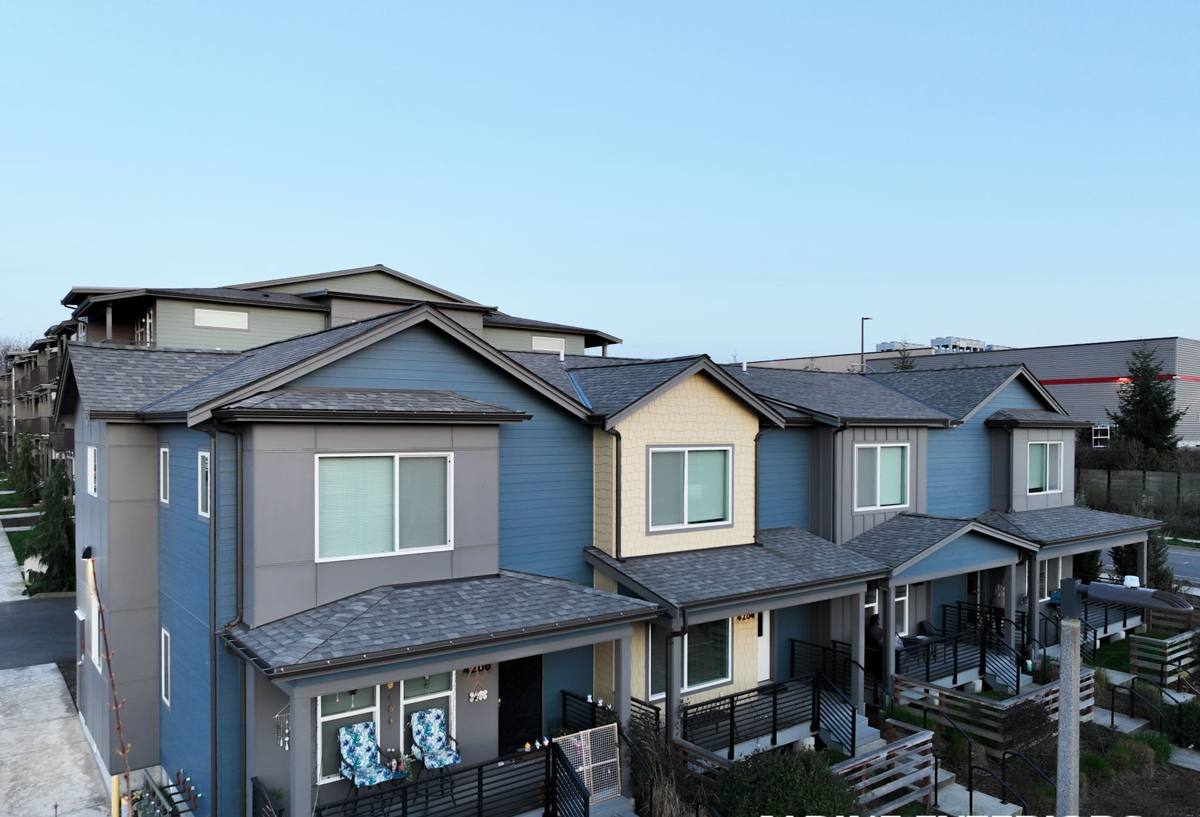
What Edison's Climate Actually Does to Siding
Three factors define siding performance risk in Edison, and they compound each other rather than acting alone.
Salt Air
Proximity to Samish Bay means airborne salt is a real, ongoing factor — not a coastal-town cliché. Salt accelerates corrosion on fasteners, trim flashing, and any metal component in the wall assembly. It also interacts with paint film, which is one reason a baked-on factory finish behaves differently over time than a field-applied coat.
Driving Rain
Skagit County gets sustained, wind-driven rain events, not just steady drizzle. Driving rain doesn't just wet a wall surface — it tests every seam, every butt joint, every point where siding meets trim, window, or roofline. Water finds the weak spot in an installation, and in a driving-rain climate it finds it faster than it would somewhere calmer.
Moss Season
Edison's tree cover, humidity, and shaded north- and west-facing walls create a long moss and algae season — often close to year-round on the shadier sides of a house. Moss holds moisture against a wall surface, and a siding material that absorbs or wicks water underneath a moss colony is going to fail differently than one that sheds water and stays dimensionally stable underneath it.
None of these three things is dramatic on its own. Together, over a decade or two, they're exactly the conditions that separate siding that ages well from siding that doesn't.
Why We Install James Hardie Fiber Cement — and Only That
We standardized on James Hardie fiber cement for every siding job we do, including in Edison, for reasons that are specific to conditions like these, not general brand preference.
- Non-combustible material: fiber cement doesn't feed a fire the way wood-based or foam-core products can.
- Dimensionally stable in moisture: it doesn't swell, cup, or delaminate the way engineered wood products can when they take on water repeatedly.
- ColorPlus factory finish: the color is baked on under controlled conditions rather than field-sprayed, which matters directly for salt-air and UV durability and gives a more consistent, longer-lasting finish than most site-applied paint jobs.
- HZ5 climate engineering: Hardie's HZ product lines are engineered for specific moisture zones, and the Pacific Northwest falls into the wetter end of that range.
- Strong transferable warranty: a warranty that's actually structured to mean something if the home changes hands.
We've made a professional call not to install LP SmartSide, vinyl, Cemplank, Allura, primed spruce, or cedar. That's not because every one of those products is without merit — cedar has real appeal, vinyl is inexpensive, engineered wood has improved over the years. It's because, weighed against what a home in a climate like Edison's needs over 20-plus years, we don't think they hold up as consistently as Hardie fiber cement installed correctly. We'd rather explain that trade-off honestly than install something we don't fully stand behind.
What a Correct Fiber Cement Installation Involves
Buying the right material is maybe half the job. The other half is installation detail, and in a driving-rain, salt-air environment, the installation detail is where most long-term failures actually originate — not in the siding material itself.
Water Management Behind the Siding
Correct installation starts with a drainage plane and weather-resistive barrier that actually manages bulk water, plus properly integrated flashing at every window, door, and roof intersection. Fiber cement siding is not a waterproofing system by itself — it's the outer layer of a wall assembly that has to be right underneath it too.
Fastening and Clearances
Fasteners need to be corrosion-resistant and set to Hardie's specification — not just any exterior-rated screw or nail. Siding needs proper clearance from grade, roof lines, and decks so it isn't sitting in standing water or splash-back, which is a common cause of premature edge deterioration on any siding, fiber cement included.
Joints, Caulking, and Trim
Butt joints, corner boards, and trim transitions are where driving rain gets tested hardest. Hardie has specific guidance on joint treatment, and skipping or shortcutting it is one of the more common ways an otherwise good product underperforms.
Field Cutting and Finishing
Any field-cut edge needs to be primed and sealed per manufacturer spec before it's painted or left exposed, or that cut edge becomes the weak point in an otherwise durable panel.
Comparing Siding Options for a Climate Like Edison's
| Factor | James Hardie Fiber Cement | Engineered Wood (e.g. LP SmartSide) | Vinyl | Cedar |
|---|---|---|---|---|
| Moisture resistance | Dimensionally stable, does not swell | Can swell/delaminate if water gets in | Doesn't absorb water, but seams can trap it | Absorbs water; needs consistent maintenance |
| Salt air behavior | Factory finish holds up well | Field or factory finish, variable durability | Doesn't corrode, but can chalk/fade | Weathers naturally but finish breaks down |
| Moss/algae resistance | Doesn't feed moss the way wood substrates can | Wood substrate can be more vulnerable | Resistant to growth, but traps moss debris in seams | Prone to moss retention on shaded sides |
| Fire behavior | Non-combustible | Wood-based, combustible | Can deform/melt under heat | Combustible |
| Long-term maintenance | Low, if installed correctly | Moderate | Low but seams/fasteners degrade over time | High — refinishing on a recurring cycle |
This isn't a claim that every alternative is bad — it's a picture of why, weighing all of this against Edison's specific climate, fiber cement is where we land.
What Our Process Looks Like for an Edison Project
- On-site assessment: we look at your home's actual exposure — which walls take the worst of the driving rain, which sides hold moss, where salt air and wind funnel through the property.
- Wall assembly check: before any new siding goes up, we evaluate what's underneath — sheathing condition, existing moisture damage, and whether the water-resistive barrier needs to be replaced.
- Product and color selection: matching the right Hardie HZ product line and ColorPlus finish to your home and to Skagit County's specific moisture zone.
- Installation to manufacturer spec: fastening, flashing, joint treatment, and clearances done to Hardie's published installation requirements, not shortcuts.
- Final walkthrough: checking trim, caulking, and finish work before we consider the job done.
Why Hiring a Crew That Already Works in Edison Matters
Siding installation isn't identical everywhere, and a crew that mostly works drier, more sheltered areas can miss details that matter here. A contractor who already understands Edison and the surrounding Anacortes and Skagit County area knows which walls typically take the worst driving rain, where moss tends to establish first, and how salt air factors into fastener and flashing choices before the first piece of siding goes up — not as an afterthought once a callback comes in.
Questions Worth Asking Any Siding Contractor Here
- Are you installing to the manufacturer's published spec for this climate zone, and can you show me that spec?
- What water-resistive barrier and flashing details are you using behind the siding?
- What fastener type and spacing are you using, and are they corrosion-resistant for salt-air exposure?
- How do you handle field-cut edges and joint treatment?
- What does the warranty actually cover, and is it transferable if I sell the home?
Signs Your Current Siding Is Losing the Battle
If your home already has siding and you're weighing whether it's time to replace it, a few signs tend to show up first in a climate like this: persistent moss or algae that comes back within a season of cleaning, soft or swollen spots near the bottom courses or around window trim, visible gaps or separation at butt joints and corners, and paint or finish that's chalking, peeling, or fading unevenly. Any one of these on its own might just need a repair. Several together, especially on the walls that take the worst weather, usually mean the wall assembly behind the siding is starting to take on water.
If you're in Edison or elsewhere around Anacortes and want a straight answer on what your home's siding actually needs, we're happy to take a look. Reach out for a free, no-pressure estimate — no obligation, just an honest assessment.