 Anacortes
 Conway's Climate Is Harder on Siding Than Most Homeowners Realize
Conway sits in the low, flat river-delta country of Skagit County, tucked between the Skagit River drainage and the damp air that rolls in off Puget Sound. It's a beautiful place to live, but it's a tough place to keep siding looking and performing the way it should. Homes here deal with a combination that few other neighborhoods in our service area get all at once: salt-tinged marine air, long stretches of driving rain off the water, and a moss season that can stretch from fall clear through spring.
Individually, none of those factors is unusual for western Washington. Together, on a low-lying property with plenty of shade and moisture that doesn't evaporate off quickly, they add up faster. Siding that would hold up fine on a sunny, elevated lot in a drier part of the county can start showing problems years earlier on a shaded, damp Conway property.
Why "Just Repaint It" Rarely Solves the Real Problem
A lot of siding trouble in this area isn't a surface problem — it's a moisture problem wearing a surface disguise. Paint failure, staining, and soft spots are usually symptoms of water getting behind or into the siding material itself, not just weathering on top of it. Repainting without addressing what's happening underneath just buys a little time before the same spots come back.
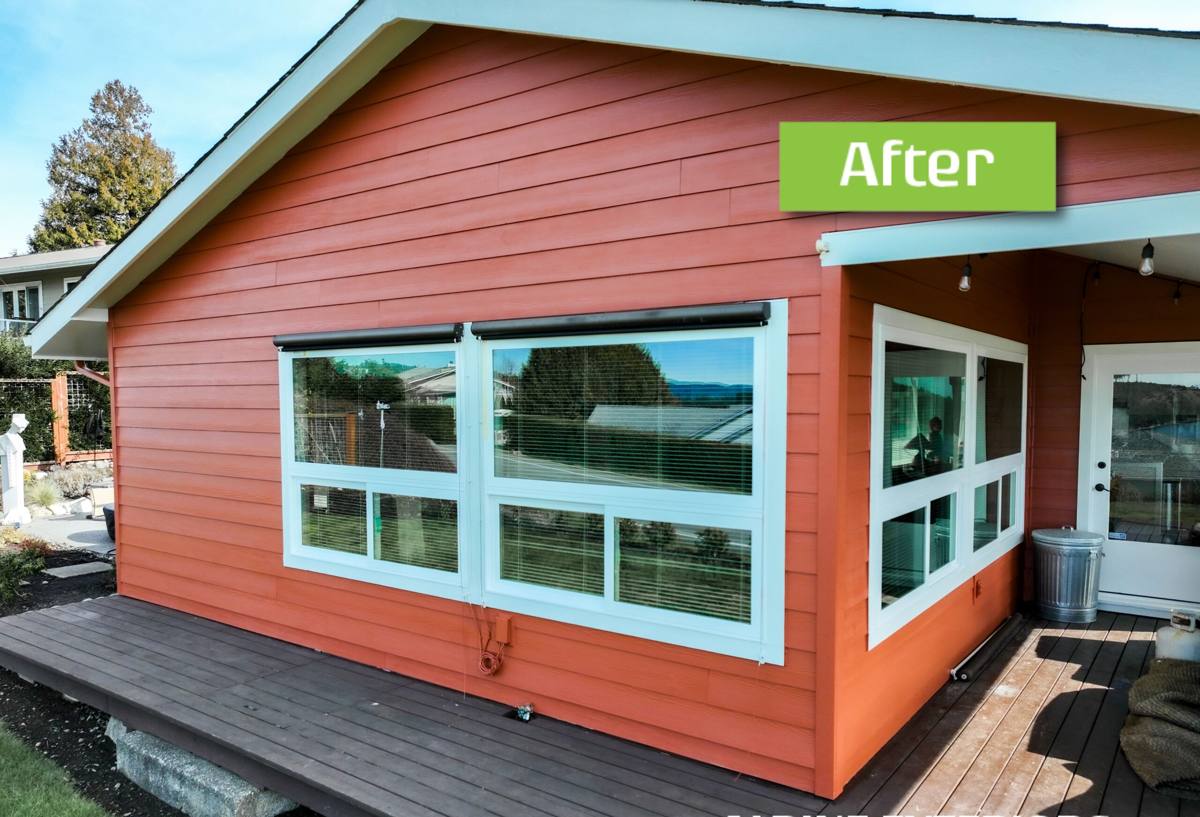
Signs Conway Homeowners Shouldn't Ignore
Because of the constant moisture cycle here, siding problems tend to show up in predictable places first: north-facing walls, areas under eaves that never fully dry, and spots near grade where splashback keeps the lower courses wet. Watch for these:
- Persistent green or black staining that comes back within weeks of cleaning
- Paint that's bubbling, peeling, or chalking well before its expected repaint interval
- Soft, spongy, or crumbling material when you press on it near the bottom edge or seams
- Visible gaps or separation at butt joints, corners, or trim boundaries
- Warping, cupping, or boards that no longer sit flat against the wall
- Musty smells or unexplained moisture inside exterior walls
Any one of these on its own might just mean a maintenance job. Several at once, especially combined with a wall that's been getting a heavier dose of Conway's damp shade, usually means it's time to talk about replacement rather than another round of patching.
What a Correct Siding Replacement Actually Involves
Siding replacement done right is not just swapping old boards for new ones. In a climate like ours, the work that happens underneath the visible siding matters more than the finish on top of it. A correct job includes:
Full Tear-Off and Sheathing Inspection
We remove the old siding completely rather than installing over it. That's the only way to actually see the wall — and on a Conway property that's been absorbing driving rain for years, it's common to find sheathing that needs attention before new siding goes on. Covering up a hidden moisture problem is how homeowners end up paying for the same repair twice.
Water-Resistive Barrier and Flashing
The weather barrier behind the siding, and the flashing around every window, door, and penetration, is what actually keeps water out of the wall assembly. Siding itself is the first line of defense, not the only one. We install and detail this layer to shed water the way it's supposed to, particularly at the horizontal surfaces and transitions where driving rain gets pushed sideways into a wall.
Proper Fastening and Clearances
Fastener spacing, nailing patterns, and the gap left between siding and grade, decks, or roofing all affect how well a wall sheds water and resists moss and mildew growth. These details are spelled out in the manufacturer's installation instructions for a reason — skipping them is one of the most common ways a siding job fails early, warranty or not.
Why We Install Only James Hardie Fiber Cement
We made a decision as a company to install James Hardie fiber cement siding exclusively — not vinyl, not LP SmartSide, not cedar or primed wood products. That's not a marketing position; it's a practical one built around what actually holds up in Skagit County's climate.
Fiber cement is non-combustible and dimensionally stable, meaning it doesn't expand, contract, warp, or absorb water the way wood-based products can. Hardie's ColorPlus factory finish is baked on under controlled conditions rather than field-applied, which matters a great deal in a region where field-painted surfaces rarely get the dry, stable conditions a good paint job needs. And Hardie engineers specific product lines (their HZ5 line, for example) for wetter, harsher climate zones — which describes Conway about as well as anywhere in our service area.
Other products have real strengths, and we're honest with customers about that when they ask. But once you've spent years pulling failed siding off homes near the water, you develop strong opinions about what you're willing to put your name behind. Ours is Hardie.
How Siding Materials Compare for a Property Like This
| Factor | James Hardie Fiber Cement | Vinyl | Wood / Primed Spruce |
|---|---|---|---|
| Moisture resistance | Excellent — engineered for wet climates | Good, but can trap moisture behind it | Poor to fair — absorbs water, prone to rot |
| Finish durability | Factory-baked ColorPlus finish, long fade resistance | Color molded in, but can chalk and fade | Field-applied paint, needs frequent recoating |
| Moss and mildew resistance | Strong when installed with proper clearances | Moderate | Weak — organic material feeds growth |
| Fire resistance | Non-combustible | Combustible, can melt or warp | Combustible |
| Typical lifespan | 30+ years with proper install | 20-30 years, more brittle over time | 10-20 years, heavy maintenance dependent |
Our Process, Start to Finish
Every Conway job follows the same disciplined sequence, because skipping a step is how corners get cut and callbacks happen:
- On-site assessment — we walk the exterior, check for existing moisture damage, and evaluate sun/shade exposure and drainage around the foundation
- Written estimate — a clear scope covering tear-off, any sheathing repair allowance, Hardie product line and color, and timeline
- Tear-off and wall inspection — old siding comes off, sheathing gets inspected before anything new goes up
- Weather barrier and flashing detail — the moisture-management layer goes in correctly, especially around penetrations
- Hardie installation to manufacturer spec — proper fastening, clearances, and joint treatment
- Final walkthrough — we review the finished work with you before calling the job complete
What Drives the Cost of a Conway Siding Replacement
| Cost Factor | Why It Matters Here |
|---|---|
| Sheathing condition | Homes with hidden moisture damage need repair before new siding — this is common on shaded, low-lying lots |
| Wall complexity | Dormers, multiple gables, and cut-up wall lines take more time and material than a simple rectangular elevation |
| Product line and profile | Hardie offers several plank widths, textures, and the HZ5 climate-specific line, priced differently |
| Access and site conditions | Tree cover, tight lot lines, and equipment access affect labor time |
| Trim and detail work | Window and corner trim quality affects both appearance and long-term water management |
Why Hiring a Crew That Already Works in Conway Matters
Siding installation isn't one-size-fits-all across Skagit County. A crew that mostly works drier, sunnier lots elsewhere may not think twice about details that matter a lot on a shaded, damp Conway property — clearance at grade, flashing at low-slope roof transitions, or how much a wall needs to breathe. A crew that's already done this work in this specific micro-climate knows which walls fail first and builds in the extra margin those walls need from day one.
That local familiarity also shows up in smaller, practical ways: knowing how the site tends to drain after a heavy rain event, understanding the moss pressure on north-facing walls near mature trees, and setting realistic expectations about maintenance in a delta environment versus a drier hillside lot a few miles away.
Questions to Ask Before You Hire Anyone for a Siding Job
- Do you install the product to the manufacturer's written specifications, including fastening and clearances?
- Will you inspect and repair sheathing before new siding goes on, not just cover it?
- What warranty applies to materials and to your labor, and is it transferable?
- Have you worked in this specific area, and do you understand its drainage and shade conditions?
- Can you walk me through your weather barrier and flashing details before work begins?
A straight answer to every one of those questions is a good sign. Vague answers, especially around sheathing inspection and flashing detail, are the ones to worry about.
Ready to Talk About Your Conway Home
If your siding is showing staining that won't clean off, paint that's failing early, or soft spots you'd rather not ignore, it's worth getting a straight assessment before winter's rain sets in again. We'll walk the property, tell you honestly what we find, and lay out what a correct James Hardie replacement would involve — no pressure, no upsell. Use the form below to request a free estimate.