 Anacortes
 Why Cap Sante Roofs Age Differently
Cap Sante sits up on the bluff above the marina, catching wind and salt air straight off Fidalgo Bay and the Guemes Channel in a way that homes further inland simply don't. That exposure changes how a roof ages. Metal fasteners and flashing corrode faster near saltwater. Wind-driven rain finds its way under shingles that would hold up fine in a calmer spot. And the shade from mature trees on parts of the hill keeps sections of roof damp long after the rest of the neighborhood has dried out, which is exactly what moss needs to get a foothold.
None of this means a roof on Cap Sante is doomed to fail early. It means the roof has to be built and installed with those conditions in mind from the start — the right materials, the right fastening schedule, and underlayment and flashing details that don't cut corners. A roof designed for a dry inland lot and installed the same way on an exposed Cap Sante home is where problems start.
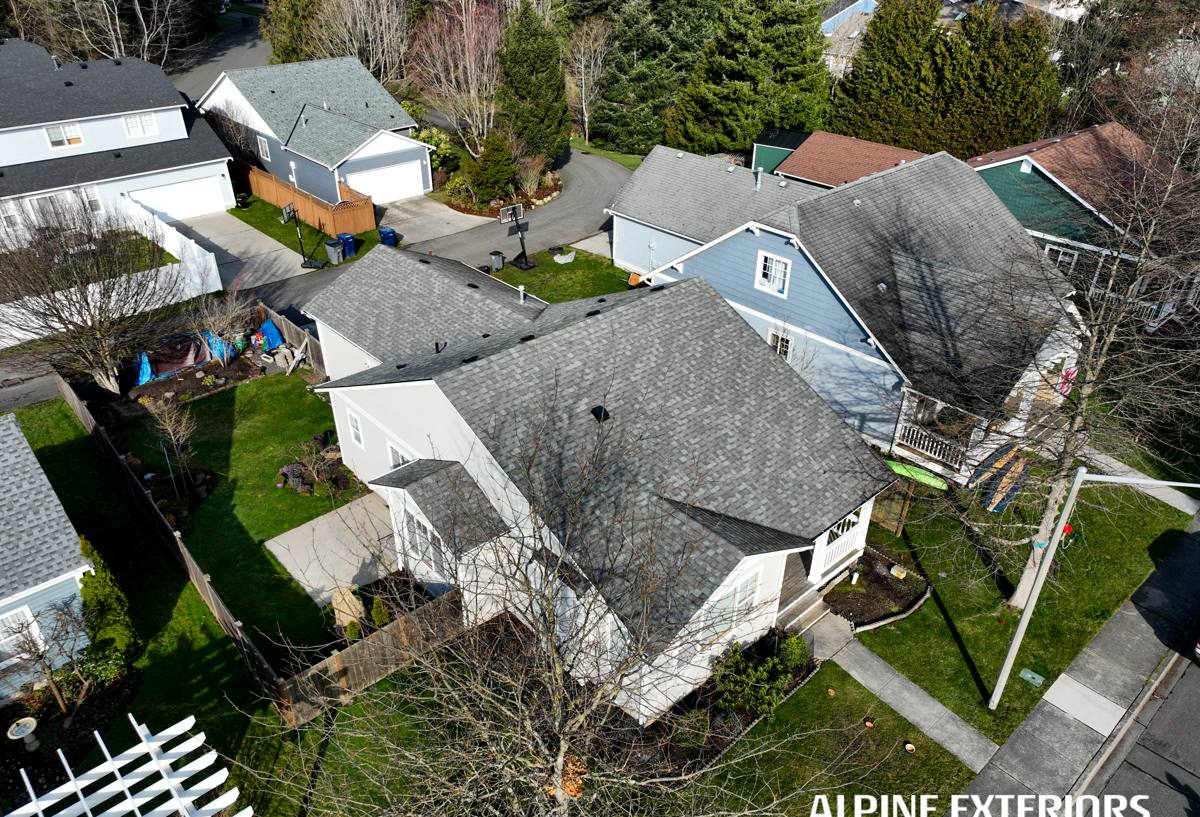
What Cap Sante Homes Specifically Need From a Roof
Skagit County building codes set the minimum, but "minimum" isn't the target for a home catching wind straight off the water. A few things matter more here than they would on a sheltered lot:
- Wind resistance — proper nailing patterns and, on more exposed sections, upgraded fastening or wind-rated shingle products so the field of the roof doesn't lift at the edges and ridges.
- Corrosion-resistant metal — flashing, fasteners, and any exposed metal should be rated for coastal/marine exposure, not standard-grade material that starts rusting within a few seasons.
- Moss-resistant material choices and treatments — especially on shaded slopes, where the roof stays wet longer between rain events.
- Ventilation that actually balances — intake and exhaust sized to move moist air out of the attic, which matters even more in a climate where the roof rarely gets a long stretch to fully dry.
These aren't upgrades for the sake of upselling — they're the difference between a roof that looks fine for a couple of years and one that's still doing its job at year fifteen.
Signs Your Cap Sante Roof Is Ready for Replacement
Repairs make sense when the damage is isolated. Replacement makes sense when the roof as a whole is past the point where patching buys you much time. Signs worth taking seriously include:
- Granules collecting in gutters or at downspouts, especially after a windy rain
- Shingles that are cupping, curling at the edges, or visibly brittle
- Moss or dark algae streaking that keeps coming back within a season or two of cleaning
- Soft spots or sagging when you walk the roofline visually from the ground
- Rusting flashing around chimneys, vents, or valleys
- Daylight visible through the attic decking, or damp insulation after storms
- A roof that's approaching or past the manufacturer's expected service life for its material and exposure
If you're seeing more than one of these, it's worth having someone walk the roof and attic before deciding whether repair or replacement is the right call.
What a Correct Roof Replacement Actually Involves
A roof replacement is not just stripping old shingles and nailing down new ones. Done right, it's several distinct steps, each of which matters more in a marine, moss-prone climate than it would somewhere drier.
Tear-Off and Deck Inspection
Every layer of old roofing comes off so the decking underneath can actually be inspected — not guessed at. On older Cap Sante homes especially, we're checking for soft or delaminated plywood or plank decking from years of moisture intrusion, particularly around valleys, chimneys, and any spot where moss held water against the surface. Bad decking gets replaced before anything new goes down; covering rot with new shingles just hides the problem.
Underlayment and Flashing
This is where a lot of the real weatherproofing happens, and it's largely invisible once the job is done. In a wind-driven rain climate, synthetic underlayment and ice-and-water shield in vulnerable areas (eaves, valleys, roof-to-wall transitions) matter more than the shingle brand on top of them. Flashing around chimneys, skylights, and vent penetrations needs to be new, properly lapped, and sealed — reused or patched flashing is one of the most common causes of leaks we find on older homes in this area.
Ventilation
Balanced intake and exhaust ventilation keeps the attic close to outside temperature and moisture levels, which protects both the decking from underneath and the shingles from overheating and premature aging. On homes with additions, complex rooflines, or older attic setups, this often needs correcting during a replacement rather than just matching what was there before.
Choosing Roofing Materials for Salt Air and Moss
There's no single "best" roofing material for every home on Cap Sante — the right choice depends on the roof's exposure, pitch, shading, and your budget and maintenance appetite. Here's how the common options compare for this specific environment:
| Material | Wind/Salt Air Performance | Moss Resistance | Maintenance |
|---|---|---|---|
| Architectural asphalt shingle | Good, with proper nailing and a wind-rated product | Moderate — better with algae-resistant granules | Periodic moss/debris removal recommended |
| Standing seam metal | Excellent when properly fastened and detailed | Very good — sheds moisture, little for moss to grip | Low; occasional fastener/seam check |
| Cedar shake | Fair — sensitive to sustained moisture exposure | Requires active upkeep to resist moss and rot | Higher; regular treatment and inspection |
| Synthetic/composite shingle | Good to very good, product-dependent | Good, depending on formulation | Low to moderate |
Our standard for shaded, moisture-prone sections leans toward materials with proven algae- and moss-resistant treatments, from manufacturers like GAF or CertainTeed, backed by fastening and flashing details suited to wind exposure — not because any one product is "bad," but because some materials demand more upkeep than a busy homeowner wants to sign up for on a hard-to-access roof.
Our Roof Replacement Process
- On-site inspection — we walk the roof and attic, check decking condition, ventilation, and flashing, and take real measurements rather than estimating from the ground.
- Written estimate — clear scope, material options, and pricing, with the reasoning behind our recommendations laid out so you're not just taking our word for it.
- Scheduling and permitting — we handle the permit process and plan around weather windows, since exposed sites like Cap Sante give us less margin for error on rain timing.
- Tear-off and deck repair — old material removed, decking inspected and repaired as needed before anything new goes down.
- Underlayment, flashing, and material installation — installed to the standard the site's exposure calls for, not just code minimum.
- Ventilation check and final walkthrough — we confirm intake/exhaust balance and walk the finished roof with you before calling the job done.
- Cleanup — full site cleanup, including a magnetic sweep for stray nails and fasteners.
What Affects Your Roof Replacement Cost
Every roof is different, so a real number only comes from an on-site inspection — but the main cost drivers on a Cap Sante home tend to be the same handful of factors:
| Factor | Why It Matters |
|---|---|
| Roof size and pitch | More surface area and steeper slopes mean more material and labor time |
| Access and elevation | Hillside lots and limited staging space can add setup and safety-equipment time |
| Material choice | Asphalt, metal, cedar, and composite options span a wide cost range |
| Decking condition | Rotted or soft decking found during tear-off needs repair before installation continues |
| Number of layers to remove | Multiple existing layers add disposal and labor time |
| Roof complexity | Valleys, dormers, skylights, and chimneys all add flashing and detail work |
As a broad range, most full residential roof replacements in this area fall somewhere between roughly $9,000 and $25,000 or more, depending on those factors. We'd rather give you a number after actually seeing the roof than a figure that doesn't hold up once we're up there.
Why Hire a Crew That Already Works Cap Sante
A hillside neighborhood with view homes, tighter lot access, and constant marine exposure isn't the same job as a flat, sheltered subdivision. A crew that's already worked on Cap Sante knows how to stage material and equipment safely on sloped lots, plans around wind and weather timing instead of getting caught by it, and doesn't need to relearn corrosion-resistant fastening and flashing choices from scratch. That familiarity shows up in fewer surprises mid-project and a roof that's actually built for the conditions it'll face, not just for the average Skagit County home.
Maintaining Your New Roof Through Moss Season
A correctly installed roof still benefits from basic upkeep, especially on shaded sections. A few habits go a long way:
- Keep gutters and downspouts clear so water isn't sitting against the roof edge
- Trim back overhanging branches to reduce shade and debris buildup
- Have moss growth removed gently (no pressure washing shingles) before it spreads
- Schedule a quick visual inspection after major windstorms
- Check attic ventilation isn't blocked by insulation or debris
If you're weighing a repair versus a full replacement, or just want an honest read on where your roof actually stands, we're happy to take a look. Reach out for a free, no-pressure estimate — the form below only takes a minute.