 Anacortes
 Roofing on the Water's Edge: What Cap Sante Homes Are Up Against
Cap Sante sits close enough to the water that the weather here is its own thing. Homes on or near the bluff and the marina area take a steady mix of salt-laden air, wind off the channel, and long stretches of drizzle that never quite dry out between storms. That combination is harder on a roof than straight rainfall alone — it's the salt exposure plus the moisture cycling plus the shade from evergreens that turns an ordinary re-roof decision into one worth thinking through carefully.
We've worked roofs in this part of Anacortes long enough to know which materials hold up and which ones start showing problems in year six instead of year twenty. This page is about one thing specifically: metal roofing for homes in and around Cap Sante, what the local climate demands from it, and what a correctly done installation actually looks like.
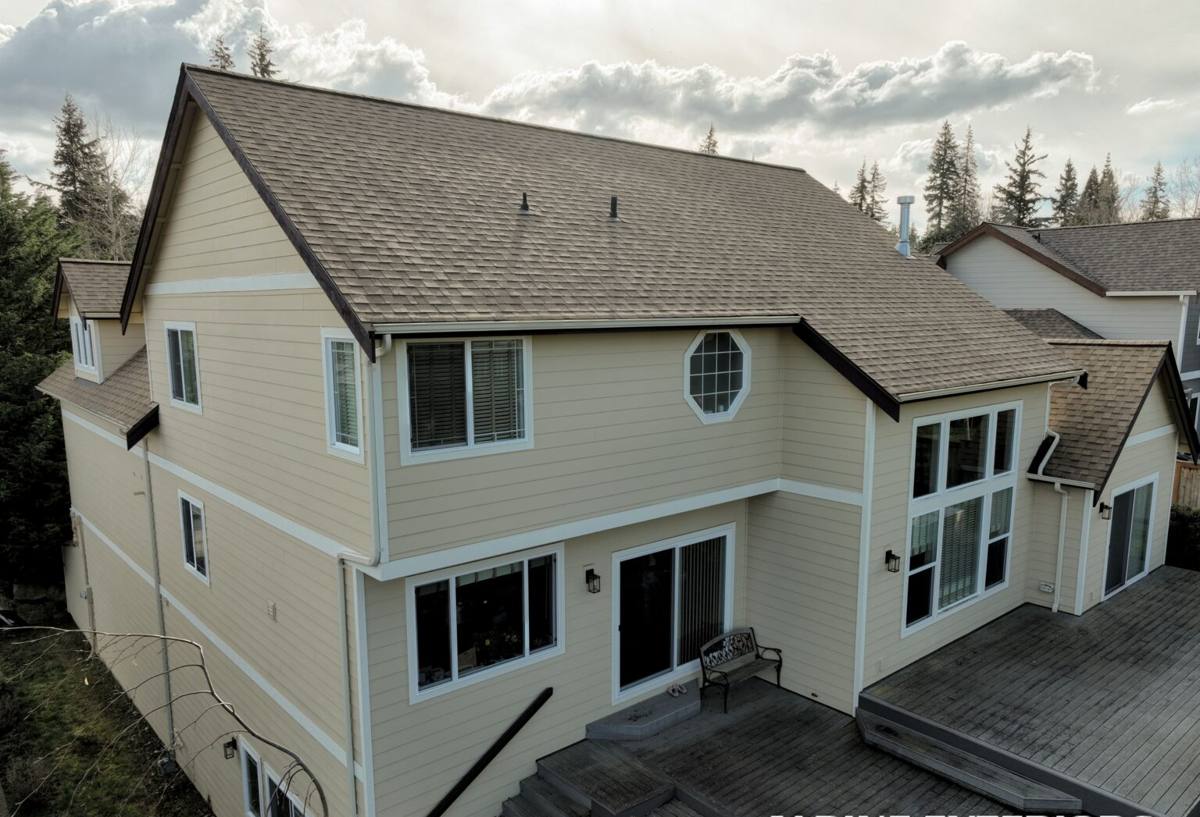
What Salt Air, Rain, and Moss Actually Do to a Roof
Skagit County's marine climate is mild, which is part of why people love living here — but mild doesn't mean gentle on a roof system. Three things compound on each other near the water:
- Salt air accelerates corrosion. Airborne salt settles on exposed metal — fasteners, flashing, gutters — and speeds up rust wherever the protective coating is thin, scratched, or missing.
- Driving rain finds gaps. Wind off the water doesn't let rain fall straight down; it pushes water sideways and up under laps, ridge caps, and poorly sealed penetrations. A roof that would shed water fine in a calm inland setting can leak here.
- Shade and moisture grow moss fast. Tree cover common around Cap Sante keeps roof surfaces damp longer after every rain. Moss and algae take hold in that dampness, and on the wrong material they hold moisture against the surface and shorten its life.
None of this is unique to metal roofing — every roofing material in this area deals with the same three pressures. The question is which material and which installation details actually stand up to them over decades, not just years.
Why Metal Roofing Holds Up Well Near the Water
Metal roofing, done right, handles this climate better than most alternatives for a few concrete reasons:
Shedding water, not absorbing it
Metal panels don't absorb moisture the way wood shakes or aging asphalt can. Water runs off a smooth, properly lapped metal surface quickly, which matters when the roof stays damp for days at a time during a typical Pacific Northwest winter.
Moss resistance
Moss struggles to get a foothold on a hard, smooth metal surface the way it does on textured shingles or shake. It can still collect in valleys, around vents, or where debris piles up — so metal isn't moss-proof — but it's far less hospitable to moss growth than most other common roofing materials.
Corrosion resistance — when the coating is right
This is the part that actually matters most in a salt-air environment, and it's also where a lot of installs go wrong. Not every metal roofing product is built for coastal exposure. Bare or lightly coated steel will corrode faster here than it would twenty miles inland. Panels and fasteners rated for coastal or marine exposure, with a proper protective coating system, are what make the difference between a metal roof that looks the same in year twenty and one that's rusting at the seams by year eight.
Wind performance
Properly fastened metal panels — especially standing seam systems with concealed fasteners — perform well against the wind-driven rain and gusts that come off the water here. Loose or under-fastened installations are where wind finds its way in.
Comparing Metal Roofing Systems for a Coastal Setting
Not all metal roofing is the same product wearing different clothes. The system type changes how it performs in exactly the conditions Cap Sante deals with.
| System | How It's Fastened | Coastal Performance | Best For |
|---|---|---|---|
| Standing seam | Concealed clips, no exposed fasteners on the field of the roof | Best resistance to wind-driven rain and long-term corrosion since fasteners aren't exposed to the weather | Full re-roofs where long-term, low-maintenance performance is the priority |
| Exposed-fastener panels | Screws driven through the panel face into the substrate | Lower upfront cost, but exposed fasteners are the first thing to corrode and the first source of leaks as gaskets age | Budget-conscious projects, outbuildings, shops — less ideal for a primary home roof this close to salt air |
| Metal shingles / shakes | Interlocking panels styled to look like traditional shingles or shake | Good weather performance with a more traditional appearance; seam detailing matters more due to the shingle profile | Homeowners who want metal's durability without a "barn roof" look |
For most primary residences in this area, we point people toward standing seam specifically because of the salt air. Fewer exposed fasteners means fewer future points of failure — which matters more here than it would on a roof twenty miles from saltwater.
What a Correct Metal Roof Installation Actually Involves
The material is only part of the story. Most metal roof failures we see aren't the panel's fault — they're installation shortcuts that don't show up until years later. A correct job on a Cap Sante home includes:
Underlayment built for wind-driven rain
A high-quality synthetic or self-adhered underlayment underneath the metal gives the roof a backup water barrier if wind ever pushes moisture past the panel laps — which happens in storms coming off the water, even on a well-installed roof.
Fastener and clip spec matched to exposure
Fastener spacing, clip type, and coating grade should be chosen for the wind exposure and salt exposure of the specific home, not just pulled from a generic spec sheet. A roof facing open water needs tighter attention than one tucked behind a hill.
Flashing details at every transition
Valleys, chimneys, skylights, and wall-to-roof transitions are where the vast majority of roof leaks originate — on any roofing material. Metal roofing raises the bar here because panel edges need to be properly formed and sealed, not just caulked as an afterthought.
Ventilation
Proper attic and roof ventilation keeps condensation from forming on the underside of the metal, which matters in a climate where indoor-outdoor temperature swings combined with high humidity can cause moisture problems from the inside out, not just the outside in.
Our Process for Cap Sante Projects
Because we already work in this area, our process starts with what we already know about how homes here are built and exposed:
- On-site assessment. We look at wind exposure, tree cover, existing roof condition, and any moss or moisture damage already present before recommending a system.
- Straight-talk material recommendation. We'll tell you honestly whether standing seam, an exposed-fastener panel, or metal shingles fits your budget and your home's exposure — not just upsell the most expensive option.
- Written scope and timeline. You get a clear breakdown of what's being done, what materials and fastener specs are being used, and a realistic schedule that accounts for Skagit County's weather windows.
- Installation with attention to the exposure points. Flashing, valleys, and fastener details get the extra attention that salt-air exposure requires — not just standard inland spec.
- Final walkthrough. We go over the finished roof with you, including what routine maintenance looks like given your specific tree cover and sun exposure.
Maintaining a Metal Roof Near the Water
Metal roofing is lower-maintenance than most materials, but "lower" isn't "zero" — especially this close to saltwater. A simple annual routine goes a long way:
- Clear gutters and valleys of needles and debris before fall storms — trapped debris holds moisture against the panel and speeds up any corrosion.
- Do a visual check for moss or algae in shaded valleys and around penetrations, and remove it gently — don't pressure-wash metal roofing, which can damage coatings and seams.
- Look at exposed fasteners (if you have an exposed-fastener system) for early rust or backed-out screws, especially after a windy winter.
- Check flashing around chimneys, skylights, and vents for caulking that's cracked or pulled away.
- Rinse road salt or heavy pollen buildup off the roof surface with a garden hose a couple times a year if your home sits close to the water.
- After any major windstorm, do a quick visual check from the ground for lifted panels, dented flashing, or debris strikes.
What Affects the Cost
Metal roofing costs more upfront than asphalt shingles, and the range varies a lot based on the system and the home. In general terms, the biggest cost drivers are:
| Factor | Why It Matters |
|---|---|
| Panel system | Standing seam typically costs more than exposed-fastener panel systems due to labor and material |
| Roof complexity | Steep pitches, multiple valleys, and dormers add labor time and flashing work |
| Tear-off vs. overlay | Removing an old roof down to the deck adds cost but is often the right call on an aging roof |
| Coating grade | Coastal-rated coatings cost more than standard coatings but pay off in corrosion resistance near saltwater |
| Access and site conditions | Steep lots, limited staging space, or tree removal needs can add to the project scope |
Metal roofing generally pays for itself over time through longevity and lower maintenance, but the honest answer to "what will it cost" always depends on the specifics of your roof — which is exactly what a walkthrough estimate is for.
Why Working With a Crew That Already Knows Cap Sante Matters
A roofing crew that's worked other homes in this specific area already understands how the wind comes off the water, which directions catch the worst of the driving rain, and how much moss pressure a given tree line creates. That's not something you get from a general spec sheet — it's from having stood on roofs in this neighborhood before. It means fewer surprises during the estimate, a material recommendation that actually fits your home's real exposure, and installation details that account for Anacortes weather instead of a generic inland install.
If you're weighing a metal roof for a Cap Sante home, we're happy to take a look and walk you through what makes sense for your specific site — no pressure, no obligation. Reach out using the form below to schedule a free estimate.