 Anacortes
 Decking Built for Life Near Cap Sante
Cap Sante sits close enough to the water that homeowners feel it in the air every day — the salt, the moisture, the wind coming off Fidalgo Bay. That same exposure that makes the views worth having is exactly what wears out an outdoor deck faster than almost anywhere else in Skagit County. Wood decking in this pocket of Anacortes fights a losing battle against moss, splinter checking, and slow rot in ways that decks a few miles inland simply don't. Composite decking was built to solve that problem, but only when it's installed correctly for this specific environment.
We install composite decking across Anacortes, and Cap Sante properties get particular attention because of how close many of them sit to open water and how much shade and moisture the surrounding trees and marine layer bring in. This page covers what that actually means for your project — not a generic composite decking pitch, but what a deck near Cap Sante needs to hold up.
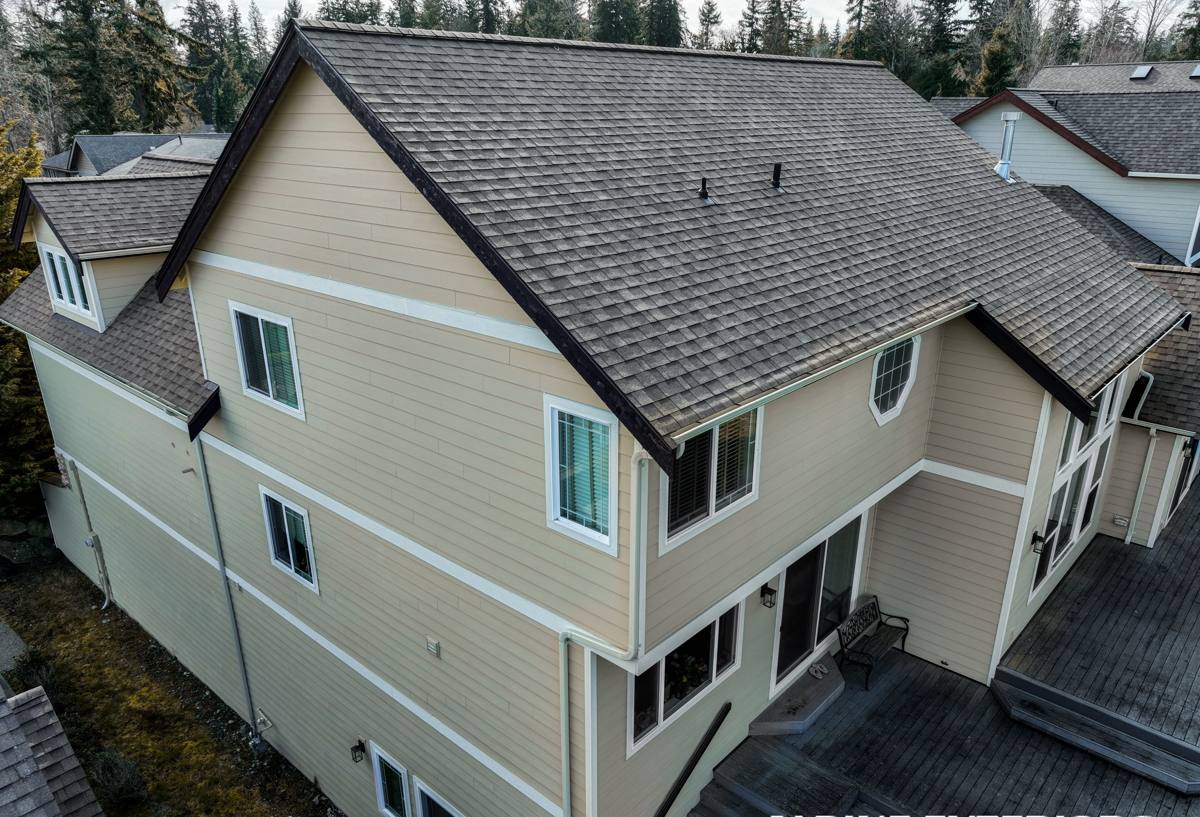
What Salt Air and Driving Rain Do to a Deck Here
Three things define the Cap Sante climate as far as decking is concerned, and each one attacks a deck differently:
- Salt air corrosion: Airborne salt accelerates corrosion on fasteners, joist hangers, and any exposed metal hardware. Standard construction screws and hangers rust faster here than they would even a mile or two inland.
- Driving rain: Wind-driven rain off the water doesn't just fall straight down — it gets pushed sideways into railings, fascia boards, and the gaps where decking meets the house. That means water intrusion points matter more here than on a sheltered inland lot.
- Long moss season: Shade, moisture, and mild temperatures give moss and algae a long growing window on the Washington coast. On a wood deck that means annual power washing and staining just to keep the surface from going slick and green. On a poorly ventilated composite deck, it means the same organic growth can take hold in board grooves and low-airflow areas if the substructure wasn't built right.
None of this means composite decking doesn't work near Cap Sante — it means the installation details that don't matter much in a dry climate matter a great deal here.
Why Composite Makes Sense for This Location
Composite decking — a blend of wood fiber and recycled plastic, typically capped with a protective polymer shell — doesn't absorb water the way solid wood does, doesn't need annual staining, and doesn't offer moss the same foothold a raw wood grain does. For a property exposed to salt air and long wet seasons, that adds up to real time and money saved over the life of the deck.
That said, composite isn't maintenance-free, and we tell every homeowner that up front. It still needs periodic washing to keep pollen, salt residue, and organic buildup from dulling the surface, and the substructure underneath still needs to be built to shed water and breathe. The board is only as good as what's underneath it.
Where Composite Outperforms Wood Locally
| Factor | Wood Decking | Composite Decking |
|---|---|---|
| Moss and algae resistance | Low — porous surface holds moisture and organic growth | Higher — capped boards resist moss adhesion, still need occasional washing |
| Salt air fastener exposure | Standard fasteners corrode faster; needs stainless or coated hardware | Same hardware requirement — composite doesn't change fastener needs |
| Refinishing | Sanding and staining every 1-2 years in this climate | No staining; occasional cleaning only |
| Moisture absorption | Absorbs and swells, especially at cut ends | Minimal absorption when properly capped and end-sealed |
| Upfront cost | Lower material cost | Higher material cost, lower lifetime maintenance cost |
What a Correct Composite Deck Build Actually Involves
A lot of decking problems we get called to look at near the water aren't failures of the composite boards themselves — they're failures of the framing and hardware underneath. Here's what we treat as non-negotiable on any composite deck build in this area:
Substructure and Framing
Pressure-treated joists and beams rated for ground contact where applicable, spaced to the manufacturer's specified span for composite decking — which is often tighter than a standard wood-deck joist layout because composite boards flex differently under load than solid lumber.
Fasteners and Hardware
Stainless steel or heavily coated, marine-rated fasteners and joist hangers throughout. This is the detail that gets skipped most often on budget decking jobs, and it's the one that matters most within a mile or two of Fidalgo Bay. Standard galvanized hardware can start showing rust streaks through composite boards within a few seasons in a salt-air environment.
Ventilation and Drainage
Proper gapping between boards and clearance underneath the deck so air can move and water doesn't pool against the framing. In a climate with a long moss season, a deck that can't dry out between rain events is a deck that stays damp — and damp framing rots even when the decking on top doesn't.
Ledger Board Flashing
Where the deck attaches to the house, correct flashing keeps driving rain from working its way behind the ledger board and into the wall assembly. This is one of the most common water intrusion points on coastal decks and one of the easiest to get wrong if it's rushed.
Board Spacing and Cut-End Sealing
Composite boards expand and contract with temperature more than people expect. Cut ends need to be sealed per manufacturer spec, and gapping needs to account for both drainage and seasonal movement.
Our Process for a Cap Sante Composite Deck
- On-site assessment: We look at sun exposure, prevailing wind and rain direction, existing drainage, and how close the structure sits to salt air exposure to determine hardware and ventilation requirements.
- Substructure plan: We spec joist spacing, hardware grade, and flashing details based on that assessment — not a one-size-fits-all framing package.
- Demo and prep: Removal of any existing deck, inspection of the ledger connection and any framing it exposes, and repair of anything compromised by past moisture damage before new construction starts.
- Framing and hardware installation: Built to span and load spec for the composite product selected, using corrosion-resistant fasteners throughout.
- Decking installation: Boards installed with correct gapping, sealed cut ends, and manufacturer-specified fastening method — hidden fastener systems, face screws, or clips depending on the product.
- Railing and finish work: Railing, fascia, and stair details finished to match the deck system and sealed against wind-driven rain at every transition point.
- Final walkthrough: We walk the deck with you, cover basic care, and point out anything worth keeping an eye on given your specific site conditions.
Choosing a Composite Board for This Climate
Composite decking comes in a range of grades, and the difference matters more here than in a drier inland climate. We talk homeowners through a few key trade-offs rather than pushing a single product:
- Capped vs. uncapped composite: Fully capped boards resist moisture and staining better and are what we recommend for anything with direct rain and salt exposure. Uncapped or partially capped boards cost less but take on moisture and stains faster.
- Color and heat: Darker composite boards run hotter in direct sun and can show pollen, salt film, and water spotting more visibly than lighter or variegated colors. Worth considering for west- or south-facing decks.
- Warranty structure: Composite warranties vary significantly by manufacturer and often distinguish between material defects and installation-related failure. We only install per manufacturer specification precisely so that warranty coverage stays intact if you ever need it.
- Grip and texture near water: A textured or wood-grain-embossed surface holds up better underfoot when boards get damp from rain or morning moisture, which is worth prioritizing over a smooth, high-gloss finish this close to the bay.
Maintaining a Composite Deck Near Cap Sante
Composite cuts down maintenance dramatically compared to wood, but "low maintenance" isn't "no maintenance" in a marine climate. A simple seasonal routine keeps a composite deck performing the way it's supposed to:
- Rinse or wash the surface periodically to clear salt film, pollen, and organic debris before it builds up in board grooves.
- Keep gutters and downspouts near the deck clear so runoff isn't dumping extra water onto the decking or framing below.
- Check railing posts and stair connections annually for movement — hardware is the first thing to show wear in salt air, even under composite decking.
- Clear leaves and debris from underneath the deck where airflow keeps the framing dry.
- Address any standing water or slow-draining spots early — pooling is usually a sign of a low spot in the framing, not a flaw in the boards themselves.
Why a Crew That Already Works Cap Sante Matters
Decking looks like a straightforward trade until the site sits a few blocks from open water. Hardware selection, ledger flashing, and ventilation details that are optional inland become the difference between a deck that lasts fifteen-plus years and one that starts showing corrosion streaks or soft framing within a few seasons. A crew that regularly builds in this part of Anacortes already knows which hardware grade to spec without guessing, how the wind and rain typically hit a given lot orientation, and where moisture tends to collect on homes near the bay.
We're an Anacortes-based siding and exterior contractor, and decking is part of the same weather-resistance work we do on siding, trim, and roofing across Skagit County. We're not subcontracting decking out to a crew unfamiliar with this coastline — the people framing and finishing your deck are the same ones who understand what salt air and driving rain do to a structure over time.
Get a Straight Answer on Your Deck
If you're planning a new composite deck or replacing a wood deck that's finally lost the battle with moss and moisture, we're happy to take a look and give you a straightforward read on what your site needs — no pressure, no upsell. Reach out for a free estimate and we'll walk the property with you before recommending anything.