 Anacortes
 Siding Repair for Bow Homes: A Coastal Skagit County Problem
Bow sits in that stretch of Skagit County where farmland meets saltwater, and that mix creates a specific kind of siding wear. Homes here take on damp marine air off the Samish Bay area, long stretches of drizzle that never quite dry between storms, and a moss season that can run half the year in shaded, north-facing spots. None of that is dramatic on its own. It's the slow, steady combination that eventually shows up as soft trim, lifted seams, or paint that won't hold anymore.
We work this part of Skagit County regularly, which matters more than it sounds. A siding repair crew that only sees a house once knows what's visibly wrong. A crew that works Bow, Edison, and the Anacortes corridor season after season knows what tends to fail first on this coastline, why it failed, and how to fix it so it doesn't fail again in the same spot two winters later.
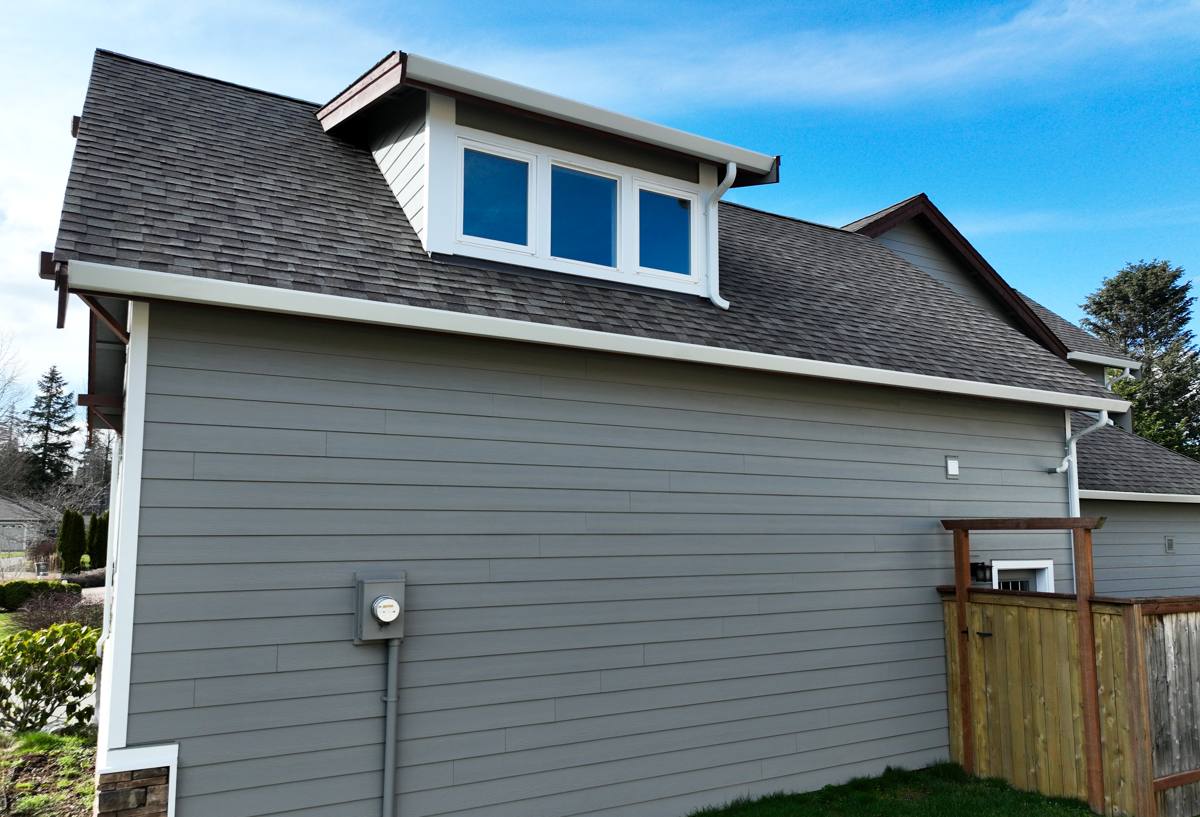
What Salt Air, Rain, and Moss Actually Do to Siding
Each of these stressors damages siding in a different way, and understanding the difference matters for getting the repair right instead of just cosmetic.
Salt-tinged marine air
Proximity to Samish Bay and the greater Puget Sound means airborne salt settles on exterior surfaces, especially on the weather side of a house. On wood-based sidings this accelerates fiber breakdown and paint failure. On fasteners and trim hardware, it speeds corrosion, which is often the real cause of streaking or a popped nail long before the siding panel itself looks bad.
Driving rain and prolonged dampness
Bow doesn't get flash flooding — it gets weeks of steady, wind-driven drizzle that pushes moisture sideways into laps, seams, and butt joints. Siding that was installed with tight, well-caulked joints sheds this fine. Siding with gaps, under-caulked trim, or improperly lapped courses slowly wicks water behind the surface, which is where rot and hidden damage actually start.
Moss and organic growth
Shaded north walls, tree-lined lots, and the general dampness of this climate give moss and algae a long growing season here. Beyond the cosmetic green-black staining, moss holds moisture directly against the siding surface for extended periods, which is exactly the condition that lets rot take hold underneath paint or coating that otherwise looks intact.
Signs a Bow Home Needs Siding Repair, Not Just a Wash
Homeowners often catch the cosmetic signs and miss the structural ones underneath. Here's what we actually check for on a repair call in this area:
- Soft or spongy spots when pressed, especially near the bottom courses and around window trim
- Visible gaps at seams, corners, or where siding meets trim boards
- Paint that's bubbling, peeling, or won't hold a fresh coat in the same spot repeatedly
- Persistent moss or dark staining that returns quickly after cleaning
- Nail heads that have backed out, rusted, or left rust streaks down the panel
- Warping, cupping, or visible separation between boards or panels
- Interior signs — a musty smell, discoloration on inside walls, or peeling interior paint near exterior walls
Any one of these on its own might just need monitoring. Two or three together, especially on the same wall, usually means moisture has been getting behind the siding for a while.
What a Correct Repair Actually Involves
A lot of siding "repair" in this region is really just caulk and paint over a problem that's still there underneath. That buys a year or two, not a fix. Our process is built around finding out what's actually happening behind the siding before we touch the surface.
Step 1: Diagnose before you patch
We pull back or remove the affected section to look at the sheathing, house wrap, and framing underneath. If there's rot, we need to know how far it's traveled before deciding whether this is a panel swap or a larger repair.
Step 2: Address the water path, not just the symptom
If siding failed because water was getting behind it — bad flashing, a failed kick-out, poor caulking at a trim intersection — replacing the siding without fixing that entry point just resets the clock on the same failure. We fix the cause first.
Step 3: Match materials correctly
Replacement sections need to match in profile, reveal, and finish so the repair doesn't stand out as a patch. This is where the original siding material matters a lot — see below.
Step 4: Reseal and finish to spec
Proper caulking at joints, correct fastener placement, and a finish that matches the surrounding wall. A repair that's structurally sound but visually obvious is still an unfinished job in our book.
Why Material Choice Changes the Repair, Not Just the Look
What your home is currently sided with drives a lot of the repair decision. Some materials repair cleanly. Others don't, and that's worth being honest about upfront.
| Existing Siding | Repair Reality |
|---|---|
| Cedar or primed wood | Repairable, but the surrounding boards are often at a similar age and moisture exposure — one bad section is frequently a sign more will follow soon |
| Vinyl | Cracked or warped panels are hard to color-match once sun-faded; full-run replacement is often more realistic than a patch |
| LP SmartSide or similar engineered wood | Repairable if caught early, but edge and joint swelling can spread underneath intact-looking panels |
| James Hardie fiber cement | Non-combustible, dimensionally stable, and holds paint far longer — when it does need a repair, it's almost always impact damage, not moisture rot in the panel itself |
We only install James Hardie fiber cement siding — we don't install vinyl, LP SmartSide, Cemplank, Allura, or unprimed cedar as a solution. That's not a sales pitch buried in a repair page; it's relevant to the repair itself. When we replace a damaged section, we're either matching Hardie that's already there, or, if the home has a material that's chronically struggling in this climate, we'll tell you honestly whether a spot repair is worth doing or whether you're better off planning a longer-term replacement instead of repairing the same wall twice.
Repair vs. Replacement: How We Help You Decide
Not every damaged section means the whole wall needs to come off. But repairing the wrong thing wastes money. Here's how we think about it:
| Factor | Favors Repair | Favors Replacement |
|---|---|---|
| Extent of damage | Isolated to one or two sections | Spread across multiple walls or courses |
| Age of siding | Relatively recent, one clear failure point (impact, flashing leak) | Original siding is decades old and failing broadly |
| Material match | Matching material or paint is realistically achievable | Discontinued product, faded beyond match, or a material we don't recommend continuing to patch |
| Underlying cause | A fixable, localized water path | Systemic moisture issues (poor original install, missing flashing throughout) |
Our Bow Siding Repair Process
- On-site assessment — we inspect the damaged area and the surrounding wall, not just the spot you called about
- Moisture and structural check — probing soft areas, checking sheathing condition where accessible
- Honest scope and estimate — repair, partial replacement, or a heads-up that full replacement is the smarter long-term call, explained plainly
- The repair itself — correcting the water path, replacing damaged material, resealing to spec
- Finish match — paint or factory-finish matching so the repair blends into the wall
Why a Local Crew Matters for Bow Specifically
Bow is a small enough community that it doesn't always get the same attention as a bigger job in Anacortes proper or Mount Vernon. We treat it the same — same assessment standard, same materials, same follow-through. Working this stretch of Skagit County regularly means we're not guessing at how the marine air and moss cycle here behaves; we've seen it on the last house down the road. That local familiarity shows up in faster, more accurate diagnosis and fewer surprises once we open up a wall.
After the Repair: Keeping Moss and Moisture From Coming Back
A good repair should outlast the conditions that caused it. A few things homeowners in this area can do between service visits:
- Keep gutters clear so overflow isn't running down the siding face
- Trim back vegetation that shades siding and keeps it damp longer than the rest of the house
- Have caulking at trim and joints checked every couple of years — it's the cheapest thing to maintain and the most common thing that fails first
- Address moss early with a gentle wash rather than letting it establish for a full season
If you're seeing soft spots, persistent moss, or paint that won't hold on a Bow-area home, it's worth getting an honest look before it spreads. We offer free, no-pressure estimates — fill out the form below and we'll take a look and tell you straight what it needs.