 Anacortes
 Why Similk Beach Roofs Wear Differently Than Roofs Inland
Similk Beach sits close enough to the water that homes here take on a different kind of weather stress than roofs ten or fifteen miles inland in Skagit County. The combination of salt-laden air off the bay, wind-driven rain coming in sideways during winter storms, and heavy tree cover on a lot of properties creates a roofing environment that's tougher on materials than most homeowners realize until they're dealing with a problem. A shingle roof that would give you twenty-five trouble-free years in a dry, open part of the state can start showing granule loss, moss colonies, and edge deterioration years earlier out here if it wasn't installed with this specific climate in mind.
None of this means asphalt shingles are a bad choice for Similk Beach — they're still the most practical, cost-effective roofing material for the vast majority of homes in this area. It means the installation details matter more here than they would somewhere drier, and it means ongoing care isn't optional if you want the roof to hit its full expected lifespan.
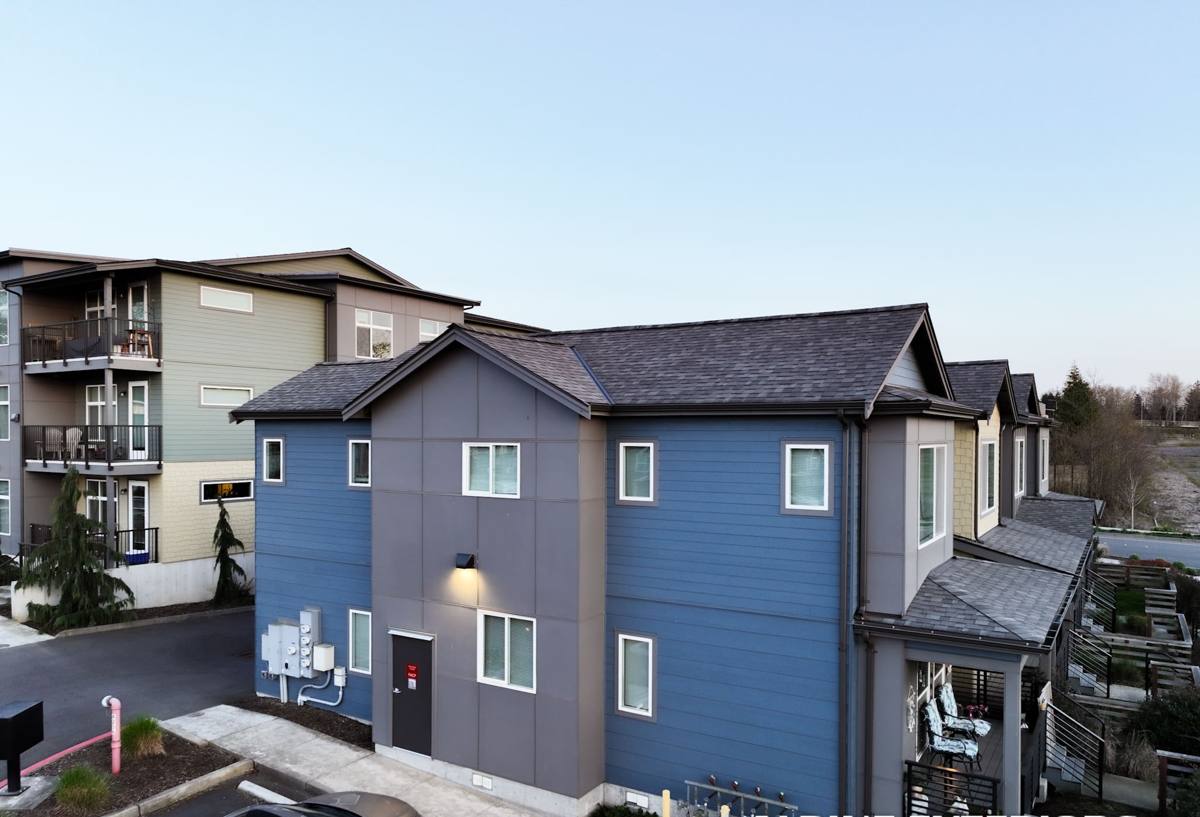
The Three Things Working Against Your Roof Here
Salt Air
Airborne salt from Puget Sound doesn't just affect metal fasteners and flashing — over years it can accelerate the breakdown of the asphalt binder in lower-quality shingles and contribute to faster corrosion of exposed nail heads, vent boots, and drip edge. This is why we pay close attention to fastener quality and flashing material selection on every Similk Beach roof, not just the shingle brand.
Driving Rain
Storms coming off the water tend to push rain sideways rather than straight down. That changes how water moves across a roof deck — it gets forced up under shingle tabs, into valleys, and around penetrations in ways that vertical rain doesn't. Underlayment coverage, valley treatment, and how shingles are fastened all need to account for wind-driven moisture, not just gravity.
A Long Moss Season
Between the tree cover common on Similk Beach lots and the region's extended damp season, north-facing slopes and shaded roof sections stay wet longer than they would in a more open, sun-exposed setting. That's exactly the condition moss and algae need to establish. Once moss gets a foothold under shingle tabs, it lifts them, holds moisture against the deck, and shortens the roof's life if it isn't addressed.
What a Correctly Installed Shingle Roof Includes
A shingle roof is a system, not just a layer of material nailed to plywood. For a Similk Beach home, we treat every layer as doing real work against the conditions above:
- Deck inspection and repair — any soft, delaminated, or water-damaged sheathing gets replaced before anything new goes down. Shingles installed over a compromised deck fail early no matter how good the shingle is.
- Ice and water shield at vulnerable points — eaves, valleys, and roof-to-wall transitions get a self-adhering waterproof membrane, not just felt, because these are the spots where wind-driven rain finds its way in first.
- Synthetic underlayment across the full deck — a durable secondary water barrier under the shingles that also stands up better to job-site foot traffic and weather exposure during install than old-style felt.
- Proper flashing at every penetration — chimneys, skylights, vent pipes, and wall intersections are common leak points if flashing is reused or installed loosely. We use new, correctly sized flashing and step-flash against walls rather than relying on caulk to do a metal detail's job.
- Correct nailing pattern and fastener count — manufacturer nailing specs exist for wind resistance, and skipping a nail or two per shingle to save time is one of the most common shortcuts that shows up later as lifted or missing shingles after a windstorm.
- Balanced attic ventilation — intake at the eaves and exhaust at the ridge, sized to the attic's square footage, so moisture and heat don't get trapped under the deck. Poor ventilation is one of the biggest hidden causes of premature shingle failure from underneath.
Choosing the Right Shingle for This Climate
Not every shingle product is built the same way, and for a home exposed to salt air and a long wet season, the difference matters more than the color chart. We steer Similk Beach homeowners toward algae-resistant (AR-rated) shingles as a baseline, and toward heavier architectural/laminate shingles over basic three-tab where budget allows, because of how each performs against this specific environment.
| Shingle Type | Typical Lifespan Here | Wind Rating | Best Fit |
|---|---|---|---|
| 3-Tab (standard) | 15–20 years | Lower (60–70 mph typical) | Budget-conscious projects, secondary structures |
| Architectural / Laminate | 25–30 years | Higher (110–130 mph typical) | Most Similk Beach homes — better wind and impact performance |
| Premium Designer Laminate | 30+ years | Highest available in shingle class | Homes wanting maximum durability and a heavier, dimensional look |
Algae-resistant granules use a small amount of embedded copper or zinc that slows the growth of the blue-green algae responsible for the dark streaking you see on older roofs. It doesn't make a roof moss-proof, but it meaningfully slows staining and buys the roof more useful life between cleanings. We also talk homeowners through manufacturer warranty structure up front — most warranties separate material defects from workmanship, and a roof only gets full protection when it's installed by a certified or authorized installer following the manufacturer's specifications exactly. That's part of why installation quality and warranty coverage go hand in hand.
Ventilation and Moisture: The Part You Don't See
Homeowners usually focus on what's visible — shingle color, curb appeal, maybe the flashing around a chimney. The part that actually determines how long a roof lasts is often invisible: attic ventilation and moisture management. An underventilated attic traps warm, moist air against the underside of the roof deck. In winter that moisture can condense and rot sheathing from below; in summer trapped heat accelerates the aging of the shingles from underneath, regardless of how good the product is. On a lot of older Similk Beach homes we've evaluated, the roof itself was still serviceable but the ventilation was original to a decades-old build and undersized for current code recommendations. Correcting intake and exhaust balance during a re-roof is one of the highest-value things we do, and it's often invisible in the finished result — which is exactly why it gets skipped by installers focused only on what shows.
Moss and Algae: What Actually Prevents It
Moss doesn't show up overnight, and it isn't just cosmetic once it takes hold. Left alone, moss holds water against the shingle surface and works its way under tabs, which can lead to granule loss and, eventually, leaks. A few things genuinely reduce moss and algae pressure on a Similk Beach roof:
- Keeping overhanging branches trimmed back so shaded roof sections get more light and air movement.
- Clearing gutters and valleys regularly so debris doesn't hold moisture against the roof edge.
- Using algae-resistant shingles from the start, especially on north-facing or heavily shaded slopes.
- Gentle, low-pressure moss removal and treatment rather than power-washing, which strips protective granules and shortens shingle life.
- Zinc or copper strips near the ridge on roofs with a history of heavy moss, which release trace metal ions that inhibit regrowth as rain washes over them.
Our Process for a Similk Beach Roofing Project
We keep the process straightforward, because roofing decisions are stressful enough without added confusion:
- On-site inspection — we walk the roof (not just look at it from the ground), check the attic for ventilation and moisture signs, and assess deck condition before quoting anything.
- Honest scope and written estimate — repair versus full replacement, what shingle tier fits the home and budget, and what the underlayment and flashing plan looks like, spelled out in writing.
- Material delivery and site protection — landscaping, gutters, and outdoor living areas get protected before tear-off starts.
- Tear-off and deck inspection — old roofing comes off completely so the deck can actually be inspected and repaired, not covered over.
- Install to manufacturer spec — underlayment, ice and water shield, flashing, ventilation, and shingles installed in the correct order and fastener pattern.
- Full cleanup and magnetic nail sweep — job site and yard cleared of debris and stray fasteners before we call it done.
- Final walkthrough — we review the finished roof with you and go over warranty paperwork.
Signs a Similk Beach Roof Needs Attention
Because of the driving rain and moss pressure specific to this area, we recommend homeowners keep an eye out for these signs rather than waiting for an obvious leak:
- Granules collecting in gutters or at downspout outlets
- Dark streaking or green/black growth on north-facing slopes
- Shingle edges curling, cracking, or lifting
- Moss visible at shingle tab edges or in valleys
- Soft or spongy spots when walking the roof
- Daylight visible through the roof deck from inside the attic
- Rusty or loose flashing around chimneys, vents, or skylights
- Musty smell or visible moisture staining in the attic
Cost Factors for a Similk Beach Roofing Project
Every roof is different, but the main variables that move a project's cost up or down are consistent. We go over all of these during the on-site estimate so there are no surprises:
| Factor | Why It Matters |
|---|---|
| Roof size and pitch | Steeper roofs take longer and require more safety setup, affecting labor cost |
| Deck condition | Rotten or delaminated sheathing found during tear-off needs replacement before shingles go on |
| Shingle tier | 3-tab, architectural, and premium laminate products carry different material costs and lifespans |
| Layers to remove | Tearing off multiple existing layers adds labor and disposal cost versus a single-layer tear-off |
| Ventilation upgrades | Adding or correcting ridge and soffit ventilation is a smart add during a re-roof, not a separate project later |
| Access and tree cover | Heavily wooded or hard-to-access lots, common around Similk Beach, can affect setup time and material staging |
Why It Matters to Hire a Crew That Already Works This Neighborhood
Roofing crews that mostly work drier, more open parts of Skagit County don't always account for salt exposure, wind-driven rain angles, or the moss pressure that shaded, water-adjacent lots deal with year after year. A crew that regularly works Similk Beach and the surrounding Anacortes area already knows to spec heavier fastener coatings, prioritize ventilation on shaded roofs, and treat valley and eave protection as non-negotiable rather than an upsell. That local pattern recognition is the difference between a roof that just gets installed and one that's actually built for where it sits.
If you're weighing a repair against a full replacement, or just want an honest read on how much life is left in your current roof, we're glad to come take a look. Reach out below for a free, no-pressure estimate.