 Anacortes
 Why West Anacortes Roofs Wear Differently
West Anacortes sits close enough to the water that salt-laden air is a constant, low-grade stressor on every exterior surface, including the roof. Add in the driving, wind-pushed rain that comes off Rosario Strait and Guemes Channel during fall and winter storms, plus a moss season that can run eight months or more in shaded, north-facing yards, and you have a climate that is genuinely tougher on asphalt shingles than what homes twenty miles inland deal with. None of this means asphalt shingles are the wrong choice for this neighborhood. It means the installation details, ventilation, and maintenance rhythm have to be dialed in for this specific environment, not generic Pacific Northwest guidance pulled from a manufacturer's brochure written for a drier climate zone.
We work on roofs throughout West Anacortes regularly, so we see the same failure patterns come up again and again: moss lifting shingle edges and holding moisture against the deck, wind-driven rain finding its way under improperly sealed tabs, and fasteners or flashing corroding faster than they would a few miles east. A roof built to standard code minimums can still underperform here if it isn't built with these specific conditions in mind.
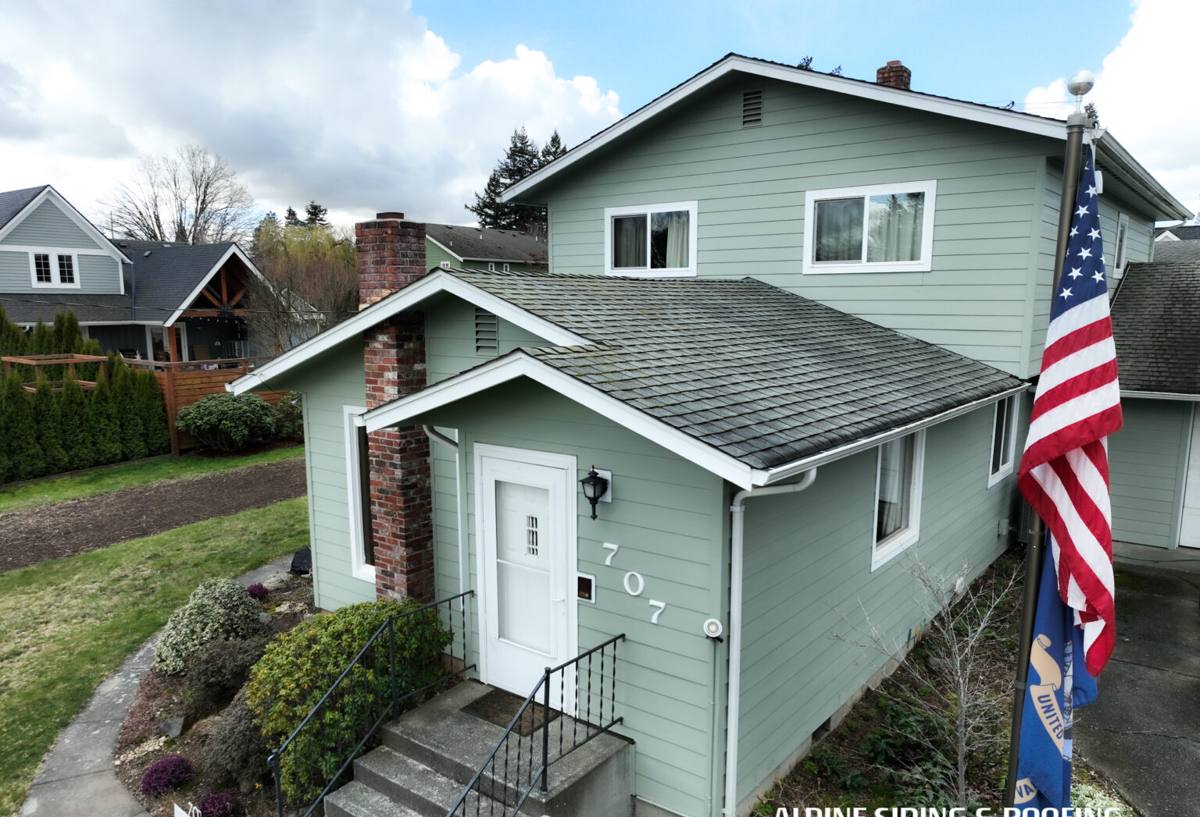
What Salt Air and Coastal Wind Actually Do to a Shingle Roof
Salt air doesn't attack the asphalt shingle mat itself as aggressively as it attacks metal. The real vulnerability is in the metal components tied to the roofing system: nails, flashing, drip edge, and any exposed fasteners. Standard electro-galvanized roofing nails can start showing corrosion streaks on shingles within a handful of years in a coastal exposure like West Anacortes, especially on roof faces that catch prevailing wind off the water. Once a fastener corrodes, its holding power weakens, and that's exactly what you don't want during a winter windstorm.
Wind is the second half of the coastal equation. West Anacortes gets enough sustained wind and gusting off the strait that shingle sealant strips need a real chance to bond, and shingles rated for standard wind exposure can be marginal on more exposed lots, especially near roof edges, ridges, and hips where uplift forces concentrate. We factor lot exposure into product selection and installation detail rather than treating every roof the same regardless of how open it sits to the water.
Where Wind Damage Shows Up First
- Rake and eave edges, where uplift pressure is highest
- Ridge caps, particularly on roofs with long, unbroken ridge runs
- Field shingles that never fully sealed due to cool, damp installation conditions
- Any shingle installed out of pattern near valleys or penetrations, where wind can catch a loose edge
Moss: The Slow-Motion Problem Most Homeowners Underestimate
Skagit County's damp, mild winters and shaded tree canopy in parts of West Anacortes create ideal moss conditions on north-facing and heavily shaded roof slopes. Moss is often dismissed as a cosmetic nuisance, but it's a mechanical and moisture problem. As moss colonies grow, their root structures work into the granule surface and shingle laps, physically lifting the shingle edge just enough to let wind-driven rain track underneath. That trapped moisture sits against the roof deck, which is how you get soft spots, sheathing rot, and interior leaks that show up nowhere near where the moss actually was.
Moss removal matters, but timing and method matter more. Aggressive pressure washing or scraping damages the granule layer that protects shingles from UV and weather, shortening the roof's remaining life even as it solves the moss problem. We treat moss control as a maintenance discipline, not a one-time cleanup, because a moss-free roof today can be re-colonized within a season if the underlying shade and moisture conditions haven't changed.
A Realistic Moss Management Approach
- Manual, low-pressure debris and moss removal rather than pressure washing the granule surface
- Zinc or copper control strips installed near the ridge, where rain washes trace metal ions down the roof plane
- Keeping gutters and valleys clear so moss doesn't get a foothold in standing debris
- Trimming back overhanging branches where practical, since shade and organic debris are what feed moss growth in the first place
What a Correctly Installed Asphalt Shingle Roof Looks Like Here
A correct install in West Anacortes starts below the shingles, not with them. Underlayment choice, ventilation, and flashing detail do more to determine how a roof performs in this climate than the shingle brand printed on the wrapper.
Underlayment
Given the amount of wind-driven rain this area sees, we favor synthetic underlayment with a self-adhered ice-and-water membrane at eaves, valleys, and roof-to-wall transitions, even though hard freeze-thaw ice damming isn't the primary concern here the way it is inland. The membrane's real job in this climate is stopping wind-driven rain that gets pushed backward under the shingle course, which is a much more common failure mode on this coastline than ice.
Ventilation
Balanced intake and exhaust ventilation keeps the roof deck at a stable temperature and moisture level, which reduces condensation on the underside of the sheathing during our long damp stretches. Under-ventilated attics in this climate tend to show up as premature sheathing degradation and shingle cupping well before the shingle's rated lifespan is up, because trapped moisture attacks the roof system from underneath rather than above.
Flashing and Fasteners
We use corrosion-resistant flashing and fastener specifications appropriate for coastal exposure rather than defaulting to whatever is cheapest at standard supply pricing. It costs modestly more up front and pays for itself by avoiding the streaking, weakened fastener holds, and premature flashing failure that show up on standard-spec roofs within a decade of coastal exposure.
Choosing the Right Shingle Product for This Exposure
Not every asphalt shingle line is built the same, and for a roof facing West Anacortes' combination of wind and moisture, the product's algae resistance rating, wind rating, and sealant design all matter more than they would on a sheltered inland lot.
| Shingle Factor | Why It Matters in West Anacortes |
|---|---|
| Algae-resistant (AR) granules | Copper-infused granules slow the blue-green algae staining common in damp coastal climates, keeping the roof looking clean longer |
| Wind rating | Higher-rated laminate or architectural shingles hold up better on lots with direct exposure to wind off the strait |
| Sealant strip design | Wider or dual sealant strips bond more reliably in the cooler, damper installation windows common here |
| Shingle profile | Laminate/architectural shingles shed wind-driven rain better than older three-tab profiles due to their thicker, layered construction |
| Warranty structure | Confirm whether algae-resistance and wind coverage are prorated, since coastal exposure can trigger those limits sooner than inland installs |
Repair, Re-Roof, or Full Tear-Off: Making the Right Call
Not every West Anacortes roof needs full replacement, and we'd rather give you an honest read than sell a bigger job than the roof needs.
Repair makes sense when damage is isolated: a section of wind-lifted shingles, a flashing failure at a chimney or vent pipe, or moss-related lifting caught early before the deck is compromised. Repairs are cost-effective but only buy time if the rest of the roof is still sound.
Overlay (roofing over existing shingles) is rarely something we recommend on this coastline. Trapping an aging shingle layer under a new one hides the roof deck from inspection and can mask moisture damage that's already underway, which is a bigger risk here than in drier climates given how much wind-driven rain finds its way under compromised shingles.
Full tear-off and replacement is usually the right call once a roof is showing granule loss, widespread curling, multiple past repairs, or any sign of deck moisture. Tear-off lets us inspect and, where needed, replace deck sheathing, correct ventilation, and rebuild flashing details properly instead of building a new roof on top of unknown problems.
Our Process for a West Anacortes Roofing Project
- On-site inspection. We walk the roof and attic, checking deck condition, ventilation, flashing, and moss or moisture patterns specific to the lot's exposure and shade.
- Honest scope and product recommendation. You get a clear explanation of what the roof actually needs, with shingle and underlayment options suited to a coastal, moss-prone exposure, not a one-size-fits-all package.
- Deck prep. Any soft, delaminated, or moisture-damaged sheathing is identified and replaced before new roofing goes down, not patched over.
- Underlayment and flashing installation. Ice-and-water membrane at vulnerable transitions, synthetic underlayment across the field, and corrosion-resistant flashing throughout.
- Shingle installation to spec. Correct nailing pattern, exposure, and sealant activation matter more in cool, damp conditions than in warm, dry ones, so timing and technique are adjusted accordingly.
- Ventilation check and correction. We confirm intake and exhaust venting are balanced for the attic size, correcting deficiencies rather than leaving them for the next contractor.
- Final walk-through and cleanup. Site debris, nails, and old material are cleared, and we go over care and moss-prevention basics specific to the property's exposure.
Homeowner Maintenance Checklist for This Climate
- Clear moss and debris from shaded slopes before it establishes a heavy colony, ideally each fall
- Keep gutters and downspouts clear so wind-driven rain has somewhere to go besides under the shingle edge
- Check attic ventilation isn't blocked by insulation, storage, or debris
- After major wind events, do a visual check from the ground for lifted or missing shingles
- Have flashing around chimneys, vents, and skylights inspected every few years, since these are the most common leak points on an otherwise sound roof
- Avoid pressure washing the roof surface directly; use low-pressure, granule-safe cleaning methods only
Why Local Experience on This Coastline Matters
A roofing crew that mainly works drier, inland Skagit County jobs can still build a code-compliant roof, but code minimums don't account for the specific combination of salt exposure, wind direction, and moss pressure that West Anacortes homes face. We've seen which roof faces take the worst of the weather off the water, which fastener and flashing specs actually hold up here, and how aggressively moss needs to be managed on shaded lots in this specific pocket of Anacortes. That local pattern recognition is what separates a roof that looks fine at handoff from one that's still performing well a decade later.
If you're dealing with a roof that's showing its age, dealing with recurring moss, or you're simply due for an honest assessment of what your asphalt shingle roof needs in this environment, we're glad to take a look. Reach out for a free, no-pressure estimate using the form below.