 Anacortes
 Windows in Similk Beach Work Harder Than Windows Inland
Similk Beach sits on the water side of Fidalgo Island, close enough to Similk Bay and the open channels around Anacortes that salt-laden air reaches every window on the house, not just the ones facing the shoreline. Add Skagit County's long wet season and the shade and humidity that build up moss on north-facing walls and rooflines, and you have three forces working against a window at once: corrosion, moisture intrusion, and organic growth that traps water against wood and trim. A window that would last three decades in a dry inland climate can show real trouble in half that time here if it wasn't installed with this environment in mind.
This page is about one job, done right, in one place: window installation for homes in and around Similk Beach. Not a general overview of window brands, but what actually matters when the house you're working on is a short walk from saltwater and sits under Pacific Northwest rain for eight or nine months of the year.
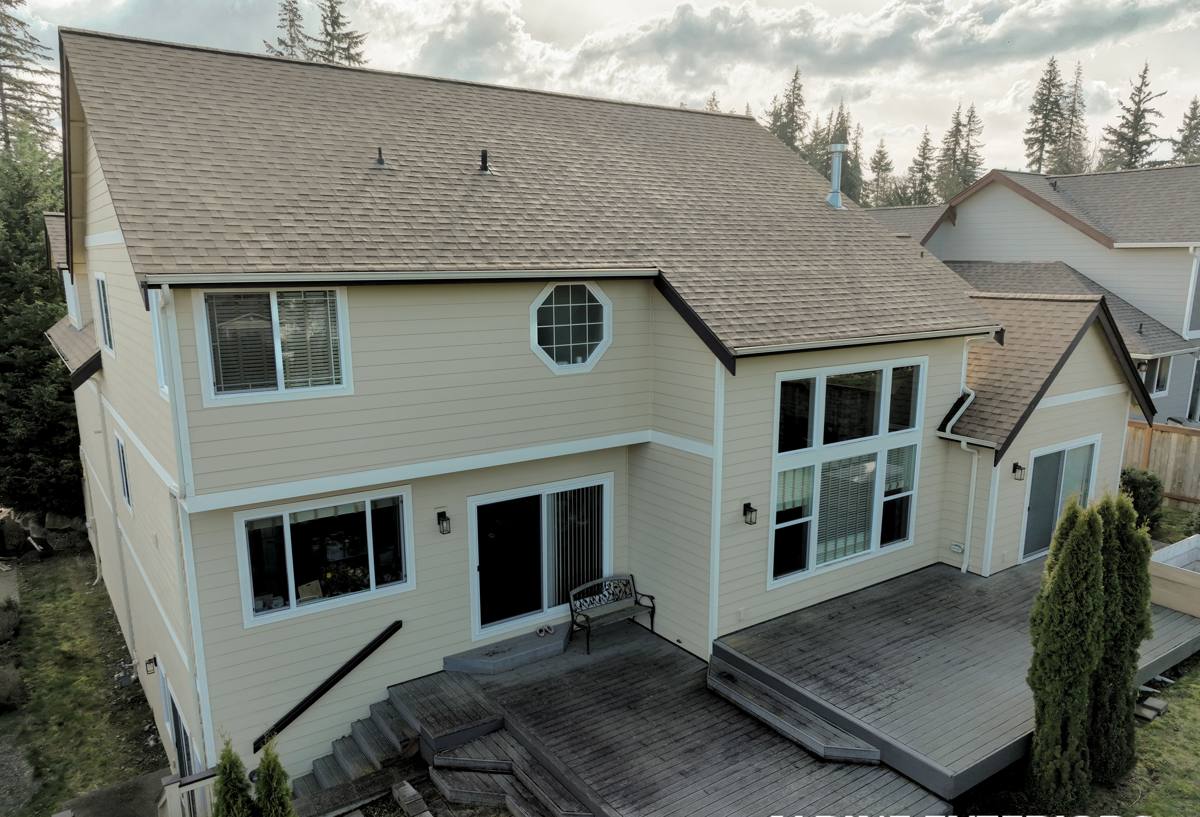
What Salt Air, Driving Rain, and Moss Actually Do to a Window
Salt Air
Airborne salt is corrosive to exposed metal — window hardware, screws, flashing, and lower-quality cladding fasteners all take the hit. On older aluminum-frame windows it shows up as pitting and white oxidation. On newer vinyl or fiberglass windows, the frame itself is fine, but cheap hardware, hinges, and locking mechanisms can seize or corrode years before the glass unit fails.
Driving Rain
Anacortes gets wind-driven rain off the water, not just straight-down rain. That matters because a window opening doesn't just need to shed water off the sill — it needs flashing and sealant details that stop wind-pushed moisture from getting up and under the trim from the sides and bottom. This is one of the most common points of failure we find on older installs in this area: water intrusion at the corners and sill, not glass failure.
Moss and Organic Growth
Shaded, north- and west-facing walls near tree cover hold moisture longer, and moss and algae take hold on trim, sills, and any horizontal surface that stays damp. Left alone, that growth holds water against wood trim and paint, which accelerates rot at exactly the joints and seams a window depends on to stay sealed.
Signs a Similk Beach Home Needs New Windows, Not Just Repairs
- Soft or spongy trim, sill, or the wall surface directly below a window
- Fogging or a visible haze between panes on a double-pane unit — the seal has failed
- Windows that are difficult to open, close, or lock, especially after a wet stretch
- Visible daylight or a draft around the frame when the window is closed and latched
- Paint that bubbles, peels, or won't hold near the window edges no matter how often it's redone
- Persistent black or green staining on the sill or trim that returns within a season of cleaning
- Noticeably higher heating bills with no other explanation, especially in older single-pane homes
Any one of these can sometimes be handled with a repair or re-caulk. Two or three together, especially on a window more than 15-20 years old, usually means the frame or seal has moved past the point where patching makes sense.
What a Correct Window Installation Involves Here
The window unit itself is only part of the job. In a coastal Skagit County setting, the installation details around the window are what determine whether it lasts 25 years or leaks in five. A correct install includes:
- Full removal and inspection of the opening — pulling the old unit out to check the sheathing, sill, and framing underneath for rot or hidden water damage before anything new goes in.
- Repair of any damaged framing or sheathing found during removal, not covering it up and moving on.
- Proper flashing, in the right order — sill pan flashing first, then side flashing, then head flashing lapped correctly so water sheds down and out, never trapped behind the trim.
- Weather-resistant barrier integration so the window ties into the house wrap or building paper correctly, maintaining a continuous drainage plane.
- Correct sealant selection and placement — sealed where it needs to seal, left open where the assembly needs to breathe and drain, since a fully sealed window can trap moisture just as badly as an unsealed one.
- Shimming and squaring so the sash operates smoothly and the seal compresses evenly all the way around.
- Interior and exterior trim finished to shed water away from the frame, not toward it.
Skip any one of these steps and the window can look fine for a year or two while water quietly works its way into the wall assembly behind it.
Window Materials and How They Hold Up Near the Water
We don't push one brand for every home. What matters is matching the frame material and glass package to a house that sits in salt air and heavy rain, and being honest about the upkeep each option asks for.
| Material | Moisture & Salt Resistance | Maintenance | Typical Lifespan |
|---|---|---|---|
| Vinyl | Good — won't corrode or rot, handles salt air well | Low — occasional wash-down | 20-30+ years |
| Fiberglass | Very good — dimensionally stable, resists warping in wet-dry cycles | Low | 30-40+ years |
| Wood (unclad) | Poor without diligent upkeep — most exposed to rot and moss staining | High — regular painting/sealing | Highly variable; short if neglected |
| Wood-clad (vinyl or aluminum-clad exterior) | Good on the exterior face; interior wood still needs attention if condensation occurs | Moderate | 25-35 years with care |
| Aluminum (uninsulated) | Prone to pitting and corrosion in salt air over time; conducts cold | Moderate | Varies widely |
For most Similk Beach homes, vinyl and fiberglass frames are the easiest to recommend in good conscience: they don't give salt air or standing moisture anything to work with, and they don't add a painting and re-sealing chore to a homeowner's yearly list. Unclad wood windows can look great and plenty of owners want that look, but we'll tell you plainly up front what the maintenance schedule needs to be to keep them performing this close to the water — that's a maintenance-burden conversation, not a knock on wood as a material.
Glass Packages Worth Discussing
Double-pane, argon-filled, low-E glass is the practical standard for this climate — it cuts heat loss, reduces condensation risk on the interior pane, and holds up to the temperature swings between a cold, damp night and a sunny afternoon. Triple-pane is worth discussing for a home with a lot of west- or water-facing glass, but it adds weight and cost that isn't always justified on every elevation.
Our Window Installation Process
- On-site assessment — we look at every window opening being replaced, not just count units from a photo, and check for existing moisture or rot issues before quoting.
- Product selection — we walk through material, glass package, and style options against your budget and how exposed that side of the house is to wind and salt air.
- Written estimate — clear line items, no surprise change orders for work we could have identified up front.
- Removal and structural check — old units come out, framing gets inspected and repaired as needed before the new window goes in.
- Installation with full flashing and sealing detail — the steps outlined above, done the same way whether it's one window or a whole house.
- Trim and finish work — interior and exterior trim completed and sealed correctly.
- Final walkthrough — every window opened, closed, and checked with you before we call the job done.
What Affects the Cost of Window Installation in Similk Beach
| Factor | Why It Matters |
|---|---|
| Number of windows and total opening size | Bigger and more openings mean more material, labor, and disposal |
| Frame material chosen | Vinyl is generally the most affordable; fiberglass and clad-wood cost more up front |
| Glass package | Double-pane low-E is standard; triple-pane and specialty coatings add cost |
| Condition of the existing opening | Hidden rot or framing damage found during removal adds repair time before install can proceed |
| Access and exposure | Upper-story or hard-to-reach openings, and heavily wind-exposed walls facing the water, can add labor |
| Replacement vs. new-construction install | Full-frame replacement (tearing out to the studs) costs more than an insert replacement into a sound existing frame |
As a rough range across the region, homeowners commonly see installed costs from around $600 to $1,500 per window depending on size and material, with full-frame replacements and larger or specialty units running higher. Every home is different, which is why we quote after actually looking at the openings rather than off a phone call.
Why Hire a Crew That Already Works in Similk Beach
Window installation isn't the same job everywhere in Skagit County. A crew that mostly works dry, inland, low-exposure sites can do fine work and still miss the details that matter on a house exposed to Similk Bay's wind and salt air, because it's never been the variable they had to plan around. Working this area regularly means:
- Knowing which flashing and sealant details actually hold up against wind-driven rain off the water, not just what a manual recommends for a generic install
- Recognizing early moss and moisture staining patterns specific to shaded, water-adjacent lots
- Understanding which frame materials and hardware finishes stand up to salt air instead of needing replacement in a few years
- Being familiar with the older housing stock common in this part of Anacortes and what's typically hiding behind the trim before we ever pull a window out
That local familiarity is the difference between an installation that looks right on move-out day and one that's still performing correctly a decade later.
Keeping New Windows Performing in This Climate
A correct installation does most of the work, but a little seasonal attention keeps it that way:
- Rinse sills and frames periodically to clear salt residue, especially on wind-exposed sides of the house
- Keep gutters and downspouts clear so runoff isn't dumping extra water near window openings
- Trim back vegetation that's shading a window and keeping trim damp longer than it needs to be
- Check and refresh exterior caulking at the trim edges every couple of years, sooner on wood-clad units
- Operate locking hardware a few times through the year so mechanisms don't seize from disuse and moisture
If your Similk Beach home has windows that are drafty, fogged, hard to operate, or showing rot and staining at the trim, we're glad to take a look and give you a straight answer about repair versus replacement. Reach out for a free, no-pressure estimate using the form below.