 Anacortes
 Windows Built for the Ship Harbor Environment
Ship Harbor sits close enough to the water that homes here take a different kind of weathering than a house a few miles inland in Skagit County. Salt-laden air off Rosario Strait works on metal components and finishes year-round, wind-driven rain finds every gap in a window's seal during winter storms, and the shaded, moisture-heavy microclimate around the harbor keeps moss and algae active on north-facing walls and trim for much of the year. Windows are one of the first places all three of those problems show up — corroded hardware, staining and rot at the sill, and seals that fail years before they should.
A window installation crew that hasn't worked this specific stretch of coastline tends to treat every job like a generic Pacific Northwest install. That's not good enough here. Ship Harbor homes need window products and installation details chosen specifically for salt exposure, sustained wind-driven rain, and low-sun, high-moisture wall assemblies. This page covers what that actually looks like.
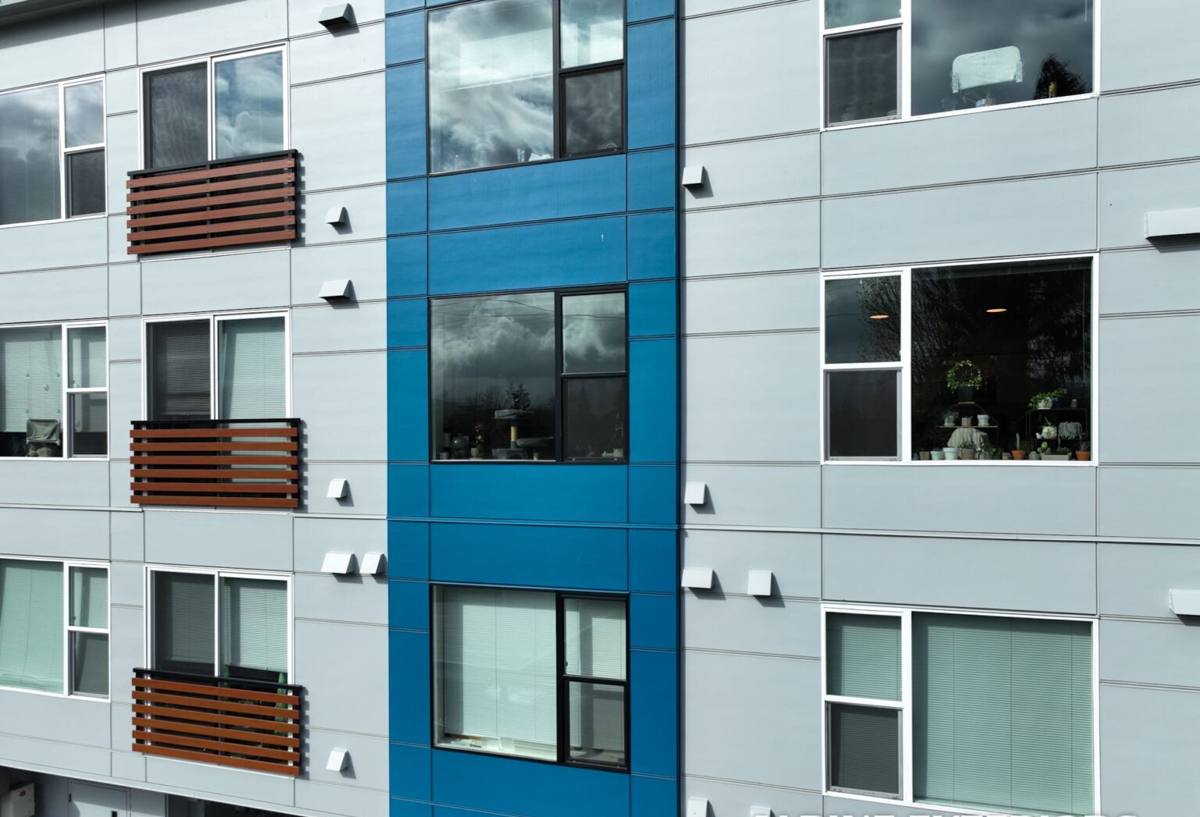
What Salt Air, Rain, and Moss Do to a Window Over Time
Salt Air and Hardware Corrosion
Salt in the air settles on window frames, hardware, and screens, and it doesn't need direct ocean spray to do damage — it travels on the wind. Over years, unprotected or lower-grade fasteners, hinges, and cranks corrode faster near the harbor than they would even a mile or two inland. This is why hardware selection matters as much as the window unit itself for Ship Harbor properties.
Wind-Driven Rain and Water Intrusion
Anacortes gets plenty of straightforward vertical rain, but the harbor's exposure means wind-driven rain is a regular event — rain that gets pushed sideways and upward against a wall instead of simply falling on it. A window that's watertight in calm rain can still leak under wind-driven conditions if the flashing, sill pan, and sealant details weren't built for that scenario. Most window leaks we find in this area trace back to installation shortcuts, not a defective window.
Moss and Sustained Moisture
Shaded elevations and north-facing walls near the harbor stay damp longer after a storm, which is exactly the environment moss and algae need to establish on siding, trim, and window sills. Once organic growth gets a foothold at a window's edge, it holds moisture against the frame and finish, accelerating rot in wood components and breaking down caulk and sealant faster than in a drier spot on the same house.
What a Correct Window Installation Involves
The window unit is only part of the job. The installation details around it are what actually determine whether a home stays dry and the window performs for its full service life. For Ship Harbor properties specifically, we treat the following as non-negotiable:
- A sloped sill pan flashing under every window, so any water that gets past the sash has a built-in path back out instead of pooling against the framing
- Corrosion-resistant fasteners and hardware rated for coastal or high-humidity exposure, not standard interior-grade hardware
- Proper integration with the existing weather-resistive barrier and siding — flashing tape and house wrap lapped in the correct shingle-style order so water sheds outward at every layer
- Continuous, correctly sized backer rod and sealant at the exterior perimeter, sized for the gap rather than just caulked over
- Insulation and air-sealing at the rough opening, not just around the visible trim, to stop condensation from forming inside the wall cavity
- Interior sill and trim finished to shed condensation without trapping it against wood
Skip any one of these and the window may look fine and even function fine for a season or two — the failures in wind-driven rain and salt exposure environments tend to show up two, five, or ten years later, usually as a soft sill, a stained wall below the window, or hardware that won't turn anymore.
Choosing the Right Window for a Harbor-Adjacent Home
Not every window product is a good fit for this environment, and the differences come down to material behavior under salt and moisture exposure rather than any one brand being "better" across the board.
| Frame Material | How It Handles This Climate | Maintenance Reality |
|---|---|---|
| Vinyl | Good moisture and salt resistance; no corrosion risk in the frame itself | Low — occasional cleaning, no repainting |
| Fiberglass | Excellent dimensional stability, resists salt and moisture well, holds paint or factory finish long-term | Low to moderate — durable finish, minimal upkeep |
| Aluminum | Strong but prone to corrosion and pitting near salt air unless it's a marine-grade or well-coated product | Higher — finish and hardware need monitoring over time |
| Wood / Wood-Clad | Excellent appearance but the most vulnerable to sustained moisture and rot if exterior detailing isn't perfect | Highest — regular inspection and finish maintenance required |
We don't push one material on every homeowner — a wood-clad window with a well-protected eave and a homeowner who's committed to upkeep can do fine here. What we do insist on is being honest about the maintenance trade-off up front, and we steer clients away from unprotected aluminum or bare wood on directly exposed, low-eave elevations facing the harbor, simply because the long-term upkeep burden in this specific microclimate is real.
Glass and Weatherstripping Details That Matter Here
Beyond the frame, a few details affect how a window holds up specifically to harbor exposure:
- Dual-pane, low-E glass is the practical standard for this climate — it cuts condensation risk on the interior glass surface, which matters given how much moisture is in the air off the water most of the year
- Compression-style weatherstripping generally outperforms basic foam or fin-seal designs under sustained wind-driven rain, because it maintains a tighter seal under pressure
- Stainless or coated fasteners at the exterior frame and hardware points resist the pitting and staining that ordinary steel fasteners develop near the water
- Factory-applied finishes rated for coastal exposure hold their color and integrity longer than field-applied or lower-grade coatings
Our Installation Process
The process itself is straightforward, but the sequencing and detailing are where quality shows up:
- Assessment — We inspect the existing opening, siding condition, and any signs of past water intrusion around each window before recommending a scope of work.
- Product selection — We walk through frame material, glass, and hardware options based on the specific elevation's sun and wind exposure, not a one-size answer for the whole house.
- Removal and opening prep — Old units are removed carefully to check the framing and sheathing underneath for rot or prior water damage before anything new goes in.
- Flashing and sealing — Sill pan, tape, and house wrap integration are done in the correct order so the wall's drainage plane stays continuous.
- Installation and insulation — The window is set, shimmed, and insulated at the rough opening, then fastened with corrosion-resistant hardware.
- Exterior and interior finish — Trim, caulking, and sill work are completed and inspected before we consider the job done.
Why a Crew That Already Works Ship Harbor Matters
A window installer who works across Skagit County generally knows the code and the basics. A crew that specifically works the Ship Harbor area and similar exposed pockets of Anacortes has already seen how these particular conditions play out on real houses — which elevations take the worst wind-driven rain, which fastener and finish choices actually hold up to the salt air here, and where moss tends to establish first on local wall assemblies. That local pattern recognition is what prevents a callback two years down the road for a problem that was avoidable at install time.
It also matters for something more practical: knowing how local building department requirements and typical framing conditions in older Anacortes homes affect a window swap, so there are no surprises mid-project.
What to Expect on Cost
Window installation pricing depends on the number of openings, frame material, glass package, and how much flashing or framing repair is needed once old windows come out. As a rough guide, a straightforward single window replacement in this area typically runs from the low thousands per window for standard vinyl units up through higher figures for larger, fiberglass, or wood-clad units with more complex trim work. Homes with hidden water damage behind existing windows will see added cost for the necessary repair before the new unit goes in — something we flag clearly before work begins, not after.
A Simple Checklist Before You Hire
- Ask whether sill pan flashing is included on every window, not just some
- Ask what fastener and hardware grade is used, and whether it's rated for coastal exposure
- Ask how the new window will be integrated with your existing house wrap or weather barrier
- Ask what happens if rot or water damage is found once the old window is removed
- Ask for the manufacturer's warranty terms in writing, separate from the installer's workmanship warranty
If a contractor can't answer these clearly before the contract is signed, that's worth noticing.
If you're weighing a window replacement or repair for a Ship Harbor property, we're happy to take a look and give you a straightforward, no-pressure estimate — just fill out the form below and we'll follow up to schedule a time that works.