 Anacortes
 Roof Replacement for Sedro-Woolley Homes
Sedro-Woolley sits inland from the water compared to Anacortes proper, but it still falls squarely inside Skagit County's wet-side weather pattern: long stretches of gray, drizzly months, heavy moss growth on anything shaded, and driving rain that comes sideways when a real system moves through the valley. Add in the temperature swings between the river bottom and the surrounding foothills, and roofs here take a steady, cumulative beating rather than one dramatic event. By the time a homeowner notices a problem, the underlying decking or felt has usually been dealing with moisture for a while.
We're an Anacortes-based crew that works Sedro-Woolley regularly, not a truck that shows up once and disappears. That matters more than it sounds like it should — a roof replacement is only as good as the crew's familiarity with how local weather actually treats a roof over the following ten, twenty, thirty years.
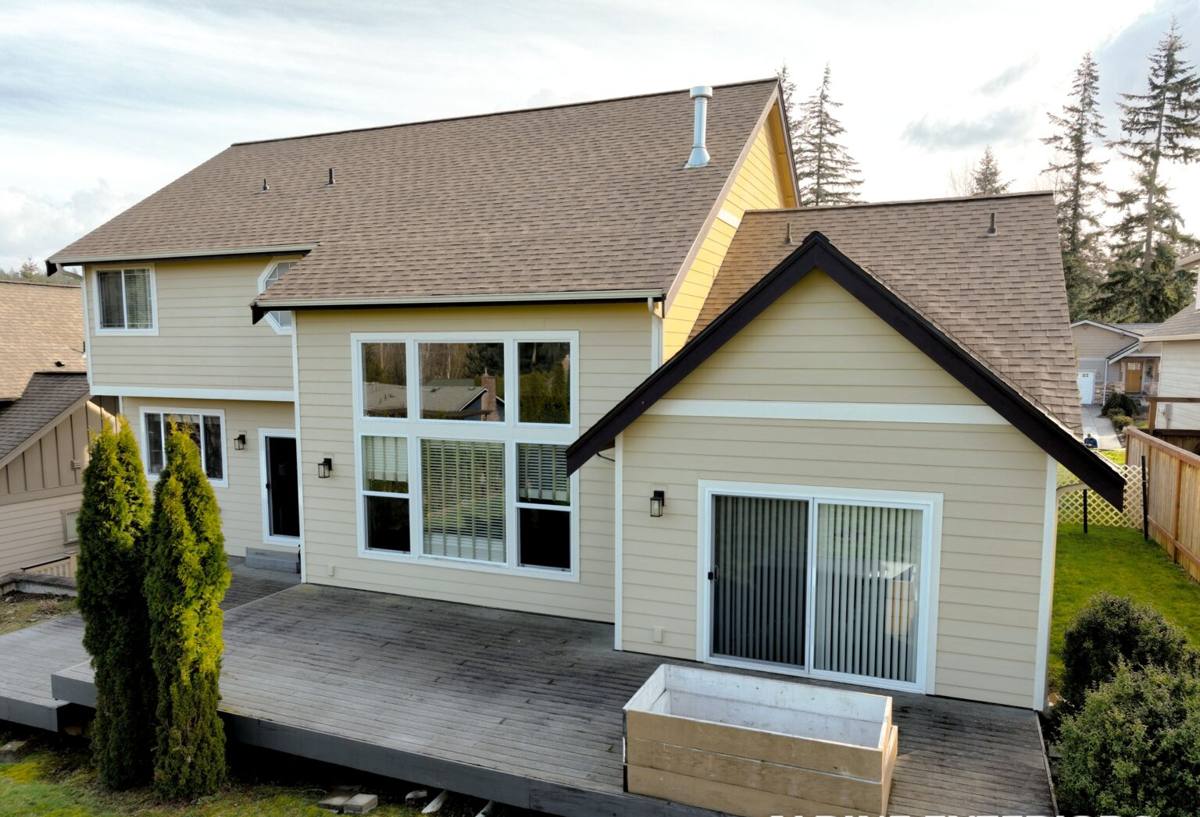
What Skagit County Weather Does to a Roof
Three things drive most of the roof replacement calls we get in this part of the county:
- Moss and algae growth. Shaded north-facing slopes and roofs under tree cover stay damp for days after a storm, which is exactly what moss needs to take hold. Once moss roots into shingle mat, it lifts tabs and holds water against the surface.
- Driving rain and wind-driven wet. Storms coming off the water push rain at an angle, not straight down. That means valleys, flashing laps, and any transition point on the roof takes water pressure most drier climates never see.
- Repeated wet-dry cycling. Skagit Valley alternates between soaked and drying out more than either coastal fog belts or drier eastern Washington towns. That cycling stresses shingle mat, fasteners, and sealants faster than steady moisture alone would.
None of this is exotic — it's just consistent, and consistency is what wears a roof down early if the original install wasn't built for it.
Signs a Sedro-Woolley Roof Is Due for Replacement
- Moss or dark streaking that comes back within a season of cleaning
- Granules collecting in gutters or at downspout outlets
- Shingles that look cupped, curled, or have lifted tabs
- Soft spots underfoot, especially near valleys or old skylights
- Daylight visible through the attic sheathing, or damp insulation below the roof deck
- A roof that's 20+ years old and has never had a full tear-off
Repair vs. Replacement — How We Make the Call
We don't sell full replacements to homeowners who only need a repair, and we're upfront when a roof still has useful life left. The decision usually comes down to how much of the roof system is compromised versus how much is isolated.
| Situation | Usually Repair | Usually Replacement |
|---|---|---|
| Damage location | Isolated area — one valley, one vent boot, storm damage to a section | Spread across multiple slopes or the whole roof |
| Shingle condition elsewhere | Rest of roof is flat, granules intact, no widespread curling | Granule loss, curling, or brittleness roof-wide |
| Age | Under 12–15 years, one prior layer | 20+ years, or already at a second layer |
| Decking condition | Solid, dry sheathing under the repair area | Soft, delaminating, or water-stained decking found during inspection |
| Moss history | First occurrence, cleaned promptly | Chronic moss that keeps returning despite cleaning |
If we get on a roof for a repair estimate and find the underlying deck or felt is compromised beyond that one spot, we'll tell you plainly and explain why patching it would just be a short-term fix.
What a Correct Roof Replacement Involves
A roof replacement done right in this climate is not just stripping old shingles and nailing down new ones. The parts that actually determine how the roof performs over the next few decades are mostly things you won't see once it's finished.
Tear-Off and Deck Inspection
We remove the existing roofing down to the deck rather than layering over old shingles. That's the only way to actually see the plywood or plank sheathing underneath, check for soft or delaminated spots, and replace any sections that have taken on water damage over the years. Roofing over a compromised deck just hides the problem under new material.
Underlayment and Ice/Water Protection
Given how much driving rain and wind-driven moisture this area sees, underlayment choice matters more here than in drier parts of the state. We use synthetic underlayment across the field and self-adhered ice-and-water membrane at the vulnerable points — eaves, valleys, and roof penetrations — where wind-driven rain is most likely to work its way under the shingle layer.
Flashing
Flashing failures — around chimneys, skylights, sidewalls, and valleys — are one of the most common causes of leaks we find on roofs that otherwise still have decent shingle life. We replace flashing as part of a full roof replacement rather than reusing old pieces, since flashing that's been through a couple decades of Skagit County weather is rarely still sealing the way it should.
Ventilation
Proper intake and exhaust ventilation keeps the attic space closer to outdoor temperature and moisture levels, which reduces condensation on the underside of the deck and helps shingles last their full rated life. A roof that traps heat and moisture in the attic tends to fail from underneath, regardless of how good the shingles on top are.
Shingle or Material Installation
Nailing pattern, exposure, and starter course installation all affect wind resistance and how well the roof sheds driving rain. We follow manufacturer specifications closely enough to keep material warranties intact — a roof installed off-spec can void coverage even if it looks fine on day one.
Material Options for This Climate
Most Sedro-Woolley roof replacements we do are asphalt composition shingle, and for good reason — it performs well, it's cost-effective, and modern algae-resistant shingle lines hold up noticeably better against the moss and algae growth this area is known for. We also install metal roofing for homeowners who want a longer-interval, low-maintenance option, particularly on steeper roofs where moss and debris are less likely to sit and hold moisture in the first place.
| Material | Typical Lifespan | Moss/Algae Resistance | Maintenance |
|---|---|---|---|
| Standard asphalt shingle | 20–25 years | Moderate — benefits from periodic cleaning | Occasional moss treatment, gutter clearing |
| Algae-resistant asphalt shingle | 25–30 years | Improved — copper/zinc granules discourage growth | Lower, still benefits from clean gutters |
| Standing seam metal | 40–50+ years | High — smooth surface sheds moss more easily | Low |
We don't push any one material as the only right answer. The right call depends on your roof's pitch, how much shade and tree cover it sits under, your budget, and how long you plan to be in the home.
Our Process, Start to Finish
- On-site inspection. We walk the roof and attic, check the deck condition where accessible, and note flashing points, ventilation, and any moss or moisture history.
- Written estimate. You get a clear scope and price — what's included, what material options fit the roof, and any deck repair contingencies spelled out ahead of time, not discovered as a surprise mid-job.
- Scheduling around weather. Roof tear-offs need a dry work window. We plan around the forecast so your home isn't sitting open to Skagit County rain overnight.
- Tear-off and deck repair. Old roofing comes off, the deck gets inspected and repaired as needed, and debris is hauled off site.
- Underlayment, flashing, and ventilation. The systems that actually keep water out go in before a single finish shingle is laid.
- Final installation and cleanup. Shingles or metal panels go on to manufacturer spec, followed by a full site cleanup including a magnetic nail sweep.
- Walkthrough. We go over the finished roof with you before calling the job done.
Why a Local Crew Matters for This Job
Roof replacement is a trade where local knowledge translates directly into how the roof holds up. A crew that already works Skagit County knows which valleys and slopes in Sedro-Woolley tend to hold moss, understands how wind-driven rain off the water behaves differently than a straight-down storm, and has seen firsthand what happens when underlayment or flashing gets under-built for this weather. That's not something you get from a general contractor passing through once.
Being based in Anacortes also means we're not disappearing after the invoice clears. If a flashing detail needs a look after a hard winter storm, or a warranty question comes up down the line, we're a short drive away, not a call center in another state.
Questions to Ask Before Hiring a Roofer
- Are you licensed and insured in Washington State, and can you provide proof?
- Will you provide a written scope that specifies underlayment, flashing, and ventilation work — not just "shingles"?
- Do you inspect and repair deck damage as part of the job, or bill it separately if found?
- What manufacturer warranty applies, and does your installation method keep it valid?
- Do you haul away and dispose of the old roofing material, and is that included in the price?
- Can you explain, in plain terms, why you're recommending one material over another for this specific roof?
Getting an Estimate
If your Sedro-Woolley home is showing moss that keeps coming back, granules piling up in the gutters, or a roof that's simply reaching the age where a full replacement makes more sense than another round of patching, we're happy to take a look. We'll give you an honest read on whether it's repair or replacement, walk you through material options that make sense for the roof's exposure and pitch, and put together a clear, no-pressure estimate — no obligation to move forward. Use the form below to get started.