 Anacortes
 Board & Batten in a Skagit Valley Town
Sedro-Woolley has a distinct look — a lot of farmhouse, craftsman, and barn-influenced architecture that board and batten siding was practically made for. The vertical lines read as taller, cleaner, and more traditional than lap siding, and it pairs naturally with the agricultural and small-town character of this part of Skagit County. That's the appeal side. The practical side is that board and batten only looks good for the long haul if it's built to handle what this climate throws at it, and that's where a lot of installations — especially older ones done with the wrong material or the wrong technique — start to show their age early.
We install board and batten siding in Sedro-Woolley regularly, and the pattern we see on tear-offs is consistent: it's rarely the style that failed. It's the material, the flashing, or the fastening that gave out first.
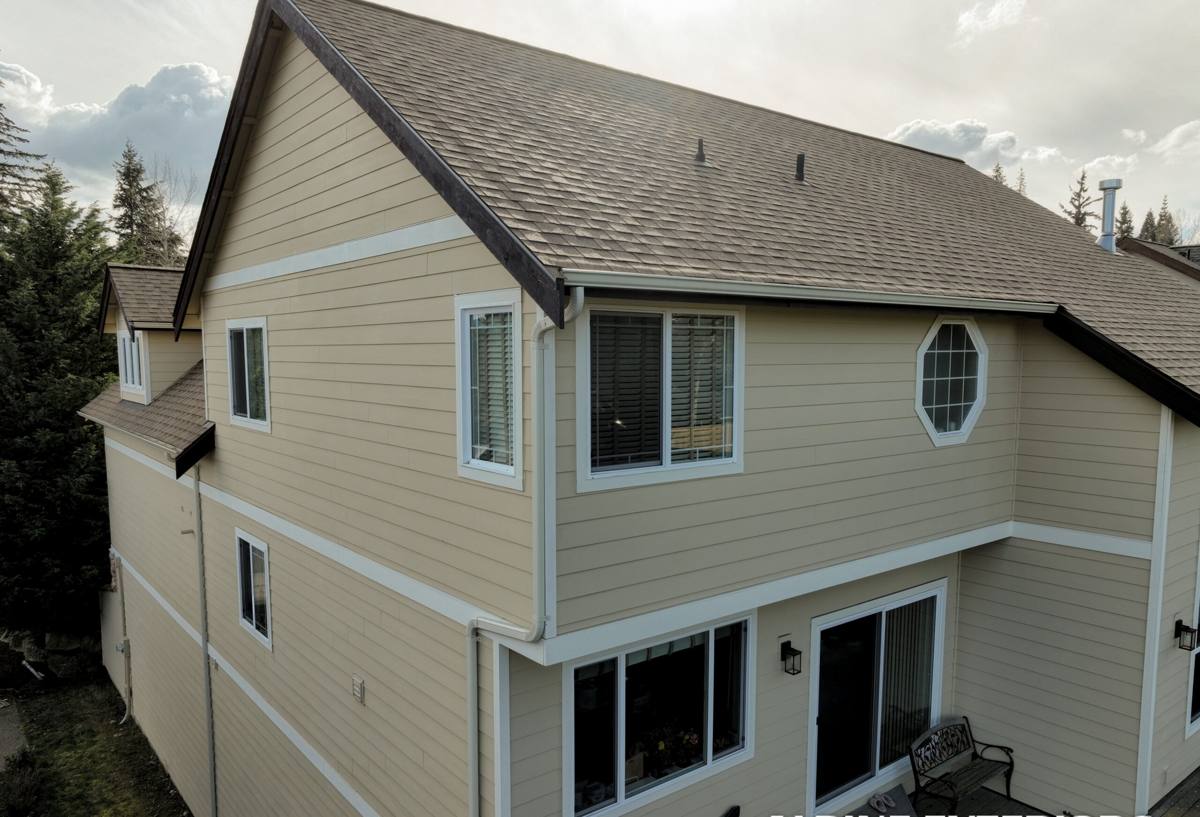
What the Local Climate Does to Vertical Siding
Sedro-Woolley sits up the Skagit Valley, away from the immediate shoreline, but it still lives inside the same marine weather pattern that moves through the rest of Skagit County — driving rain that comes in sideways during fall and winter storms, salt-tinged air that rides in off Puget Sound on prevailing winds, and a long stretch of the year where surfaces just don't fully dry out. Add the valley's own humidity — river fog, shaded lots, tree cover — and you get an extended moss and algae season that outlasts what a lot of homeowners expect.
Board and batten is more exposed to this than standard lap siding in a few specific ways:
- Vertical seams collect water differently. Every joint between a board and its batten is a place water can find its way behind the surface if the install isn't detailed correctly.
- Battens create more edges. More edges means more places for moisture to sit, more places for paint film to fail first, and more places for moss to get a foothold.
- Shaded, damp walls (common on north and west exposures here) grow moss and algae faster than sun-exposed walls, and moss holds moisture against the siding face far longer than bare wood or fiber cement would dry on its own.
- Freeze snaps in winter aren't as harsh here as inland Washington, but repeated wet-dry, cool-warm cycling still stresses any material that isn't dimensionally stable.
None of this means board and batten is a bad choice for Sedro-Woolley. It means the material and the installation both have to be built for this specific climate, not a generic one.
What Board and Batten Actually Is
Board and batten is a two-layer siding system: wide vertical boards installed first, then narrower strips (the battens) fastened over the seams between them. Done correctly, the battens aren't just decorative — they're functionally covering and protecting the vertical joint underneath, which is the most vulnerable part of the whole assembly.
That's exactly why the material matters as much as the pattern. A board and batten wall is only as good as its weakest joint, and the boards and battens both need to hold their shape, resist moisture intrusion, and keep a paint or factory finish intact for years without cupping, splitting, or pulling away from fasteners.
Why We Use James Hardie for This Application
We install James Hardie fiber cement exclusively — for board and batten and every other siding profile we put on a home. For a system built on vertical seams and repeated joints, that decision matters more than usual. Hardie's board and batten products are engineered as fiber cement, which doesn't absorb and swell with moisture the way wood-based products do, and doesn't expand and contract with temperature the way vinyl does. That dimensional stability is what keeps the battens tight to the boards underneath year after year, instead of gapping and letting water track in behind them.
We won't install cedar, primed spruce, or engineered wood products like LP SmartSide in this profile. Wood-based boards can perform well for a while, but board and batten's extra seams and edges are exactly where moisture-driven swelling, checking, and rot show up first, and those are maintenance problems we'd rather not hand a Sedro-Woolley homeowner a few years down the road. Vinyl board and batten exists too, but it reads as visibly thinner and flatter than a true board-and-batten profile, and it doesn't hold up well to direct-fastened vertical installs over time. Hardie's ColorPlus factory finish also means the finish is baked on before the boards ever leave the plant — not something we're relying on field-applied paint to get right on every seam and cut edge.
What a Correct Installation Involves
Board and batten fails less often because of the boards themselves and more often because of what's happening — or not happening — behind them. A correct install in this climate includes:
Drainage Plane and Rain Screen
A weather-resistive barrier goes on the wall first, and we install furring strips or a purpose-built rain screen behind vertical siding so water that does get past the surface has somewhere to drain and air has a path to dry the wall assembly out. This matters more for board and batten than lap siding because of the joint density.
Flashing at Every Transition
Windows, doors, roof lines, and horizontal trim all need proper flashing detail. Water runs down a vertical wall and looks for the first horizontal interruption — that's where flashing errors turn into rot, and it's the single most common failure point we find on tear-offs.
Fastening Pattern
Hardie specifies exact fastener spacing, edge distances, and fastener types for board and batten applications. Skipping or eyeballing this doesn't show up as a problem on day one — it shows up as a batten working loose or a board cracking at a fastener point years later.
Board and Batten Spacing
Boards need consistent gaps behind the battens to allow for the material's minor expansion and contraction, and battens need to be wide enough to fully cover that gap under all conditions. Too tight, and the assembly has no room to move without stressing the fasteners.
Our Process for Sedro-Woolley Homes
- On-site walkthrough: We look at your home's exposure — which walls face prevailing wind and rain, which stay shaded and damp longer, and whether existing siding shows moss, staining, or soft spots that point to moisture already behind the wall.
- Assessment of what's underneath: If you're re-siding, we check sheathing condition before anything new goes up. Covering a wet or rotted wall with new siding just hides the problem.
- Written scope and estimate: Board width, batten spacing, trim details, and color are all decided up front, not improvised mid-project.
- Installation to Hardie spec: Drainage plane, flashing, correct fastening — the parts that don't show up in a walk-by but determine how the job performs in year eight, not just year one.
- Final walkthrough: We go over the finished work with you before we consider the job done.
Working Sedro-Woolley regularly means we already know which exposures in this area tend to hold moisture longest and which details matter most for the valley's climate — that's not something a crew coming in from outside the county has any reason to already know.
Maintenance and Longevity in This Climate
Board and batten done right in Skagit County isn't maintenance-free, but it should be low-maintenance. With James Hardie fiber cement and a ColorPlus factory finish, you're not repainting every few years the way you would with wood-based board and batten in a wet climate. What you should still plan for:
- Periodic soft washing to keep moss and algae from establishing on shaded walls — waiting too long lets growth hold moisture against the siding longer than the wall assembly is designed for.
- Checking caulking at trim joints and penetrations every year or two, since caulking is a maintenance item on any siding system, Hardie included.
- Keeping gutters and downspouts clear so water isn't sheeting down a wall it wasn't meant to hit directly.
- Trimming back vegetation and tree cover where it's keeping a wall shaded and damp longer than the rest of the house.
What Affects the Cost
Board and batten typically costs somewhat more than standard lap siding on the same home, largely because of the extra material (the battens themselves) and the additional installation time the seam detailing requires. Rough factors that move the number:
| Factor | Why It Matters |
|---|---|
| Home size and wall complexity | More corners, dormers, and roof intersections mean more flashing and cut work |
| Existing siding removal | Tear-off and disposal add labor, especially if old material has moisture damage |
| Sheathing repair | Rot found underneath old siding needs to be fixed before new siding goes on |
| Board width and batten spacing | Custom spacing to match an existing look or HOA guideline can add layout time |
| Trim and accent details | Window and door surrounds, corner boards, and frieze detail all add scope |
We won't give you a real number without seeing the home, but we'll walk you through what's driving your specific estimate line by line.
Signs Your Current Siding Needs Attention
If you're not sure whether your board and batten (or any siding) needs replacement versus repair, watch for:
- Persistent moss or algae growth on the same wall section every year, even after cleaning
- Boards or battens that feel soft, spongy, or visibly warped
- Paint that's peeling or bubbling specifically along seams and joints, not evenly across the wall
- Gaps opening up between boards and battens that weren't there originally
- Staining below window sills or trim that suggests water is tracking down behind the siding
Any of those point to moisture already working its way into the wall assembly, and it's worth having someone look before it spreads.
If you're planning a board and batten project in Sedro-Woolley, we're happy to come take a look and walk you through what your home actually needs — no pressure, no obligation. The estimate form below gets you started.