 Anacortes
 Why Bow Roofs Wear Differently Than Roofs Inland
Bow sits close enough to Samish Bay and the tidal flats that homes here take on a different kind of weather than roofs even a few miles inland get. It's not one big storm that does the damage — it's the steady combination of salt-laden air, wind-driven rain, and months of shade and dampness that let moss take hold. A roof built or repaired without those three things in mind will look fine for a season or two, then start failing in ways that are hard to spot from the ground.
Salt Air and Metal Fatigue
Salt in the air doesn't just affect waterfront homes. It travels on wind and settles on every exposed metal surface — flashing, fasteners, gutter hangers, vent caps. Standard steel fasteners and thin galvanized flashing corrode faster near the water than they would in, say, Sedro-Woolley or Mount Vernon. Once a fastener head rusts through or a flashing seam pits and thins, water finds a way in long before the shingles themselves are worn out.
Driving Rain and Wind-Driven Water
Open exposure around Bow means rain rarely falls straight down. Wind pushes it sideways and up under eaves, into valleys, and behind poorly lapped flashing. A roof that would shed water fine in a calm rain can leak under wind-driven rain if the underlayment, valley work, and edge details weren't built for it. This is one of the most common reasons we find water staining on decking that still has years of shingle life left on top.
The Long Moss Season
Skagit County's wet season stretches long, and shaded, north-facing roof sections in Bow can stay damp for weeks at a time. That's exactly what moss needs. Moss doesn't just sit on top of shingles — its root structure works into the granule layer and lifts shingle edges, and where it grows thick, it holds water against the roof deck instead of letting it run off. Left unaddressed, a mossy roof ages faster than a clean one of the same material and age.
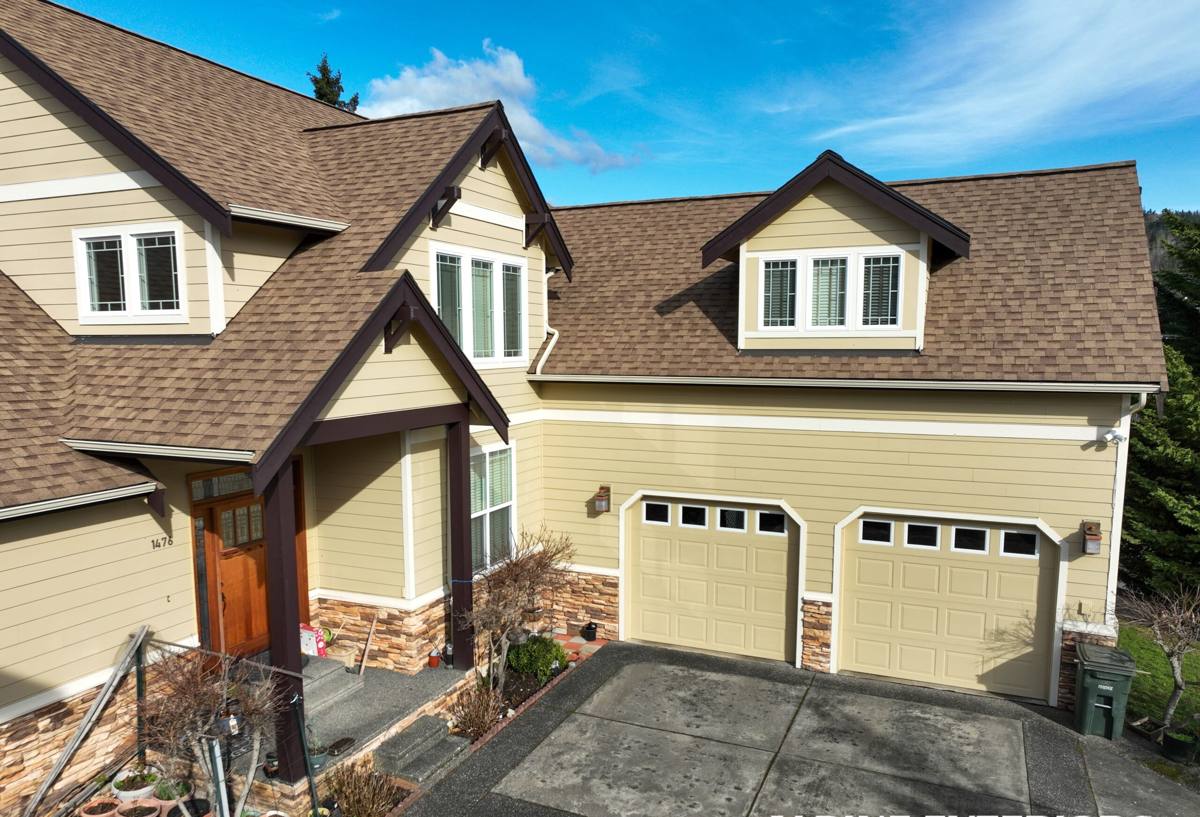
Signs a Bow Roof Needs Replacement, Not Just Repair
Not every roof problem calls for a full replacement, but there are signs that patching is only delaying the inevitable — and often at a higher total cost once you've paid for repairs first.
- Granule loss heavy enough that you can see bare, shiny patches on asphalt shingles
- Moss or dark streaking covering more than a small section, especially on north-facing slopes
- Shingles that are curling, cupping, or cracking rather than lying flat
- Soft spots or sagging when walked on, which usually points to deck damage underneath
- Daylight visible through the roof deck from inside the attic
- Rusted, pitted, or missing flashing around chimneys, skylights, and valleys
- Interior water stains that reappear after repairs, meaning the leak source hasn't actually been fixed
- A roof at or past the expected service life of its material, especially if it's never been proactively maintained
What a Correct Roof Replacement Includes
A roof replacement is more than swapping old shingles for new ones. The parts you can't see after the job is done are usually what determine whether the roof lasts fifteen years or thirty.
Tear-Off and Deck Inspection
We remove the old roofing down to the deck rather than layering over it. That's the only way to actually see the plywood or plank sheathing underneath, replace any boards that are soft, delaminated, or water-damaged, and confirm the deck is solid enough to fasten new roofing to properly.
Underlayment and Ice-and-Water Barrier
A synthetic underlayment goes down over the full deck as the roof's real waterproofing layer — shingles are the weather-facing surface, but underlayment is what keeps water out if wind ever drives it past the shingle edge. In vulnerable spots — eaves, valleys, and around penetrations — we use a self-adhering ice-and-water membrane for extra protection where wind-driven rain and moss-related water retention do the most damage.
Flashing and Fasteners Built for Coastal Exposure
Given the salt air in this part of Skagit County, we don't treat flashing and fasteners as an afterthought. Corrosion-resistant flashing and fasteners cost a little more up front but avoid the early rust-through that leads to leaks around chimneys, valleys, and wall intersections years before the shingles themselves would need attention.
Ventilation
Proper intake and exhaust ventilation keeps the attic close to outside temperature and lets moisture escape instead of condensing on the underside of the deck. Balanced ventilation also reduces the damp, shaded conditions on the roof surface that moss depends on — it's not a cure-all, but it's a meaningful part of a moss-resistant roof system.
Choosing Roofing Materials for Bow's Climate
There's no single "best" roofing material for every home — the right choice depends on your roof's pitch, sun exposure, budget, and how much maintenance you're willing to do. Here's how the common options stack up against the specific conditions Bow homes face.
| Material | Moss Resistance | Salt-Air Durability | Maintenance Needs |
|---|---|---|---|
| Architectural asphalt shingles | Moderate — improves with algae-resistant granules | Good, when paired with corrosion-resistant flashing and fasteners | Periodic moss/debris removal, especially on shaded slopes |
| Standing-seam metal | High — steep, smooth panels shed moss spores well | Very good with coated, marine-grade fastener and panel systems | Low; occasional gutter and fastener checks |
| Cedar shake | Low without diligent upkeep — moss and moisture readily take hold | Fair; requires attentive maintenance near salt air | High; regular treatment and moss control needed |
| Composite/synthetic shingle | Good — dense material resists moss root penetration | Good with proper flashing details | Low to moderate |
For most Bow homes, we lean toward architectural asphalt or standing-seam metal because they offer the best balance of moss resistance, salt-air durability, and manageable maintenance without asking homeowners to commit to constant upkeep. Cedar can still be the right call for homeowners who love the look and are committed to the maintenance it takes in this climate — we'll give you an honest read on what that commitment looks like before you decide.
Our Roof Replacement Process
- On-site inspection. We get on the roof, check the deck condition where accessible, look at ventilation, flashing, and moss coverage, and take honest note of what's actually driving the need for replacement.
- Written estimate. You get a clear scope of work and material options in writing — no pressure, no vague allowances.
- Scheduling and material delivery. We coordinate delivery and protect landscaping and driveways before work starts.
- Tear-off and deck repair. Old roofing comes off, the deck is inspected board by board, and any damaged sheathing is replaced before anything new goes down.
- Underlayment, flashing, and ventilation installed. This is the layer that actually keeps water out — done right, and not rushed.
- Roofing material installed. Shingles, panels, or shakes go on to manufacturer specifications, with attention to nailing patterns and exposure since wind exposure around Bow punishes shortcuts here.
- Cleanup and magnetic sweep. Job site debris, old material, and stray fasteners are cleared from your property and landscaping.
- Final walkthrough. We go over the finished roof and warranty paperwork with you before calling the job done.
Permits and Local Considerations
Roof replacement in unincorporated Skagit County, which covers Bow, typically requires a building permit, and inspections may apply depending on scope. We handle that paperwork as part of the job rather than leaving it on the homeowner's plate. Local wind exposure near the bay and county wind-load requirements also factor into fastener schedules and material choices — details that matter more here than they would on a more sheltered inland lot.
Why a Crew That Already Works Bow Matters
A roofer who mainly works subdivisions farther inland may not think twice about flashing grade or fastener corrosion resistance, because it usually doesn't matter as much there. Around Bow, those details are the difference between a roof that's still tight in fifteen years and one that starts leaking around the chimney in year six. Knowing which slopes on a typical Bow property collect moss fastest, how far wind-driven rain travels up under an eave in an open lot, and which flashing details hold up near the water isn't something you learn from a manual — it's something you learn by doing the work here, repeatedly, and paying attention to how it holds up.
Keeping a New Roof Performing After Installation
A correctly installed roof still benefits from basic upkeep in this climate:
- Clear gutters and downspouts each fall so wind-driven rain has somewhere to go
- Remove overhanging branches that shade roof sections and slow drying
- Have moss buildup addressed before it spreads, rather than after it's established
- Schedule a periodic visual check of flashing and fasteners, particularly after major windstorms
None of this is intensive, but skipping it is how a well-built roof loses years of life it didn't have to lose.
If your Bow home's roof is showing its age or you're planning ahead rather than waiting for a leak, we're happy to take a look and give you a straight answer about what it needs. Request a free, no-pressure estimate using the form below.