 Anacortes
 Building New in March Point? Window Installation Is Not a Detail to Rush
If you're framing a new home or a major addition in March Point, the windows are one of the few building components that have to get everything right the first time: structural opening, weather barrier integration, flashing sequence, and the window unit itself. Get it right during new construction and you likely won't touch it again for decades. Get it wrong, and it's a callback waiting to happen — usually after the drywall and trim are already in, which makes the fix expensive and disruptive.
March Point sits close to open water and tidal flats, which means homes here take on more of the marine environment than properties further inland in Skagit County. Salt-laden air, wind-driven rain off Fidalgo Bay and the surrounding waterways, and a long, wet moss season all put extra demand on exterior openings. New-construction windows are your chance to build for that environment from day one instead of retrofitting for it later.
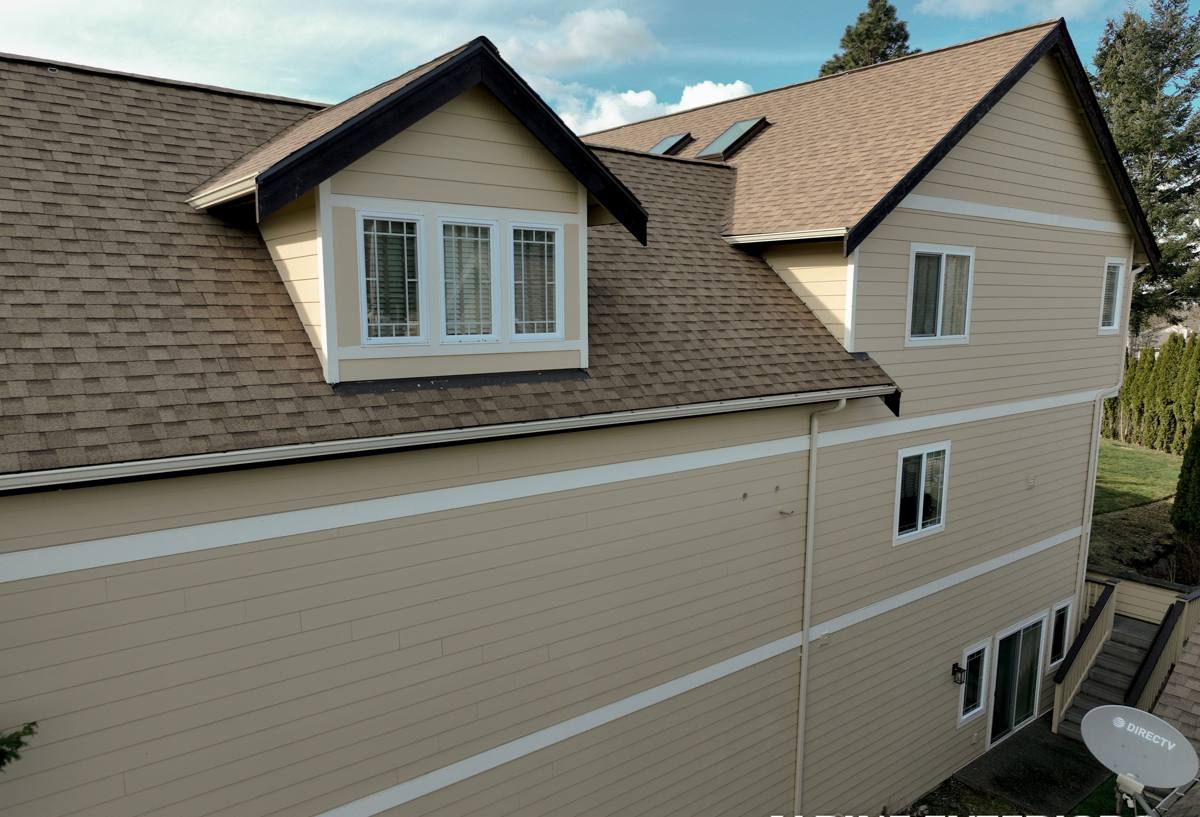
What March Point's Climate Actually Does to a Window Opening
It's worth being specific about the conditions, because they shape real installation decisions:
- Salt air corrosion: Proximity to the bay means airborne salt reaches fasteners, flashing, and hardware faster than it would in a drier, inland location. Standard steel fasteners and low-grade flashing corrode faster here.
- Wind-driven rain: Storms coming off the water don't just fall straight down — they drive rain sideways into wall assemblies, which stresses any gap in the flashing or sealant plane far more than a calm, vertical rain would.
- Extended moss and mildew season: Anacortes' long damp stretch from fall through spring keeps surfaces wet longer, which means any trapped moisture around a window opening has more time to do damage before it dries out.
- Temperature swings between marine and inland air: Day-to-night and seasonal shifts cause the building envelope to expand and contract, which is exactly what proper flashing laps and sealant joints are designed to accommodate — if they're done correctly.
None of this means March Point needs exotic materials. It means ordinary best practice — the stuff that's easy to skip on a tight framing schedule — actually matters here more than it would in a milder microclimate.
What a Correct New-Construction Window Install Involves
Rough Opening and Flashing Sequence
New construction gives us access to the wall assembly before it's closed up, which is the biggest advantage over a retrofit. That means we can build the opening correctly in layers: sill pan flashing first, then side flashing lapped over the sill, then the window's nailing flange integrated with the weather-resistive barrier, then head flashing lapped over the top. Every layer needs to shed water downward and outward — never trap it against the sheathing.
Sill Pan Detail
The sill pan is the single most important detail on a coastal or high-rain job. It creates a sloped, sealed pocket under the window so that any water that does get past the glazing or frame — which happens on every window eventually — drains back out instead of soaking into the framing. Skipping or shortcutting the sill pan is one of the most common causes of hidden rot behind new windows, and it's invisible until the damage is already done.
Fastener and Flashing Material Selection
Given the salt air in March Point, we pay attention to corrosion resistance in fasteners and flashing tape compatibility with the specific sheathing and housewrap on the job. Mismatched or bargain materials here are a slow failure — they hold up fine for a year or two, then start letting go right around the time nobody's looking for it anymore.
Sealant and Backer Rod, Not Just Caulk
Perimeter sealant needs a proper backer rod behind it so the sealant forms the right bead shape and can flex with the building's movement instead of cracking. A thin bead of caulk smeared over a gap looks fine at final walkthrough and fails within a couple of wet seasons.
Choosing Windows for a March Point Build
New construction gives you real choice in frame material, glazing package, and configuration — decisions that are much harder (and pricier) to revisit once the home is finished. For this environment, we typically walk clients through:
| Frame Material | How It Handles This Climate | Trade-Offs to Know |
|---|---|---|
| Vinyl | Good moisture and corrosion resistance; no rust risk near salt air | Limited color range on some lines; frame flexes more in very large sizes |
| Fiberglass | Very stable in temperature swings, strong resistance to warping and moisture | Higher upfront cost than vinyl |
| Wood-clad | Warm interior appearance with exterior cladding protection | Cladding seams and corners need careful detailing to keep water out long-term; more maintenance if the clad is compromised |
| Aluminum | Strong and slim sightlines | Poor thermal performance and higher condensation risk unless thermally broken — a real consideration in a wet, cool marine climate |
We don't push one brand or material as the only correct answer — the right call depends on your budget, the home's design, and how much long-term maintenance you want to take on. What we do insist on is glazing rated for wind-driven rain exposure and frames with a track record in coastal Pacific Northwest conditions, not just a general "good enough" rating.
Our Process on a March Point New-Build
- Plan review and rough opening check: We confirm window sizes, egress requirements, and structural header sizing against the architect's plans before framing locks in.
- Coordination with the framer and siding trades: Window installation touches multiple trades. We coordinate timing so flashing goes in before housewrap is finished and before siding closes the wall up.
- Flashing and sill pan installation: Done in the correct shingle-lap sequence, using materials chosen for this site's exposure.
- Window setting, shimming, and fastening: Units are set plumb, level, and square, shimmed at load points per manufacturer spec, and fastened per the window's approved installation instructions — not a generic method applied to every brand.
- Sealant and final weatherproofing: Perimeter sealed with backer rod and appropriate sealant, interior air sealing addressed separately from exterior weatherproofing.
- Walkthrough: We check operation, sightlines, and seal integrity with you before we call the job done.
Why It Matters to Hire a Crew That Already Works in March Point
A window crew that mostly works inland doesn't think about salt air corrosion or wind-driven rain the same way a crew that installs regularly in Skagit County's coastal areas does. It's not a knowledge gap that shows up on day one — it shows up two or three years later, when fasteners start to bleed rust through paint or a sill pan that wasn't sloped correctly finally lets water into the framing. Building for this specific environment from the start costs the same in labor and only a little more in material selection — and it's dramatically cheaper than fixing hidden rot after the fact.
We also know how Anacortes' inspection process and typical framing practices work, which keeps the window install moving with the rest of your build schedule instead of becoming the trade that holds everyone else up.
What to Ask Any Contractor Before New-Construction Window Install
- Do you install a dedicated sill pan flashing on every opening, or only "if needed"?
- What flashing tape and fastener materials do you use, and are they rated for coastal/salt-air exposure?
- How do you sequence flashing with the housewrap and siding trades on this job?
- What's the manufacturer's installation instruction for this specific window line, and do you follow it exactly (this affects warranty validity)?
- Can you walk me through how water would drain out of the opening if it ever got past the glazing?
Any contractor who works new construction regularly should be able to answer these without hesitation. If the answer is vague, that's worth noting before the walls close up and the opening becomes invisible.
Cost Factors to Expect
New-construction window pricing depends on window count, size, frame material, glazing package, and site access — there's no single number that applies to every build. Broadly, expect fiberglass and higher-end wood-clad units to cost more upfront than vinyl, with the gap widening on larger openings or specialty shapes. The bigger cost driver over the life of the window, though, is almost always installation quality, not brand: a mid-range window installed correctly will outlast a premium window installed with a shortcut flashing job.
If you're framing or planning a new build in March Point and want windows installed to hold up against the salt air, rain, and moss season this area sees every year, we're happy to walk the plans with you and put together a free, no-pressure estimate — just fill out the form below.