 Anacortes
 Windows Built for March Point's Exposure
March Point sits out on open, low-lying ground between Fidalgo Bay and Padilla Bay, which means homes here take weather straight off the water with very little to break it up. Wind-driven rain, salt-laden air, and long stretches of gray, damp weather are just part of living in this corner of Skagit County. Windows here work harder than windows a few miles inland, and they fail faster when they're the wrong product or the wrong installation for the site.
Energy-efficient windows aren't just about a lower heating bill, though that matters. In this climate they're also your first line of defense against moisture getting into wall framing, sills, and interior finishes. A window that's rated well for efficiency but installed loosely, or built from a frame material that doesn't hold up to salt exposure, will cost you more in repairs than it ever saves in energy.
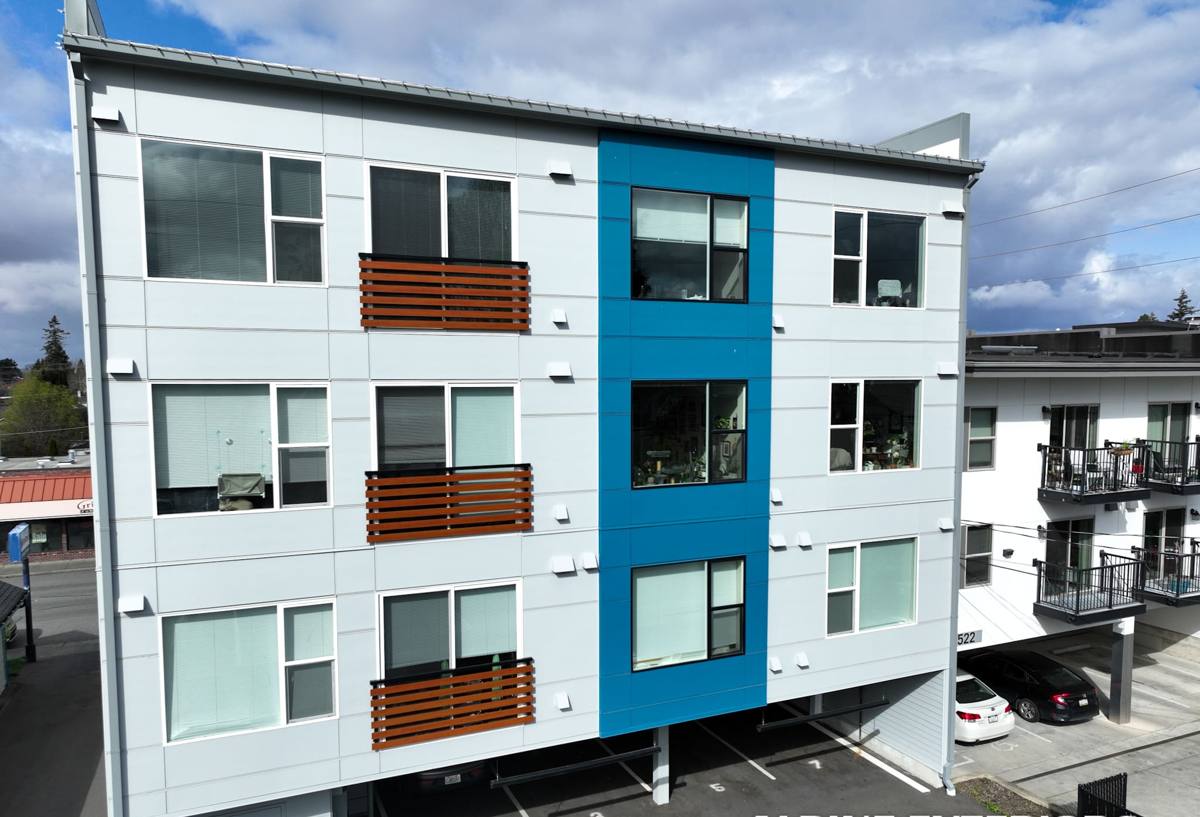
How the Local Climate Actually Affects Your Windows
Salt Air and Corrosion
Airborne salt from the surrounding bays settles on everything, including window hardware, screen frames, and exposed fasteners. Over years, that salt film accelerates corrosion on lower-grade metal components — hinges, cranks, and cheap aluminum cladding are the usual failure points. This is one of the biggest reasons frame and hardware material choice matters more in March Point than it would in a drier, inland neighborhood.
Driving Rain
Wind off the bay pushes rain sideways more often than it falls straight down, which puts real pressure on window flashing and sealant joints that a calmer site would never test. A window can be perfectly efficient on paper and still leak if the flashing detail underneath it wasn't built for wind-driven water. This is an installation issue as much as a product issue.
Moss and Sustained Dampness
Shaded sides of a house, north-facing walls, and areas under overhangs stay damp for long stretches during our moss season. Moss and mildew growth around window trim and sills isn't just cosmetic — it holds moisture against wood trim and caulking, which shortens the life of both. Homes near tree cover or with limited sun exposure see this more than open, south-facing walls.
What "Energy-Efficient" Should Mean Here
Energy-efficient window ratings look at a few core numbers, and in this climate two matter more than the rest:
- U-factor — how well the window resists heat loss. Lower is better for our mild-but-damp winters, where consistent heat loss (not extreme cold snaps) is the bigger long-term cost.
- SHGC (solar heat gain coefficient) — how much solar heat passes through. Western Washington doesn't get intense year-round sun, so this matters less here than in a hot, sunny climate, but it still affects comfort on the bright days we do get.
- Low-E coatings and gas fills — argon-filled, double- or triple-pane units with a quality low-E coating cut heat loss and reduce interior condensation, which is a real issue in a house that stays damp and cool for months at a time.
Efficiency ratings are only half the picture. The other half is whether the frame and installation can survive salt air and driving rain without degrading — a highly efficient window with a poor frame or a loose install won't stay efficient for long.
Frame Material Comparison for This Climate
| Frame Material | Salt Air Durability | Moisture Behavior | Maintenance |
|---|---|---|---|
| Vinyl | Good — won't corrode or rust | Doesn't absorb water; seams are the weak point | Low — occasional cleaning |
| Fiberglass | Very good — dimensionally stable, resists corrosion | Handles moisture and temperature swings well | Low |
| Wood or wood-clad | Fair — cladding protects the wood, but any breach lets moisture in | Prone to rot if sealant joints fail | Higher — needs inspection and upkeep |
| Bare aluminum | Poor to fair — prone to pitting and corrosion near salt air | Conducts cold, prone to condensation | Moderate to high |
We generally steer March Point homeowners toward vinyl or fiberglass frames for the exterior exposure this area gets. Wood-clad windows can still be the right call for certain architectural styles, but we're honest about the added maintenance that comes with them so close to the water. Costs vary a lot by window size, style (fixed, casement, double-hung), and how many openings are involved — expect a broad range depending on scope, and we'll give you real numbers once we've seen the house.
What a Correct Installation Actually Involves
Most window failures we get called out to fix aren't a bad window — they're a bad installation. In a climate that pushes rain sideways, the details around the window matter as much as the window itself.
- Proper sill pan flashing so any water that does get past the exterior sealant has somewhere to drain, not soak into framing
- Correctly lapped weather-resistive barrier and flashing tape, integrated with the siding above and below the opening
- Backer rod and quality exterior sealant at the perimeter, sized and installed for long-term flexibility rather than just filled with caulk
- Low-expansion foam or batt insulation in the gap between the window frame and rough opening — not packed too tight, not left with gaps
- Window set level, plumb, and square before fastening, checked again after
- Interior air sealing and trim work finished so conditioned air isn't leaking out around the frame
- Old window and packaging hauled off, work area cleaned up
Skip any one of these steps and you can end up with a window that looks fine and performs fine on a mild day, but leaks or underperforms the first time we get a real wind-driven rain event off the bay.
Our Process for March Point Window Replacement
Assessment and Estimate
We start by looking at the existing windows, the wall assembly around them, and any signs of moisture damage — soft trim, staining, or fogged glass are all clues about what's going on behind the surface. We'll talk through frame material, glass package, and style options that make sense for the exposure your specific walls get.
Removal and Opening Prep
Old windows come out carefully to protect the surrounding siding and trim. We check the rough opening for rot or water damage before anything new goes in — this is often where problems from a prior installation show up, and it's much cheaper to address them now than after a new window is sealed in place.
Flashing and Installation
This is where we spend the extra time other crews sometimes skip. Sill pans, flashing tape, and sealant get installed in the right order so water is directed out, not trapped in. The window gets set, shimmed, leveled, and fastened per manufacturer spec.
Insulation, Sealing, and Trim
We insulate the gap around the frame, seal the interior and exterior properly, and finish trim so the whole opening looks clean and performs the way it's supposed to.
Final Walkthrough
We check operation on every window — smooth opening, closing, and locking — and walk the job with you before we consider it done.
Signs Your March Point Home Might Need New Windows
A few common signs we see on service calls in this area:
- Noticeable drafts near the window frame, especially during windy weather off the bay
- Condensation building up between panes, which usually means a failed seal on an older double-pane unit
- Wood trim or sills that feel soft, stained, or show early moss and mildew growth
- Windows that are hard to open, close, or lock, often a sign the frame has shifted or swollen
- A noticeably higher heating bill compared to similar-sized homes with newer windows
Not every one of these means a full replacement — sometimes it's a resealing or hardware repair job. We'll tell you honestly which one you're actually dealing with.
Why Hire a Crew That Already Works in March Point
Every neighborhood in Skagit County deals with weather a little differently, and March Point's open exposure to wind and salt air is its own thing. A crew that mainly works sheltered, inland lots may not think twice about a frame material or flashing detail that matters a lot more out here. We've done work on homes across this area and in Anacortes generally, so we're not guessing at how the exposure here behaves — we plan for it from the estimate stage, not after something leaks.
Local also means we're not far away if a question comes up after the job is done, and we're familiar with the permitting and inspection expectations for exterior work in this part of the county.
Keeping Your Windows Performing After Installation
Energy-efficient windows still need a little upkeep in this climate. A yearly check of exterior sealant joints, keeping weep holes clear of debris, and washing off salt residue and moss buildup around frames goes a long way toward protecting the investment. If you notice sealant cracking or pulling away from the frame, it's worth having it looked at before water finds its way behind it.
If you're weighing window replacement or repair for a home in March Point, we're happy to take a look and give you a straightforward, no-pressure estimate — no obligation, just an honest read on what your windows actually need. Use the form below to get started.