 Anacortes
 Guemes Island's Siding Climate: Salt Air, Driving Rain, and a Long Moss Season
Guemes Island sits right in the marine air off Guemes Channel and Rosario Strait, and that exposure shows up on siding faster than it does on homes further inland in Skagit County. Salt-laden air rides in on the wind, wind-driven rain hits walls at an angle instead of just falling straight down, and the tree cover on many lots keeps siding shaded and damp for long stretches of the year. None of that is unusual for the San Juans or the greater Anacortes area, but on an island with limited services and a ferry-only commute, it matters even more that the siding you install the first time is the right siding — because a callback isn't a quick trip across town.
Salt Air and Fastener Corrosion
Airborne salt accelerates corrosion on anything metal — nail heads, flashing, trim fasteners — and it degrades paint film faster than a dry inland climate would. Siding materials and coatings that aren't built for a marine environment tend to chalk, fade, or fail at the fastener line years ahead of schedule.
Moss, Algae, and Shade
Wooded, shaded lots are common on the island, and shade plus damp plus mild temperatures is exactly what moss and algae need to take hold. Siding that stays wet longer because it's tucked under trees needs a surface and an installation detail that sheds water instead of holding it against the wall.
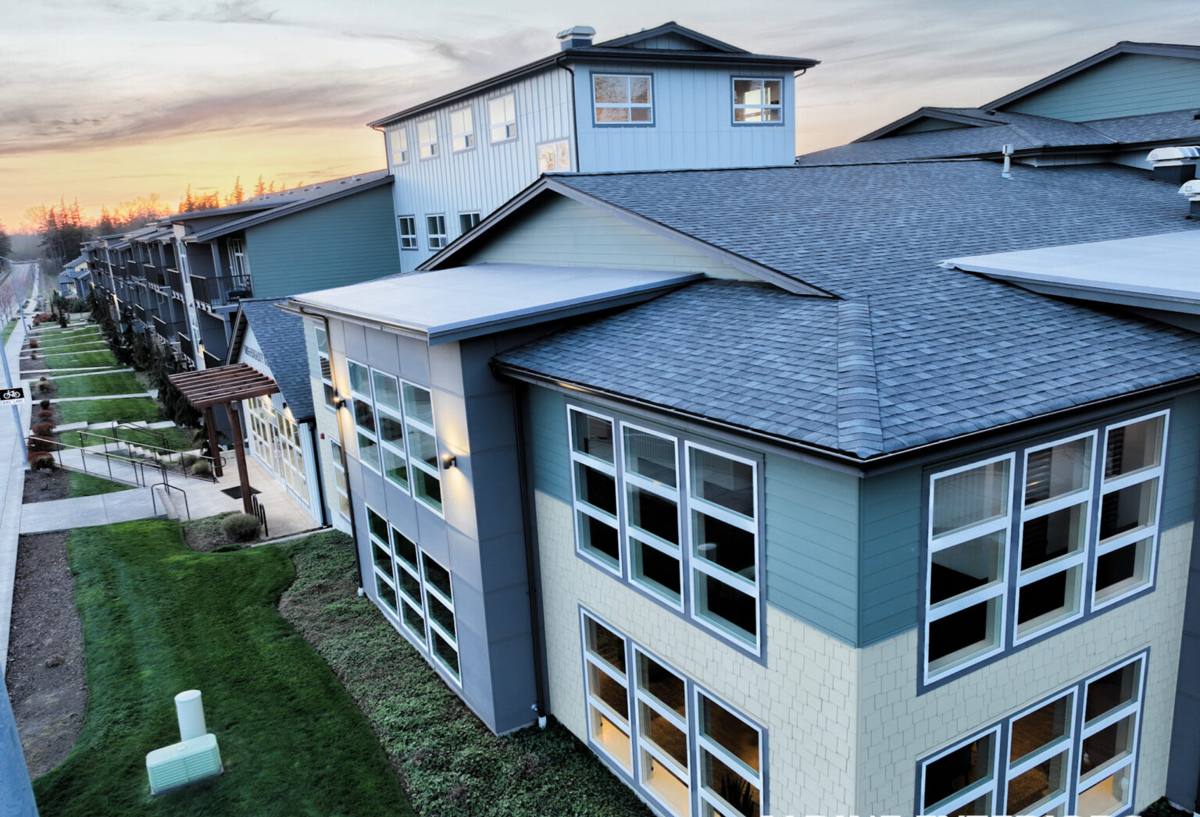
Why Wood, Vinyl, and LP Struggle Out Here
We only install James Hardie fiber cement siding, and a climate like Guemes Island's is a big part of why. It's worth being straightforward about the trade-offs of the alternatives rather than just saying "trust us."
- Cedar and other wood siding looks great new, but constant damp shade is the exact condition that feeds rot, and repainting or restaining on a schedule that keeps up with island humidity is a real, ongoing cost.
- Vinyl siding is inexpensive and low-maintenance, but it's a cladding, not a moisture barrier — it relies entirely on what's behind it, it can warp or crack in temperature swings, and its color fades unevenly over years of UV and salt exposure.
- LP SmartSide is an engineered wood product with an OSB-based core. If the factory coating or caulking at a seam or cut edge is ever compromised, moisture intrusion can cause the core to swell — a risk that's harder to manage in a climate that stays wet as much of the year as this one does.
None of these are junk products. They're just not what we'd choose to put on a home that sits in salt air and shade for most of the year, and we don't install what we wouldn't stand behind on our own house.
What James Hardie Engineers Specifically for This Climate
HZ10 Engineered Formulation
James Hardie doesn't make one siding formulation for the whole country — it engineers its fiber cement by climate zone, and the Pacific Northwest's cool, wet, low-freeze conditions fall under its HZ10 zone formulation. That means the product going on a Guemes Island wall is built around this region's actual weather pattern, not a generic national spec.
ColorPlus Factory Finish
Most of what we install uses Hardie's ColorPlus factory-applied finish rather than field-applied paint. It's baked on under controlled conditions, resists fading and chipping better than a job-site paint job, and comes with its own finish warranty. In a salt-air environment where paint film is one of the first things to break down, that head start matters.
Non-Combustible Core
Fiber cement is also non-combustible, which is a genuine safety advantage over wood-based siding — not the main reason for choosing it on the coast, but a real one worth knowing.
What a Correct Installation Looks Like on a Guemes Island Home
Fiber cement performs the way it's supposed to only when it's installed to spec. In a high-moisture, wind-driven-rain climate, the details that get skipped on a rushed job are exactly the details that cause problems five or ten years down the road.
Flashing and Moisture Management
Proper head flashing above windows and doors, correctly lapped weather-resistive barrier, and kick-out flashing where a roofline meets a wall are non-negotiable here. Driving rain finds any gap in that system, and on a shaded, damp lot, water that gets behind the siding doesn't dry out quickly.
Fastening and Gaps in a Wet Climate
Hardie's installation instructions call for specific gaps at butt joints, corners, and penetrations, plus proper fastener spacing and embedment. Those gaps aren't a shortcut — they let the wall assembly manage moisture and movement instead of trapping it.
Clearance and Trim Transitions
Keeping siding the correct distance above grade, decks, and roof surfaces prevents wicking and splash-back, and trim transitions at corners and around openings need to be sealed with a product rated for exterior, marine-adjacent exposure — not whatever caulk happens to be in the truck.
The Logistics of Working on the Island
Working on Guemes Island isn't the same as working a job a few blocks from our shop. Access is by ferry on a limited daily schedule, which means a crew that isn't used to the island can burn a lot of a workday just getting equipment and material on and off the boat — or worse, discover mid-job that they forgot something and lose hours to a second crossing.
We plan island jobs around that reality: staging materials and tools in advance, scheduling crew trips to minimize crossings, and building weather windows into the timeline since wind and rain can affect ferry runs as much as they affect the work itself. It's a small thing that makes a real difference in how smoothly a project actually goes.
Our Process, Start to Finish
- On-site assessment — we look at the home's exposure, existing siding condition, trim, and any moisture or rot issues before quoting anything.
- Measurement and material order — exact quantities and product line are locked in, and materials are staged ahead of the install trip.
- Scheduling — we plan around the ferry schedule and a realistic weather window rather than just the next open date on the calendar.
- Tear-off and prep — removing old siding, addressing any sheathing or framing damage found underneath, and installing or verifying the weather-resistive barrier.
- Installation — siding, flashing, and trim installed to James Hardie's published specifications, not shortcuts.
- Inspection and cleanup — a final check of fastening, gaps, and sealant, plus full job-site cleanup before we leave the island.
- Walkthrough — we go over the finished work with the homeowner and answer any questions before calling the job done.
What Affects Cost on an Island Job
Every home is different, and we won't quote a number without seeing the house, but these are the main factors that move the price up or down.
| Factor | Why It Matters |
|---|---|
| Square footage and home shape | More wall area, corners, and gables mean more material and more cut time. |
| Tear-off vs. new construction | Removing and disposing of old siding adds labor that a new build doesn't have. |
| Existing damage or rot | Sheathing or framing repair found during tear-off is priced separately once it's uncovered. |
| Trim and detail complexity | Multiple window and door openings, dormers, and custom trim take more time than a simple rectangular wall. |
| Site access and logistics | Ferry scheduling and material staging are part of planning an island job efficiently. |
Living With Fiber Cement in a Salt Air, Moss-Prone Environment
James Hardie siding with a ColorPlus finish is low-maintenance compared to wood, but "low-maintenance" isn't "no-maintenance," especially in this climate. A little attention keeps it looking and performing the way it should for the long run.
- Rinse siding periodically to clear salt residue and organic buildup, especially on shaded or wind-exposed walls.
- Keep vegetation and tree branches trimmed back from the siding so walls get airflow and sunlight to dry out.
- Check caulking at trim, window, and door transitions every year or two and re-seal anything that's cracked or pulled away.
- Watch for moss or algae starting in shaded corners and address it early rather than letting it establish.
- Keep gutters and downspouts clear so roof runoff isn't dumping extra water onto the wall below.
- Have any impact damage or exposed edges repaired promptly to keep the factory finish and moisture protection intact.
Why Hire a Crew That Already Works Guemes Island
A contractor who's never worked the island has to learn its logistics on your project's dime — figuring out ferry timing, material staging, and weather-window planning while your job is underway. A crew that already works Guemes Island has that figured out before the first board goes up, which means fewer surprises, fewer wasted trips, and a project that actually moves at the pace it was scheduled to move at. Combined with fiber cement engineered for this exact climate and installed to the manufacturer's spec, that's the difference between siding that just looks good on install day and siding that's still doing its job in twenty years.
If you're weighing options for a Guemes Island home, we're glad to take a look and put together a straightforward, no-pressure estimate — just fill out the form below to get started.