 Anacortes
 Why Guemes Island Decks Wear Out Faster Than You'd Expect
A deck on Guemes Island lives a harder life than the same deck would fifty miles inland. The island sits out in the salt water of the Salish Sea, which means every deck is dealing with airborne salt, wind-driven rain that hits at angles most flashing details were never designed for, and a moss season that runs long even by Skagit County standards. None of that is dramatic on its own. It's the accumulation, year after year, that turns a small maintenance item into a structural repair if nobody catches it early.
Salt Air and Corrosion
Salt in the air settles on everything, including the metal fasteners, joist hangers, and railing hardware holding a deck together. Standard galvanized fasteners hold up fine in a lot of inland settings, but on a marine-exposed property they can start showing rust and pitting years before they should. Once a fastener corrodes, it loses grip strength, and that's exactly the kind of failure that doesn't announce itself until a board or a rail moves under someone's weight.
Driving Rain and Water Intrusion
Storms off the water don't just fall straight down here, they come in sideways. That matters because most of the water damage we find on island decks isn't from rain landing on top of the boards, it's from rain driven up under railings, into end grain, and behind ledger boards where the deck ties into the house. Water finds the smallest gap and stays there.
The Long Moss Season
Anacortes and the surrounding islands get a moss and algae season that stretches well beyond a typical Puget Sound winter, thanks to the shade, the humidity, and the moisture that lingers under tree cover common on Guemes Island lots. Moss on a deck surface isn't just cosmetic. It holds water against the wood, blocks airflow, and turns a walking surface slick and dangerous, especially on stairs.
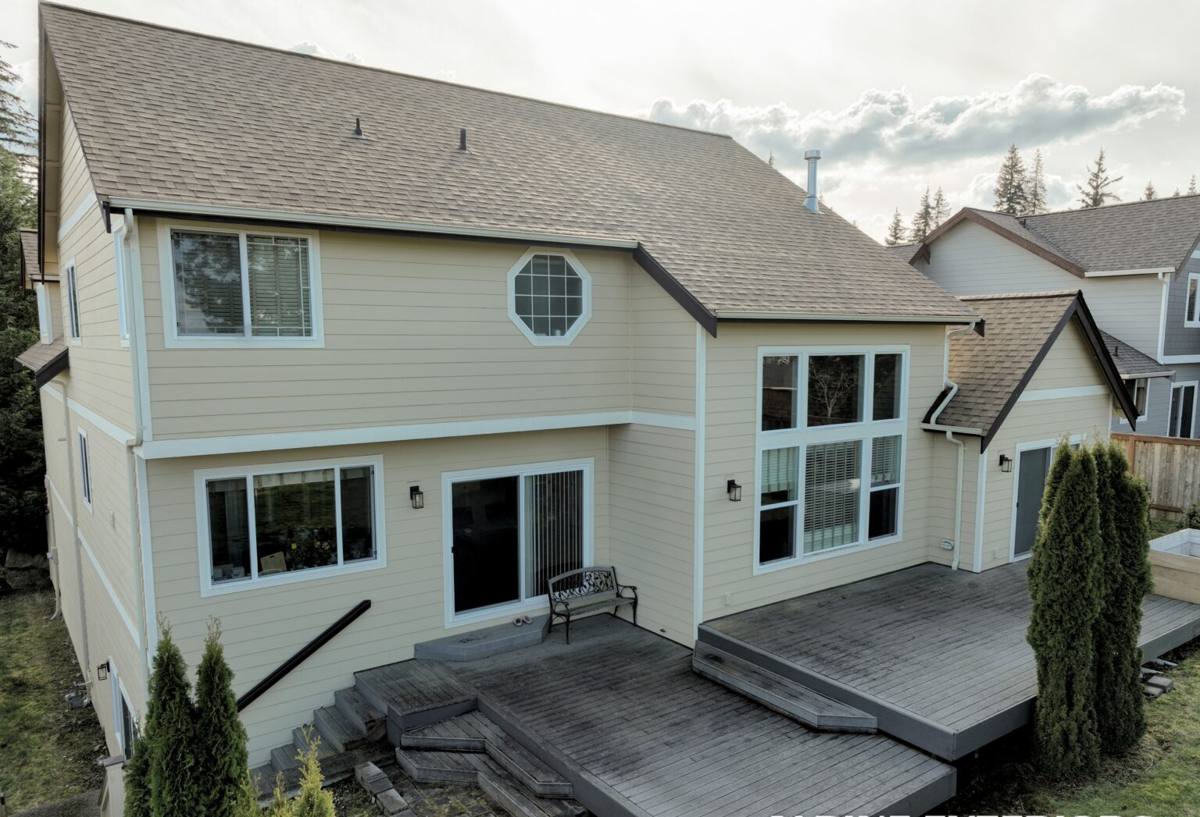
Common Deck Problems We See on Guemes Island
Ledger Board and Flashing Failures
The ledger board, the piece that attaches the deck to the house, is the single most important structural connection on most decks, and it's also the most common failure point we find on older island decks. If the flashing behind it was never installed, or was installed without accounting for wind-driven rain, water works its way in behind the siding and rots the ledger, the rim joist, and sometimes the framing inside the wall.
Rotted Joists, Beams, and Posts
Once water gets past the surface boards, it settles into the framing underneath. Joists and beams that stay damp for extended periods soften, and posts set in or near the ground are especially vulnerable if they weren't installed with proper standoff hardware or a moisture barrier at the base.
Fastener and Hardware Corrosion
We regularly find joist hangers, screws, and bolts that have corroded well ahead of the wood around them. This is one of the most preventable problems on a marine-exposed deck, and it's also one of the easiest to miss during a casual look, since the surface boards can still look fine while the connectors underneath are failing.
Railing and Stair Issues
Railings take a lot of load stress in a small area, and stairs take constant foot traffic plus moss buildup. A wobbly rail or a step that feels soft is rarely just cosmetic, it usually points to a post connection or stringer that needs attention before someone gets hurt.
Signs Your Deck Needs Repair
Most deck problems give some warning before they become a real hazard. Worth checking for:
- Boards that feel spongy, soft, or flex noticeably underfoot
- Gaps opening up between the deck and the house at the ledger board
- Rust streaks running down from screws, bolts, or joist hangers
- Railings or posts that wobble or shift when pushed
- Persistent moss, algae, or dark staining that keeps coming back after cleaning
- Visible daylight or gaps where flashing should be sealing a joint
- A musty smell coming from underneath the deck
- Stair treads that feel different underfoot than they used to, softer or springy
Any one of these on its own might be minor. Two or three together usually means it's time for a proper look before winter storms make things worse.
What a Correct Deck Repair Involves
Assessment From the Ground Up, Not Just the Surface
A repair that only addresses what's visible from the top of the deck is a repair that misses the point. We check the ledger connection, the framing underneath, the posts and footings, and the fasteners throughout, not just the boards people walk on. On a property exposed to the kind of weather Guemes Island gets, the damage is often worse underneath than it looks from above.
Structural Repairs Come First
If a ledger board, joist, or post is compromised, that gets fixed before anything cosmetic happens. Replacing deck boards over a weak frame just hides the problem and shortens the life of the new work.
Matching Materials the Right Way
Whether the deck is cedar, another wood species, or composite decking, patch repairs need to match not just in appearance but in how the material moves and weathers. Mixing incompatible materials, or using an interior-grade fastener because it was on hand, is how a repair fails again in two years instead of lasting.
Fasteners and Flashing Details Built for This Coastline
On a marine-exposed property, we use fasteners and hardware rated for that exposure rather than whatever the original builder used, and we correct flashing details at the ledger and any point where water was clearly finding its way in. It's not extra work, it's the work that actually prevents the same repair from being needed again in a few years.
Repair vs. Replace: How We Help You Decide
| Factor | Favors Repair | Favors Replacement |
|---|---|---|
| Structural framing | Solid, isolated soft spots only | Widespread rot in joists, beams, or ledger |
| Age of deck | Under 15-20 years, good bones | Original construction quality was poor or unknown |
| Extent of damage | Localized to a few boards or one rail section | Damage spread across multiple systems (frame, boards, railing) |
| Fastener condition | Isolated corrosion, easily swapped | Corrosion throughout most connections |
| Budget goals | Extend usable life affordably | Want a long-term, lower-maintenance surface |
Most of the time, the honest answer sits somewhere in the middle: repair the structure, replace the surface boards, and upgrade the hardware while everything is open. We'll tell you plainly which category your deck falls into once we've actually looked underneath it.
Material Considerations for Island Decks
Wood decking, cedar in particular, still has a real place here. It's affordable to repair in sections, it looks right on a lot of island homes, and it can last a long time with proper fastening and finish maintenance. The trade-off is that it needs periodic cleaning and refinishing to hold up against the moss and salt exposure, and that maintenance schedule tends to be shorter here than it would be inland.
Composite decking trades that maintenance burden for a higher upfront cost and a different set of installation requirements. It doesn't need refinishing, but it still needs correct fastening, proper spacing for drainage, and a substructure that's actually sound, since composite boards will happily sit on top of a rotting frame and hide the problem just as easily as wood will. Whichever material a deck already has, our standard is to repair it the way that material is supposed to be repaired, not to force a shortcut because it's faster.
Typical Repair Costs and What Drives Them
| Repair Scope | What's Involved | Typical Range |
|---|---|---|
| Board or rail section replacement | Swap a handful of damaged boards or a rail section | $400 - $1,500 |
| Fastener and hardware upgrade | Replace corroded screws, hangers, and connectors | $500 - $2,000 |
| Ledger and flashing repair | Correct the deck-to-house connection and flashing | $1,000 - $3,500 |
| Structural framing repair | Replace rotted joists, beams, or posts | $1,500 - $6,000+ |
| Full surface resurface | New decking over a repaired, sound frame | $3,000 - $9,000+ |
These are broad ranges meant to give a sense of scale, not a quote. Actual cost depends on the deck's size, height, access, and how much of the framing turns out to need attention once we open things up. We won't know your real number until we've looked at your specific deck.
Our Process for Guemes Island Deck Repair
Getting a crew and materials to Guemes Island means working around ferry scheduling, which is just a fact of doing this work on an island rather than an inconvenience we complain about. We plan material deliveries and crew time around the ferry so a repair isn't stretched out over extra trips, and we scope the job thoroughly on the first visit so we're not discovering major surprises after work has already started.
Once we're on site, the sequence is straightforward: assess the structure first, confirm what's actually driving the damage, present the repair-versus-replace conversation honestly, then do the work in the order that makes sense structurally, framing and connections before surface and finish.
Why Hire a Crew That Already Works Guemes Island
A contractor who's worked on the island before already understands the ferry logistics, already knows what marine exposure does to fasteners and framing out here compared to a more sheltered inland lot, and isn't learning those lessons on your project. That familiarity translates into fewer surprises, fewer return trips, and a repair that accounts for the actual conditions your deck faces rather than a generic approach that works fine in a different climate but falls short here.
If your deck is showing any of the signs above, or you just want an honest opinion on what shape it's really in, we're glad to take a look. The estimate is free, there's no pressure attached to it, and you'll walk away with a clear picture of what your deck actually needs. Use the form below to get started.