 Anacortes
 Flounder Bay sits right where the roofs on Fidalgo Island earn their keep. The homes along this stretch of Anacortes take a steady beating from Rosario Strait weather — wind-driven rain off the water, salt-laden air that never really lets metal or fasteners rest, and a moss season that runs long and wet most years in Skagit County. When a storm rolls through and takes a run of shingles, lifts a ridge cap, or drives water under flashing, the repair has to account for all of that, not just patch what's visibly broken.
This page covers what a proper storm damage roof repair looks like for Flounder Bay homes specifically — what the local exposure demands, how we assess and fix storm damage, and why a crew that already works this waterfront neighborhood tends to get it right the first time.
Why Flounder Bay Roofs Take Different Damage Than Inland Anacortes
Flounder Bay's location on the water changes the kind of storm damage we see compared to roofs a mile or two inland. Homes here get more direct exposure to wind gusts coming off the strait, and that wind carries salt spray that inland roofs simply don't deal with in the same volume. Over time, that salt air accelerates corrosion on exposed fasteners, flashing, and any lower-grade metal components — which matters a lot when we're assessing storm damage, because a nail or flashing seam that would still be sound on an inland roof may already be compromised here.
The other factor is moisture retention. Waterfront lots tend to hold humidity longer after a storm passes, and combined with tree cover common in this part of Anacortes, that means roofs stay damp longer and grow moss more readily. Moss isn't just cosmetic — it holds water against the roofing material and works its way under shingle edges and around fasteners, which is often exactly where storm damage starts to show up as a leak weeks or months after the actual weather event.
What This Means for Repair, Not Just Patch Work
A storm damage repair that only replaces the obviously missing or cracked shingles, without checking the surrounding fastener condition, underlying flashing, and any moss intrusion nearby, is likely to need a second visit. We treat storm repair on Flounder Bay homes as an opportunity to check the health of everything immediately around the damage — because the same conditions that caused the storm damage are actively working on the material next to it.
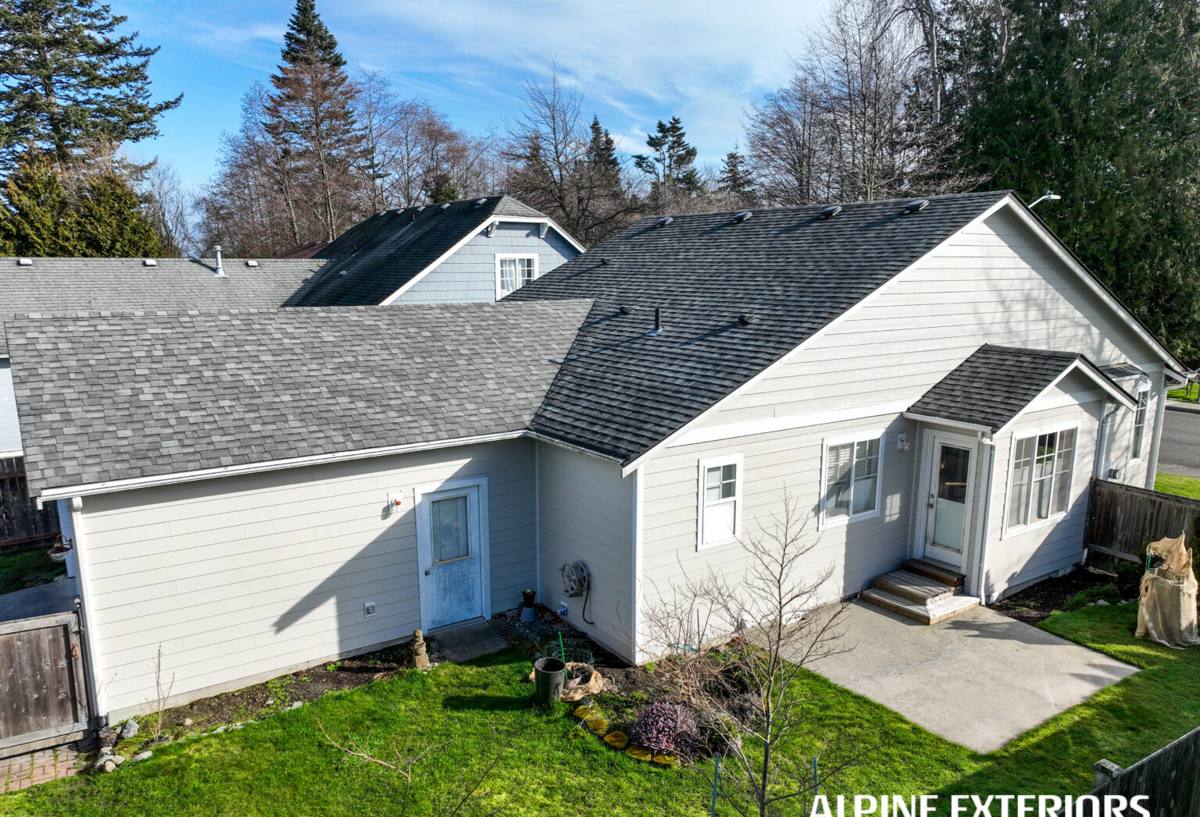
What Storm Damage Actually Looks Like Here
Not every storm event announces itself with a hole in the roof. In Flounder Bay, the damage we're most often called out for falls into a few categories:
- Wind-lifted or missing shingles — usually along ridge lines, hips, and roof edges where uplift pressure is highest during gusts off the water
- Compromised flashing — around chimneys, vent pipes, and roof-to-wall transitions, where wind-driven rain finds the smallest gap
- Granule loss on asphalt shingles — from wind-blown debris or hail, which shortens the shingle's remaining service life even when it isn't leaking yet
- Damaged or dislodged ridge caps — a common failure point in sustained high wind
- Moss-related lifting — pre-existing moss growth that gets pried further under shingles during a storm, turning a minor issue into an active leak point
- Gutter and edge damage — debris impact or wind torque that pulls fascia-mounted gutters loose, which then allows water to back up under the roof edge
Our Storm Damage Assessment Process
When we come out after a storm, we're not just looking at the spot the homeowner noticed. Salt air and moss mean small problems compound quietly, so the walkthrough covers the whole roof plane, not just the damaged section.
Step One: Full Roof and Attic Check
We inspect the exterior roof surface for the damage categories above, then check the attic or roof deck from below where accessible for water staining, damp insulation, or daylight coming through — signs that water has already gotten past the roofing material even if the leak hasn't reached the living space yet.
Step Two: Document the Damage
We photograph and note the specific damage found, which matters both for the repair plan and for any insurance claim the homeowner needs to file. Storm damage claims move faster and get approved more reliably when the documentation is specific about what happened and where.
Step Three: Repair Plan and Honest Scope
We give a clear picture of what's storm damage versus what's pre-existing wear that the storm simply exposed. Both matter, but they're not the same thing, and a homeowner deserves to know which is which before deciding what to fix now versus later.
Doing the Repair Right for This Environment
A storm repair on a Flounder Bay roof needs materials and fastening that account for the salt air and moisture exposure, not just a like-for-like patch.
Fasteners and Flashing
We use corrosion-resistant fasteners and flashing appropriate for coastal exposure. Standard galvanized fasteners can start showing rust well before their expected lifespan in this kind of salt-air environment, and a repair is only as good as the metal holding it down.
Matching Existing Roofing
Where shingles need replacing, we match the existing product as closely as possible in both material and color batch, since sun-faded roofs can show a visible patch line if the match isn't close. When an exact match isn't available, we talk through the options honestly rather than installing something that will stand out.
Clearing Moss Before Closing Up the Repair
If moss contributed to the damage or is present near the repair area, we clear it and treat the surrounding area before finishing the repair. Closing up a repair over active moss growth just guarantees the same failure returns within a season or two.
Cost Factors for Storm Damage Repair
Storm repair costs vary a lot based on scope, and we'd rather explain the variables than quote a number that doesn't apply to your roof. Most Flounder Bay storm repairs land in a broad range depending on these factors:
| Factor | Why It Affects Cost |
|---|---|
| Extent of shingle damage | A handful of lifted shingles is a different job than a full slope needing replacement |
| Flashing involvement | Chimney, vent, and wall-transition flashing repairs require more careful sealing than open-field shingle work |
| Roof pitch and access | Steeper or harder-to-access roofs take longer and require more safety setup |
| Underlying deck condition | If water has reached the roof deck, sections of sheathing may need replacement before new roofing goes on |
| Moss remediation needed | Cleaning and treating moss-affected areas adds labor beyond the storm repair itself |
| Material match availability | Discontinued or weathered shingle lines can require sourcing time or a wider repair area to blend well |
We always inspect before quoting, since storm damage that looks minor from the ground sometimes extends further once we're actually on the roof, and damage that looks alarming from a photo is sometimes a contained, straightforward fix.
Insurance and Storm Damage Claims
Most homeowner policies cover storm damage to roofing, but the claims process goes smoother with clear documentation of the damage and a repair estimate that itemizes the scope. We provide that documentation as part of our assessment, and we're glad to walk through what we found with an adjuster if that's useful. We don't handle the claim itself — that's between the homeowner and their insurer — but we make sure the repair scope is accurately represented so nothing gets missed or underpaid.
What to Check After Any Storm, Even Before Calling a Contractor
- Look for shingle debris in the yard or gutters — granules or shingle pieces after a windstorm are a sign something came loose
- Check ceilings and attic spaces for new water stains, especially near chimneys or where roof planes meet
- Note any visible gaps, lifted sections, or missing ridge caps from the ground using binoculars rather than climbing up yourself
- Check gutters for separation from the fascia or visible sagging
- Photograph anything visible right after the storm, before wind or rain moves debris around
- Avoid walking the roof yourself after a storm — wet, moss-covered, or wind-loosened shingles are unstable footing
Why a Crew That Works Flounder Bay Regularly Matters
Storm damage repair isn't a generic skill applied the same way everywhere. A crew that regularly works the waterfront neighborhoods in Anacortes already knows which fastener grades hold up against this salt air, which shingle lines are common on Flounder Bay roofs and easier to match, and how aggressively moss needs to be addressed given the tree cover and humidity typical here. That familiarity means fewer surprises during the repair and a better chance the fix holds through the next storm season rather than needing a repeat visit.
It also means a faster, more accurate initial assessment. When we've seen the same wind patterns and drainage quirks on other roofs nearby, we know where to look first for hidden damage instead of starting from scratch on every call.
If a recent storm left your Flounder Bay roof with missing shingles, a leak, or damage you're not sure how to scope, we're happy to take a look. We offer free, no-pressure estimates — just fill out the form below and we'll get back to you.