 Anacortes
 Windows That Have to Work Harder Near the Water
Flounder Bay sits close enough to the water that its homes deal with a different set of pressures than houses further inland in Skagit County. Salt-laden air moves off the bay and settles on every exterior surface, including window frames, hardware, and glazing seals. Add Anacortes' long wet season, frequent driving rain off Rosario Strait and the Salish Sea, and a moss season that can stretch for months, and you have a climate that finds every weak point in a window system faster than it would almost anywhere else in the state.
Energy-efficient windows are usually marketed on comfort and utility bills, and that's real, but in Flounder Bay the bigger story is often durability. A window that isn't built or installed correctly for this environment doesn't just lose efficiency over time — it lets moisture into wall framing, corrodes hardware, and fails years before it should. Getting this service right here means treating salt air and moisture as the primary design problem, with energy performance built in alongside it.
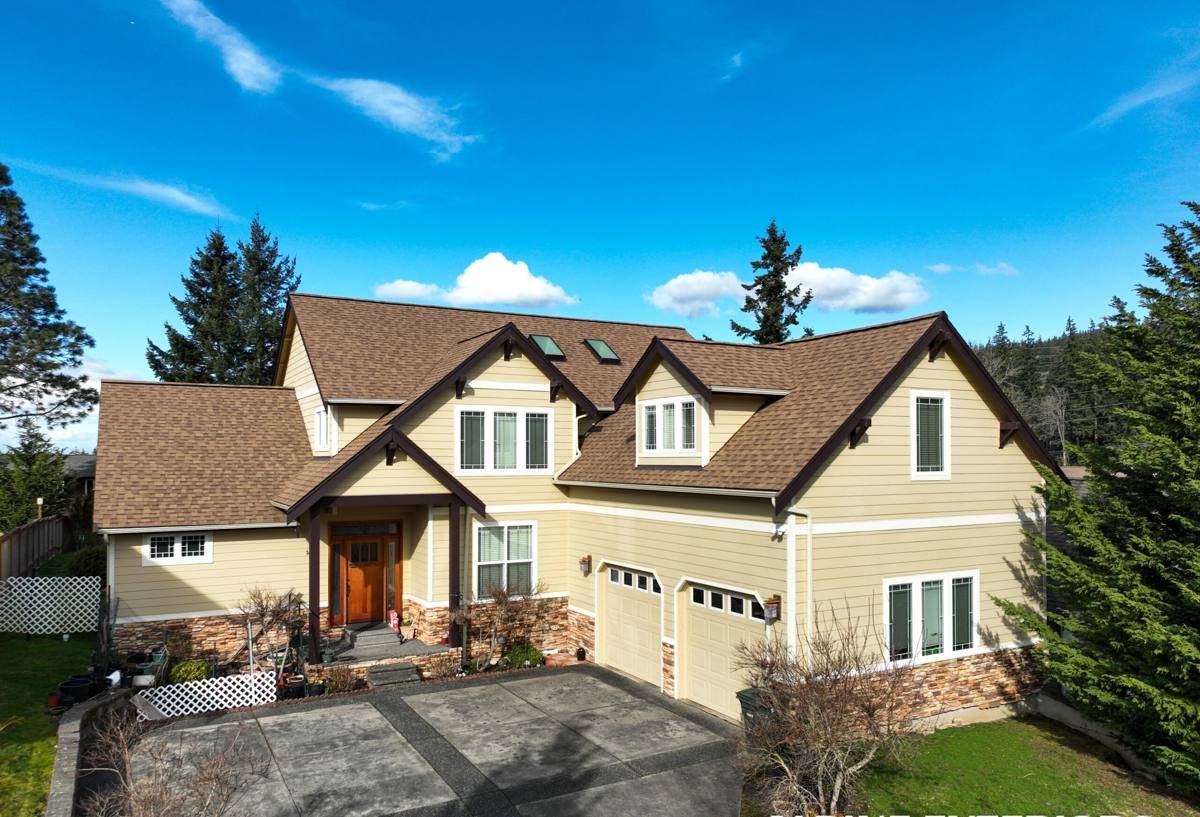
What "Energy-Efficient" Should Mean for a Home Like Yours
Not all energy-efficient windows are equal, and the label alone doesn't tell you much. For a Flounder Bay home, the specification that matters is a combination of glass performance, frame material, and — just as important — how well the unit is sealed into the wall once it's installed.
Glass and Glazing
Most new construction and replacement windows in this area use dual-pane glass with a low-E coating and an inert gas fill (usually argon) between the panes. This combination cuts heat loss in winter and heat gain in summer, and it also helps reduce interior condensation, which is a common complaint in older single-pane or failed dual-pane windows around here. Triple-pane glass is available and does perform better thermally, but for most Flounder Bay homes the added cost isn't always justified unless the home is unusually exposed to wind or noise off the water.
Frame Material
Frame material matters more here than in a lot of the state, because it's the frame — not the glass — that takes the brunt of salt exposure and repeated wetting. Vinyl, fiberglass, and clad-wood frames all perform differently in this environment, and we'll walk through the trade-offs below.
U-Factor and Air Infiltration
U-factor tells you how well a window resists heat transfer — lower is better. Air infiltration rating tells you how much outside air leaks through the assembly. In a home exposed to driving rain and wind off the bay, a low air-infiltration rating is often as important as the U-factor itself, because a drafty window is also usually a window that's letting in wind-driven moisture.
Frame Material Comparison for a Marine Environment
This is the decision that has the biggest long-term impact on how your windows hold up in Flounder Bay's climate. There's no single "best" material for every home — it depends on your budget, your home's exposure to wind and salt, and how much upkeep you're willing to do.
| Material | How It Handles Salt Air & Moisture | Relative Cost | Maintenance |
|---|---|---|---|
| Vinyl | Doesn't corrode; performs well in salt air; can become brittle with age in constant sun/wind exposure | Lowest | Low — occasional cleaning |
| Fiberglass | Very stable in temperature swings and moisture; strong resistance to warping near the water | Mid to higher | Low |
| Aluminum-clad wood | Attractive and durable if maintained, but any breach in the cladding or seal invites moisture into the wood core | Highest | Higher — seals and cladding need periodic inspection |
| Bare aluminum | Prone to corrosion and heat/cold transfer in this climate; not something we recommend for exterior-exposed homes near the bay | Low | Higher — corrosion checks |
We generally steer Flounder Bay homeowners toward vinyl or fiberglass for most applications. It's not that clad-wood windows can't work here — they can look great and perform well — but they demand more diligence about caulking, drainage, and seal inspection than most homeowners want to take on, and a missed maintenance cycle can mean hidden rot behind the cladding. That's a maintenance-burden tradeoff worth knowing about before you commit, not a knock on any particular manufacturer.
Signs Your Current Windows Are Underperforming
Because moisture damage often starts inside the wall cavity before it's visible on the surface, it helps to know the early warning signs. If you're seeing any of the following, it's worth having the windows looked at before the next wet season:
- Fogging or haze between the panes of dual-pane glass (a sign the seal has failed and the gas fill is gone)
- Persistent condensation on the inside of the glass, even with normal ventilation
- Drafts you can feel near the frame on windy days
- Windows that are difficult to open, close, or lock — often a sign the frame has shifted or swollen
- Visible corrosion, pitting, or chalky white residue on hardware or aluminum components
- Soft or discolored wood trim around the window opening
- Rising heating bills without any other clear explanation
- Moss or dark streaking building up on the sill or lower frame faster than on the rest of the exterior
Why the Installation Matters as Much as the Window
A high-quality energy-efficient window installed poorly will underperform a modest window installed correctly. This is especially true in a location like Flounder Bay, where wind-driven rain tests every seam. The parts of the job that don't show up in a brochure are usually the parts that determine whether you get twenty-plus years of trouble-free performance or a callback in three.
Flashing and Drainage
Proper window flashing directs any water that gets past the exterior cladding back out, rather than letting it pool at the sill or behind the frame. This is standard practice everywhere, but it's non-negotiable in a bay-adjacent home where wind can drive rain sideways into a wall for hours at a time.
Sealing and Insulation
The gap between the window frame and the rough opening needs to be sealed and insulated correctly — not overpacked with expanding foam, which can bow a frame, and not left with gaps that create both a draft and a moisture pathway. We use sealants and backer materials rated for exterior, coastal-adjacent use, not general-purpose products that break down faster under UV and salt exposure.
Exterior Trim and Caulking
The finish work around the window — trim, caulking, and any flashing tape at the joints — is what keeps water from finding its way in over time. This is also the area that needs periodic re-caulking as part of normal home maintenance, and we'll tell you honestly what that schedule should look like for your specific siding and exposure.
How Our Process Works
We keep the process straightforward, and we don't push products or upsells that don't fit your home.
- On-site assessment. We look at your current windows, note any signs of moisture intrusion or frame damage, and check how exposed your home is to prevailing wind and rain off the water.
- Straightforward product recommendation. We'll explain frame material and glass options in plain terms, including honest cost-versus-durability trade-offs for your specific exposure, rather than defaulting to the most expensive option.
- Written estimate. You get a clear scope of work and price before anything is ordered — no surprise add-ons once the job starts.
- Removal and disposal. Old windows and any water-damaged framing material we find are removed and hauled off; we don't leave debris behind.
- Correct installation. Flashing, sealing, insulation, and trim work are done to hold up against this specific climate, not a generic install.
- Final walkthrough. We check operation, seals, and finish work with you before we consider the job done.
Ongoing Care in a Moss and Salt Environment
Even a correctly installed, high-quality window benefits from some basic upkeep in this climate. A few habits go a long way toward protecting your investment:
- Rinse salt residue and grime off frames and glass a couple of times a year, especially on wind-exposed elevations
- Keep gutters and downspouts clear so runoff isn't sheeting down over window heads
- Clear moss and debris from sills and tracks before it holds moisture against the frame
- Re-caulk exterior trim joints when you notice cracking or gaps, rather than waiting for a leak
- Operate locking hardware periodically through the wet season so mechanisms don't seize
Why Local Experience in Flounder Bay Matters
A window contractor who mostly works drier, inland parts of Washington may not think twice about flashing details or frame material choices that matter a great deal a few hundred feet from the water. Working regularly in Anacortes and along the Skagit County shoreline means we've seen how different products and installation methods actually hold up here over years, not just what a spec sheet promises. That local track record shapes the recommendations we make — including when we steer a homeowner away from a product that looks good on paper but doesn't hold up well against sustained salt exposure and wind-driven rain.
It also means we understand practical realities specific to this area: tighter lots and shared access common in bay-front neighborhoods, the scheduling challenges of our wet season, and how to sequence work so your home isn't exposed to the weather any longer than necessary during a window replacement.
Get a Straightforward Estimate
If your windows are drafty, fogged, hard to operate, or just original to a home that's been through a lot of wet seasons, it's worth a look before problems move from the window into the surrounding wall. Reach out for a free, no-pressure estimate — we'll assess your home's specific exposure and give you honest options, not a sales pitch. The request form below is the easiest way to get started.