 Anacortes
 Why Fidalgo Island Siding Takes More Damage Than You'd Expect
Fidalgo Island sits right where Skagit County meets the salt water, and that location is exactly why siding here fails faster than it does twenty miles inland. Homes facing the water get a steady dose of salt-laden air that works into seams, fasteners, and any spot where paint or caulk has started to fail. Add the region's long stretch of driving rain each fall and winter, plus the shaded, damp conditions that let moss and algae take hold on north- and west-facing walls, and you have three separate stressors working on the same siding at the same time.
None of that means siding on Fidalgo Island is doomed — it means it needs to be inspected and repaired with those specific conditions in mind. A repair that would hold up fine in a drier part of Washington can fail here in a season or two if it doesn't account for wind-driven moisture and salt exposure. That's the gap we focus on closing.
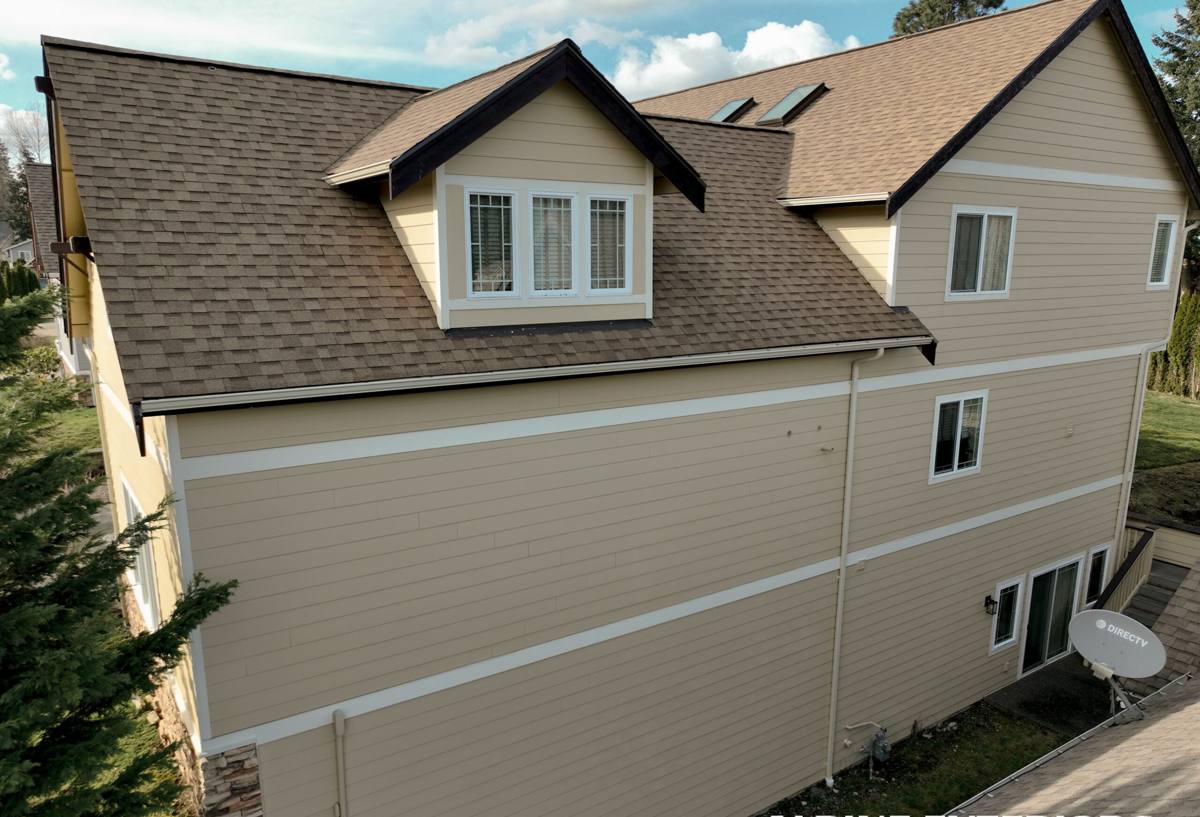
What's Actually Causing the Damage
Salt Air and Metal Fasteners
Salt in the air accelerates corrosion on nails, staples, and any exposed metal trim. Once a fastener starts to rust, it loses its grip, siding panels start to shift, and water gets a path behind the cladding. This shows up first as small stains bleeding through paint near nail heads — an early warning sign that's easy to miss from the ground.
Driving Rain and Wind Exposure
Storms coming off the water don't just fall straight down — they drive rain sideways into siding, especially on homes with limited roof overhang or on lots with open exposure to prevailing winds. That kind of wind-driven rain finds gaps at butt joints, corner trim, and window flashing that would never get tested in a calmer climate.
Moss, Algae, and Trapped Moisture
Fidalgo Island's tree cover and marine humidity create ideal conditions for moss and algae on shaded siding. Beyond the cosmetic issue, moss holds moisture against the surface far longer than open air would, which softens caulk, degrades paint film, and — on wood-based products — can lead to rot underneath a surface that still looks intact from a distance.
Signs Your Siding Needs a Professional Look
- Bubbling, peeling, or chalky paint, especially on the sides of the house that face the water or prevailing wind
- Soft or spongy spots when you press on the siding near the bottom edge or around windows
- Visible gaps or separation at panel joints, corners, or trim
- Rust streaks below fastener heads or metal flashing
- Persistent moss or algae growth that comes back within a season of cleaning
- Warping, buckling, or wavy panels, particularly on shaded walls
- Increased drafts or unexplained humidity near exterior walls inside the home
Any one of these on its own might be minor. Several showing up in the same area of the house usually means moisture has been getting behind the siding for a while, and that's worth a proper inspection before it spreads.
What a Correct Repair Actually Involves
A repair that just covers the visible damage often fails again within a year or two, because it doesn't address why the damage happened in the first place. Our approach starts with figuring out the cause, not just patching the symptom.
- Diagnose the source. We trace the damage back to its cause — failed caulking, a fastener issue, a flashing gap, or a drainage problem — rather than just replacing the damaged piece and moving on.
- Check for hidden moisture. Visible damage is often smaller than what's happening behind the siding. We check the surrounding area, including house wrap and sheathing where accessible, before closing anything back up.
- Match materials correctly. Repairs need to match the existing siding's profile, exposure, and finish as closely as possible so the patched section doesn't stand out or perform differently than the rest of the wall.
- Rebuild the water management, not just the surface. Flashing, house wrap laps, and caulking at joints and penetrations get corrected as part of the repair — not left as-is around a new patch.
- Finish to last. Fasteners, caulk, and paint or factory finish all get chosen for coastal exposure, not whatever happens to be on the truck.
Repair or Replace? How We Help You Decide
Not every damaged section needs a full re-side, and we're not going to tell you it does. But there's a point where repeated repairs cost more over time than replacing a wall or elevation once, correctly. These are the factors that actually matter:
| Factor | Favors Repair | Favors Replacement |
|---|---|---|
| Extent of damage | Isolated to one or two sections | Spread across multiple walls or elevations |
| Underlying material condition | Sheathing and house wrap intact | Rot or moisture damage found behind siding |
| Siding material | Material still performs well, just locally damaged | Product has a history of recurring failures |
| Age of existing siding | Well within expected service life | Nearing or past the material's realistic lifespan |
| Repair history | First repair needed in this area | Same section has already been patched once or twice |
If your siding is a good product that's simply taken localized damage — from a storm, an old flashing failure, or a one-time issue — a targeted repair is the right call, and we'll say so. If we find the same failure pattern repeating across a wall, or moisture damage behind multiple sections, we'll tell you that too, along with why continuing to patch it usually isn't the better value.
Why Repairs Get Done With James Hardie Materials
When a repair calls for replacing a section of siding rather than just resealing or refastening what's there, we use James Hardie fiber cement — it's the only siding product we install, on repairs or full projects. Hardie's ColorPlus factory finish is baked on and engineered to resist the fading and cracking that field-applied paint struggles with in this climate, which matters for keeping a repaired section blending in for years, not just at handoff. The HZ5 product line is engineered for climates with significant moisture exposure, which fits Fidalgo Island's rain and humidity better than general-purpose siding lines built for drier regions.
Just as important, fiber cement doesn't rot, and it's non-combustible — two things that matter more here than in a lot of places, given the moisture load this area sees year-round. When a repair section needs new material, we'd rather put on something built to outlast the rest of the wall than something that's likely to need the same repair again in a few years.
Our Repair Process
We keep the process straightforward because most homeowners just want the problem fixed correctly without a lot of runaround:
- Inspection: We look at the damaged area and the surrounding siding, and check for signs of moisture behind the surface.
- Honest assessment: You get a clear explanation of what caused the damage and whether repair or replacement makes sense — with the reasoning, not just a recommendation.
- Written estimate: A clear scope of work and price before anything starts.
- Repair work: Damaged material removed, underlying moisture issues addressed, correct materials installed, and water management details rebuilt properly.
- Cleanup: Job site left clean, with debris and old material hauled away.
Why a Local Fidalgo Island Crew Makes a Difference
Siding repair isn't identical everywhere in Skagit County, and a crew that mostly works inland jobs won't automatically account for what a marine-exposed lot needs. A crew that regularly works on Fidalgo Island already knows to check fastener corrosion first on water-facing walls, to expect moss recurrence on shaded north sides, and to pay extra attention to flashing and joint sealing on elevations that catch driving rain. That local pattern recognition shortens the diagnosis step and helps make sure the repair addresses the actual cause instead of just the visible symptom.
It also means realistic expectations about maintenance. A repair on this island should be built to handle another wet winter and another moss season — not just look good long enough to pass a walk-through.
After the Repair: Keeping It From Happening Again
A good repair should reduce how often you need another one, not just reset the clock. A few habits help on Fidalgo Island specifically: keep gutters and downspouts clear so water isn't sheeting down siding it wasn't meant to run over, trim back vegetation that keeps walls shaded and damp, and do a simple visual check after major storms for anything that looks different — new stains, loose trim, or fresh gaps at joints. Catching a small issue early is almost always cheaper and simpler than catching it after a full wet season has worked on it.
If you're seeing damage, softness, or recurring moss on your siding, we're happy to take a look and give you a straightforward read on what's going on and what it would take to fix it right. Request a free, no-pressure estimate using the form below.